


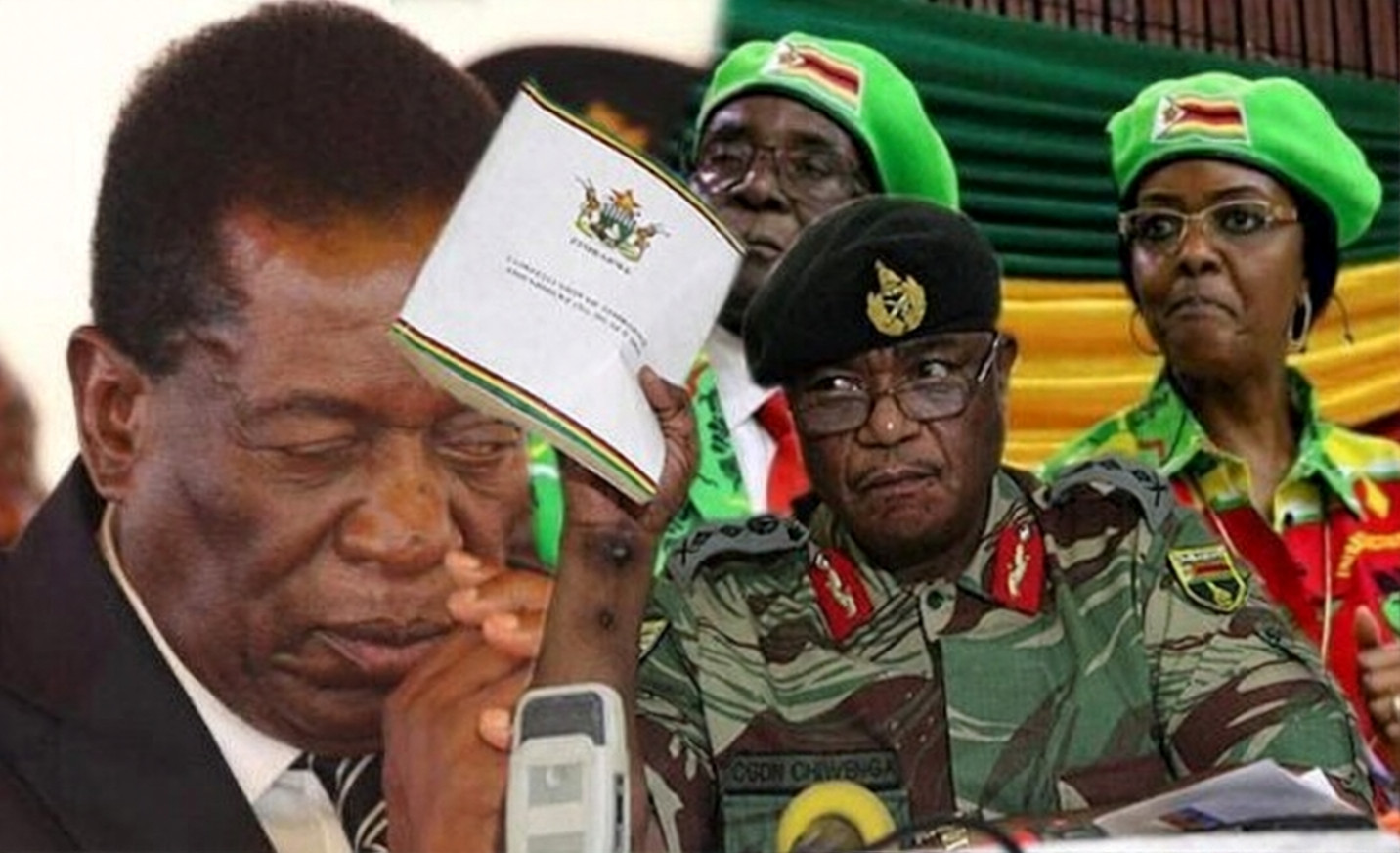
In 2013, Zimbabweans celebrated the birth of a new constitution, a document meticulously crafted to usher in an era of democratic accountability and, crucially, to prevent the recurrence of a Mugabe-style life presidency. The cornerstone of this new charter was the introduction of presidential term limits, a safeguard designed to ensure a peaceful and democratic transfer of power. Today, a decade later, these very laws have become a potent weapon in a bitter factional struggle within the ruling ZANU-PF party, ensnaring the very individuals who once championed their creation.
The irony is palpable. Those who meticulously drafted the 2013 term limits with the explicit aim of ushering Robert Mugabe out of power are now finding themselves caught in a legal trap of their own making. The current administration, often referred to as the “New Dispensation,” is grappling with the unintended consequences of political engineering, as the 2013 Constitution looms like a ghost, haunting their ambitions for extended rule.
At the heart of this constitutional conundrum lies Section 328(7) of the 2013 Constitution, a provision often dubbed the “benefit ban” or “legal trap.” This crucial clause stipulates that any amendment to a term-limit provision that extends the duration an individual can hold office shall not apply to anyone who held that office before the amendment. In essence, it prevents an incumbent president from benefiting from any changes made to extend presidential terms during their tenure. This foresight, intended to prevent a repeat of Mugabe’s prolonged rule, now directly impedes President Emmerson Mnangagwa’s perceived aspirations to remain in power beyond 2028.
The architects of this constitutional safeguard, including prominent figures like Douglas Mwonzora of the then MDC-T and Paul Mangwana of ZANU-PF, were co-chairs of the Constitution Parliamentary Committee (COPAC). Their mission was clear: to “Mugabe-proof” the presidency. Mwonzora, reflecting on the design, has been quoted as saying, “The Constitution is designed to make it extremely difficult for an incumbent to extend their stay.”
This statement underscores the deliberate intent behind the stringent term limits and the “benefit ban.”
Fast forward to the present, and the political landscape is dominated by the “ED2030 Agenda,” a concerted effort by ZANU-PF loyalists, particularly those aligned with the Lacoste faction, to extend President Mnangagwa’s term until 2030. This push has manifested in various forms, including provincial resolutions and public pronouncements advocating for a constitutional amendment. The most recent and significant attempt is the proposed Constitutional Amendment Number 3 Bill, introduced in February 2026. This bill seeks to extend presidential terms from five to seven years and, controversially, to alter the method of presidential election from a popular vote to a parliamentary appointment, a model reminiscent of South Africa’s system. It also aims to strip the Zimbabwe Electoral Commission (ZEC) of certain responsibilities.
However, this ambitious legislative manoeuvre faces a significant hurdle in Section 328(7). Legal experts and opposition figures alike have highlighted the clause’s prohibitive nature. David Coltart, a respected legal expert and opposition figure, articulated this challenge, stating, “Amend the constitution but if those amendments benefit incumbents section 328(7) read with 328(9) mandate a referendum.”
Section 328(9) further complicates matters by requiring a national referendum for any amendment to Section 328 itself, a process that the ruling party, despite its parliamentary majority, cannot easily bypass without risking widespread public discontent and political instability.
The current constitutional impasse has ignited a fierce factional war within ZANU-PF, primarily between President Mnangagwa’s allies and those loyal to Vice President Constantino Chiwenga. The “ED2030” slogan is widely interpreted as a direct challenge to Chiwenga’s succession ambitions. A widely rumoured “gentleman’s agreement” from the 2017 military coup, which saw Robert Mugabe ousted and Mnangagwa ascend to power, reportedly stipulated that Mnangagwa would serve two terms before handing over to Chiwenga. The current attempts to extend Mnangagwa’s tenure are seen as a betrayal of this understanding, deepening the fissures within the ruling party.
Paul Mangwana, who co-chaired COPAC alongside Mwonzora, now finds himself in a peculiar position. As a key architect of the 2013 Constitution, he was instrumental in crafting the very provisions that are now being challenged by his own party. While he has been seen defending the current administration’s actions, the historical record of his involvement in creating these safeguards remains a stark reminder of the original intent. Mwonzora, now a leader of the MDC, has been vocal in his criticism of the proposed amendments, asserting, “Section 328 of the Constitution explicitly bars incumbents from benefiting from term-limit extensions,” and further adding, “Zanu PF is making a constitutional blunder on attempt to rewrite supreme law.”
President Mnangagwa, in response to the growing controversy, has often adopted a stance of constitutional adherence, frequently stating, “I am a constitutionalist… I will respect the constitution.” However, these pronouncements often stand in contrast to the actions of his party, which continues to push for the term extension. This dichotomy highlights the delicate balance between political ambition and constitutional fidelity within the Zimbabwean political landscape.
The history of the 2013 Constitution is a tale of complex negotiations and hidden agendas. The process, which culminated in a national referendum overwhelmingly supported by Zimbabweans, was a direct response to the decades-long rule of Robert Mugabe. The various factions involved, while seemingly united in their desire for a new constitutional order, each had their own strategic objectives. The inclusion of clauses like Section 328(7) was a deliberate act of political engineering, designed to prevent any future leader from consolidating power indefinitely. The current chaos, therefore, is not merely a legal dispute; it is a profound political struggle where a group of politicians who attempted to “outsmart the future” are now being outsmarted by the very document they signed.
The “ghost” metaphor aptly captures the essence of the situation. The 2013 Constitution, once hailed as a beacon of democratic progress, now serves as an unyielding barrier to the ambitions of the “New Dispensation.” The “legal trap” of Section 328(7) acts as a “suicide clause” for any incumbent attempting to circumvent the term limits. The current attempts to amend the constitution are, in essence, a desperate effort to “exorcise” this ghost, to dismantle the very safeguards that were put in place to prevent the abuses of power witnessed under the previous regime.
Beyond the constitutional debate, Zimbabwe continues to face various governance challenges. In March 2024, President Mnangagwa appointed veteran politician Didymus Mutasa to the ZANU-PF Elders Council, a move seen as an attempt to consolidate party unity amidst the internal strife. Concurrently, the country grapples with issues of law enforcement, as evidenced by the January 2026 court appearance of two police officers accused of unlawfully releasing a Chinese national suspect who subsequently fled to Botswana. Warnings from the Ministry of Foreign Affairs regarding fraudulent overseas job schemes further underscore ongoing concerns about citizen welfare. These events paint a complex picture of a nation where constitutional legacies, governance issues, and the protection of its citizens are deeply intertwined.
In conclusion, the current political crisis in Zimbabwe is a compelling study in unintended consequences. The 2013 Constitution, born out of a collective desire to prevent authoritarian rule, has now become a formidable obstacle for those who seek to extend their stay in power. The “ghost” of 2013 serves as a powerful reminder that legal frameworks, once established, can take on a life of their own, shaping the political destiny of a nation in ways its creators may never have fully anticipated.