


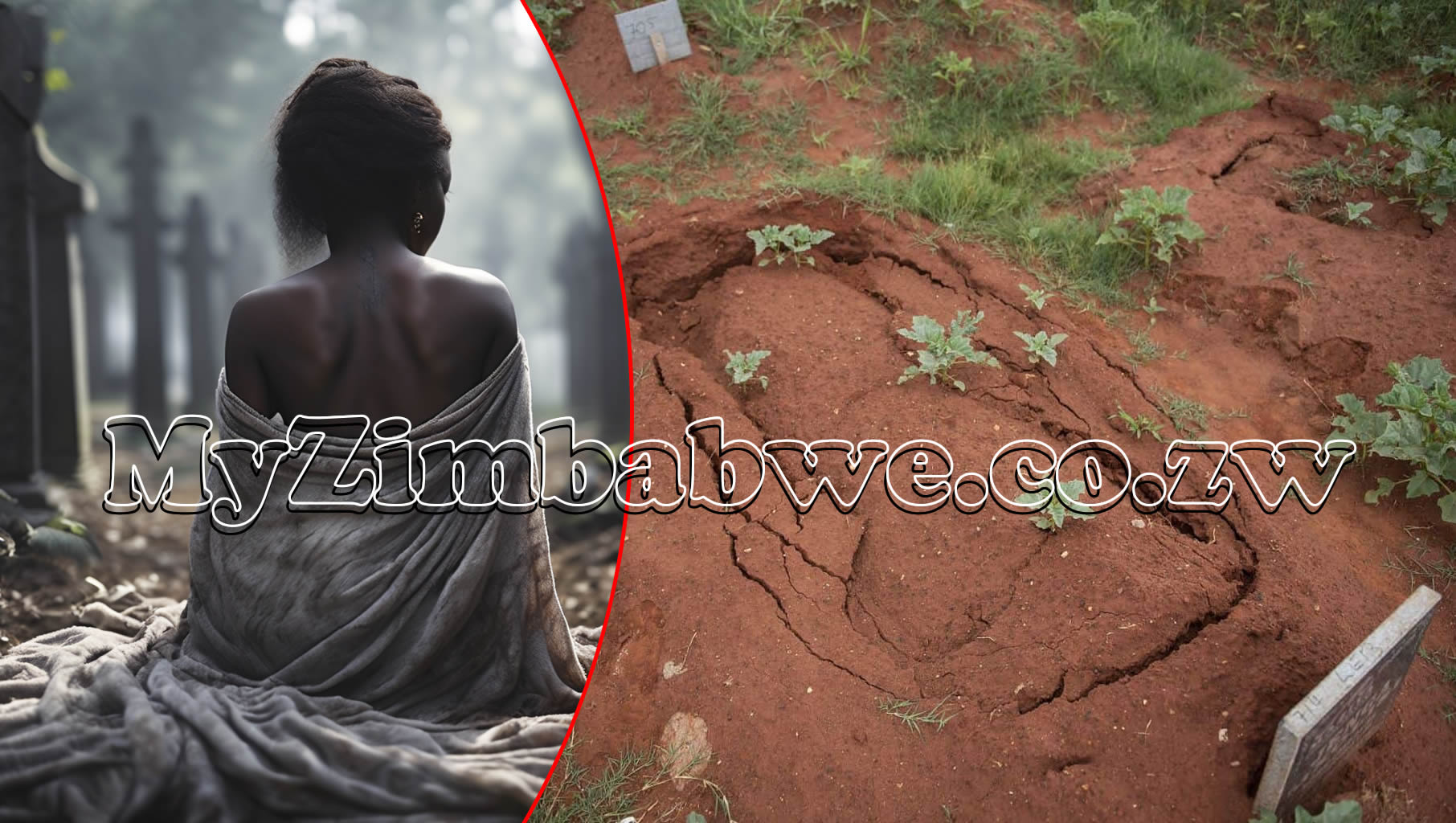
A deeply unsettling incident has cast a shadow over a family in Mutasa, Zimbabwe, drawing the stern gaze of traditional leaders and igniting a crucial debate about cultural adherence, modern funeral practices, and the profound grief that can lead to unforeseen complications. The Tayengwa family finds itself at the centre of a cultural storm after their teenage daughter, Anisha Tayengwa, was buried alongside her unborn child in a single grave—an act deemed a grave violation of long-held traditional norms.
The controversy began to unravel not at the graveside, but a week after the burial, when a phone call from the funeral parlour delivered a revelation that would plunge the family into further distress and communal scrutiny. Relatives were informed that the foetus, which had been removed during Anisha’s post-mortem examination, had been placed in the coffin with her, unbeknownst to them. This shocking disclosure has since propelled the matter before Chief Mutasa’s community court, where the family is now seeking urgent cultural and moral guidance to avert potential misfortune.
A Father’s Unimaginable Grief and a Rushed Farewell
The tragic journey began in Harare, where 17-year-old Anisha, who had just completed her Ordinary Level examinations, passed away. Her father, Golden Tayengwa, brought her body home to Mutasa for burial. The family, already reeling from the sudden loss, was unaware of the full circumstances surrounding Anisha’s death, particularly her pregnancy.
Golden, still grappling with the immense pain of losing his daughter, recounted the harrowing events leading up to the burial. “I did not know that my child was pregnant. She got sick while I was at work and died on her way to the hospital,” he stated, his voice heavy with sorrow. “The following day the post-mortem results revealed that she was pregnant, and that the doctors would remove the foetus.”
The funeral arrangements were fraught with pressure and haste. Golden explained that funeral parlour staff briefly showed the family the foetus after its removal but failed to provide clear instructions or seek consent regarding its disposal. “At the parlour they showed us the foetus, but they did not ask us what they were supposed to do with it. We also did not ask where it had been put,” he recalled, highlighting the family’s overwhelmed state.
The body arrived at their rural home around 2 AM, necessitating a rushed burial the following morning. “We got to our rural home around 2am. She was hurriedly buried later that morning because people had gathered for the funeral for far too long. We did body viewing, but we did not check whether the baby was inside or not,” Golden explained. The family believed the coffin contained only Anisha’s remains, a belief shattered by the subsequent call from the funeral parlour.
Anisha’s aunt, Annie Tayengwa, corroborated the family’s ignorance. “We had a funeral after my niece died in Harare. Her father, Golden, brought the body home for burial. We did not know she was pregnant, nor that a doctor had removed the foetus and placed it in the coffin,” she said. It was Annie who reported the matter to the traditional authorities after the funeral parlour staff contacted them. “They told us there were two corpses in the coffin and asked if we had been informed. That is why we reported the matter, because we were never told,” Annie added.
This revelation has inevitably sparked tension among relatives, with some accusing Golden of withholding crucial information. However, Golden maintains his innocence, insisting he was equally unaware that the unborn child had been placed in the coffin. For the grieving father, the news that his daughter had been buried together with the foetus came as yet another painful shock. “I only heard about it later when other relatives were told by the funeral parlour. I did not know what had happened with the baby,” he lamented. The released examination results, showing Anisha had passed, only compounded his grief, a poignant reminder of a young life cut tragically short.
The Weight of Tradition: Chief Mutasa’s Stern Warning
The incident has drawn strong criticism from Chief Mutasa, who presides over the community court. The traditional leader unequivocally stated that the burial arrangement constitutes a severe violation of African cultural norms surrounding death and burial, particularly within the Shona tradition prevalent in Zimbabwe. He emphasised the urgent need for rectification, warning of dire spiritual consequences if the matter is not properly addressed.
“It is un-African what you did. This might keep happening in your family. You could have cursed yourselves by doing what you did,” Chief Mutasa admonished the family. According to established cultural practices, an unborn child should never be buried in the same grave as the mother. “A child should never be buried in the same grave as the mother. There are traditional procedures that must be followed in such situations to ensure peace for both spirits,” he explained.
The Chief also questioned the conduct of the mortuary staff, suggesting their actions might extend beyond mere customary oversight. “Even the mortician did something wrong if they indeed did that without your knowledge. This is no longer just a customary matter, it may also have criminal implications,” he asserted. The act of placing the foetus between the legs of the deceased without informing the family raised serious ethical concerns for the Chief, who questioned, “Why would the baby be put between the legs? That now becomes concealment.”
Failure to adhere to these traditional protocols, Chief Mutasa warned, could lead to profound spiritual repercussions, including the manifestation of an avenging spirit, known asNgozi.
“If it becomes an avenging spirit, it will be devastating for the family. You need to correct this,” he cautioned, advising the family to seek guidance from elders and spiritual leaders to determine the proper cultural procedures required to rectify the situation.
The Broader Implications: Negligence, Ethics, and the Law
This incident, while deeply personal for the Tayengwa family, resonates with broader concerns about the conduct of funeral parlours and medical institutions in Zimbabwe. The Chief’s suggestion of potential criminal implications highlights a critical intersection between traditional beliefs and modern legal frameworks. The Burial and Cremation Act (Chapter 5:03) in Zimbabwe outlines procedures for the disposal of deceased persons and still-born children, and any deviation, particularly the concealment of a foetus, could lead to serious legal ramifications.
Indeed, Zimbabwe has witnessed other high-profile cases that have cast a spotlight on the ethical lapses within the funeral industry. A notable example is the Doves Funeral Services scandal in 2021, where a family accused the parlour of burying an empty coffin and later interring the body of their loved one, Maxwell Chimwamurombe, in the same coffin as another deceased individual, Nyasha Mashora
. This case, which garnered significant national attention, underscored the devastating impact of negligence and disrespect in handling human remains, further eroding public trust in these essential services.
Furthermore, the issue of proper foetal remains disposal is not isolated. Reports from various hospitals, including some in Bulawayo, have highlighted challenges such as non-functional incinerators, leading to improper handling of stillbirths and foetuses
. Such systemic failures can inadvertently contribute to situations like the Tayengwa family’s predicament, where families are left uninformed or misinformed about the fate of their unborn children.
The ethical dilemma raised by Chief Mutasa—the placement of a foetus without explicit family knowledge or consent—points to a potential breach of professional conduct by the funeral parlour. While the family was under immense emotional duress, the responsibility to clearly communicate and seek consent for such a sensitive matter remains paramount. The lack of transparency in this critical moment has not only caused profound distress but has also led to a cultural transgression with potentially far-reaching spiritual consequences, according to traditional beliefs.
Seeking Resolution in a Clash of Worlds
The Tayengwa family’s plight is a poignant illustration of the complexities that arise when modern medical and funeral practices intersect with deeply ingrained cultural and spiritual beliefs. Their appearance before Chief Mutasa’s court signifies a community’s attempt to reconcile these differing worlds and restore harmony. The resolution of this case will undoubtedly set a precedent, not only for the Tayengwa family but for how similar sensitive situations are handled across Zimbabwe.
As the family seeks guidance from elders and spiritual leaders, the wider community watches, hoping for a resolution that honours both the deceased and the living, ensuring that such a heart-wrenching incident does not recur. The call for urgent correction by Chief Mutasa underscores the belief that spiritual well-being is intrinsically linked to adherence to cultural protocols, particularly in matters as sacred as life and death.