


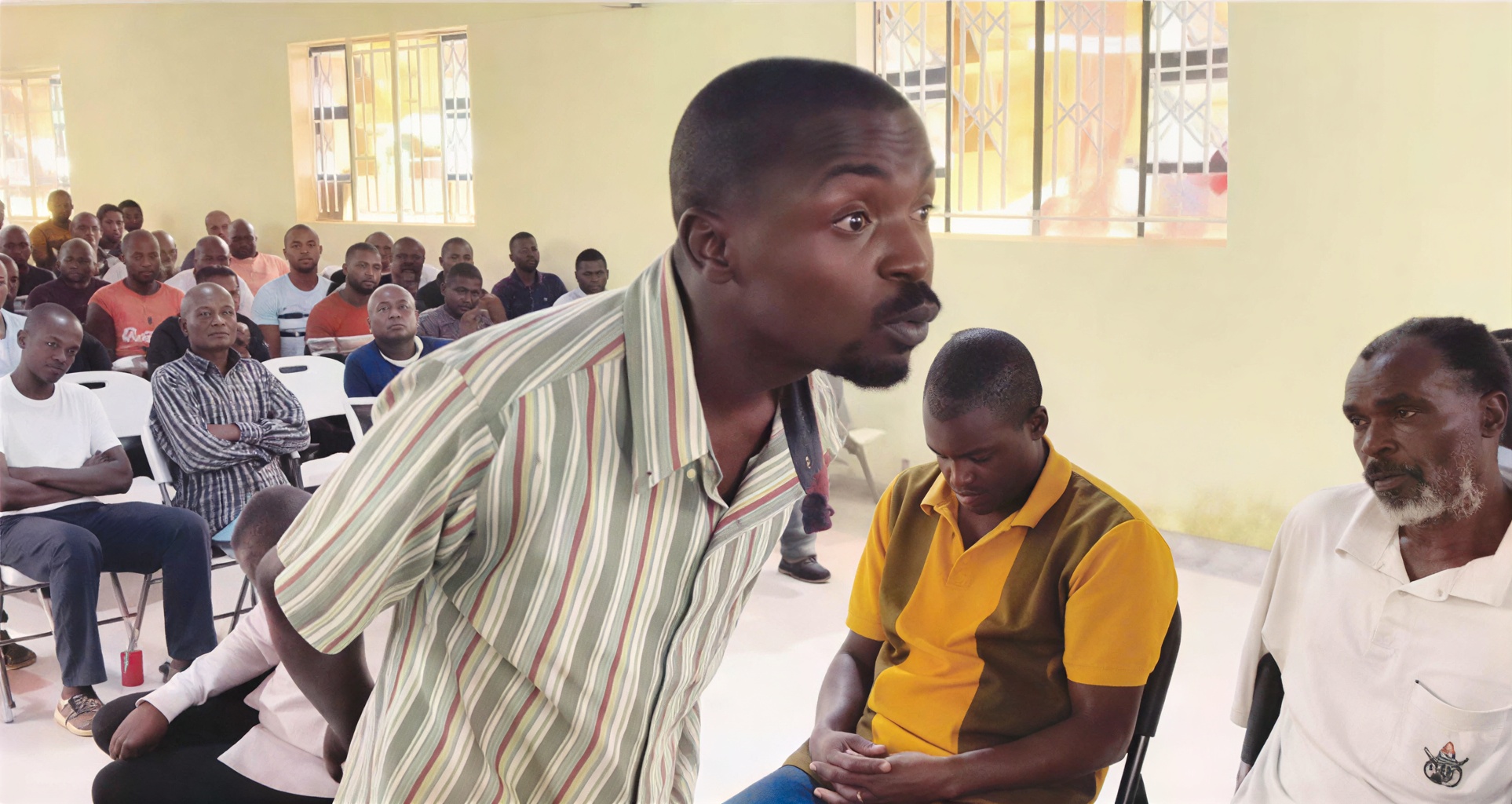
MUTASA — In the heart of Zimbabwe’s Mutasa district, where ancient traditions often intertwine with modern beliefs, a profoundly unsettling incident has unfolded, leaving a family in disarray and sparking a wider debate about spiritual practices. The controversy centres on a self-proclaimed prophet, a man desperately seeking a cure for his ailments, and a grave that has been allegedly violated in the name of healing.
The Gatakata family, still mourning the loss of their patriarch who passed away in 2021, was confronted with a shocking discovery last month. The children of the deceased found their father’s final resting place had been tampered with. It was not merely the passage of time that had altered the grave, but a deliberate, intrusive act: a hole drilled into the tombstone, hinting at a series of events that seem to belong more to folklore than to contemporary life.
The Unholy Ritual of the Frying Pan
At the core of the dispute, now brought before Chief Mutasa’s community court, are allegations that a local prophet, identified as Macheka, instructed individuals to collect soil from the deceased’s grave. This was not a simple act of reverence; the collected soil was reportedly mixed with salt and then fried in a pan. This bizarre ritual was purportedly intended to cure the deceased’s younger brother, Musaita Gatakata, who has been suffering from a persistent and debilitating leg pain.
Naume Gatakata, one of the daughters who initiated the court proceedings, recounted the distressing discovery: “They consulted a prophet who instructed them to take soil from our father’s grave. The soil was fried and mixed with salt before being returned to the grave.” She further elaborated on the moment of realisation: “Last month, we went to the grave and found that there was a hole that had been drilled into our father’s tombstone. That is when we realised that something very wrong was happening.”
The image of sacred earth being subjected to such a process has caused considerable distress within the local community. It casts a stark light on a concerning trend in Zimbabwe’s spiritual landscape, where the deceased are sometimes drawn into rituals aimed at resolving the problems of the living, often with questionable methods.
A Lingering Shadow of Suspicion
For Naume and her siblings, the alleged desecration is merely the latest painful chapter in a story of unresolved grief and suspicion. Their father’s death in 2021 was sudden and lacked clear answers for the family. “He fell ill after drinking mahewu at his workplace. He complained of severe stomach pains, was hospitalised, and later died,” Naume recounted, her voice still tinged with the sorrow of that time.
Despite a post-mortem examination attributing the death to food poisoning, the family harboured doubts. In many rural Zimbabwean communities, such medical explanations can often be viewed with scepticism, sometimes interpreted as a cover for witchcraft or spiritual attacks. “As a family, we never fully understood what really happened,” Naume stated, reflecting the lingering uncertainty that has plagued them for years.
Their unease only intensified in the years following the burial. The family began to observe strange objects appearing at the gravesite – items that carry significant symbolic meaning in local spiritual beliefs. “We started seeing strange things at my father’s grave. A day after we buried him, we noticed a needle that had been placed on the grave. Later on, we saw bottles placed near the grave. We also found small clay pots placed at the grave,” Naume detailed. These objects, which were not placed by any immediate family members, were perceived as unsettling signs of interference, deepening the family’s anxieties.
The Uncle’s Plea of Desperation
Musaita Gatakata, the uncle whose illness prompted the controversial ritual, offers a narrative rooted in desperation rather than malicious intent. Bedridden and enduring considerable pain, Musaita admitted to seeking spiritual assistance but vehemently denied any direct involvement in the physical act of grave desecration.
“The prophet told us that there was need for soil from the grave to be taken so that I could be healed,” Musaita explained to the court. “People went to get the soil for the prophet, but I did not go to the grave because I was bedridden. I was in pain and wanted help. I never intended to disrespect my brother’s grave.”
Musaita’s defence hinges on a belief common in some traditional circles: that his persistent leg pain was a manifestation of his late brother’s restless spirit. He expressed profound frustration at the accusations that have now created a deep rift within his family. “The truth is that the prophet they are talking about, Macheka, is actually my best friend. Now they are saying that Macheka and I killed my brother, which is not true,” he insisted, highlighting the emotional toll the accusations have taken.
A Troubling Trend of Grave Desecration
The Gatakata case is not an isolated incident but rather indicative of a broader, troubling pattern across Zimbabwe. Traditional leaders and law enforcement agencies have increasingly been confronted with cases of grave-related crimes. Just last year, Chief Mutasa himself raised concerns about the rising number of desecrations at sacred sites and cemeteries. Incidents have ranged from timber harvesters damaging graves in the region to more extreme cases of individuals exhuming human remains for use in rituals, often driven by beliefs in wealth acquisition or miraculous healing.
The use of salt in conjunction with grave soil, particularly its frying, is a detail that has drawn particular attention. While salt is widely used in various cultures for purification or protection against evil, its application in this context, combined with heat, suggests a more aggressive attempt to influence or “tame” a spirit. Traditional spiritual experts often interpret such acts as an effort to neutralise a perceived vengeful ghost or to harness the power of the deceased for a specific outcome.
Other recent cases underscore the severity of the issue. In Manicaland province, a family discovered their relative’s grave completely dug up just days after burial. Such occurrences have compelled many families to adopt drastic measures, such as encasing graves in thick concrete or even employing guards to watch over cemeteries during the sensitive initial weeks following a funeral, all in an effort to protect the sanctity of their loved ones’ resting places.
The Chief’s Unwavering Stance
Presiding over the community court, Chief Mutasa delivered a stern rebuke to the Gatakata family members involved. For the traditional leader, the sanctity of burial grounds is a fundamental aspect of societal order and respect for ancestors.
“I will fine you for desecrating a grave. That is very, very bad,” the Chief declared, addressing Musaita and those who assisted him. “Why did you fry soil taken from a grave and mix it with salt? You cannot just go to a grave and desecrate it.”
In a decisive move, Chief Mutasa has summoned Prophet Macheka to appear before the court. The Chief demands a full explanation for the prophet’s instructions, seeking to understand the spiritual and ethical justifications behind such a directive. “I want the prophet who instructed this to appear before this court. We must hear exactly what instructions were given and why,” he ordered. Furthermore, the court intends to hear testimony from other family members allegedly involved in the physical act of drilling into the tombstone and collecting the soil, ensuring a comprehensive investigation into the matter.
The Human Toll of Spiritual Desperation
The Gatakata case serves as a poignant illustration of a complex societal challenge: the interplay between inadequate access to conventional healthcare, deeply ingrained spiritual beliefs, and the pervasive influence of unregulated prophets. In communities where medical services are scarce or mistrusted, and where explanations for ailments or misfortunes are often sought in the spiritual realm, individuals like Musaita, suffering from chronic pain, frequently turn to alternative healers.
However, as Chief Mutasa emphatically stressed, the pursuit of healing or spiritual intervention cannot justify the violation of sacred spaces. “Cemeteries are sacred places that must be treated with respect, regardless of family disputes or spiritual concerns,” he asserted, drawing a clear line between spiritual seeking and sacrilege.
As the community awaits Prophet Macheka’s testimony, the Gatakata family remains deeply fractured. The physical hole in the tombstone serves as a stark metaphor for the emotional chasm that has opened between the siblings and their uncle. In their desperate quest to alleviate a living man’s pain, they have inadvertently inflicted a wound upon the memory of a deceased father, leaving a lasting scar on the family’s history that no ritual, however elaborate, is likely to heal.
The proceedings at the community court continue to attract significant attention, as the people of Mutasa look for a clear affirmation that the resting places of their ancestors will remain undisturbed – sanctuaries free from the intrusions of those who would disturb the dead in service of the living.
Facts and Context: Grave Desecration in Zimbabwe
|
Incident Type
|
Common Motivations
|
Legal/Traditional Consequences
|
|
Ritual Soil Collection
|
Healing, influencing spirits, seeking luck
|
Heavy fines from Chiefs, potential jail time
|
|
Exhumation of Bones
|
Witchcraft, wealth-seeking rituals, spiritual power
|
Criminal prosecution under the Burial and Cremation Act
|
|
Tombstone Damage
|
Family disputes, ritual access, vandalism
|
Restitution costs, communal shaming, fines
|
|
Sacred Site Encroachment
|
Farming, timber harvesting, development
|
Fines, spiritual “cleansing” ceremonies, community service
|