


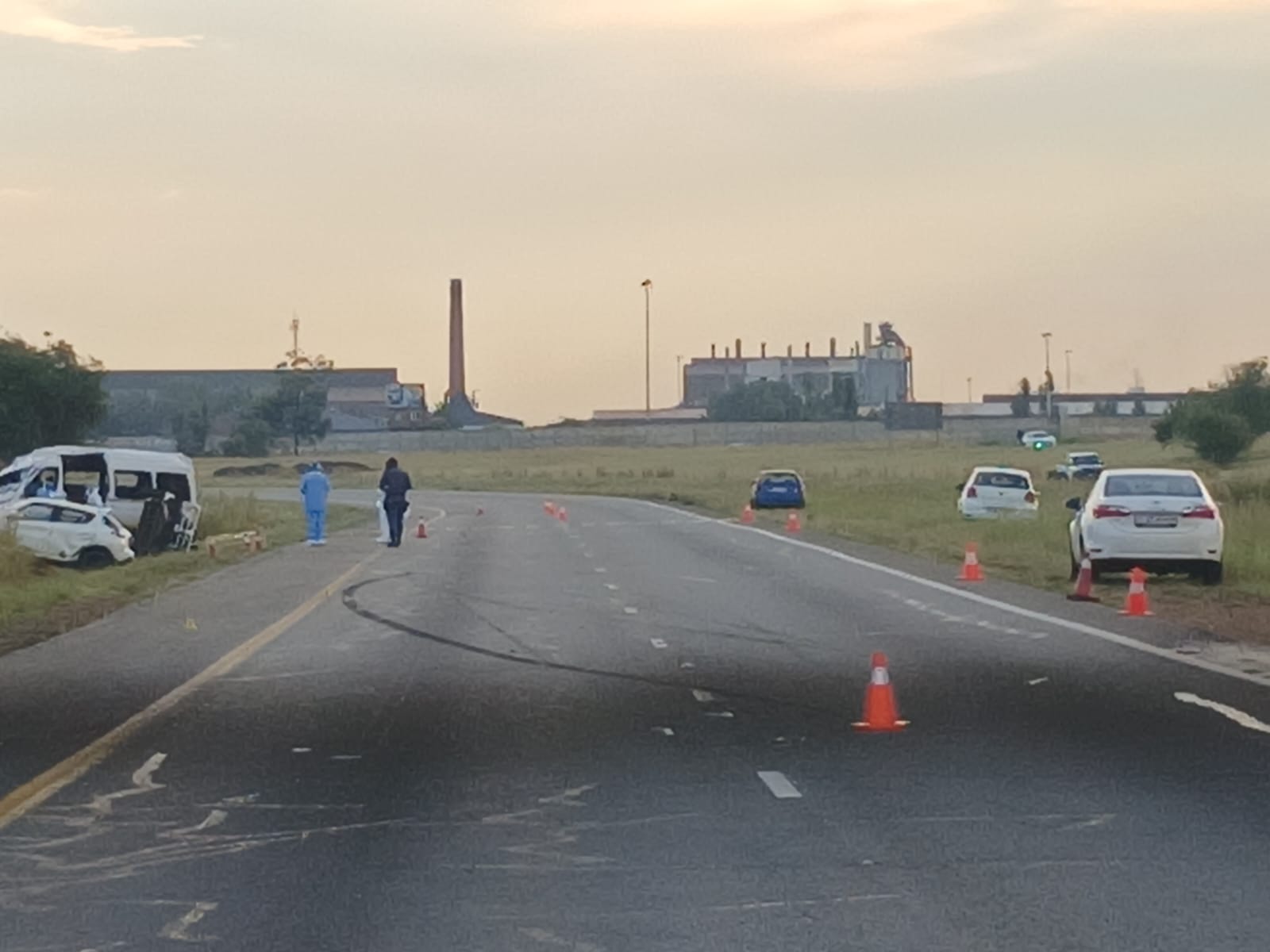
On the afternoon of 3 February 2026, the R59 highway near Meyerton, south of JOHANNESBURG, was transformed from a busy arterial route into a scene of absolute carnage. A white Toyota Quantum taxi, carrying 24 passengers on a long journey toward the border of Lesotho, was cruising along the asphalt when the unthinkable happened. Without warning, a dark vehicle accelerated alongside the taxi, ramming into its side with enough force to send the vehicle spinning toward the shoulder of the road. As the taxi came to a shuddering halt, a group of men armed with AK-47 assault rifles jumped out of the pursuing vehicle and unleashed a hail of lead into the trapped passengers. In a matter of seconds, the air was filled with the smell of gunpowder and the screams of the dying. Six people were killed instantly, their bodies slumped in their seats, while 18 others were left wounded, some fighting for their lives amidst the shattered glass and blood-soaked upholstery.
When the Gauteng Police Deputy Provincial Commissioner, Major-General Fred Kekana, arrived at the scene, he described the incident as a movie-style ambush. The tactical precision of the attack suggested that this was not a random act of road rage or a spontaneous dispute. It was a clinical execution, carried out by individuals who knew exactly which taxi to target and where to strike. The victims were all Basotho nationals, men and women who were simply trying to make their way home across the border. While initial reports from the scene pointed toward generic taxi-related disputes, the sheer scale of the firepower used has forced investigators to look deeper into the shadowy world of international transit routes and the private security firms that operate within them.
The investigation into the R59 ambush has already led to the arrest of three suspects, but the recovery of 10 high-calibre firearms at the scene has raised serious questions about the nature of the attackers. These were not common criminals using rusted handguns; they were a professional hit squad equipped with military-grade weaponry. The presence of so many AK-47s points toward a level of organization that is usually reserved for the most elite criminal syndicates. In recent months, there have been whispers in JOHANNESBURG about a cross-border turf war over the lucrative scholar and migrant transport routes that link the industrial hubs of Gauteng to the rural heartlands of Lesotho. These routes are worth millions of rands every month, and the competition for control over them has become increasingly deadly.
What makes this story even more disturbing is the alleged involvement of private security companies that have become a law unto themselves. In South Africa, there are now more than double the number of private security officers than there are police officers and national military members combined. Some of these firms are reportedly hiring former special forces members from the South African National Defence Force. A prominent businessman, Vusi “Cat” Matlala, recently made headlines when he claimed to pay former special forces members as much as R100,000 per month for private security work. These highly trained individuals are being recruited into the service of taxi associations to act as “patrollers,” but in reality, they often function as private armies for the “Taxi Mafia.”
The “Taxi Mafia” is a term used to describe the powerful associations that control the transport industry through a system of “protection fees.” Every taxi owner is forced to pay a weekly fee toward the hiring of these patrollers. The official reason for these fees is to protect the drivers and passengers from crime, but the reality is far more sinister. The money is used to fund hit squads that are tasked with eliminating rivals and enforcing the association’s dominance over specific routes. The R59 has become a “no-man’s land” where the state has effectively lost control, leaving the safety of commuters in the hands of these shadowy organizations.
The tactical precision of the Meyerton hit suggests that the gunmen had specific intelligence about this particular taxi. They knew its departure time from JOHANNESBURG, its route, and the number of passengers on board. This level of coordination requires a network of informants and a command structure that mirrors a military operation. The fact that the victims were Basotho nationals adds another layer of complexity to the case. There are long-standing tensions between South African taxi associations and their counterparts in Lesotho over cross-border permits and the right to pick up passengers in certain areas. The R59 ambush may have been a brutal message sent to the Basotho associations, a warning that the Gauteng routes are off-limits.
As the 18 survivors recover in various hospitals across Gauteng, the trauma of the ambush remains etched in their minds. One survivor described how the gunmen didn’t say a word as they opened fire. They simply walked around the vehicle, spraying bullets into the windows before speeding off. The efficiency of the attack left no room for escape. The police have confirmed that the deceased were all from Lesotho, and the process of repatriating their remains has begun, adding a somber diplomatic dimension to the investigation.
The R59 ambush is a symptom of a much larger problem in South Africa, where the lines between private security, organized crime, and the transport industry have become dangerously blurred. The “Taxi Mafia” operates with a level of impunity that suggests they have protection from within the government and the police service. When Major-General Fred Kekana and his team arrested the three suspects, they were praised for their swift action, but many wonder if the masterminds behind the hit will ever be brought to justice. The foot soldiers are easily replaced, but the individuals who fund the hit squads and profit from the “protection fees” remain safely in the shadows.
The rise of these private armies, staffed by former special forces members, represents a significant threat to the national security of South Africa. These are men who have been trained at the taxpayers’ expense to defend the country, but they are now using their skills to facilitate the interests of criminal syndicates. The lure of high salaries in the private sector is drawing the best and brightest out of the military and into a world where their only loyalty is to the highest bidder. This brain drain is leaving the national police and military weakened, while the “Taxi Mafia” grows stronger every day.
In the final analysis, the R59 ambush is a wake-up call for a nation that has become desensitized to reports of taxi-related incidents. This was not a minor skirmish; it was a massacre carried out on a public highway in broad daylight. The tactical precision, the use of AK-47s, and the targeting of foreign nationals all point toward a new and dangerous phase in the conflict for control over South Africa’s transport routes. If the government does not take decisive action to dismantle the “Taxi Mafia” and regulate the private security industry, the R59 will continue to be a blood-soaked war zone where the innocent pay the ultimate price for the greed of the few.
Do you believe that the South African government has the political will to finally take on the “Taxi Mafia” and the shadowy security firms that support them, or have these organizations become so powerful that they are now effectively untouchable by the law?