


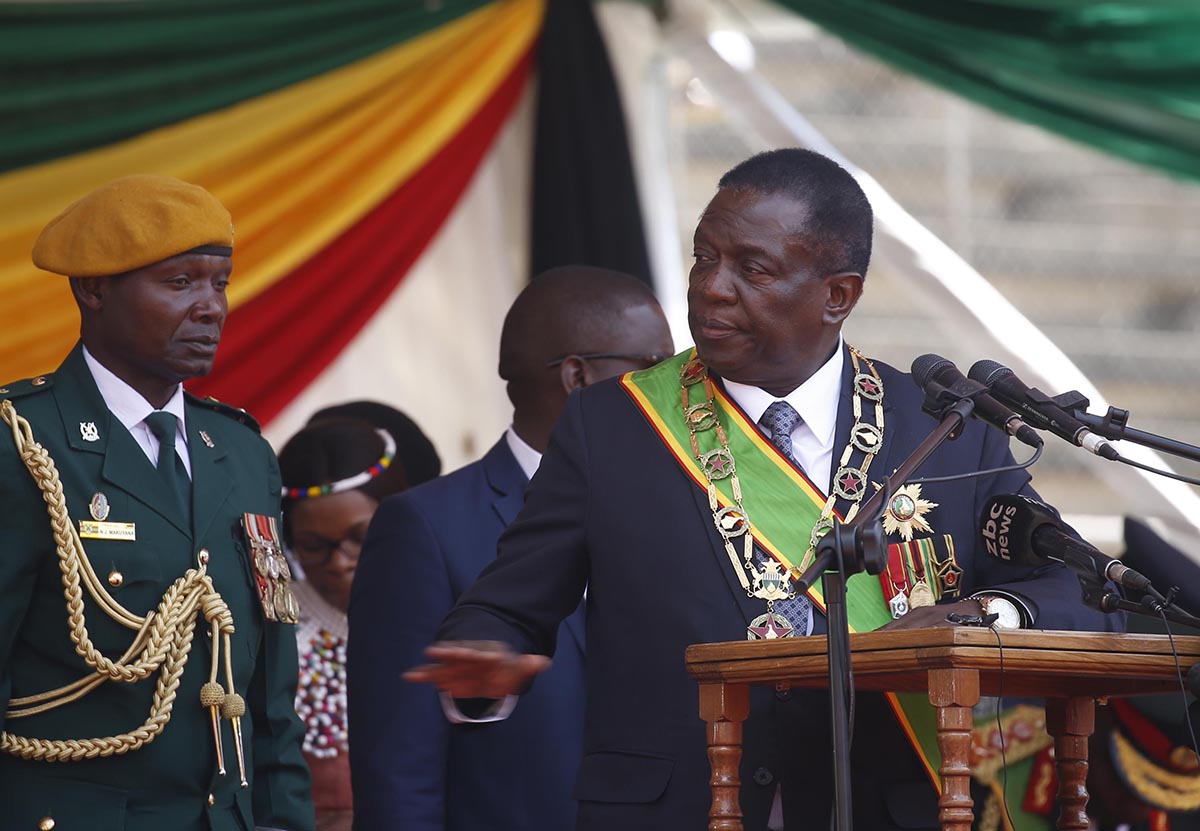
The humid air in Gweru was thick with more than just the mid-summer heat this past Friday. Inside a strategic seminar for the ZANU PF Central Committee, the atmosphere was reportedly electric, but for all the wrong reasons. President Emmerson Mnangagwa, usually known for his “soft as wool” persona, finally “blew a gasket” in a public display of temper that has left the ruling party’s corridors of power buzzing with uneasy speculation. While the official state media has predictably framed the outburst as a righteous crusade against “waste and bureaucracy,” our investigation suggests a much more volatile reality: a President increasingly cornered by internal resistance to his controversial “2030 crusade.”
The Gweru Outburst: More Than Just Bureaucracy
The Gweru seminar was not just another routine gathering of the party faithful. It was a high-stakes “strategic seminar” aimed at the very heart of the party’s power structure—the Central Committee. For those unfamiliar with the ZANU PF hierarchy, the Central Committee is the principal policy and regulation-making organ between Congresses. It is the engine room where the party’s survival strategies are forged and where the constitutional path for the “2030 crusade” must be cleared.
When President Mnangagwa took to the podium on February 6, 2026, the expectation was a victory lap following the recent infrastructure successes, such as the rehabilitation of the Solomon Mujuru Road and the progress on the Willowvale Road traffic circle. Instead, the audience was met with a barrage of criticism. The President’s frustration seemed to boil over as he addressed the “mediocrity” that he claims is threatening both governance outcomes and public confidence.
“ZANU PF remains a party of results. We have zero tolerance to corruption, complacency, mediocrity and outright negligence,” Mnangagwa declared, his voice reportedly rising with a frustration that those present described as palpable. “Going forward, tendencies to gloss over or even to conceal inefficiencies, both within the party and Government, are not acceptable. Nothing must undermine the attainment of Vision 2030.”
The timing of this outburst is critical. It comes just days after the government announced the partial closure of major roads in Harare for “urgent rehabilitation,” a move that many see as a desperate attempt to show “results” while the underlying political and economic structures remain fragile. By framing his anger as a fight against “shoddy work” and “bureaucracy,” the President is setting a standard that few can meet, providing a convenient pretext for removing those who are not sufficiently enthusiastic about his continued leadership. On that Friday in Gweru, the President stood before the party’s principal policy-making organ and tore into what he termed “errant members” of his own ranks. The language was unusually sharp, even for a man who has spent the last few years consolidating his grip on the nation.
The 2030 Crusade: A House Divided
The “2030 crusade”—the movement aimed at extending Mnangagwa’s presidency to a third term—has become the ultimate litmus test for loyalty within ZANU PF. Despite the President’s public claims that he will retire at the end of his constitutional second term, the machinery of the party has been working overtime to ensure he doesn’t. At the party’s annual conference in late 2025, resolutions were passed to actively pursue the “legal and constitutional basis” for an extension.
However, our investigation reveals that this push is meeting significant, albeit quiet, resistance from within. The “gasket-blowing” incident occurred specifically when Mnangagwa confronted senior officials who have been perceived as “lukewarm” toward the 2030 agenda. By framing his anger as a fight against “shoddy work,” the President is effectively initiating a purge. If you aren’t delivering on the 2030 narrative, you are “inefficient.” If you aren’t vocal in your support, you are “complacent.”
As Mnangagwa himself put it during the seminar: “As leaders, we must, therefore, be at the forefront of exposing corruption, wastefulness and bureaucratic shortcomings.”
In the current climate, “bureaucratic shortcomings” is often synonymous with “failing to facilitate the third-term bid.” The President is demanding a monolithic media narrative where the only “shared national vision” is the one that includes him at the helm until 2030.
The Factions Under Fire
The Gweru seminar, convened by Secretary-General Advocate Jacob Mudenda, was designed to “re-calibrate” the leadership. Mudenda’s own remarks underscored the pressure being applied to the Central Committee. He reminded the leaders that they are the “guardians of ideological consistency” and that their role is to ensure that programmes collectively approved are translated into “concrete outcomes.”
“The Central Committee, as a collective, must demonstrate resolute and decisive leadership; leadership that is firmly committed to the diligent and disciplined implementation of agreed programmes… This calls for bold, determined and courageous leadership, characterised by constant supervision and oversight,” Mudenda stated, effectively echoing the President’s hardline stance.
Our sources indicate that several high-ranking officials, particularly those aligned with the “Successionist” faction—those who believe the 2028 deadline should be respected—found themselves in the direct line of fire. This faction is increasingly concerned that the “2030 crusade” will not only lead to international isolation but could also trigger internal instability. The President’s warning that “leadership positions should be earned through service rather than entitlement” was seen as a direct shot at those who feel they are next in line for the throne, most notably those who have been quietly building their own power bases in the provinces.
“Leadership is not conferred by position alone,” Mnangagwa warned, reinforcing the idea that his current favor is the only currency that matters in the party today. This is a significant shift from the “collective leadership” narrative that ZANU PF has traditionally tried to project. Now, it is clear: the collective must follow the individual, or face the consequences of being labeled “inefficient.”
The presence of First Lady Dr Auxillia Mnangagwa, Vice President Cde Kembo Mohadi, and national chairperson Cde Oppah Muchinguri-Kashiri at the seminar added to the weight of the occasion. Their presence served as a visual reminder of the “united front” that the President is demanding. However, the absence of any meaningful debate during the seminar suggests that this “unity” is being maintained through fear rather than consensus.
The Media as a Weapon
Perhaps most telling was the President’s directive regarding the media. He explicitly challenged the Central Committee to use new media not as a tool for “egos” or “opportunistic and self-seeking behaviour,” but to “occupy the space” and publicise the party’s successes.
“Let us quickly embrace and fully utilise new media to occupy the space and publicise the work and successes of our party, challenge us to use the media to promote unity of purpose around our shared national vision and not as a tool for egos, as well as opportunistic and self-seeking behaviour,” he stated.
This is a clear move to shut down internal dissent that has occasionally leaked into the public sphere. The President is demanding that the identity, ideology, ethos, and character of the party should never change, but that the strategies for growing membership must be “fluid, innovative and forward-looking.” In reality, this means using technology to drown out any voices that question the 2030 agenda.
The Looming 2028 Crisis
As Zimbabwe drifts toward the 2028 elections, the “2030 crusade” is creating a perfect storm. The Patriotic Act, signed into law in 2023, already limits freedom of expression, and now the internal tightening of the screws within ZANU PF suggests that the space for any political alternative—even from within the ruling party—is vanishing.
The conspiracy being whispered in the corridors of the Munhumutapa Building is that the “waste” Mnangagwa is targeting isn’t just financial. It is the political “waste” of a succession plan that doesn’t involve him. By “blowing a gasket” now, he is signaling that the time for quiet resistance is over. The 2028 election is no longer just a national event; it has become a internal ZANU PF battleground where the President is willing to burn the house down to ensure he remains the master of it.
The President also emphasized the need to revive the standing committees of the Central Committee, which he believes will help to “swiftly deal with some shortcomings in the party.” This “revitalisation” is seen by many as a way to create a more efficient mechanism for disciplining members who show even the slightest hint of disloyalty.
The Final Warning
The Gweru seminar ended with a call for the “revitalisation of the standing committees,” a move that will allow for more “swift” and “decisive” action against those who fail to toe the line. For the ZANU PF bigwigs who left the seminar on Friday, the message was unmistakable: The President’s temper is a tool of statecraft, and his “gasket-blowing” was the final warning.
In a country where the identity, ideology, and character of the ruling party are held as sacred, Mnangagwa has made it clear that those who do not align with his 2030 vision are no longer standard-bearers, but obstacles. As Zimbabwe moves deeper into 2026, the question is no longer whether Mnangagwa wants to stay, but who will be left standing in ZANU PF to tell him he can’t. The President expects that this “result-driven seminar” will see the party emerge with a “re-calibrated leadership” that is “disciplined and knowledgeable of our constitution.” But whose version of the constitution will they be following? The one that limits him to two terms, or the one they are currently trying to rewrite?