


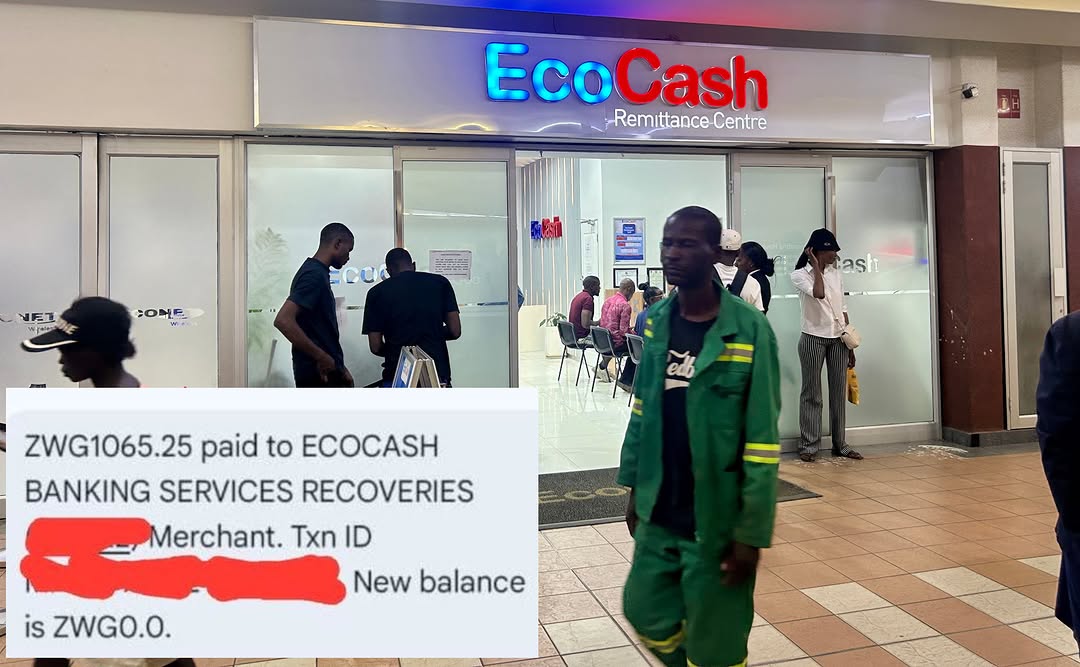
CHITUNGWIZA – In the bustling digital landscape of Zimbabwe, where mobile wallets like EcoCash have become the very lifeblood of the economy, a new and insidious predator has emerged. It is a network not of code-crunching geniuses in dark rooms, but of young, unemployed men armed with nothing more than a smartphone and a deep understanding of human psychology. This is the story of the EcoCash “Hacker” Network—a syndicate of 11 individuals whose recent arrest has exposed a staggering US$61,000 fraud operation that turned the average citizen’s phone into a crime scene.
The arrest, executed by detectives from CID Homicide Harare on February 4 and 5, 2026, has provided a rare and chilling window into the mechanics of modern cyber-crime in the region. While the term “hacking” often conjures images of complex digital breaches, this investigation reveals a much simpler, yet far more effective, reality: social engineering.
The Chitungwiza Syndicate: A Modern Crime Hub
The heart of this operation was found in the high-density suburb of Chitungwiza. All 11 suspects, ranging in age from 21 to 26, hailed from Units D, B, and E—neighbourhoods that have now become synonymous with this high-tech heist. The list of the accused, as released by the Zimbabwe Republic Police (ZRP), reads like a directory of a generation left behind by the formal economy, yet adept at exploiting its digital gaps.
|
Accused Number
|
Name
|
Age
|
Residence
|
Occupation
|
|
1
|
Mpho Ruzwidzo
|
22
|
Unit D, Chitungwiza
|
Not employed
|
|
2
|
Ishmael Muzanenhamo
|
Unknown
|
Zengeza Extension
|
Not employed
|
|
3
|
Moses Shingirai Chawatama
|
24
|
Unit D, Chitungwiza
|
Not employed
|
|
4
|
Usher Forester Mubaiwa
|
26
|
Unit D, Chitungwiza
|
Not employed
|
|
5
|
Panashe Wesley Gonzo
|
22
|
Unit D, Chitungwiza
|
Not employed
|
|
6
|
Tinashe Gonzo
|
24
|
Unit D, Chitungwiza
|
Not employed
|
|
7
|
Eddington Leeroy Mazonde
|
21
|
Unit D, Chitungwiza
|
Not employed
|
|
8
|
Calvin Takudzwa Masiyandaita
|
23
|
Unit E, Chitungwiza
|
Not employed
|
|
9
|
Shawn Goodmore Chikangaidze
|
22
|
Unit D, Chitungwiza
|
Not employed
|
|
10
|
Billy Zawe
|
21
|
Zengeza 2, Chitungwiza
|
Not employed
|
|
11
|
Dilan Macheka
|
22
|
Unit B, Chitungwiza
|
Not employed
|
These young men, most of whom are listed as “not employed,” managed to amass a fortune that allowed them to live a lifestyle far beyond their visible means. When detectives descended upon their residences, they found more than just suspects; they found the spoils of a digital war.
The Anatomy of the Scam: Simplicity as a Weapon
The brilliance of this syndicate lay in its simplicity. They didn’t need to bypass EcoCash’s multi-million dollar security infrastructure; they simply asked the victims for the keys. The process began with a simple, enticing link sent via SMS or WhatsApp, pretending to be from Econet Zimbabwe. The message promised “free data”—a powerful lure in a country where data costs are a significant burden.
Once a victim clicked the link, they were directed to a fraudulent portal. Following the instructions on the screen, the victim would eventually receive a One-Time Password (OTP) on their phone. It was at this critical juncture that the “hackers” would strike. A phone call would follow, with a persuasive voice on the other end claiming to be an Econet representative needing the OTP to “verify” the free data allocation.
“Once the victim followed the link’s instructions they would call the victims requesting for an OTP sent to the victims cellphone. This would give the accused person access to the victims Ecocash hence they would transfer funds from the victims to various ecocash accounts.” – ZRP Arrest Sheet, February 5, 2026.
That OTP was the “key to the cabinet.” With it, the scammers could log into the victim’s EcoCash account from their own devices, effectively “SIM-swapping” the digital identity without needing the physical card. From there, the money was moved rapidly through a complex web of “agent” lines and personal accounts, often while the victim slept, unaware that their life savings were being drained.
Cars, Crypto, and “InDrive”: The Scammer’s Economy
The scale of the recovery by CID Homicide provides a staggering look at the profitability of this scheme. Detectives recovered property worth an estimated US$22,000, though the total amount defrauded is believed to be closer to US$61,000. The items seized tell a story of rapid wealth and calculated “cleaning” of stolen funds.
The syndicate allegedly purchased two vehicles: a Toyota Spade (registration AGW 5666) and a Nissan Note (registration AGG 5665). The Toyota Spade was specifically intended for use as an “InDrive” vehicle—a classic move to legitimise stolen money through a cash-based transport business. This allowed the scammers to “clean” their loot, turning digital theft into a seemingly legal daily income.
Perhaps most modern was the admission by the first accused, Mpho Ruzwidzo, that he had invested a portion of the stolen funds into Cryptocurrency. Crypto has become the go-to for local cybercriminals, allowing them to move money across borders with ease and anonymity, echoing the tactics seen in the infamous eCreator scam years prior.
The physical haul was equally impressive. Police seized over 100 SIM cards and an array of high-end smartphones, including the iPhone 17 Pro Max, iPhone 16 Pro Max, and Samsung S25 models. These devices were not just the tools of their trade; they were the status symbols of their success. Furthermore, the suspects had kitted out their homes with brand-new beds, sofas, televisions, fridges, and stoves—all allegedly bought with “stolen money.”
The Responsibility of the Giants: Why Are We Still Vulnerable?
While the ZRP’s “follow the money trail” tactics led to a successful bust, the incident raises uncomfortable questions for service providers like Econet and EcoCash. Why is it so easy for a group of 20-somethings to bypass security through a simple OTP? Why are these phishing links still reaching thousands of users?
EcoCash has pointed to its internal fraud monitoring systems, noting that some wallets were blocked before the money could be cashed out. However, for the thousands who lost their $10 or $20—amounts that may seem small to a corporation but are monumental to a struggling family—the protection came too late. The responsibility to educate and protect the user must be as robust as the platform’s drive for profit.
A Survival Guide for the Digital Age: Are YOU Next?
This investigative piece is more than just a report on a crime; it is a survival guide for every Zimbabwean with a phone in their pocket. The EcoCash “Hacker” Network thrived on the “mathematical certainty” that among thousands of users, a few would always click. To ensure you are not the next victim, follow these essential rules:
- Never Share Your OTP: No legitimate representative from Econet, EcoCash, or any bank will ever ask you for your One-Time Password or PIN over the phone.
-
Ignore “Free Data” Links: If an offer sounds too good to be true, it is. Official promotions will be advertised on verified social media pages and official websites.
-
Verify the Caller: If someone calls claiming to be from a service provider, hang up and call the official customer service line yourself to verify the claim.
-
Monitor Your Account: Regularly check your transaction history. If you see any suspicious activity, report it to EcoCash and the police immediately.
The arrest of these 11 individuals is a victory, but it is not the end of the war. As long as there are vulnerabilities in our digital systems and gaps in our collective awareness, the “shadow network” will continue to evolve. The Chitungwiza syndicate may be behind bars, but the blueprints they used are still out there. In the digital age, your greatest defence is not a complex password, but a healthy dose of suspicion.
The investigation continues, and as these young men face the courts, we hope to gain even deeper insights into their methods. For now, let this be a warning: the scammers are awake while you sleep. Stay vigilant, stay informed, and stay safe.