


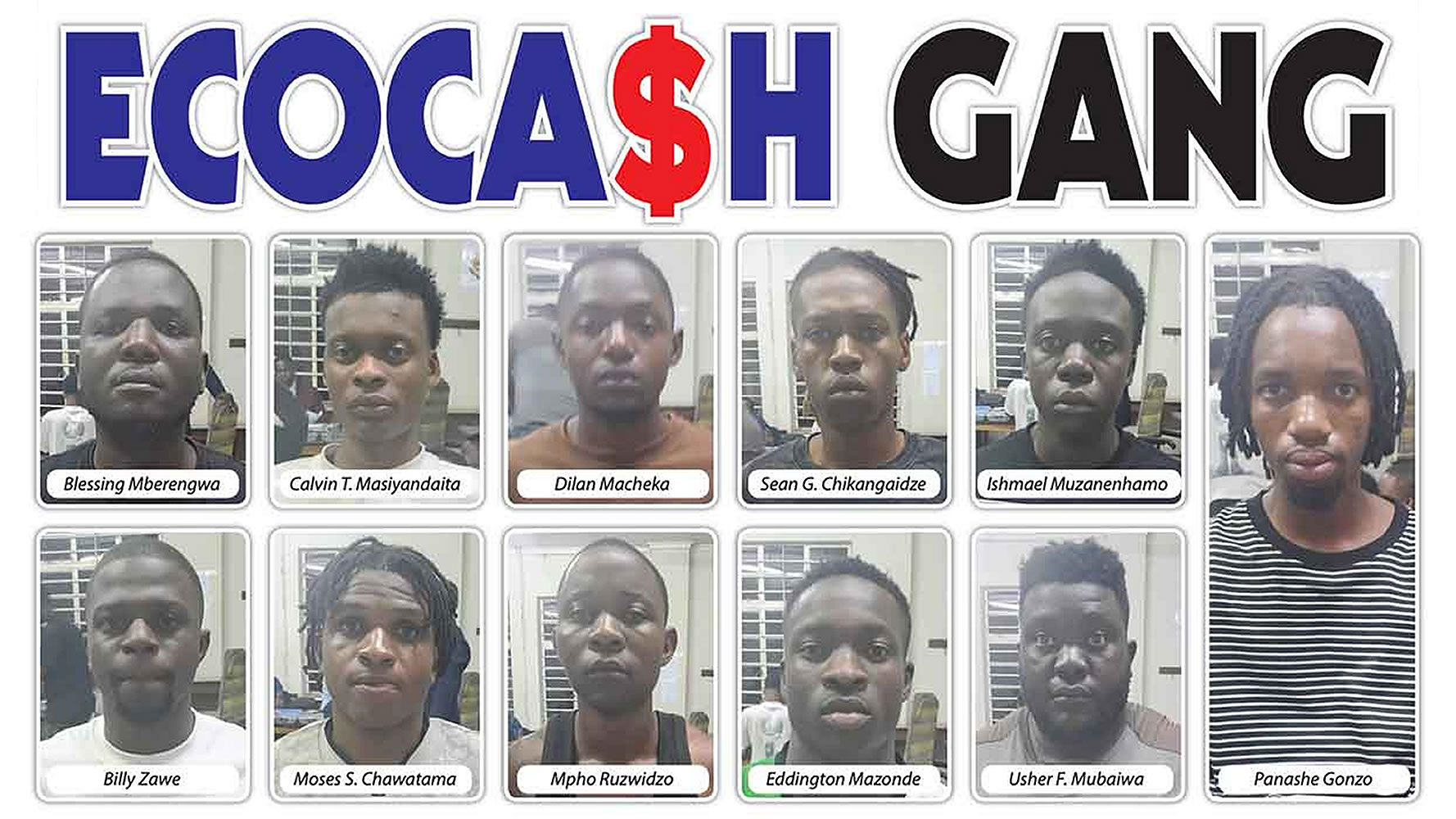
CHITUNGWIZA — For months, a shadow hung over the digital wallets of thousands of Zimbabweans. While ordinary citizens struggled to balance their monthly budgets, a sophisticated syndicate of eleven young men was allegedly siphoning a staggering US$61,000 from unsuspecting victims. The heart of this operation beat within the humble confines of Unit D, Chitungwiza, but its reach was national, leaving a trail of emptied accounts and broken trust. Today, the masks have been stripped away, revealing the faces of those who police claim turned cybercrime into a high-stakes lifestyle.
The Zimbabwe Republic Police (ZRP) have finally dismantled this operation, which they describe as a “sophisticated EcoCash syndicate.” The scale of the theft — US$61,000 — marks this as one of the most significant mobile money frauds in recent memory. But even more shocking than the amount stolen is how the proceeds were spent. While their victims were left wondering how they would pay for basic necessities, the suspects were busy furnishing their lives with high-end technology, luxury vehicles, and even venturing into the world of cryptocurrency.
The Faces of the Syndicate
The group, primarily composed of “digital natives” with an average age of just 23, operated with a level of coordination that suggests a highly organised structure. Seven of the eleven suspects resided in Unit D, a neighbourhood adjacent to the Chitungwiza Town Centre, creating a localized hub for their national crime spree.
The suspects, all currently listed as unemployed, are:
- Mpho Ruzwidzo (22) of 3377 Unit D, Chitungwiza.
-
Usher Forester Mubaiwa (26) of 3248 Unit D, Seke, Chitungwiza.
-
Panashe Wesley Gonzo (22) of 3392 Unit D, Chitungwiza.
-
Tinashe Gonzo (24) of 3392 Unit D, Seke, Chitungwiza.
-
Moses Shingirai Chawatama (24) of 3378 Unit D, Chitungwiza.
-
Eddington Leeroy Mazonde (21) of 3800 Unit D, Chitungwiza.
-
Shawn Goodmore Chikangaidze (22) of 3379 Unit D, Chitungwiza.
-
Ishmael Muzanenhamo of 19730 Zengeza Extension, Chitungwiza (originally from Dema).
-
Calvin Takudzwa Masiyandaita (23) of 5292 Unit E, Seke, Chitungwiza.
-
Billy Zawe (21) of 12 Mbambaira, Zengeza 2, Chitungwiza.
-
Dilan Macheka (22) of 63267 Unit B, Chitungwiza.
Detective Inspector Rachel Muteweri, spokesperson for the Criminal Investigations Department (CID), confirmed that the breakthrough came through a “follow-the-money” investigative approach. This method allowed the CID Homicide team to trace the illicit funds from the victims’ wallets directly to the doorsteps of these young men.
How the Loot Was Spent: From iPhones to InDrive
The most damning evidence against the syndicate is not just the digital trail they left behind, but the physical “loot” recovered during the police raids. The suspects did not hide their newfound wealth; they invested it in a lifestyle that was visibly inconsistent with their unemployed status.
The primary transport for the group included two notable vehicles. Detectives intercepted Mpho Ruzwidzo and Ishmael Muzanenhamo at 22:00 hours in a peach-coloured Nissan Note (Registration: AGG 5665). Further disclosures revealed the purchase of a Toyota Spade (Registration: AGW 5666), which the syndicate intended to use for “InDrive” operations—a move to blend their stolen gains with a legitimate-looking business front.
Inside their homes, the transformation was even more apparent. Police seized an array of household items that were clearly purchased with the proceeds of the crime. These included new beds, sofas, televisions, refrigerators, wardrobes, stoves, and even sets of plates and blankets. For these young men, the US$61,000 theft was a ticket to a life of domestic comfort that their peers could only dream of.
However, it was the technology that truly defined their spending. The sheer volume of high-end mobile devices recovered is a testament to the profitability of their scheme:
- Billy Zawe was found with an iPhone 17 Pro Max—the absolute pinnacle of modern smartphone technology—and US$300 in cash.
-
Calvin Takudzwa Masiyandaita possessed an iPhone 16 Pro Max and 21 Buddie lines used for the operation.
-
The Gonzo Brothers had an iPhone 15 Pro Max, a Samsung A05, an S10 Ultra tablet, and a MacBook, along with US$1,200 in cash.
-
Eddington Leeroy Mazonde was caught with an iPhone 14 Pro Max and a Redmi phone.
-
Dilan Macheka held an iPhone 13 Pro Max and US$150 in cash.
Perhaps the most sophisticated aspect of their spending was their foray into the future of finance. “Part of the proceeds from the crime were invested in cryptocurrency,” investigators discovered. By moving portions of the US$61,000 into digital currencies, the syndicate hoped to create an anonymous nest egg that would be shielded from traditional police searches and the fluctuations of the local economy.
The Mechanics of the US$61,000 Heist
To understand how they managed to steal such a vast sum, one must look at the psychological warfare they waged against EcoCash users. They did not “hack” the system in the traditional sense; they hacked the people who used it.
“The syndicate impersonated Econet Zimbabwe, disseminating fraudulent links to unsuspecting victims under the guise of free data promotions,” the police explained. These links, often shared via WhatsApp, promised “unlimited data” or “instant loans” through products like Kashagi.
Once a victim clicked the link, they were directed to a fake website that looked identical to the official Econet or EcoCash portals. The victim would enter their mobile number and their EcoCash PIN, thinking they were registering for a promotion. This action allowed the hackers to trigger a One-Time Password (OTP) request on the victim’s actual account.
“Once victims accessed the links, they were manipulated into disclosing One-Time Passwords (OTPs),” police stated. “This security breach enabled the syndicate to unlawfully access victims’ EcoCash wallets and siphon funds into multiple controlled accounts.”
By the time the victim realized something was wrong, their money was already being moved through a complex web of SIM cards. During the raids, police recovered dozens of “Buddie lines”—20 from Shawn Goodmore Chikangaidze, 21 from Masiyandaita, and 16 from Usher Forester Mubaiwa. These lines were the essential tools of their trade, used to receive and redistribute the stolen US$61,000.
A Pattern of Predatory Behaviour
The Chitungwiza syndicate is not an isolated incident but part of a growing national crisis. In June 2025, Zimbabweans were targeted by a similar Facebook-based Bitcoin scam masquerading as InnBucks Investment, which saw hundreds lose their savings. Earlier in 2026, tech analysts at Techzim warned of an upsurge in these phishing attacks, noting that “scammers are setting up fake websites and promotions, advertising deals that are simply too good to be true.”
The Chitungwiza hackers were particularly predatory because they targeted the most vulnerable—those looking for cheap data to stay connected or small loans to survive. They understood that in a difficult economic environment, the promise of a “free gift” is a powerful weapon.
The Investigation and the Aftermath
The police operation was a masterclass in modern detective work. After the initial arrest of Ruzwidzo and Muzanenhamo, follow-up raids were conducted at the homes of the other nine suspects. The total value of the recoveries—including cash, cars, and electronics—is estimated at US$22,000, leaving a significant portion of the US$61,000 still unaccounted for, likely tied up in cryptocurrency or already spent on ephemeral luxuries.
One crucial victory for the authorities was the blocking of a SIM card that still held illicit funds, preventing any further withdrawals. “One SIM card, which contained illicit funds, had been blocked, preventing any further withdrawals,” police noted.
As these eleven young men face the justice system, the case serves as a grim reminder of the dangers lurking in the digital world. The “loot” they enjoyed—the iPhones, the Nissan Note, the designer furniture—was built on the misery of thousands of their fellow citizens.
Authorities continue to urge the public to be vigilant.
“Authorities continue to warn the public to be vigilant when confronted with social media messages as criminals are increasingly exploiting these platforms to defraud people,” the CID warned.
For the victims of the Chitungwiza syndicate, the lesson has been a costly one: in the world of mobile money, your PIN and your OTP are the keys to your life savings, and there are many “faces of evil” waiting for you to hand them over.
Summary of the Chitungwiza Syndicate’s “Loot”
|
Suspect(s)
|
Key “Loot” Recovered
|
Cash Found
|
|
Ruzwidzo & Muzanenhamo
|
Nissan Note (AGG 5665), Toyota Spade (AGW 5666), Beds, Sofas, TVs, Fridge
|
US$600
|
|
The Gonzo Brothers
|
iPhone 15 Pro Max, MacBook, S10 Ultra Tablet, Samsung A05
|
US$1,200
|
|
Billy Zawe
|
iPhone 17 Pro Max
|
US$300
|
|
Calvin T. Masiyandaita
|
iPhone 16 Pro Max, 21 Buddie Lines
|
–
|
|
Eddington L. Mazonde
|
iPhone 14 Pro Max, Redmi Phone
|
US$310
|
|
Dilan Macheka
|
iPhone 13 Pro Max, 6 Buddie Lines
|
US$150
|
|
Moses S. Chawatama
|
Samsung S25, Samsung S23, Samsung A03, 15 Buddie Lines
|
–
|
|
Usher F. Mubaiwa
|
Samsung S22 Plus, Samsung S36, Samsung A15, 16 Buddie Lines
|
–
|
|
Shawn G. Chikangaidze
|
Samsung A03, Samsung Note 20 Tablet, 20 Buddie Lines
|
–
|
Total Amount Stolen: US$61,000.
Total Estimated Value of Recoveries: US$22,000.
Operational Hub: Unit D, Chitungwiza.
Primary Method: Phishing via fake data/loan links and OTP manipulation.