


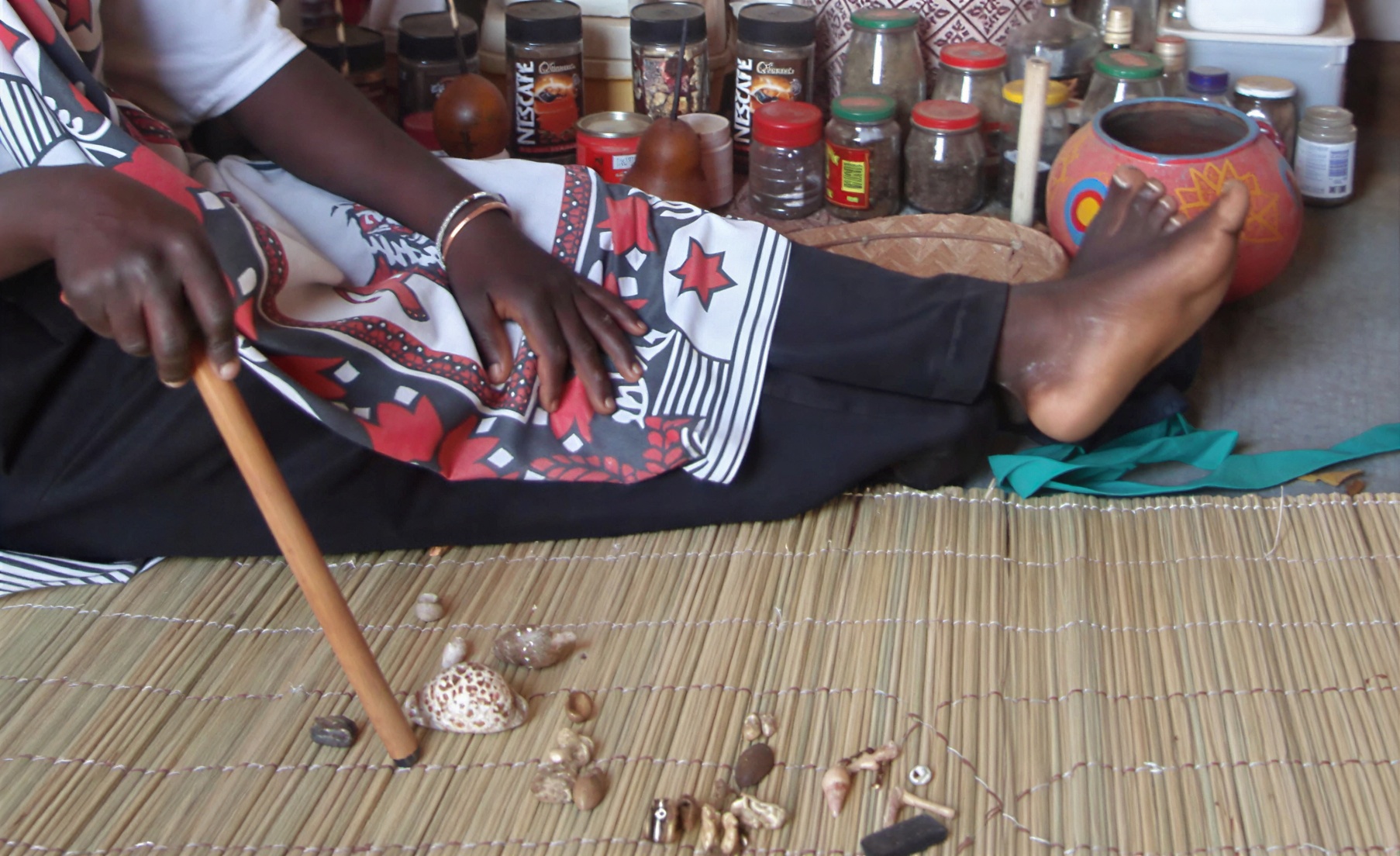
In the bustling town of Chitungwiza, a chilling tale has emerged, casting a dark shadow over traditional healing practices and the desperate search for solutions to life’s misfortunes. Mazvita Chinambata, a 27-year-old woman from Zengeza 2, finds herself trapped in a living nightmare, claiming she was subjected to a harrowing ritual involving
a sinister ritual involving ‘corpse water’ that has left her life in tatters. Her harrowing account sheds light on the perilous intersection of desperation, traditional beliefs, and alleged exploitation by unscrupulous practitioners.
Mazvita’s journey into this nightmare began with a relentless string of misfortunes that plagued her life from a young age. Seeking respite from what she described as ‘corruption’ or bad luck, she ventured to South Africa. It was there, in a foreign land, that she encountered a young man who, upon hearing her woes, connected her with a Malawian traditional healer, or n’anga. This healer, Mazvita claims, proposed a drastic solution to her persistent bad luck: a cleansing ritual using water that had been used to wash dead bodies.
“I went to SA, I met a guy, who I told my problems to, and then he gave me the number of a witch doctor from Malawi, who then came and washed me with water washed with dead bodies,” Chinambata recounted, her voice heavy with the weight of her experience. The ritual, as she described it, was as bizarre as it was terrifying. She was instructed to find a new broom and hold it firmly in her hands, completely naked, while the n’anga performed the cleansing with the macabre ‘corpse water’. The origin of this water remains unclear to Mazvita; she ponders whether it was sourced locally in South Africa or brought by the healer from Malawi.
An agreement was struck for payment to be made upon the healer’s return from Malawi. However, the n’anga never reappeared in South Africa, leaving Mazvita unable to settle the agreed-upon fee. This unfulfilled transaction, however, would soon become the least of her worries. The true horror of the ritual began to unfold shortly after the healer’s departure.
On the very night of the cleansing, the n’anga had forewarned Mazvita not to be alarmed by any noises in her room, hinting at supernatural occurrences that would follow the ritual. True to his word, Mazvita experienced a terrifying intrusion. “That day, I heard a noise in the house in the middle of the night, something entering the house, and then I started to feel tattoos all over my body, including genitals, by someone I didn’t see. Then I had sex with someone I didn’t see until dawn,” she revealed, detailing an invisible sexual assault that left her traumatised and violated.
The ordeal did not end there. In the days and weeks that followed, Mazvita’s life descended further into a realm of the surreal and the terrifying. “From then on, I began to dream of being touched by snakes all over my body and seeing various salams,” she stated, referring to strange magical occurrences. The physical manifestations of her spiritual torment were equally disturbing. “A few days after I was washed with this corpse water, I saw a big worm that came, and entered my secret organ, as if I was sleeping with a man, and then it was entered again by a big rat on my bottom, and it went away completely and stopped coming out,” Chinambata recounted, a chilling narrative that suggests a profound spiritual and psychological assault. She firmly believes that these intrusions led to the loss of her virginity, despite never having been intimate with a man.
Her body, she says, has become a battleground for unseen forces. “My stomach started to growl like a child playing, I’m not pregnant. I feel my breasts being sucked by a snake that sleeps on me again,” Mazvita described, painting a vivid picture of her ongoing torment. The constant internal noises and the sensation of a snake suckling her breasts are daily reminders of the ritual’s devastating aftermath.
Exhausted and desperate, Mazvita has sought help from numerous traditional healers and prophets across the region, but her problems persist. Her plight has led to severe social ostracisation. “Because of what happened, I am said to have been criticised as I have become so angry that nobody loves me. Wherever I go, they say they can’t afford it; I have become a person who just lives in the sowe as I am now called to have scars,” she lamented. The term ‘sowe’ refers to apostolic shrines, where she now spends much of her time, accused by others of possessing ‘zvikwambo’ or goblins. Even her closest relatives, including her parents, have turned against her, branding her as ‘dirty’.
In her desperate search for a cure, Mazvita has undergone various other rituals. “One time, for seeking help, I was given a rope to sit around my waist. I also went to a witch doctor, who gave me medicine that I was told to throw away at night,” she explained. The cumulative effect of these experiences and the relentless suffering has pushed her to the brink, leading her to contemplate suicide.
The Perilous Path of ‘Corpse Water’ and Traditional Beliefs
Mazvita Chinambata’s story, while deeply personal, resonates with broader concerns about the use and misuse of traditional practices in Southern Africa. The concept of ‘corpse water’ is not entirely alien to certain African traditions, though its application varies significantly. For instance, among the Chewa people of Malawi, a unique funeral ritual known as ‘mbiya’ involves cleansing the deceased with water, which is then sometimes used in communal meal preparation. However, this practice is deeply rooted in specific cultural contexts and is distinct from the alleged use of ‘corpse water’ for cleansing living individuals of bad luck.
Pastor Hazvinei Muchefa from Harare unequivocally condemned the use of ‘corpse water’ for the living. “This mother has been subjected to high witchcraft; she needs help in time, and there is nothing that God refuses,” Pastor Muchefa asserted, highlighting the belief that such practices are associated with dark magic rather than genuine healing. This sentiment is echoed by Gogo Mamoyo, a traditional healer from Chitungwiza, who believes Mazvita has been afflicted by ‘zvikwambo’ (goblins) and ‘zvidhoma’ (evil spirits). “He needs help in time because he may already be a witch leader, which he doesn’t know. We recommend that people get help from people they know because there are others who are looking for a place to dispose of their bad things,” Gogo Mamoyo advised, underscoring the dangers of seeking help from unknown or malicious practitioners.
The belief in spiritual attacks, goblins, and invisible entities is deeply ingrained in many Zimbabwean traditional belief systems. Stories of ‘zvikwambo’ or ‘zvidhoma’ causing misfortune, illness, or even sexual assault are not uncommon. These beliefs often lead individuals to seek solutions from traditional healers, some of whom may exploit their vulnerability. The tragic incidents of traditional healers and their clients drowning during rituals, as reported in various news outlets, further highlight the unregulated and sometimes dangerous nature of certain traditional practices.
A Call for Awareness and Protection
Mazvita Chinambata’s ordeal serves as a stark reminder of the urgent need for greater awareness and regulation within the realm of traditional healing. While many traditional healers provide genuine and beneficial services, the absence of oversight can create fertile ground for exploitation and harm. Victims like Mazvita, caught between deeply held cultural beliefs and devastating personal consequences, often find themselves isolated and without recourse.
Her story is a plea for help, a desperate cry from a woman whose life has been irrevocably altered by a ritual gone horribly wrong. It underscores the importance of seeking assistance from reputable and ethical practitioners, and the critical role that communities and authorities must play in protecting vulnerable individuals from predatory practices. As Mazvita contemplates the ultimate escape from her suffering, her case stands as a powerful testament to the hidden dangers lurking within the shadows of unregulated traditional medicine, and the profound human cost when trust is betrayed and ancient beliefs are twisted for malevolent purposes.