


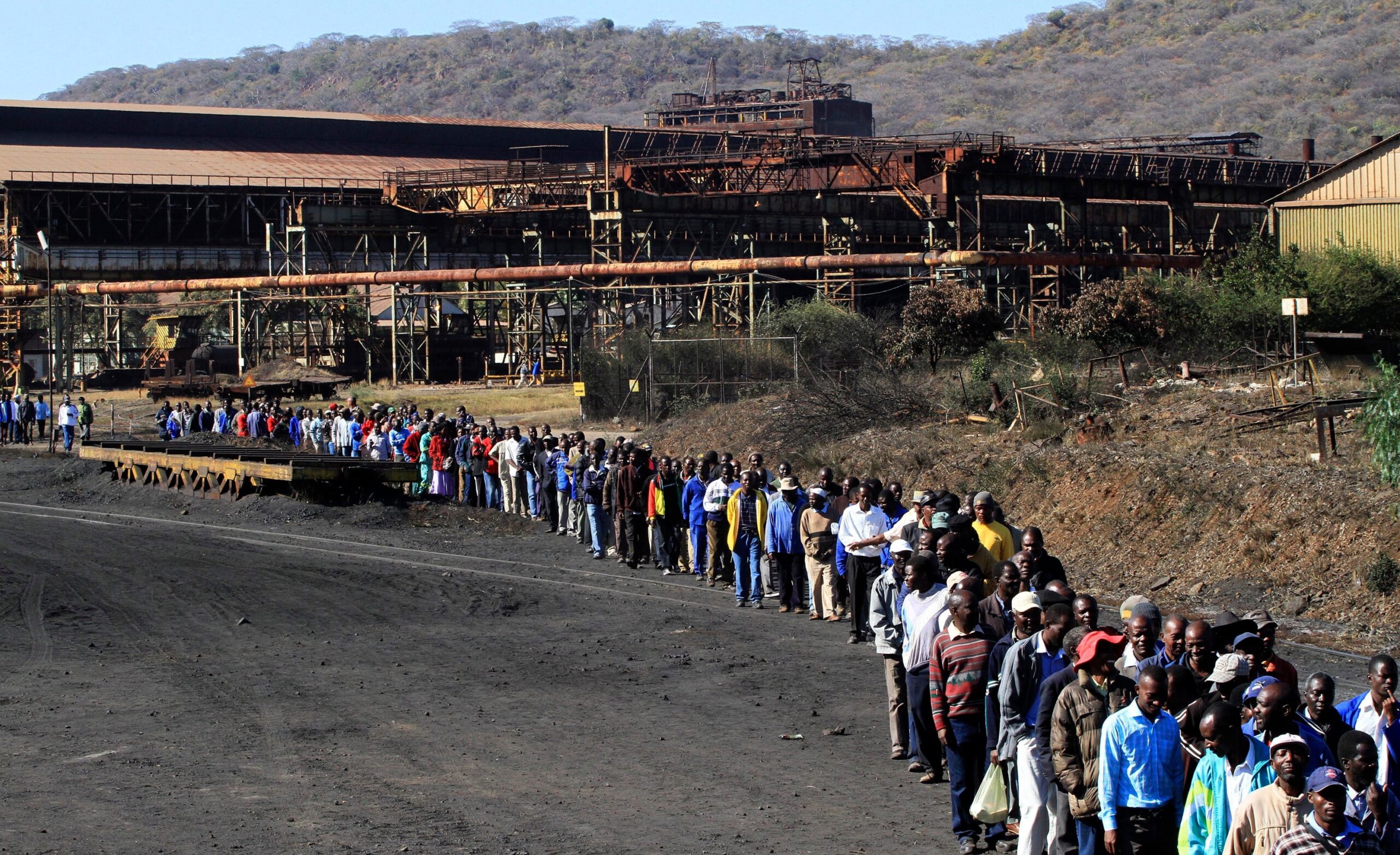
The legendary Zimbabwe Iron and Steel Company (ZISCOSTEEL), once the undisputed pride of African industry, has been quietly moved under the umbrella of the Mutapa Investment Fund. But what does this sudden transfer mean for the thousands of former workers left destitute, and for the nation’s industrial future? This investigation delves into the “secret plan” behind this manoeuvre, exploring whether it is a genuine attempt to revitalise a sleeping giant or a calculated strategy to shield state assets from public scrutiny.
The Sovereign Wealth Fund: A Law Unto Itself
To understand the gravity of this transfer, one must first simplify what the Mutapa Investment Fund (MIF) actually is. Originally established in 2014 as the Sovereign Wealth Fund of Zimbabwe, it was rebranded and significantly expanded in 2023. Today, it operates as a sovereign wealth fund with an estimated portfolio exceeding US$16 billion, overseeing more than 60 state-owned enterprises.
However, the MIF is not a standard government department. Under Statutory Instrument 156 of 2023, the fund was controversially exempted from the Public Procurement and Disposal of Public Assets Act. This exemption grants the fund significant autonomy, allowing it to bypass traditional parliamentary oversight and open public procurement procedures. The official justification—that the fund needs to move “at the speed of business”—has been heavily criticised by transparency advocates as a thin veil for a lack of accountability.
It is within this opaque architecture that ZISCOSTEEL has been chosen as the fund’s latest “prize.” Through Statutory Instrument 58 of 2026, the government formally transferred the 89% state-owned steelmaker to the MIF. The gazette notably referred to the transfer of ZISCO’s “residue,” a stark admission of the plant’s current dilapidated state.
The Ghost of Redcliff and the Hidden Debt
The story of ZISCOSTEEL is a painful emblem of deindustrialisation. At its peak in the late 1980s and 1990s, the plant produced up to 1.2 million tonnes of steel annually, directly employing over 5,500 workers and sustaining an estimated 50,000 jobs in downstream industries. Today, the sprawling complex in Redcliff is tended by a skeletal crew of around 400 maintenance workers, guarding rusting infrastructure that has stood idle since massive power failures damaged the blast furnaces in January 2008.
The human cost of this collapse is staggering. Redcliff, once a thriving hub, has been reduced to a ghost town plagued by shambolic municipal billing and widespread poverty. In September 2025, the desperation in the town was highlighted when a local ambulance technician was convicted of theft, underscoring the breakdown of civic order in the shadow of the dead plant.
More insidious are the “hidden details” of the firm’s debt and the plight of its pensioners. In March 2024, the ZISCO Steel Pensioners petitioned Parliament, revealing a catastrophic loss of value in their pensions. A subsequent parliamentary report presented in May 2025 implicated First Mutual Life (FML) and the government’s currency conversion policies in a US$38.7 million loss for the 5,956 pension fund members.
When the government assumed ZISCO’s debt through the Zimbabwe Iron and Steel (Debt Assumption) Act of 2018, the implementation of Statutory Instrument 33 of 2019 converted US dollar amounts to Zimbabwean Dollars at a 1:1 rate. By the time funds were disbursed in 2021, the exchange rate had plummeted to 1:90. Consequently, pensioners who had contributed in US dollars found themselves receiving a flat payout of USD 25 or even ZWL 25.
During the parliamentary debate, Dzivarasekwa MP Edwin Mushoriwa captured the tragedy:
“As we speak, we have workers who died. If you go to Red Cliff, you will discover that some of the houses where rich people used to stay and the type of life that they are surviving now is not that good… All those funds should actually be taken back and paid back to those workers of ZISCO Steel.”
A New Recapitalisation Deal or Final Asset-Stripping?
The transfer of ZISCOSTEEL to the Mutapa Investment Fund places it alongside Kuvimba Mining House, another state-controlled entity that was named the preferred bidder for ZISCO in February 2022. Kuvimba had pledged up to US$1.3 billion over three years to revive the plant, yet four years later, tangible progress on the factory floor remains non-existent.
By consolidating both ZISCO and Kuvimba under the MIF, authorities claim they are creating synergies—using mining revenues from Kuvimba’s gold, nickel, and platinum assets to fund the steelworks’ upgrades. However, the move also opens the door for a new, foreign-backed recapitalisation deal that could bypass traditional parliamentary oversight.
The Mutapa Investment Fund has been actively seeking over US$10 billion to revamp state enterprises and is planning to issue a USD 500 million Mutapa Infrastructure Bond (MIB 2026). With the fund’s exemption from procurement laws, negotiations with foreign investors—particularly from China and the UAE—can be conducted behind closed doors.
This lack of transparency raises a critical question: Is this a move to revitalise the steel giant, or is it a way to shield state assets from public scrutiny?
Industrial experts are deeply divided. Some argue that removing the bureaucratic red tape of fragmented government ministries could finally spark a manufacturing renaissance. They point to the recent success of the Dinson Iron and Steel Company (DISCO) in Manhize, which began carbon steel production in 2024/2025, as proof that Zimbabwe’s steel industry can be resurrected with the right capital and execution.
Conversely, critics fear this could lead to the final asset-stripping of a national icon. ZISCO has already suffered heavily from unchecked theft and vandalism. In September 2020, the board had to request army and police protection due to the rampant theft of machinery. Furthermore, reports indicate that Zimbabwe loses approximately US$1.5 million annually to scrap metal smuggling, with abandoned industrial sites like ZISCO being prime targets for illicit harvesting.
The “Who, What, and Why” of State Ownership
The transfer of ZISCOSTEEL is not merely an administrative reshuffle; it is a profound shift in Zimbabwe’s state ownership landscape.
Who is involved? The Mutapa Investment Fund, led by CEO Dr. John Mangudya – the former RBZ Governor, now holds the reins, operating with a board that includes prominent business executives but answers directly to the highest levels of the executive branch, bypassing Parliament.
What is happening? The “residue” of a once-mighty industrial complex is being bundled with lucrative mining assets in a bid to attract massive foreign capital, all while thousands of former workers fight for their stolen pensions.
Why was it done? Officially, to commercialise a failing parastatal and drive Vision 2030. Unofficially, it consolidates immense economic power within a single, opaque entity, allowing for rapid, unscrutinised deal-making.
The Mutapa Investment Fund will either transform Zimbabwe’s industrial base or finish what decades of mismanagement started. For the people of Redcliff, who have watched their town decay and their pensions evaporate, the promises of a manufacturing renaissance ring hollow until the blast furnaces roar back to life. Until then, ZISCOSTEEL remains a captive prize in a high-stakes game of sovereign wealth.