


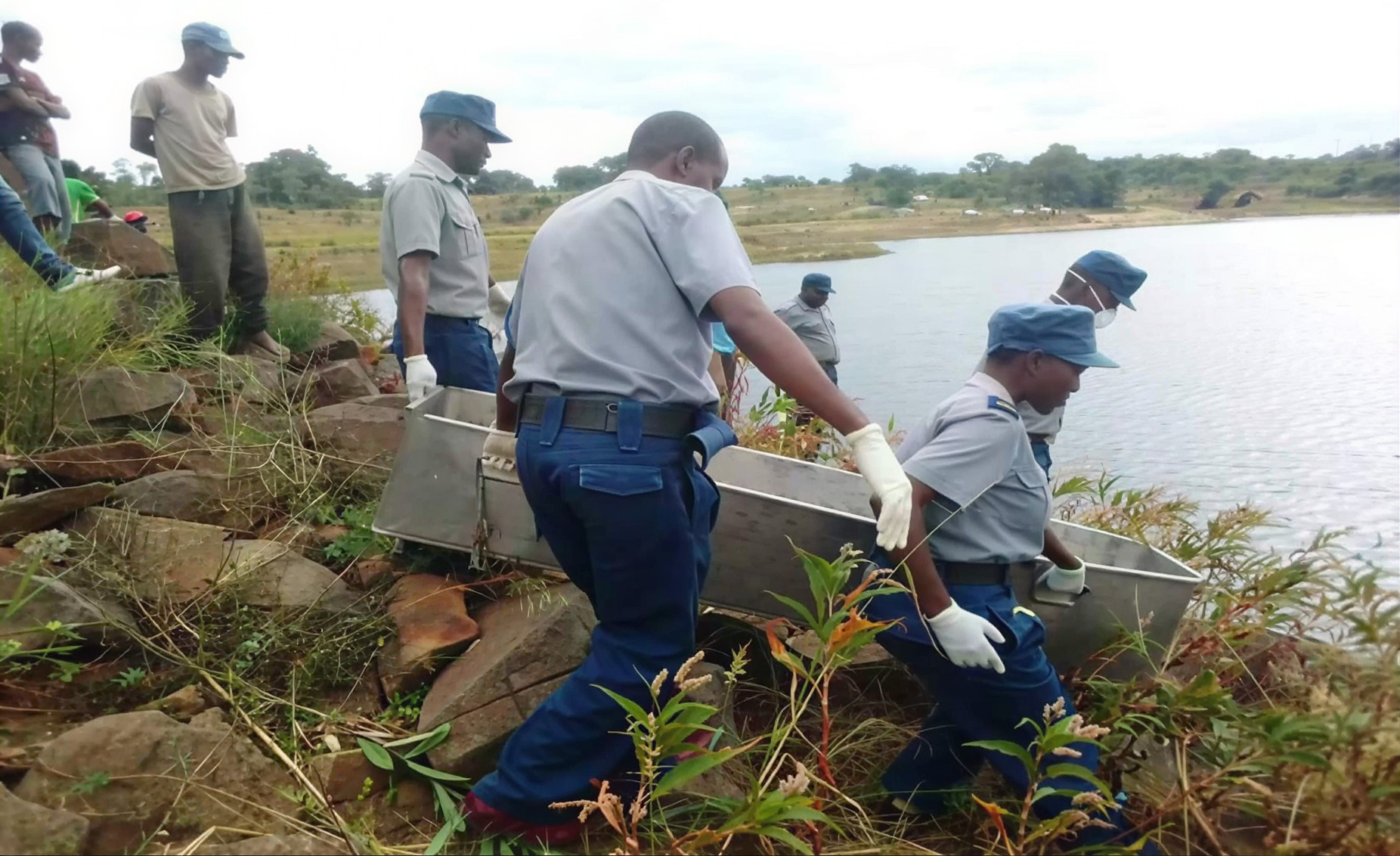
HARARE – The reeds at Lake Chivero have long whispered secrets that the Zimbabwean authorities would rather remain buried in the silt. For years, this sprawling body of water on the outskirts of Harare has served as a convenient, albeit macabre, dumping ground for the city’s criminal underworld. However, the discovery of Shingirayi Chikosha’s body in a thicket near the Gracelands Resort Centre in Zvimba has brought a chilling new dimension to the “Lake Chivero phenomenon.” Chikosha was not just another statistic in a country grappling with a surge in violent crime; he was a driver for the National Prosecuting Authority (NPA), the very heart of the state’s legal machinery.
While the official police narrative paints a picture of a random robbery gone tragically wrong, a deeper investigation into the circumstances of his death reveals a series of inconsistencies that the state is seemingly desperate to overlook. The suspects, Tawanda Ruzvidzo (38) and Edmond Muzuva (32), currently lie under heavy police guard at Parirenyatwa Hospital, nursing gunshot wounds sustained during their arrest. They appeared before Harare magistrate Ruth Moyo in a bedside court session on 26 March 2026, facing charges of murder and armed robbery. Yet, as the court proceedings unfolded, the “NPA connection” loomed large, raising questions about whether Chikosha was targeted for what—or whom—he was carrying.
The timeline of Shingirayi Chikosha’s final hours is a study in the vulnerability of government employees. On the evening of 12 March 2026, at approximately 9:30 PM, the 41-year-old driver was operating a company-owned Kia Picanto, registration AGE 4599. He stopped at the Whitehouse bus terminus along the Bulawayo Road, a common spot for commuters seeking transport to Norton. It was here that he picked up Ruzvidzo and Muzuva, who had posed as genuine passengers. According to Prosecutor Lawrence Gangarahwe, the pair had “hatched a plan to rob unsuspecting motorists” earlier that day.
What followed was not a simple carjacking. The state alleges that the duo strangled Chikosha to death before dumping his body in the secluded bushes near the lake. The brutality of the act—strangulation—suggests a level of personal violence that is often absent in quick-fire roadside robberies. Furthermore, the choice of Lake Chivero as a disposal site is telling. Criminals know the area is poorly patrolled and that a body can remain undiscovered for days, as was the case with Chikosha, who was only found after an “extensive search” involving family, colleagues, and the police.
|
Key Individual
|
Role in the Case
|
Status
|
|
Shingirayi Chikosha
|
Victim (NPA Driver)
|
Deceased (41 years old)
|
|
Tawanda Ruzvidzo
|
Lead Suspect
|
In custody, hospitalised (38 years old)
|
|
Edmond Muzuva
|
Lead Suspect
|
In custody, hospitalised (32 years old)
|
|
Ruth Moyo
|
Harare Magistrate
|
Presiding over the initial remand
|
|
Lawrence Gangarahwe
|
State Prosecutor
|
Leading the prosecution
|
Inside the corridors of the NPA, the mood is one of quiet trepidation. Sources within the authority, speaking on the condition of anonymity for fear of victimisation, describe a climate of fear that has permeated the institution. “People think being a driver is a low-level job, but in this building, the drivers see and hear everything,” one source revealed. “They transport sensitive dockets, they drive prosecutors to high-stakes trials, and they are often the only witnesses to the private movements of the state’s legal minds. To kill a driver is to send a message to the entire system.”
The police have been quick to link Ruzvidzo and Muzuva to a subsequent robbery spree to bolster the “random criminal” theory. In the early hours of 13 March, just hours after Chikosha’s murder, the suspects allegedly used the stolen NPA vehicle to pick up three more passengers in Chinhoyi—Dickson Guza, Believe Matiza, and Darlington Matemadanda. Near the Lomagundi turn-off, the suspects produced a knife and a pistol, robbing the trio of cash and mobile phones. In a particularly humiliating twist, the victims were forced to strip naked before the suspects fled with their clothes.
However, investigative journalists and legal analysts are questioning the logic of this spree. Why would seasoned criminals, who had just murdered a government employee in a high-profile vehicle, continue to use that same vehicle for petty robberies in the same region? “It’s almost as if they wanted to be caught, or they were so confident in their protection that they didn’t care,” says a local security expert. “The official probe seems to stop at the arrests. There is no public inquiry into whether Chikosha was carrying sensitive documents related to ongoing corruption cases or if his death was a ‘warning shot’ to the NPA leadership.”
The “Lake Chivero dumping ground” is a symptom of a much larger rot in Zimbabwe’s security sector. In 2025 alone, the Zimbabwe Republic Police recorded over 1,200 armed robbery cases. Commissioner General Mthamba recently admitted that “everyone is a target and no sector is spared.” For government employees, who often lack the private security detail of the political elite, the risks are escalating. The lake, once a premier tourist destination, has become a symbol of this insecurity. Its dark waters and dense thickets provide the perfect cover for those who operate outside the law, while the authorities struggle to maintain even a basic level of surveillance.
The official statement from the NPA, issued on 18 March 2026, was a masterclass in bureaucratic brevity. It confirmed Chikosha’s death and offered condolences to his family, but it avoided any mention of the potential motives beyond simple robbery. This silence is what has fueled the suspicion of a cover-up. If Chikosha was targeted, the implications are devastating: it means the state’s legal arm is being infiltrated or intimidated by the very criminal elements it is supposed to prosecute.
“The accused persons devised a plan to rob unsuspecting victims,” Prosecutor Gangarahwe told the court. “They strangled the now deceased and dumped his body in a bush near Lake Chivero… The accused ordered the complainants to strip naked and stole their clothes before fleeing.”
As the case moves through the courts, the focus will remain on the two men in the hospital beds. But for the family of Shingirayi Chikosha and his colleagues at the NPA, the search for the truth is far from over. The questions remain: Was this truly a random act of violence? Or was Chikosha a casualty in a silent war between the state and the underworld? Until the police provide more than just a convenient timeline of a robbery spree, the shadow of Lake Chivero will continue to hang over the justice system.
The “NPA connection” is not just a theory; it is a necessity for understanding why a 41-year-old father and driver ended up as a discarded body in the Zvimba bush. Shingirayi Chikosha deserved better than a summary dismissal of his death as a “robbery gone wrong.” He was a man on the front lines of the justice system, and his murder is a grim reminder that in today’s Zimbabwe, the line between the law and the lawless is becoming dangerously thin.
The investigative report into this case suggests that the mass search for Chikosha, while eventually successful in locating his remains, was hampered by initial delays in the police response. Family members reported that the urgency only escalated once the “NPA connection” was realised. This disparity in how cases are handled—depending on the victim’s employer—is a recurring theme in Zimbabwean policing. It highlights a system that is reactive rather than proactive, and one that is often more concerned with managing optics than solving crimes.
In the end, the story of the murder at the lake is a story about the state of a nation. It is about the loss of a public servant, the rise of a ruthless criminal class, and a police force that seems content with the easiest answers. As the trial of Ruzvidzo and Muzuva approaches, the public will be watching to see if the deeper questions are finally asked, or if Shingirayi Chikosha will simply become another name in the long list of those whose secrets are kept by the reeds of Lake Chivero.
The total value of the loot from the subsequent robbery—estimated at over US$1,690—pales in comparison to the cost of a human life and the integrity of the state’s legal authority. The suspects may have been tracked down through a stolen phone, but the trail of who truly benefited from the silence of an NPA driver may go much colder. The “Lake Chivero phenomenon” is not just about a location; it is about a lack of accountability that allows such gruesome acts to occur with terrifying frequency.
As we conclude this investigation, the climate of fear within the NPA remains palpable. Employees continue to go about their work, but with a new, sharp awareness of their own mortality. They know that if a driver can be snatched from a busy terminus and murdered in cold blood, no one is truly safe. The murder of Shingirayi Chikosha is a chilling look at the intersection of crime and the state’s legal machinery—a look that many in power would prefer we didn’t take.