


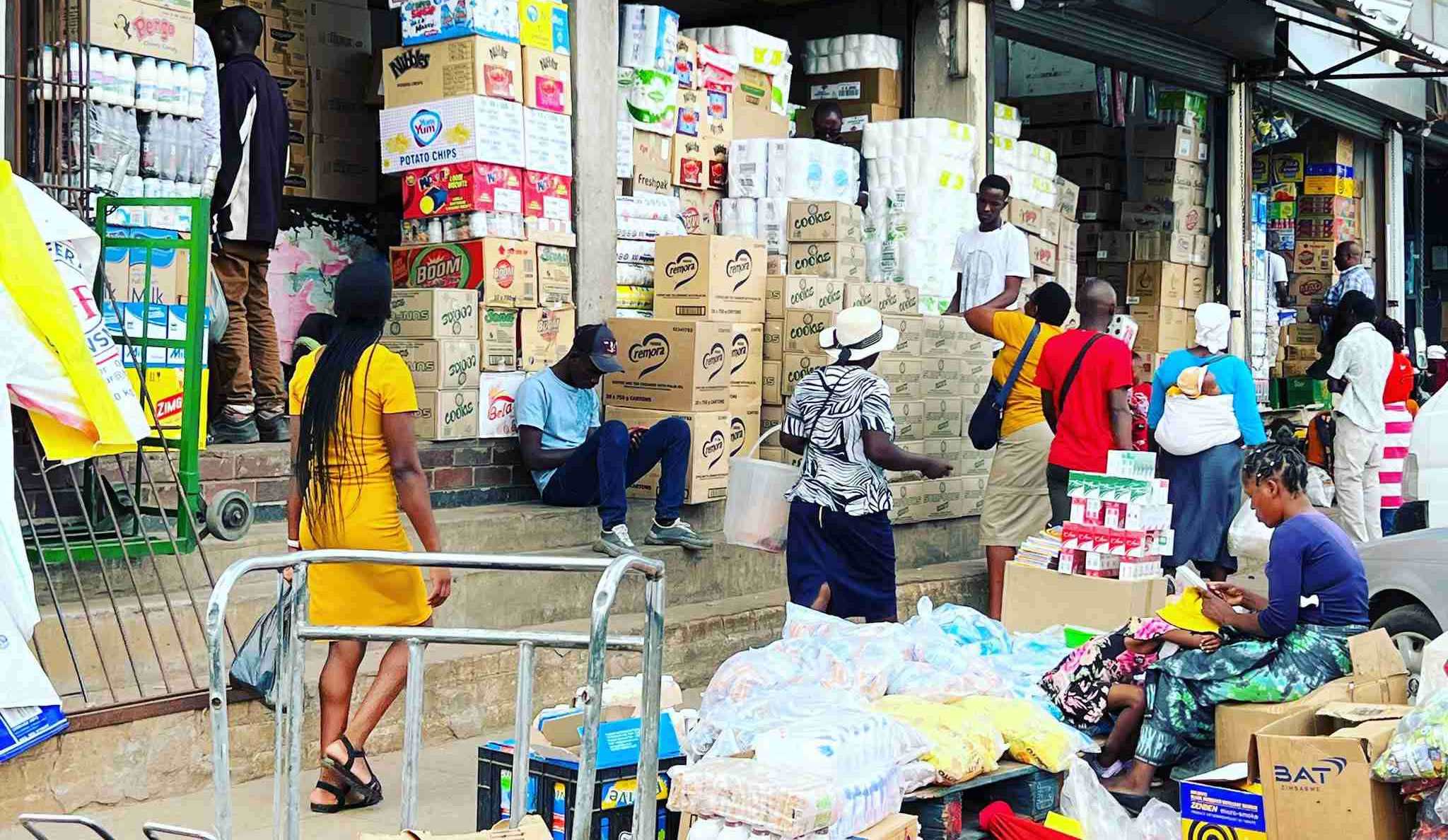
In the heart of Harare’s bustling downtown district, the air is thick with the scent of roasted maize and the persistent hum of generators. Here, in the “tuckshop capital” of Zimbabwe, thousands of small-scale traders have long been the lifeblood of a nation struggling under the weight of hyperinflation and a volatile currency. But a dark cloud is gathering over these informal hubs. A new directive from the highest office in the land threatens to dismantle the very safety net that has kept millions of Zimbabweans fed when the big supermarket shelves were empty.
President Emmerson Mnangagwa has recently directed the Ministry of Industry and Commerce to expedite the development of a new Wholesale and Retail Sector Policy. While the official rhetoric frames this as a move to “bring order” to the markets and “sustain growth,” our investigation suggests a far more calculated motive. This is not just about administrative tidiness; it is a battle for survival between the “big crocodiles” of the formal retail world and the nimble “tuckshop” minnows who have, quite literally, beaten them at their own game.
The timing of this policy shift is no coincidence. In late February 2026, the retail landscape was rocked when OK Zimbabwe, once an untouchable giant of the formal sector, was forced into corporate rescue. The Zimbabwe Stock Exchange halted trading of its shares as the company buckled under massive losses and a collapse in revenue. For years, formal retailers like OK Zimbabwe and TM Pick n Pay have complained that they are fighting with one hand tied behind their backs, burdened by heavy taxes and complex regulations, while tuckshops operate in what they call a “low-compliance, high-flexibility space.”
Denford Mutashu, the president of the Confederation of Zimbabwe Retailers (CZR), has been a vocal proponent of this “formalisation.” He recently blamed the “price madness” in the economy on the informal sector, stating that “Most of the price madness is in the informal sector,” and has repeatedly called for a level playing field. However, our investigation reveals that the CZR itself is largely composed of the very retail giants who are losing customers to the downtown traders. By pushing for this new policy, they are effectively asking the government to regulate their competition out of existence.
The “orderly marketing” jargon in the new policy hides a series of “formalisation traps” designed to squeeze the small player. Chief among these is the mandatory requirement for all retailers to order goods only from registered wholesalers. This sounds reasonable on paper, but in practice, it cuts off the informal supply chains that allow tuckshops to keep their prices low. Many tuckshop owners source their goods directly from South Africa or through small-scale importers who do not have the expensive “wholesaler” permits required by the new law.
Furthermore, the policy introduces a “single licence” system that promises to streamline fragmented requirements. But there is a catch: the cost of this new, consolidated licence is expected to be prohibitive for the average street vendor or backyard tuckshop owner. When you add the mandatory use of point-of-sale (POS) machines and the expansion of taxation to “emerging sectors,” the annual compliance costs could easily exceed US$15,000—a figure that would bankrupt most informal businesses overnight.
“They want us to pay for the right to survive,” says a tuckshop owner in Mbare who requested anonymity for fear of retribution. “We started these shops because there were no jobs. We sell in US dollars because that is how we buy our stock. If they force us into their formal system, we will have to raise our prices, and our customers—the poor people—will starve. This is not about order; it is about making sure the big shops get their customers back.”
Our investigation into the ownership of Zimbabwe’s largest wholesale and retail groups reveals a tangled web of political connections. Many of the “big crocodiles” who stand to benefit from an “ordered” retail sector have close ties to the very people drafting the policy. This raises a disturbing question: Is the government using the law to protect the private profits of the political elite? By framing the informal sector as a source of “economic sabotage” and “price distortions,” the state is creating a narrative that justifies a crackdown.
The ghost of “price monitoring” teams is also returning. Historically, these teams have been used to harass small businesses, with officials demanding bribes or seizing stock under the guise of enforcing fair pricing. Meanwhile, the massive price hikes of the big retail chains often go ignored. The new policy hints at a return to this heavy-handed approach, giving law enforcement agents the power to target “unlicensed” traders in a series of nationwide blitzes.
We have already seen the precursors to this crackdown. On 3 March 2026, the government launched an 81-day “National Consumer and Product Integrity Roadshow,” which was essentially a series of raids on downtown shops. ZIMRA officers, backed by police, have been intercepting trucks and seizing goods, claiming they were smuggled. In Beitbridge, police recently destroyed 24 pressure boats used by smugglers to move goods across the Limpopo River. While the state calls this “protecting the consumer,” the informal traders see it as a logistical siege.
The human cost of this policy cannot be overstated. The informal sector accounts for over 70% of Zimbabwe’s economic activity. For many families, the local tuckshop is more than just a store; it is a source of credit, a place to buy “broken packs” of sugar or flour when they cannot afford a full bag, and a vital link to the US dollar economy. If the government succeeds in killing the informal retail sector, they aren’t just closing shops; they are cutting off the lifeline of the nation.
The “formalisation” push also includes Statutory Instrument 215, which reserves 14 key sectors—including retail, bakeries, and barber shops—exclusively for Zimbabwean citizens. While this is framed as an empowerment move, it is being used as a tool to target foreign-owned tuckshops, particularly those run by immigrants who have filled the gaps in the local market. Affected businesses are being told to cede 75% of their shareholding to locals by 2028 or face closure. This “indigenisation” of the informal sector is seen by many as a way for politically connected individuals to take over successful small businesses without doing the hard work of building them.
As the Ministry of Industry and Commerce rushes to finalise the Wholesale and Retail Sector Policy, the mood in the streets of Harare is one of quiet defiance mixed with deep anxiety. The “tuckshop wars” are about to enter a new, more dangerous phase. The government may believe that by “bringing order” they can fix the economy, but they are playing a risky game. When you corner a crocodile, it might bite; but when you take away the food from a hungry nation, the consequences are far more unpredictable.
In the end, we must ask: Who really benefits? It is not the consumer, who will face higher prices and fewer choices. It is not the small trader, who faces ruin. The only winners in this “ordered” new world are the retail giants and their political patrons, who are tired of sharing the market with the people. The “Goodbye Tuckshops” policy is a clear signal that in the new Zimbabwe, there is only room for the big players, and the rest of the nation is being told to move along or get crushed.