


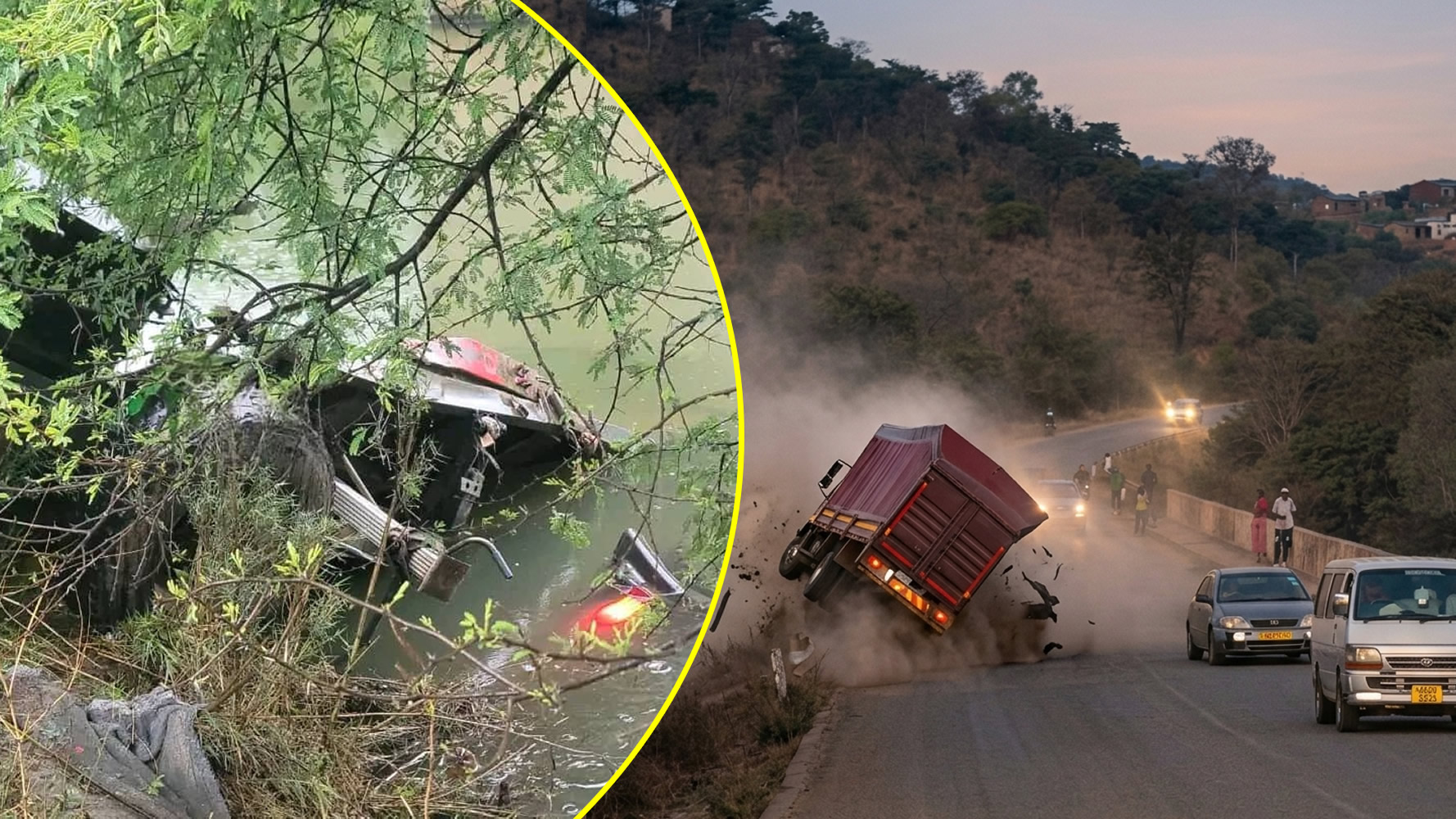
Horror at Ngezi Bridge: Blinding Lights, Stationary Obstacles, and the Plunge of Chrome-Laden Trucks Amidst Zimbabwe’s Road Carnage
Zvishavane – A harrowing incident unfolded at Ngezi Bridge this week, as two chrome-laden haulage trucks veered wildly, narrowly averting a catastrophic head-on collision before plunging into the river below. This dramatic event, captured in widely circulated footage and corroborated by eyewitness accounts, has intensified national concern over the escalating toll of traffic accidents on Zimbabwe’s roads, particularly at notorious danger zones like Ngezi Bridge.
The calamity, which occurred early this morning, saw two heavy-duty trucks, reportedly travelling from Mberengwa to Zvishavane, succumb to the treacherous conditions of the bridge. Social media discussions and preliminary reports suggest a complex chain of events leading to the disaster. It is believed that the driver of the lead haulage truck may have been momentarily blinded by the excessively bright headlights of an oncoming Isuzu truck. This sudden impairment of vision is thought to have initiated the erratic, zigzagging movement of the truck as it approached the narrow bridge.
Further compounding the peril, a stationary kombi, reportedly following the blinding Isuzu, was positioned on the bridge itself. The vehicle had to stop just before the bridge to avoid a head-on crash with the haulage truck. In a desperate attempt to avoid this unexpected obstacle and regain control after the blinding encounter, the truck driver was forced into evasive action. This manoeuvre proved fatal, as the vehicle crashed through the bridge barriers and plummeted into the Ngezi River.
This latest tragedy at Ngezi Bridge resonates deeply, occurring just days after a devastating head-on crash on the Harare-Masvingo Road claimed the lives of six members of the same family. The tragic loss of Lilian Maranda Mujuru, aged 40, and her five young children – Nokutenda (15), Makanaka (13), Ronald Junior (11), Rufaro Shalom (7), and Kayden (3) – has plunged the nation into profound mourning. The Mujuru family, residents of Tynwald North, Harare, were en route to a church conference when their Toyota Corolla collided with a Mercedes Benz truck at the 246-kilometre peg near Mvuma on Thursday, 2nd April 2026, at approximately 9:50 AM. All six perished instantly, leaving behind a heartbroken husband and father, Ronald Mujuru.
Mr. Mujuru, awaiting confirmation of his family’s safe arrival, instead received the devastating news from the police. The immense scale of this personal catastrophe prompted a visit from Transport Minister Felix Mhona, who extended his condolences to the bereaved family. A mass burial for Lilian and her children was held in Chivhu on Easter Sunday, 5th April 2026.
The proximity of these two horrific events – the Ngezi Bridge plunge and the Mujuru family tragedy – underscores a deeply troubling and persistent crisis on Zimbabwe’s roads. The details emerging from the Ngezi Bridge incident, particularly the role of blinding headlights and stationary vehicles, highlight critical factors contributing to road accidents that extend beyond mere driver error. These elements point to systemic issues including inadequate road lighting, lack of clear hazard warnings, and potentially insufficient enforcement of vehicle lighting regulations.
Ngezi Bridge, in particular, has earned an unenviable and grim reputation as a serious danger zone for heavy vehicles. Local reports and social media discussions frequently refer to it as an area where accidents, particularly involving haulage trucks, are tragically common. A previous incident in October 2025 saw two chrome-loaded haulage trucks also plunge into the Ngezi River after attempting to avoid a stationary vehicle on the bridge. In that instance, two drivers were also feared dead, establishing a grim pattern of consistent danger at this specific location. The recurring nature of these disasters raises serious questions about the structural integrity of the bridge barriers and the overall safety provisions in place.
The broader picture of road safety in Zimbabwe paints an increasingly concerning portrait. The recent Easter holiday period of 2026 witnessed a significant surge in fatalities, with 30 people losing their lives in road accidents, a notable increase from the 24 deaths recorded during the same period in 2025. While the total number of accidents saw a slight decrease to 337 from 384 in the previous year, the rise in fatalities indicates a worrying trend towards more severe and deadly collisions. Of particular concern is the statistic that 19 of the 30 fatalities were pedestrians, underscoring the extreme vulnerability of those outside vehicles on the nation’s often-congested and poorly maintained roads.
Experts and authorities frequently attribute these accidents to a complex interplay of factors, including driver fatigue, mechanical failures, excessive speeding, dangerous overtaking manoeuvres, and now, critically, issues related to visibility and unexpected road hazards. The Harare-Masvingo highway, where the Mujuru family tragedy occurred, is consistently identified as one of the country’s most hazardous routes, prone to high-speed collisions and a lack of adequate safety infrastructure in certain sections. The sheer volume of traffic, including a significant number of heavy goods vehicles, further exacerbates the risks, creating a volatile environment where minor errors can have catastrophic consequences.
The incident at Ngezi Bridge, with the haulage truck zigzagging due to perceived blinding lights and then attempting to avoid a stationary vehicle, underscores the multifaceted nature of road safety challenges. While driver vigilance is paramount, external factors such as the intensity of oncoming headlights and the presence of unlit or poorly marked stationary vehicles on critical infrastructure like bridges introduce additional layers of risk. These details necessitate a re-evaluation of current road safety strategies, moving beyond a sole focus on driver behaviour to encompass broader infrastructural and regulatory improvements.