


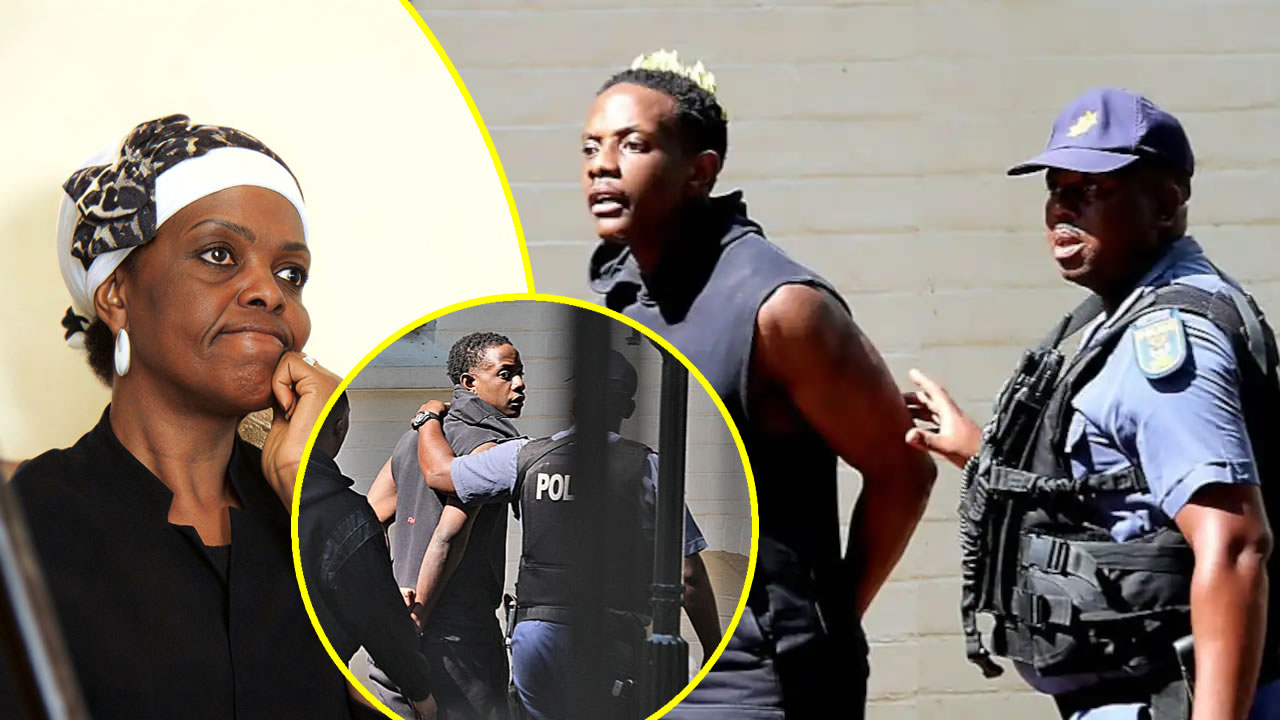
The Sandhurst Shooting: Mugabe’s Son, a Missing Gun, and the Shadow of Zimbabwe
JOHANNESBURG – In the quiet, tree-lined streets of Sandhurst, where the high walls of luxury estates usually whisper of old money and quiet privilege, a violent incident on February 19 has pulled back the curtain on a world of political legacy, illegal weaponry, and a cross-border mystery that remains unsolved. At the centre of this storm is Bellarmine Chatunga Mugabe, the youngest son of the late Zimbabwean strongman Robert Mugabe, and his cousin, Tobias Tamirepi Matonhodze.
The case, which has captivated both South African and Zimbabwean audiences, took a significant turn on April 17 when the Alexandra Regional Court accepted guilty pleas from both men. Yet, despite these admissions of guilt, the most critical piece of evidence—the firearm used to shoot 23-year-old gardener Sipho Mahlangu—remains missing. South African police are now openly accusing the pair of being “not remorseful,” alleging a calculated effort to hide a weapon that may have been smuggled across the porous borders into Zimbabwe.
A Vicious Attack in a Posh Suburb
The incident occurred at 37 Killarney Road in Sandhurst, a location often misreported by other media outlets as being in Hyde Park. It was here, in one of Johannesburg’s most exclusive enclaves, that Sipho Mahlangu was shot in the back. According to court records and investigative findings, Mahlangu was attempting to flee his assailants when the trigger was pulled. The young gardener, who was merely trying to escape a “vicious attack,” now finds himself at the heart of a political and legal firestorm.
Chatunga Mugabe and Matonhodze were arrested on the same day as the shooting. While initial reports suggested a simple altercation, the gravity of the charges soon became clear. Matonhodze, in what some observers believe is an attempt to shield his more famous cousin, pleaded guilty to the most serious charge: attempted murder. He also admitted to defeating the ends of justice and the illegal possession of ammunition.
The Mystery of the Missing Gun
However, the state is not convinced. Lieutenant-Colonel Raj Ramchunder, the investigating officer, has been vocal about the accused’s lack of cooperation. The central dilemma remains the whereabouts of the firearm. “They show no remorse,” Ramchunder noted, pointing to their refusal to disclose where the gun is hidden.
Investigative leads obtained by The NewsHawks suggest a sophisticated effort to dispose of the weapon. Anonymous sources close to the investigation have revealed that the gun was whisked away from the scene of the crime by a group of friends. These individuals, whose names have been provided to investigators but not yet made public, allegedly moved the weapon out of the country almost immediately after the shooting.
The prevailing theory is that the firearm was smuggled into Zimbabwe. This was not a random act of panic but a calculated move to prevent the weapon from being subjected to ballistic tests. In the world of investigative forensics, a gun is a “Pandora’s box.” A ballistic match could link the weapon to other crimes, potentially exposing a broader network of illegal activities or other individuals involved in criminal enterprises. By moving the gun across the border, the accused and their associates have effectively stalled a crucial part of the South African police’s investigation.
Porous Borders and Criminal Predicaments
The ease with which a firearm can be moved from Johannesburg to Harare highlights the ongoing crisis of South Africa’s porous borders. The Beitbridge border post, the primary crossing point between the two nations, has long been a hub for the illegal movement of goods and people. Despite various crackdowns, the “green routes”—illegal crossing points along the Limpopo River—remain active, used by smugglers to transport everything from cigarettes to unlicensed weaponry.
If the gun was indeed smuggled to Zimbabwe, it places Chatunga Mugabe and his associates in a double legal bind. In South Africa, the act of removing the weapon constitutes defeating the ends of justice, a charge Matonhodze has already admitted to. However, the friends who assisted in the smuggling could face charges of being accessories to attempted murder and illegal possession of a firearm.
Back in Zimbabwe, the predicament is equally severe. Under the Zimbabwean Firearms Act, the possession of an unlicensed firearm is a serious criminal offence, punishable by up to five years in prison. Furthermore, the Customs and Excise Act treats the smuggling of prohibited items with extreme gravity. If Zimbabwean authorities were to recover the weapon, Chatunga and his friends could face a new set of charges in their home country, including illegal importation and possession of a prohibited weapon.
A History of Controversy
For those who have followed the exploits of the Mugabe children, this latest incident is part of a familiar pattern. Bellarmine Chatunga, now 29, has long been known for his “high life” in Johannesburg, often seen in the city’s most expensive nightclubs and driving luxury vehicles. His reputation for being a “party boy” has frequently landed him in the headlines for the wrong reasons.
In 2017, he was at the centre of the infamous Sandton incident where his mother, Grace Mugabe, allegedly assaulted a young South African woman, Gabriella Engels, with an electric extension cord. More recently, in 2023, Chatunga was involved in an assault on Lazarus Pairemanzi in Zimbabwe. In 2024, he was arrested near the Beitbridge border for disorderly conduct and possession of a prohibited knife after a confrontation at a police roadblock. There have even been allegations of his involvement in a violent raid at the Mazowe Mine in Zimbabwe, where an AK-47 was reportedly used.
This history of legal troubles paints a picture of a young man who has lived with a sense of impunity, perhaps bolstered by the political shadow of his late father. However, the South African legal system, currently dealing with a surge in gun violence and public pressure to hold high-profile individuals accountable, may not be as forgiving as the environments he has navigated in the past.
The Court’s Weighty Decision
The Alexandra Regional Court has postponed the matter to April 24. This two-day window is a critical period for the accused. The court has set two primary conditions for the next hearing: first, to verify that Sipho Mahlangu has been financially compensated as claimed by the defence, and second, to give the accused one final opportunity to reveal the location of the missing firearm.
The choice to remain silent about the gun may protect Chatunga and his friends from immediate revelations that a ballistic test might bring, but it leaves them facing much harsher scrutiny from the bench. South African judges are increasingly taking a dim view of accused persons who refuse to cooperate with the recovery of illegal weapons, often using such lack of cooperation as a reason to hand down custodial sentences instead of the fines or suspended sentences requested by defence lawyers.
How Will It End?
As the deadline of April 24 approaches, the legal path for Chatunga Mugabe and Tobias Matonhodze looks increasingly narrow. If they continue to withhold information about the gun, the court is likely to view their guilty pleas as tactical rather than sincere. A lack of remorse is a significant factor in sentencing in South African law, and the refusal to assist in removing an illegal firearm from the streets is a point that prosecutors will undoubtedly press.
The likelihood of the gun being found is slim, especially if it has already crossed the Limpopo. Zimbabwean police have their own challenges with illegal firearms, and without a specific location or a cooperative witness, the weapon may remain lost in the criminal underworld. However, the failure to produce the gun could be the very thing that ensures the Mugabe cousins do not receive the “mercy” they have asked for.
Ultimately, this case is about more than just a shooting in a luxury suburb. It is a test of the South African justice system’s ability to handle well-connected individuals who operate across international borders. While the defence argues for a fine and a quiet trip back to Zimbabwe, the state is pushing for a message to be sent: that no name, no matter how famous, is above the law, and that the silence surrounding a missing gun will not be ignored.
The world now waits for April 24, to see if the “Pandora’s box” will finally be opened, or if the mystery of the Sandhurst shooting will remain as hidden as the gun itself.
Key Information and Timeline
|
Date
|
Event
|
|
19 February 2026
|
Shooting of Sipho Mahlangu at 37 Killarney Road, Sandhurst. Chatunga Mugabe and Tobias Matonhodze arrested.
|
|
22 February 2026
|
Initial reports surface of a plea deal being discussed.
|
|
17 April 2026
|
Alexandra Regional Court accepts guilty pleas from both men.
|
|
22 April 2026
|
Current date; investigative reports highlight the missing gun and smuggling theories.
|
|
24 April 2026
|
Scheduled court date for verification of compensation and final chance to disclose gun’s location.
|
Summary of Charges and Pleas
|
Accused
|
Charge
|
Plea
|
|
Tobias Matonhodze
|
Attempted Murder
|
Guilty
|
|
Defeating the Ends of Justice
|
Guilty
|
|
|
Illegal Possession of Ammunition
|
Guilty
|
|
|
Illegal Immigration
|
Guilty
|
|
|
Chatunga Mugabe
|
Pointing a Firearm
|
Guilty
|
|
Violating Immigration Laws
|
Guilty
|
|
|
Illegal Immigration
|
Guilty
|
Potential Legal Penalties in Zimbabwe (if gun recovered)
- Illegal Possession of Firearm: Up to 5 years imprisonment under the Firearms Act.
- Smuggling: Significant fines and potential imprisonment under the Customs and Excise Act.
- Accessory to Crime: Potential prosecution for assisting in the disposal of a weapon used in a violent crime in a neighbouring state.