


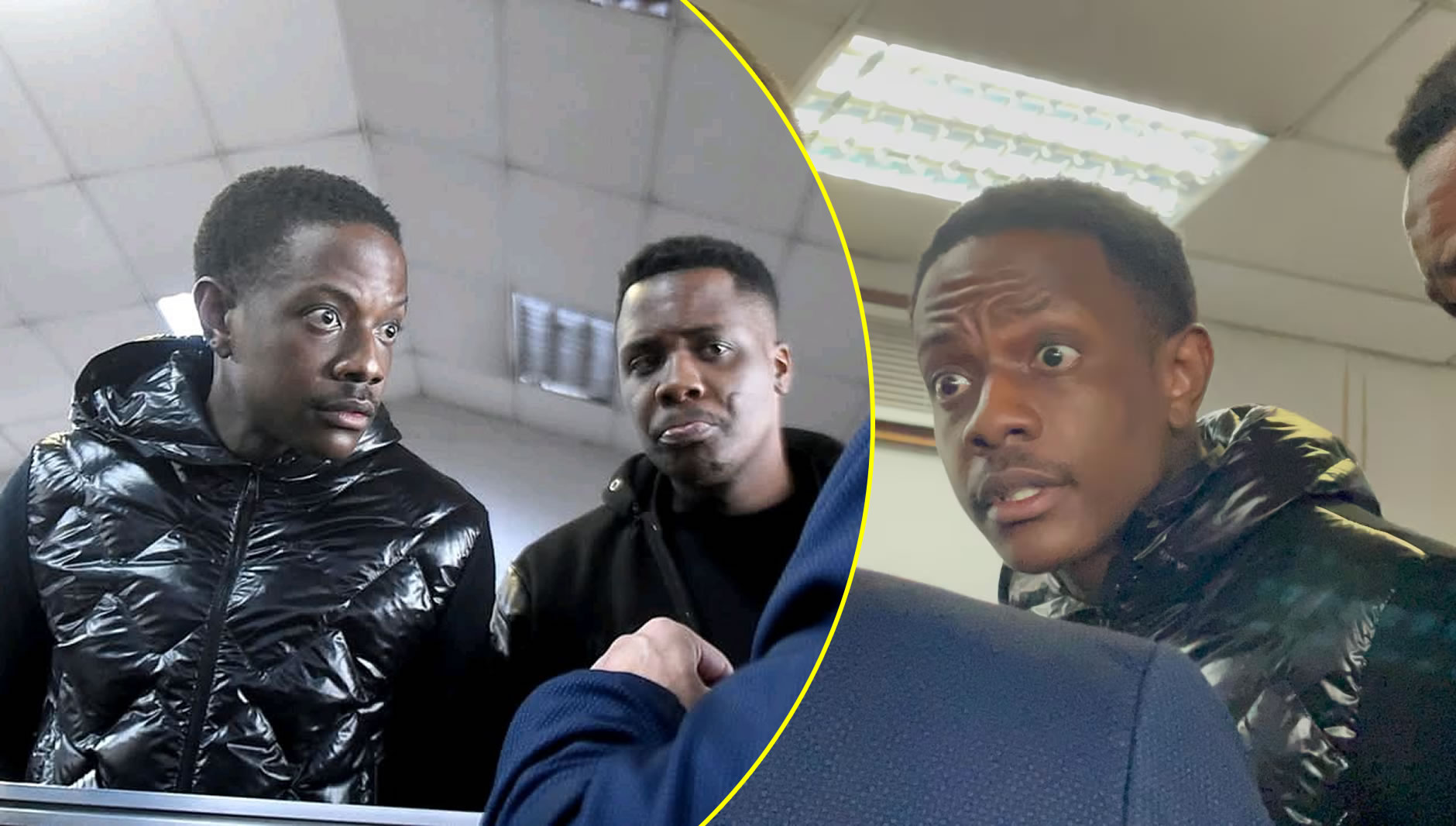
Johannesburg – The curtains have finally closed on the latest legal drama surrounding the Mugabe dynasty. In a quiet courtroom in Johannesburg, the youngest son of the late Zimbabwean strongman Robert Mugabe has admitted that his high-flying life in South Africa was built on a foundation of illegal presence and reckless behaviour. Chatunga Bellarmine Mugabe, once the poster boy for the “Gushungo” brand of excess, stood before the Alexandra Magistrate’s Court on Friday, 17 April 2026, to face the consequences of a lifestyle that has long teetered on the edge of the law.
The proceedings marked a significant fall from grace for a young man who once boasted of his father’s power while pouring thousands of pounds’ worth of champagne over luxury watches. This time, there were no flashy entourages or social media filters to mask the reality of his situation. Alongside his co-accused, Tobias Matonhodze, Mugabe entered a guilty plea that confirmed what many had suspected: the “First Family” of Zimbabwe no longer enjoys the untouchable status they once wielded with such impunity.
The case against the pair is a dark tale of violence and entitlement that unfolded in the leafy, high-security suburb of Hyde Park. It began on 11 February 2026, at a residence that has become a focal point for police investigations. According to court documents and Mugabe’s own admission, the young socialite pointed what he claimed was a “toy gun” at a victim, intentionally leading them to believe they were staring down the barrel of a lethal weapon. While the defence has attempted to downplay the incident as a misguided prank or a minor altercation, the law views the act of pointing a firearm—or an object intended to look like one—as a serious offence.
However, the “toy gun” incident was merely the prelude to a far more sinister event that occurred just eight days later. On 19 February 2026, the same Hyde Park residence became a crime scene when Sipho Mahlangu, a 23-year-old gardener who also provided security services, was shot twice in the back. The young man, who was simply trying to earn a living, found himself caught in the crossfire of a world he likely never chose to inhabit. He was rushed to hospital in a critical condition, a victim of the senseless violence that seems to follow the Mugabe brothers wherever they settle.
In a move that has sparked intense speculation among legal observers, Tobias Matonhodze took the brunt of the most serious charges. Matonhodze pleaded guilty to attempted murder, possession of an illegal firearm, possession of ammunition, and defeating the ends of justice by disposing of the weapon used in the shooting. He also admitted to being in South Africa illegally. The defence team was quick to shoot down any suggestions that Matonhodze was “taking the fall” for his high-profile companion.
Defence attorney Sinenhlanhla Mnguni was firm in his stance when addressing the media outside the court. He stated:
“Think ultimately, the parties are at liberty to plead to the charges that are put to them, and those are entered freely and voluntarily by the different accused.”
Mnguni further dismissed the rumours of a fall-guy arrangement as an attempt to “sensationalise the matter.” Yet, the mystery of the missing weapon continues to cast a long shadow over the case. Despite the guilty pleas, the firearm used to shoot Sipho Mahlangu has vanished. The authorities believe it was intentionally concealed or destroyed to protect those involved, a suspicion that was voiced clearly by the investigating officer, Colonel CP Raj.
Taking the stand as a witness to provide facts for the sentencing phase, Colonel Raj did not mince his words. He highlighted a distinct lack of cooperation from the accused, which he interpreted as a sign of their true character. The Colonel told the court:
“The accused shows no remorse in assisting the police in any way to point out the firearm used. At this stage, I have a tracking team available. Should they change their minds, it can be communicated through their attorneys, and we are available to act.”
The Colonel’s testimony painted a picture of two men who, despite their formal admissions of guilt, are still playing a tactical game with the South African justice system. He also noted that he could not confirm whether the victim, Mahlangu, had received any form of remuneration or compensation for the life-altering injuries he sustained. The lack of a recovered weapon and the uncertainty surrounding the victim’s welfare led State prosecutor Lufuno Maphiri to request a postponement.
“The State is going to make a request for the postponement of this matter in order for the colonel to follow up on the issues that have been raised – the issue of compensation and the possibility of trying to locate the firearm that was used,” Maphiri informed the court.
The magistrate agreed, pushing the matter to 24 April 2026. This delay leaves the Mugabe family in a state of anxious limbo. The defence, led by Advocate Laurence Hodes, has proposed a sentencing deal that seems remarkably lenient given the gravity of the crimes. They are pushing for a suspended sentence, a monetary fine, and a requirement for the accused to compensate the victim. Perhaps most tellingly, the defence has suggested that Mugabe and Matonhodze pay for their own flight tickets back to Zimbabwe—essentially volunteering for deportation to avoid the inside of a South African prison cell.
For Chatunga Bellarmine Mugabe, the charge of being an illegal immigrant—a “border jumper” in the local parlance—is a particularly stinging irony. This is a man whose father ruled Zimbabwe for thirty-seven years, often railing against the “imperialist” influences of the West and the perceived slights from neighbouring nations. Now, his own son has admitted to sneaking across the very borders his father once guarded so fiercely, living as an undocumented foreigner in a country that his family often viewed with a mix of dependency and disdain.
This latest scandal is not an isolated incident but the latest chapter in a long history of controversy involving the Mugabe offspring in South Africa. The trail of chaos stretches back nearly a decade. In 2017, the brothers were famously evicted from a luxury apartment in Sandton after a violent brawl that left a security guard with serious injuries. That same year, their mother, Grace Mugabe, became the subject of an international incident when she was accused of assaulting a young model, Gabriella Engels, with an electrical extension cord in a Sandton hotel room. Grace Mugabe claimed she was acting in self-defence, but the image of the “First Lady” of Zimbabwe allegedly beating a young woman while her sons looked on became a symbol of the family’s perceived arrogance.
The pattern of behaviour has remained remarkably consistent. While their father’s legacy was being dismantled in Harare following the 2017 coup, the Mugabe brothers continued to live a life of unbridled luxury in Johannesburg and Dubai. They became known as the “Brat Pack” of Southern Africa, frequently posting videos of themselves drinking £200 bottles of Ace of Spades champagne and showing off fleets of luxury cars that the average Zimbabwean could not hope to afford in several lifetimes.
However, the protection once afforded by their father’s name has clearly evaporated. Even in their home country, the brothers have found themselves in the crosshairs of the law. In August 2024, Chatunga was arrested in the Zimbabwean border town of Beitbridge for allegedly assaulting a police officer at a roadblock. He was on bail for that matter when he became embroiled in the Hyde Park shooting in South Africa. His older brother, Robert Junior, has also faced his share of legal woes, including a 2023 arrest for damaging property and spitting on a police officer at a party in Harare. More recently, in late 2025, Robert Junior was convicted of drug possession and handed a suspended sentence and a fine.
The Mugabe name, once synonymous with the liberation struggle and the birth of a nation, has become a regular fixture in the crime reports of two countries. The investigative trail even suggests more recent and violent involvements. In February 2026, reports emerged of a “terror raid” at the Mazowe Mine in Zimbabwe, where Chatunga was allegedly seen leading a heavily armed team in a dispute over a mining concession. A security guard at that site was also reportedly left fighting for his life after a brutal assault.
The cumulative weight of these incidents suggests a family that has struggled to adapt to a world where they are no longer the law. In the Hyde Park case, the defence’s strategy appears to be one of damage control—admitting to the lesser charges to shield the principal figure from the most severe consequences. By having Matonhodze plead to the attempted murder, the legal team likely hopes to secure a path for Chatunga to return to Zimbabwe without a lengthy prison term in South Africa.
But the South African authorities seem less inclined to play along. The insistence on finding the missing firearm and ensuring the victim is properly compensated indicates a desire to see justice served fully. The fact that Chatunga was in the country illegally only complicates his position. For years, the Mugabe brothers lived in South Africa on the basis of their status as the children of a head of state. Without that diplomatic cover, they are subject to the same immigration laws as any other foreign national—laws that Chatunga has now admitted to breaking.
As the 24 April court date approaches, the question remains whether the court will accept the defence’s proposal for a non-custodial sentence and deportation. For the victim, Sipho Mahlangu, the outcome of this case is about more than just a headline; it is about accountability for the two bullets that changed his life forever. For the South African public, it is a test of whether the country’s legal system can hold the powerful and the well-connected to the same standards as everyone else.
The “Game Over” headline reflects a growing sentiment that the era of Mugabe exceptionalism has reached its end. The flashy cars and the champagne showers have been replaced by the sterile environment of a magistrate’s court and the very real prospect of being sent home in disgrace. The youngest son of Robert Mugabe, who once had the world at his feet, now finds himself defined not by his father’s achievements, but by his own guilty pleas.
In the end, the story of Chatunga Bellarmine Mugabe is a cautionary tale of what happens when the trappings of power are stripped away, leaving behind only the consequences of one’s actions. The investigative journey into his life reveals a consistent disregard for the law and the well-being of others, a trait that has finally caught up with him in a Hyde Park mansion and an Alexandra courtroom. Whether he truly feels the remorse that Colonel Raj found so lacking remains to be seen, but for now, the law has the final word.
The following table summarises the key charges and pleas from the Friday hearing:
|
Accused
|
Charge
|
Plea
|
|
Bellarmine Chatunga Mugabe
|
Pointing a Firearm (Toy Gun)
|
Guilty
|
|
Bellarmine Chatunga Mugabe
|
Illegal Immigration (Border Jumping)
|
Guilty
|
|
Tobias Matonhodze
|
Attempted Murder (Shooting of Sipho Mahlangu)
|
Guilty
|
|
Tobias Matonhodze
|
Possession of Illegal Firearm
|
Guilty
|
|
Tobias Matonhodze
|
Possession of Ammunition
|
Guilty
|
|
Tobias Matonhodze
|
Defeating the Ends of Justice (Disposing of Weapon)
|
Guilty
|
|
Tobias Matonhodze
|
Illegal Immigration
|
Guilty
|
The world will be watching on 24 April to see if the “Gushungo” luck has finally run out, or if the Mugabe name still carries enough weight to secure a final escape from the full force of the law. For now, the “border jumper” son of Zimbabwe’s former leader waits in the shadows of his own making, a far cry from the spotlight he once so eagerly craved.