


BEYOND THE BEND: THE DEADLY N1 TRAP CLAIMING ZIMBABWEAN LIVES
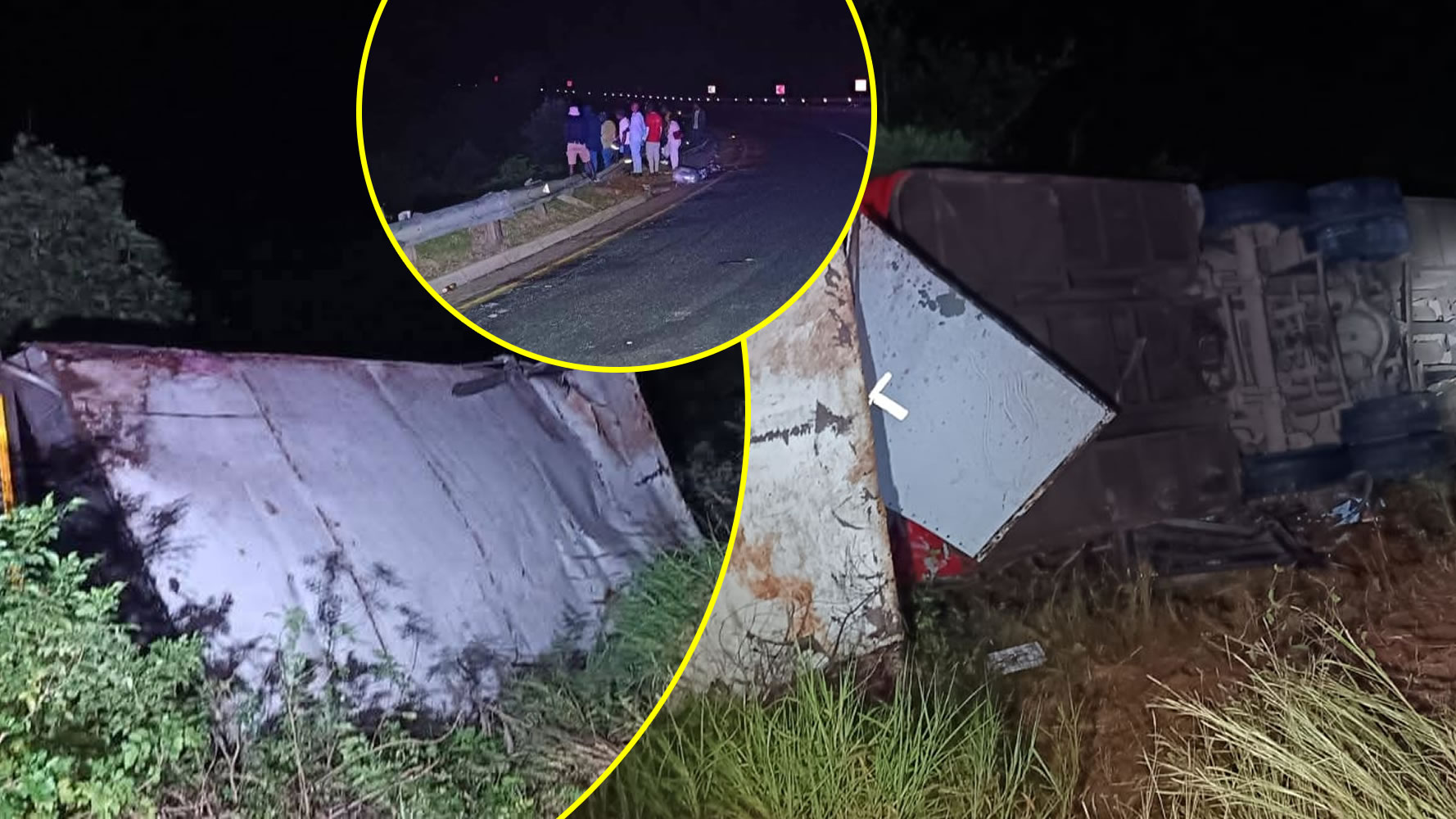
MAKHADO, SOUTH AFRICA – The pre-dawn silence of the N1 highway was shattered once again on Wednesday morning, April 22, 2026, as a Zimbabwean cross-border bus veered off the road and plunged into a deep ditch near the notorious Ingwe Motel. The accident, which occurred at approximately 02:50, has left five people dead and at least thirty-two others injured, many critically. As emergency services worked through the morning to pull survivors from the wreckage, a familiar and grim question began to circulate amongst the local residents and transport experts: how many more must die before this stretch of road is fixed?
The Limpopo Department of Transport and Community Safety spokesperson, Mashu Mabata, confirmed the details of the crash later that morning. “The department informs motorists of a bus accident involving a Zimbabwean bus on the N1 between Makhado and Musina, near Ingwe Motel,” she said. “The road has now been temporarily reopened. The bus reportedly lost control and veered off the road, landing in a ditch along the N1 North near Ingwe Motel. Motorists are advised to reduce speed when approaching the area and drive with caution.”
While the immediate cause of Wednesday’s crash is still under investigation, the location itself—a sharp, mountainous section of the N1 near the Hendrik Verwoerd Tunnel—is a well-known death trap. This is the same area where, on October 13, 2025, a horrific crash involving a DNC Services bus claimed the lives of forty-three people, mostly Zimbabweans and Malawians. Just months later, on February 19, 2026, another Bulawayo-bound bus drifted down a cliff in the same vicinity, killing five more passengers.
The frequency of these disasters suggests a systemic failure that goes beyond simple driver error. An investigation into the history of this route reveals a lethal combination of poor road engineering, a lack of driver induction, and a stalled multi-billion rand infrastructure project.
The Engineering of a Disaster
The section of the N1 North between Louis Trichardt (Makhado) and Musina is one of the most important transport corridors in Southern Africa, yet it remains one of the most dangerous. Local residents, who have witnessed decades of carnage, argue that the road’s design has long since outlived its intended life.
Johan Fourie, a local resident who has travelled the pass for nearly thirty years, expressed his frustration on social media following the latest incident. “How many people must still die before the government does anything to this dangerous piece of road? I have travelled through there regularly for nearly 30 years, and the way people drive on that pass is horrendous! Considering that it is the N1 and a toll road, it is a shocking shame that more is not being done to protect the lives of mostly innocent passengers,” he said.
The specific 40 km/h hairpin bend near the Ingwe Hotel is particularly notorious. The sharp curves and steep embankments are a challenge even for experienced drivers, but for those unfamiliar with the terrain, they are often fatal. Marianna Nicholson, another local resident, suggested that simple engineering interventions could save lives. “There should be speed humps and ripples to break the speed of all vehicles. I do not understand that the RTMC [Road Traffic Management Corporation] and Arrive Alive have not made the necessary recommendations to SANRAL and the Minister of Transport. It is their duty to identify these hotspots,” she noted.
Despite these pleas, a R1.2 billion upgrade project announced by the South African National Roads Agency Limited (SANRAL) in 2023 has been suspended. The project, which was meant to improve the safety of the N1 North, was halted in March 2024 due to a contractual dispute and a legal challenge from one of the bidders. While SANRAL continues with routine maintenance like pothole repairs, the fundamental design flaws of the mountainous pass remain unaddressed.
The “New Driver” Factor
While the road itself is a major factor, the human element cannot be ignored. In several recent accidents, including a fatal Mzansi Express crash in August 2024 that killed ten people, reports indicated that the driver was new to the route. In the transport industry, “route learning” or induction is a critical safety procedure, but it is often bypassed by companies under pressure to keep their fleets moving.
The well-known procedure is for a new driver to undergo induction and make several trips just observing the terrain and how the established drivers handle the curves. However, when a driver is thrown onto the N1 North at night without prior experience of the Ingwe Motel hairpin bend, the results are frequently catastrophic. The combination of a heavy, often overloaded bus, a steep descent, and a driver who does not anticipate the sharpness of the turn is a recipe for disaster.
In the case of the Mzansi Express accident, grieving families were vocal about their anger. One relative, speaking on a social media forum, lamented, “Some children are now orphans because of your new driver. We had high hopes for our relatives, but they were taken by someone who didn’t know the road.”
A Corridor of Grief
The N1 highway is the lifeline for thousands of Zimbabweans travelling to and from South Africa for work, trade, and family visits. Yet, it has become a corridor of grief. The table below highlights the scale of the tragedy over the past few years in this specific area.
|
Date
|
Incident Description
|
Casualties
|
|
May 2019
|
Bus overturned at Ingwe Motel turn
|
9 Dead
|
|
Aug 2024
|
Mzansi Express crash near Makhado (New driver)
|
10 Dead
|
|
Oct 2025
|
DNC Services bus plunged off embankment
|
43 Dead
|
|
Feb 2026
|
Bulawayo-bound bus drifted down cliff
|
5 Dead
|
|
Apr 2026
|
Zimbabwean bus plunged into ditch near Ingwe Motel
|
5 Dead
|
The Path Forward: Mitigation and Accountability
Mitigating these accidents requires a two-pronged approach: immediate infrastructure improvements and stricter oversight of cross-border operators.
Firstly, SANRAL must resolve its legal disputes and prioritise the N1 North upgrade. If a full-scale redesign is not immediately possible, low-cost interventions such as “rumble strips,” improved signage, and high-visibility lighting at the Ingwe Motel bend could provide drivers with the necessary warnings.
Secondly, the Zimbabwean and South African transport ministries must collaborate to enforce mandatory induction periods for cross-border drivers. Bus companies should be held legally accountable if they are found to have assigned an un-inducted driver to a high-risk route.
As the families of Wednesday’s victims begin the painful process of identifying their loved ones, the wreckage of the bus serves as a silent witness to a tragedy that was entirely preventable. The N1 North near Makhado is not just a road; it is a test of a government’s commitment to the safety of its people. Until that test is passed, the ditch near Ingwe Motel will continue to be a final resting place for many more innocent travellers.