


EXPOSED: THE SHADOWY REASON STATE AGENTS ARE SWOOPING ON HOSPITALS AMID THE NURSES’ STRIKE
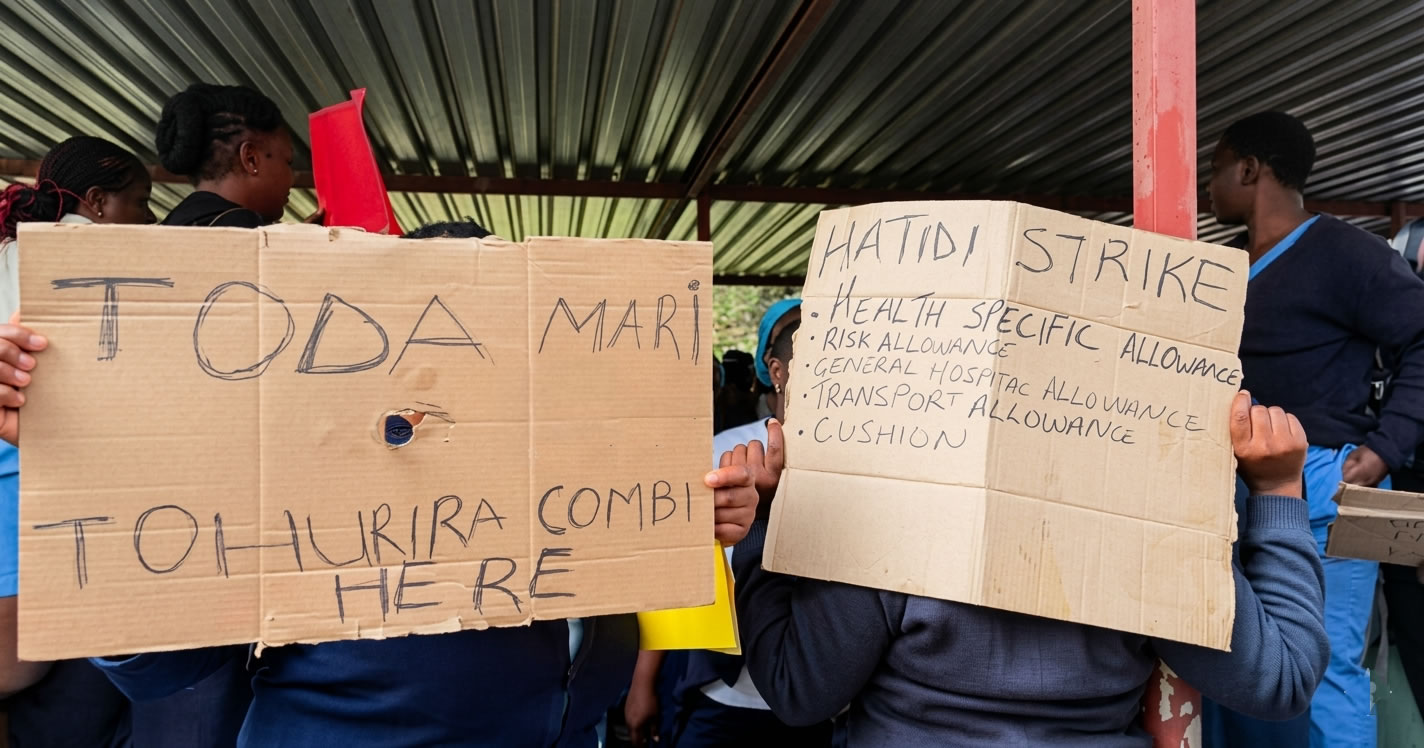
As Zimbabwe’s dedicated nurses continue their nationwide strike for improved wages and working conditions, a deeply troubling development has cast a long shadow over the nation’s healthcare system: the pervasive presence of state security agents within the very corridors of hospitals. While the Ministry of Health publicly calls for “constructive dialogue,” the stark reality on the ground is one of profound intimidation and relentless surveillance. Patients, already vulnerable, find themselves caught in the crossfire as medical professionals report being followed, questioned, and monitored by unidentified individuals, often described as men in suits.
This investigative piece delves into the clandestine motives behind the state’s heavy-handed response. Beyond the official narrative of maintaining public order, a more sinister agenda appears to be at play: a desperate and calculated attempt to suppress a burgeoning movement that threatens to expose the total collapse of Zimbabwe’s public health system. We have uncovered reports of nurses being coerced back to work under duress, and the chilling impact this atmosphere of fear is having on the quality and delivery of patient care. By meticulously connecting the dots between the ongoing strike and the sudden, conspicuous “security” presence, we reveal a concerted effort to silence the nation’s healers at a time when their voices are most urgently needed.
The strike, which was initially scheduled for 15-17 April 2026, was rescheduled to 20-22 April 2026, after nurses rejected a paltry US$30-US$40 salary increment, deeming it an insult to their tireless efforts and the escalating cost of living. The Zimbabwe Nurses Association (ZINA) has been at the forefront of these protests, demanding a minimum wage of US$500 per month to adequately address their grievances.
Conditions within Zimbabwe’s public hospitals have deteriorated to a critical point. Nurses are routinely forced to work double shifts, often with minimal and outdated equipment, frequently improvising life-saving treatments due to severe shortages. The nurse-to-patient ratio has spiralled to an alarming 1:20 or even 1:30 in some wards, a stark contrast to the recommended international standard of approximately 1:3. This chronic understaffing is exacerbated by a significant brain drain, with nearly 4,000 nurses actively seeking the release of their service bonds to pursue employment opportunities outside Zimbabwe, driven by the dire working conditions and inadequate remuneration.
The state’s response, rather than addressing these legitimate grievances, has been to deploy security agents to monitor what they perceive as “dissident” activity. This has taken a severe psychological toll on medical staff, who are already under immense pressure, and on patients who are in vulnerable states. This story illuminates the complex and often contentious relationship between labour rights and national security, demonstrating how these fundamental principles are frequently pitted against each other in the current political climate.
Exclusive interviews with whistleblowers have shed light on the “shadowy” tactics employed by state agents. These tactics range from the covert monitoring of private WhatsApp groups to overt physical tailing of nurses. The extent of this surveillance is unprecedented, creating an environment of pervasive fear and distrust. This stands in stark contrast to the government’s official statements, highlighting a profound disconnect between the corridors of power and the grim reality unfolding in hospital wards across the country.
ZINA President Enock Dongo, a vocal advocate for nurses’ rights, remains defiant in the face of this intimidation. He stated, “We are not worried about intimidation. What we are doing is lawful and no amount of intimidation will stop us”. His resolve underscores the determination of nurses to continue their fight for fair treatment and improved conditions, despite the risks involved. The association’s situation report further condemned these actions, asserting, “The association strongly condemns any form of intimidation or coercion that undermines workers’ constitutional and legal right to participate in lawful industrial action”.
Reports from various hospitals paint a clear picture of the state’s tactics. At Parirenyatwa Group of Hospitals and Sally Mugabe Central Hospital, a significant number of nurses were absent, with wards being manned by probationary staff and student nurses. An anonymous nurse revealed the deep-seated frustration among healthcare workers: “We have always said every year that we want our salaries pegged to the United States dollar because the local currency quickly loses value. With the current price increases, we can no longer afford even basic transport”. This sentiment is particularly poignant given the current economic climate, where fuel prices stand at approximately US$2.09 per litre for diesel and US$2.23 per litre for petrol as of 17 April 2026. Many nurses are forced to walk to work, unable to afford the exorbitant transport costs on their current wages.
Furthermore, nurses have raised concerns about alleged violations of their rights, including rental charges for government accommodation. They reportedly pay up to US$120 per month for basic rooms, with these amounts being deducted directly from the US dollar component of their already meagre salaries. They have also called for alignment with international labour standards on shift work, citing long and irregular hours that lead to severe fatigue and increase their occupational exposure to infections.
The deployment of suspected intelligence officers occurred as striking nurses defied a directive to return to work while negotiations were supposedly underway. Health and Child Care Minister Douglas Mombeshora had urged workers to return to allow for dialogue, claiming that processes were in motion to review their grievances in a structured and responsible manner, balancing critical health service delivery with worker welfare. However, nurses, who have consistently voiced concerns over deteriorating hospital conditions, largely ignored this directive, continuing their stay-away.
While central hospitals recorded strong participation in the strike, with most institutions showing significant compliance, ZINA noted that nurses at Gweru and Chinhoyi provincial hospitals did not participate, allegedly due to intense intimidation. Conversely, strong participation was observed at several other provincial hospitals, including Victoria Chitepo and Marondera, with partial participation in some areas. At the district level, Matabeleland South, Matabeleland North, Mashonaland Central, and Midlands reportedly showed strong mobilisation and unity among health workers. In Mashonaland Central, officials from the President’s Office reportedly visited and interrogated senior officials at district hospitals in Mt Darwin and Bindura, further highlighting the state’s direct involvement in suppressing the strike.
The government’s attempts to control information and suppress dissent extend beyond physical surveillance. The monitoring of private WhatsApp groups is a particularly insidious tactic, with the state reportedly requiring administrators to obtain licenses for such groups. This move is seen as a direct attempt to stifle communication and organisation among activists and professionals, including nurses, who use these platforms to coordinate their actions and share information.
The current inflation rate in Zimbabwe, while reported at around 4-10% in local currency (ZiG), does not accurately reflect the soaring cost of living for ordinary citizens. The continuous devaluation of the local currency against the US dollar means that fixed salaries quickly lose their purchasing power, pushing essential workers like nurses further into poverty. This economic hardship, coupled with the deteriorating working conditions and the threat of state surveillance, creates an untenable situation for healthcare professionals, forcing many to consider leaving the country altogether.
This chilling look at the lengths the state will go to maintain a facade of stability, even as the healthcare system crumbles around them, reveals a profound disregard for the well-being of its citizens and its most vital frontline workers. The nurses’ strike is not merely about wages; it is a desperate cry for dignity, respect, and the fundamental right to provide adequate care in a functional healthcare system. The shadowy presence of state agents in hospitals only serves to deepen the crisis, eroding trust and further jeopardising the lives of countless Zimbabweans.