


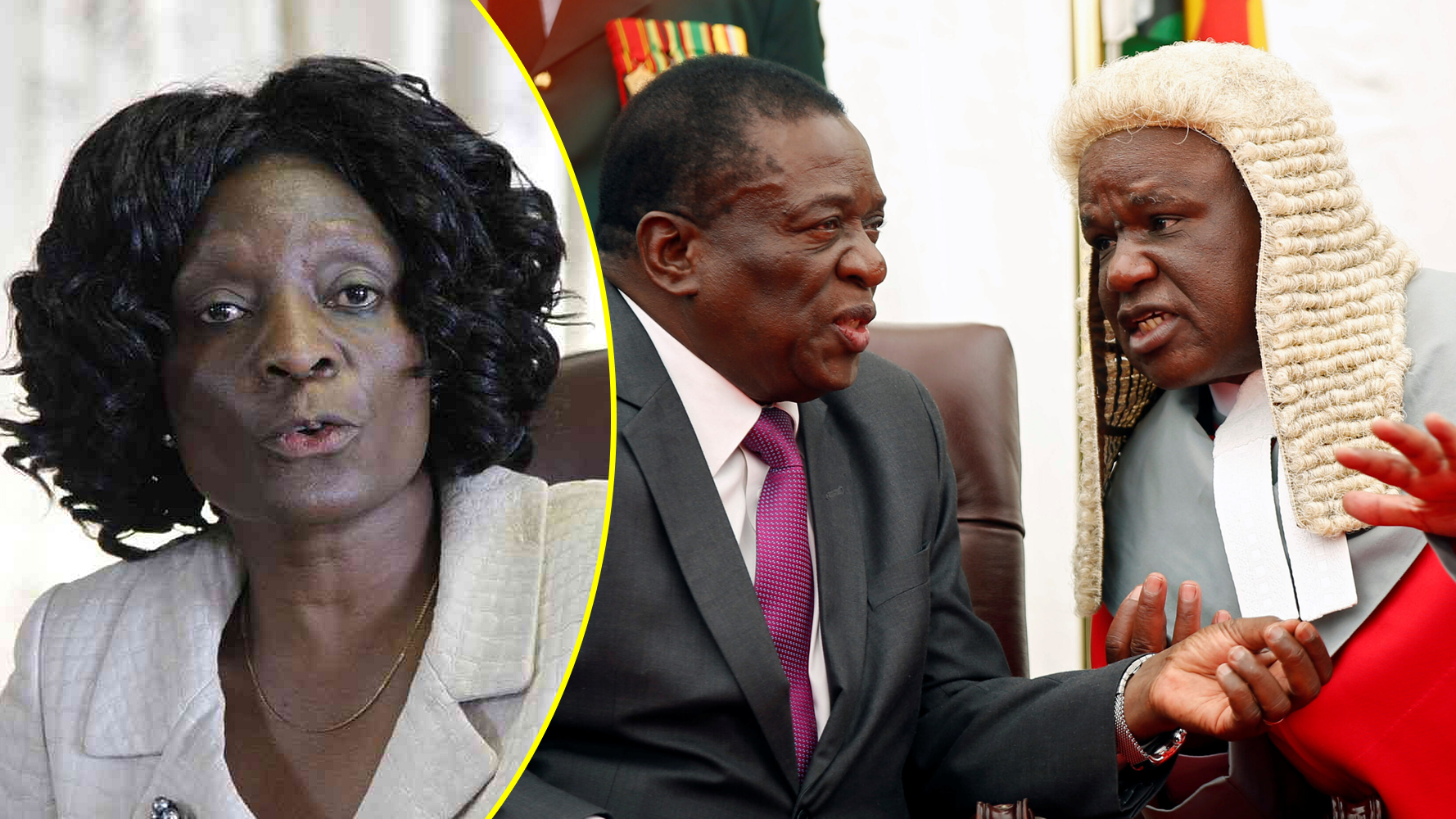
HARARE – As Chief Justice Luke Malaba prepares to bid farewell to the bench, the nation stands at a judicial crossroads. The Judicial Service Commission has confirmed that his last working day will be May 14, 2026, as he reaches the mandatory retirement age of 75 the following day. His departure is not just a change of personnel; it is the final act in a decade-long battle to define the independence of the Zimbabwean courts. The legacy he leaves behind is one of deep division and a judiciary that many feel has become an extension of the executive branch.
Malaba’s tenure has been one of the most controversial in Zimbabwe’s history. It was marked by the 2018 election challenge and the dramatic constitutional amendment that allowed him to stay beyond the initial retirement age of 70. This article analyses the “Malaba Doctrine” — a judicial philosophy that many critics argue has prioritised state stability over individual rights. We look at the hidden influence of the “Command Justice” system and how it has paved the way for the current constitutional crisis. By simplifying the complex legal battles that defined his career, we show why the choice of the next Chief Justice is the most important political decision of 2026.
Investigative sources suggest that the race to succeed Malaba is already being fought behind closed doors, with the Constitutional Amendment Bill No. 3 playing a central role. The Bill’s provisions on judicial appointments are seen by many as a way for the executive to hand-pick a successor who will be sympathetic to the 2030 term extension project. In a parallel reform, the Bill also proposes removing the Judicial Service Commission from the process of appointing the Prosecutor-General. Malaba’s legacy is thus being carefully curated to ensure a smooth transition to another loyalist who will uphold the status quo and protect the interests of the ruling elite. This is a battle for the very soul of the Zimbabwean legal system.
Furthermore, we investigate the judicial purge that has taken place under Malaba’s watch. Several judges who showed signs of independence have been sidelined or subjected to tribunals that many observers believe were politically motivated. We speak to legal insiders who describe a culture of fear and self-censorship within the courts. This investigative piece explores the potential candidates for the Chief Justice position and what their past rulings tell us about the future of Zimbabwean democracy. Will the next Chief Justice be a reformer who restores the 2013 spirit, or a continuity candidate who will oversee the final dismantling of the constitution? This is the ultimate investigative guide to the judicial transition that will decide the fate of the 2028 and 2030 political cycles.
The Malaba Doctrine and Command Justice
To understand the gravity of the current transition, one must first examine the specific cases where the courts appeared to side with the state against clear constitutional mandates, and how this has eroded public trust. The term “Command Justice” gained prominence during the 2019 fuel protests, when lawyers marched in the capital with pieces of paper inscribed with the word “injustice” gagging their mouths. Their placards read “No to command justice,” protesting what they saw as coordinated, harsh bail denials directed from the top. This public outcry highlighted a growing perception that the judiciary was no longer an impartial arbiter but rather an instrument of state power.
The Malaba Doctrine, as legal scholars have termed it, is characterised by a strict adherence to executive authority, often at the expense of human rights and constitutional safeguards. When defending his record, Malaba stated that a judicial office cannot exist outside the law. He further argued, “Inclusivity speaks to who is able to use the system of justice. At its core lies the democratic promise of equal treatment of all before the law.” However, critics argue that this promise has been selectively applied, particularly in cases involving political dissent or challenges to the ruling party’s authority. The doctrine, they contend, has systematically undermined the separation of powers, a cornerstone of any democratic state.
The most defining moment of his tenure was the 2018 presidential election petition, where the Constitutional Court, under his leadership, unanimously dismissed the opposition’s challenge to President Emmerson Mnangagwa’s victory. This ruling cemented his reputation as a reliable ally of the executive. The legal arguments presented by the opposition, which included allegations of widespread irregularities, were swiftly rejected, leading to accusations that the court had prioritised political expediency over justice. The subsequent enactment of Constitutional Amendment No. 2 in 2021, which legally extended his tenure past the age of 70, sparked outrage amongst law professionals and civil society, further entrenching the perception of a compromised judiciary. This amendment, pushed through despite significant public opposition, was seen as a blatant attempt to circumvent constitutional limits and maintain a pliant judiciary.
The Judicial Purge: A Culture of Fear and Self-Censorship
The consolidation of power within the judiciary was not achieved through rulings alone. It was accompanied by a systematic removal of dissenting voices, creating a palpable culture of fear and self-censorship among judges. During Malaba’s tenure, President Mnangagwa fired four High Court judges in just two years, a move unprecedented in Zimbabwe’s legal history and one that sent a clear message to the remaining bench.
Justice Erica Ndewere was suspended and later removed from office after granting bail to an opposition politician, Job Sikhala. She publicly stated that she was being victimised by the Chief Justice for refusing to take instructions on how to handle the case, a claim that resonated with many legal observers. Her dismissal was widely seen as a punitive measure for judicial independence. Similarly, Justice Edith Mushore was fired for allegedly disappearing from work without official leave, a charge that many found questionable given the political climate. Other judges, such as Justice Thompson Mabhikwa and Justice Francis Bere, were removed following tribunals investigating various forms of misconduct, with critics suggesting that these tribunals were often politically motivated and lacked genuine impartiality.
Legal insiders describe a chilling effect resulting from these dismissals. The message sent to the remaining bench was clear: independence comes at a high personal and professional cost. This environment of self-censorship ensures that politically sensitive cases are handled with extreme caution, often resulting in rulings favourable to the state. Judges, fearing for their careers and livelihoods, are increasingly reluctant to challenge executive authority, leading to a judiciary that is perceived as subservient rather than independent.
Constitutional Amendment Bill No. 3: Engineering the Succession
As the May 2026 retirement date approaches, the focus has shifted to the succession process, with the introduction of Constitutional Amendment Bill No. 3 being a critical development. This Bill is widely viewed as a pre-emptive strike to control this transition and ensure a hand-picked successor. The Bill alters the appointment process for judges, allowing the President to appoint them after merely consulting the Judicial Service Commission, rather than being bound by a rigorous public interview process that would allow for greater transparency and scrutiny.
This legislative manoeuvre provides the executive with the legal authority to promote a judge from the lowest judicial tier, or appoint a nominally qualified lawyer, directly to the highest court. It effectively neutralises the Judicial Service Commission’s role as an independent vetting body, stripping it of its power to ensure merit-based appointments. The timing of this Bill is no coincidence; it is designed to ensure that the next Chief Justice is someone who will not obstruct the political ambitions of the ruling party, particularly the rumoured 2030 term extension project, which would see President Mnangagwa seek a controversial third term.
Rita Makarau: The Architect of Continuity?
Among the names circulating in legal and political circles, Rita Makarau has emerged as the frontrunner to succeed Malaba. As a former Supreme Court Judge and the former Chairperson of the Zimbabwe Electoral Commission (ZEC), Makarau possesses the requisite legal experience and political pedigree. Her past roles, particularly at ZEC, have positioned her as a figure capable of navigating highly charged political environments.
Her tenure at the electoral commission demonstrated her ability to deliver outcomes that, while often contested by the opposition, satisfied the ruling establishment. For the executive, Makarau represents stability and continuity. She is viewed as a safe pair of hands who understands the unwritten rules of Zimbabwean politics and the delicate balance between judicial pronouncements and state power. Her appointment would signal a continuation of the judicial philosophy established during Malaba’s era, ensuring a predictable and compliant judiciary.
If appointed, Makarau would become Zimbabwe’s first female Chief Justice. However, her appointment would likely be viewed by critics not as a triumph for gender equality, but as the successful execution of a carefully planned succession strategy designed to maintain the status quo and further consolidate executive power. The question for many is not whether she is qualified, but whether she can, or will, restore the independence and public trust that the judiciary has lost.
The Road to 2028 and 2030: A Nation at a Crossroads
The departure of Chief Justice Luke Malaba is a watershed moment for Zimbabwe. The judiciary is the last line of defence against executive overreach, and its independence is crucial for the survival of any democracy. The upcoming appointment will not only shape the legal landscape for the next decade but will also have profound implications for the 2028 general elections and the potential constitutional battles surrounding the 2030 political cycle. The choices made in the coming months will determine whether Zimbabwe moves towards a more democratic and accountable future or entrenches a system where the judiciary is merely a rubber stamp for the executive.
The legacy of the Malaba era is a cautionary tale of how courts can become instruments of political power, eroding public trust and undermining the rule of law. The incoming Chief Justice will inherit a fractured institution suffering from a severe deficit of public trust. Whether they choose to be a reformer who restores the spirit of the 2013 Constitution, which enshrined greater judicial independence, or a continuity candidate who oversees its final dismantling, remains to be seen. What is certain, however, is that the battle for the very soul of the Zimbabwean legal system is far from over. The final act of the Malaba era may be ending, but the consequences of his tenure will be felt for generations to come, shaping the political and legal landscape of Zimbabwe for years to come.