


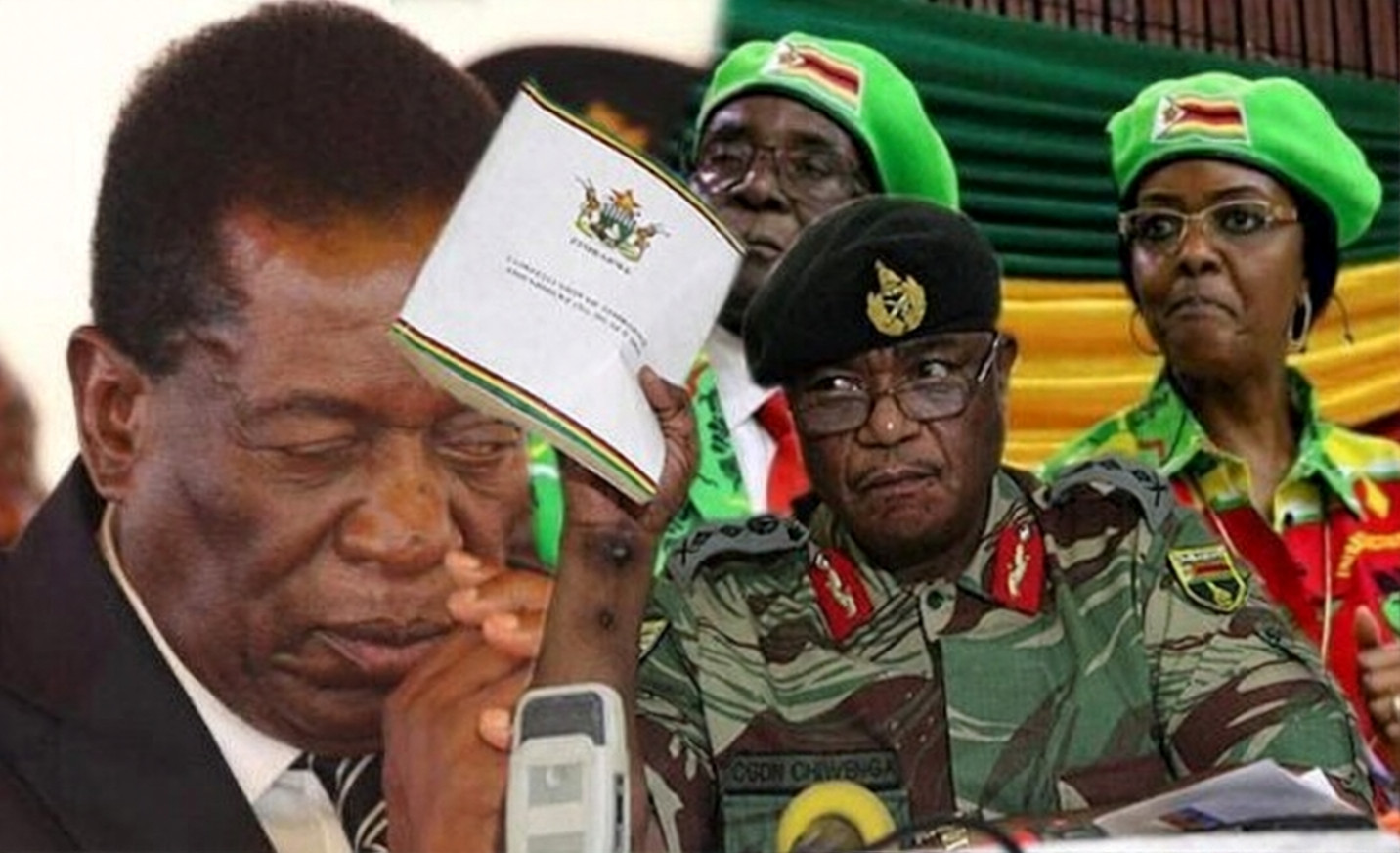
HARARE – A profound schism is widening within Zimbabwe’s corridors of power, as a formidable group of retired army generals and former senior civil servants issues a stark warning to President Emmerson Mnangagwa. At the heart of this escalating tension is the contentious Constitutional Amendment (No. 3) Bill (CAB3), a legislative manoeuvre widely perceived as an attempt to extend Mnangagwa’s presidential term beyond its constitutional limit of 2028. This unfolding drama reveals a ‘silent war’ brewing, threatening to destabilise the political landscape and expose deep fractures within the ruling ZANU-PF party and the military establishment that once propelled Mnangagwa to power.
The retired generals, speaking through former Air Marshal Henry Muchena, have not minced their words. They accuse President Mnangagwa of being the “principal architect and principal beneficiary” of CAB3, a bill that seeks to extend presidential terms from five to seven years and potentially allow Mnangagwa, currently 83, to remain in office until 2030. This move, they argue, is a betrayal of the original ‘Succession Plan’ that underpinned the 2017 military-backed transition, which saw Robert Mugabe ousted and Mnangagwa ascend to the presidency. The generals believe in a turn-based system of leadership, a tacit agreement allegedly forged during the 2017 coup, which they feel is now being discarded in favour of a permanent presidency.
The opposition to CAB3 is not merely rhetorical; it is actively mobilising. The generals have formally petitioned parliament and held face-to-face meetings with Mnangagwa, which reportedly ended in a stalemate. During a particularly tense meeting on May 18, when the generals raised concerns about the bill’s constitutional implications and the potential alienation of citizens and ZANU-PF members, Mnangagwa’s response was combative. He reportedly told the disgruntled retired generals, “Whoever wins, wins.” This remark, according to Muchena, “lays bare the contempt with which the constitutional concerns of citizens and members of our party are regarded at the highest level of executive authority.”
The situation is further complicated by explosive allegations of a massive bribery scheme designed to secure parliamentary support for the bill. The generals have directly named Kudakwashe Tagwirei, a politically connected businessman and head of Sakunda Holdings, as the primary financial force behind the push for CAB3. They allege that a US$31 million fund has been established to buy parliamentary votes, with US$50,000 purportedly approved for each Member of Parliament. Furthermore, they claim that provincial ZANU-PF chairmen have been induced with motor vehicles and cash payments of US$100,000 each to support the bill.
“These are not allegations we make lightly,” Muchena stated emphatically. “We make them as men and women who have served this nation with honour, and who refuse to stand silently by while its constitutional foundations are sold to the highest bidder. It will simply not happen.” The generals have issued a pointed warning to Members of Parliament, senators, and proportional representation members, cautioning that voting for the bill would constitute “a constitutional transgression that will carry enduring and serious political consequences for each and every individual who participates in it.”
The electorate is watching. History is watching. Every Zimbabwean will remember those who chose personal enrichment over constitutional duty,” Muchena warned. He argued that lawmakers who support the bill risk violating the Constitution by endorsing proposed changes that could extend presidential and parliamentary terms without direct approval from citizens. “Complicity in CAB3 constitutes a blatant violation of the Constitution of Zimbabwe,” the statement read.
The legal battleground is also heating up. Activist Youngerson Matete filed an application in the High Court on May 20, arguing that incumbent MPs and the president cannot benefit from changes to term limit provisions without two referendums held six months apart. The generals have endorsed these legal arguments as “compelling and ought to persuade any reasonable court,” declaring their unqualified respect for judicial independence. They also noted that individual Members of Parliament have been named as respondents in dozens of voter-initiated applications within their respective constituencies. “We call upon [judges] to discharge their duty without fear or favour,” Muchena urged.
This ‘silent war’ is not confined to legal challenges and public statements; it is also manifesting in the shadows. Reports indicate that secret meetings have been held between senior military officials and war veterans to strategise against Mnangagwa’s 2030 ambitions. There are even whispers of ‘shadow cabinets’ being formed, suggesting a concerted effort to present an alternative vision and leadership structure within the ruling party. This level of organised resistance from within the military and veteran community is unprecedented in recent Zimbabwean history and underscores the gravity of the current political crisis.
The fracture in the ‘Coup Coalition’ is perhaps the most significant development. The military establishment, particularly the retired generals and war veterans, view the 2030 extension as a direct threat to the stability and future of the nation. They are calling on all citizens to “mobilise the electorate in active and sustained opposition” to MPs who “seek to collude with zvigananda to unlawfully extend their own terms of office, and that of the president, without the absolute consent of the voters.” The term ‘zvigananda’ is an informal reference coined by Vice President General (Retired) Constantino Chiwenga to wealthy backers of Mnangagwa’s rule, which highlights the growing resentment towards the perceived influence of money in politics.
The government, however, appears determined to push the bill through. Justice Minister Ziyambi Ziyambi has signalled the intention to rush the legislation through both houses of parliament before sending it to Mnangagwa for his assent. With ZANU-PF holding a two-thirds majority in the lower house and overwhelmingly controlling the upper house, political analysts expect the bill to sail through parliament. However, the growing opposition from the military and veteran community, coupled with the legal challenges and public outcry, suggests that the path to 2030 will be anything but smooth.
The implications of this ‘silent war’ extend far beyond the immediate political future of President Mnangagwa. It raises fundamental questions about the nature of democracy and constitutionalism in Zimbabwe. The proposed amendments, if passed, could weaken constitutional safeguards and democratic accountability, consolidating power in the hands of the executive. This is a prospect that many Zimbabweans, particularly those who fought for the country’s liberation, find deeply troubling.
As the debate over CAB3 intensifies, the nation finds itself at a crossroads. The outcome of this struggle will not only determine the political trajectory of Zimbabwe for the next decade but also test the resilience of its democratic institutions. The retired generals have drawn a line in the sand, challenging the very men they helped put in power. Their warning is clear: the Constitution is not for sale, and the future of the nation cannot be decided in the shadows by a select few.
The allegations of a US$31 million bribery fund, allegedly orchestrated by Kudakwashe Tagwirei, add a layer of corruption and intrigue to the unfolding drama. If true, these allegations suggest a brazen attempt to subvert the democratic process and buy political support. The generals’ decision to publicly name Tagwirei and detail the alleged bribery scheme indicates a willingness to confront the powerful financial interests that back Mnangagwa’s rule. This is a high-stakes gamble, one that could have profound consequences for all involved.
The legal challenges, particularly the application filed by Youngerson Matete, offer a potential avenue for resolving the crisis through the courts. However, the independence of the judiciary in Zimbabwe has often been questioned, and it remains to be seen whether the courts will be willing to rule against the executive on such a sensitive political issue. The generals’ call for judges to “discharge their duty without fear or favour” is a reminder of the critical role the judiciary plays in upholding the rule of law and protecting the Constitution.
In conclusion, the ‘silent war’ brewing over CAB3 and the ED2030 plot is a defining moment in Zimbabwe’s political history. The retired generals’ strong warning to Mnangagwa highlights the deep divisions within the ruling party and the military establishment. The outcome of this struggle will have far-reaching implications for the future of democracy and constitutionalism in Zimbabwe. As the nation watches this high-stakes political drama unfold, one thing is clear: the battle for the soul of Zimbabwe is far from over. The electorate, the military, and the political elite are all locked in a struggle that will determine the destiny of the nation for years to come.