


The Unsettling Demands of the ‘Wealth Beast’: A Bulawayo Money Changer’s Harrowing Confession
Bulawayo – The quiet suburb of Cowdray Park in Bulawayo has once again found itself at the epicentre of a bizarre and unsettling narrative, as a local money changer, known in street parlance as an usiphatheleni, publicly surrendered a monkey he claimed was the source of his illicit wealth and, more recently, the cause of his torment. This extraordinary confession, made during a deliverance session led by the renowned spiritual leader Madzibaba Emmanuel Mutumwa, has cast a stark light on the shadowy world of ‘juju’ practices and the desperate lengths to which some individuals will go in pursuit of riches.
The money changer, whose identity has been withheld, reportedly confessed to congregants that the monkey was no ordinary pet. It was, he alleged, a ‘juju’ animal acquired from a traditional healer, or sangoma, specifically to siphon money from unsuspecting fellow money changers in Bulawayo’s bustling city centre. Through these alleged dark powers, the man had amassed a considerable fortune, evident in his ownership of multiple properties across Bulawayo’s eastern and western suburbs and a flashy fleet of luxury vehicles.
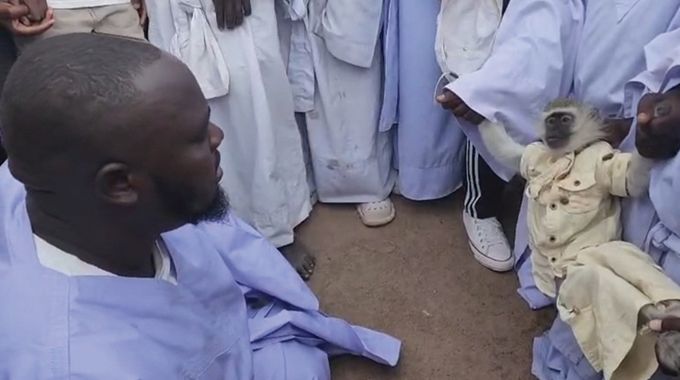
However, this ‘money machine’ eventually turned into a living nightmare. The terrified usiphatheleni claimed the monkey began making increasingly chilling and bizarre demands. Among these was an alleged insistence on sharing his bed, a condition the animal supposedly imposed to continue boosting his wealth. Unable to endure these frightening propositions, the man sought spiritual intervention, recalling a recent, equally dramatic incident involving a businessman whose alleged ‘owl juju’ was reportedly destroyed during a deliverance session conducted by Madzibaba Emmanuel Mutumwa of Johanne Masowe Yechishanu.
Driven by fear and a desperate need for liberation, the money changer attended a deliverance ceremony in Cowdray Park last week. Initially, he attempted to conceal the true nature of his relationship with the animal, claiming it was merely a pet. A witness recounted the scene: “He first lied and said it was just his pet. But as prayers and questioning intensified, the truth started coming out.”
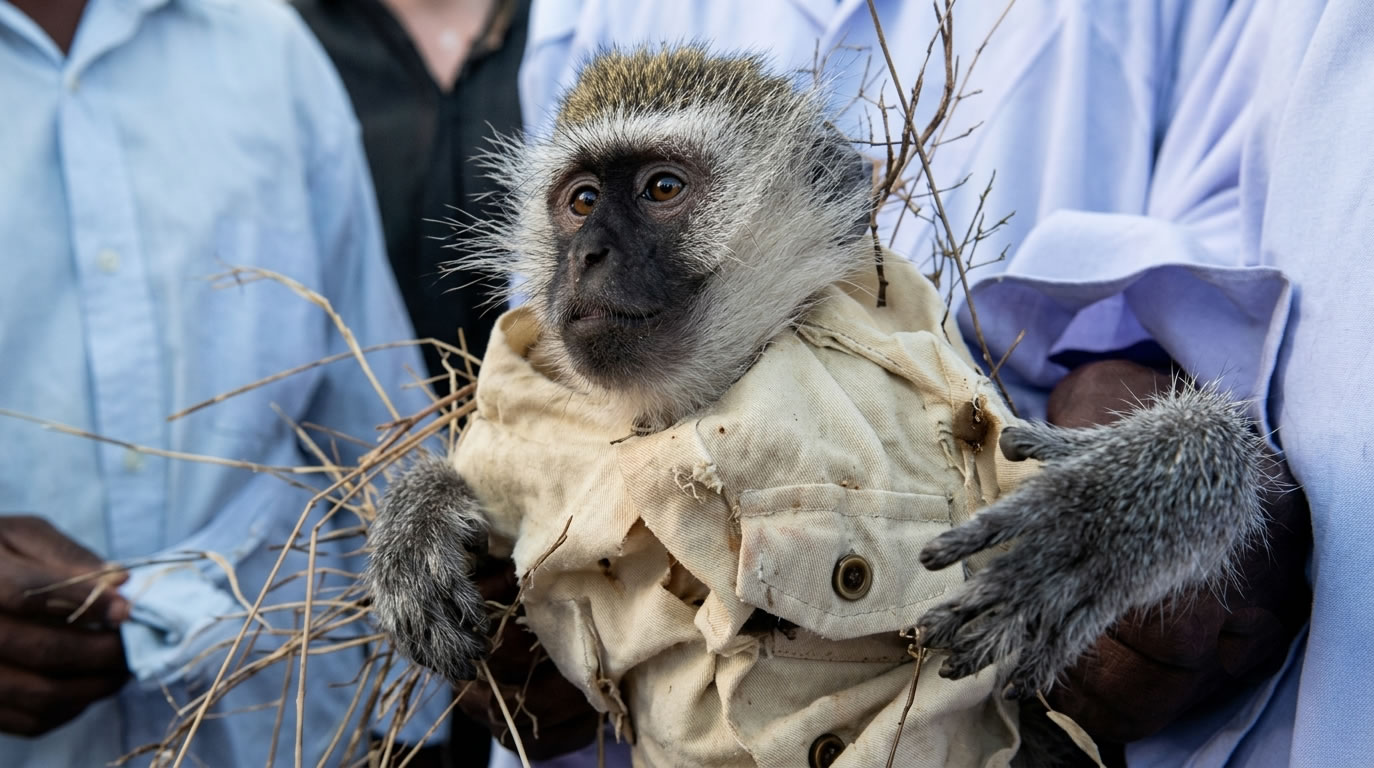
Madzibaba Mutumwa, a figure widely recognised for his spiritual interventions, reportedly instructed the man to return home and bring the monkey to the shrine. To the astonishment of many, he complied. Witnesses described a scene that escalated from bizarre to truly shocking when the man reappeared, not only with the monkey but with the animal dressed in a coat. “It was unbelievable. We thought he was joking when he confessed,” another witness stated. “But Madzibaba Mutumwa told him to fetch the monkey if he was serious. To our shock, he actually came back with it — and the monkey was wearing a coat. People screamed and moved backwards in fear.”
The visibly distressed money changer subsequently broke down, narrating his deep involvement in these dark practices. He reiterated his confession that the monkey was instrumental in mysteriously siphoning money from other money changers, explaining how this had enabled him to acquire his wealth, build houses, and purchase cars. “But now the same thing was haunting him,” a witness quoted him as saying. “The scary part was when he said the monkey now wanted to sleep with him. People were left speechless.”
Contacted for comment, Madzibaba Mutumwa confirmed the extraordinary incident. “I can confirm the man came seeking deliverance after the very thing he trusted for wealth turned against him,” he stated. The spiritual leader used the opportunity to issue a stern warning against the pursuit of wealth through illicit means: “People must understand that wealth gained through unorthodox means comes with painful consequences. There are no shortcuts in life.” He further urged individuals to abandon dubious methods of chasing riches, advising, “Work hard, pray and trust God. Do not seek wealth through dark powers because what looks like blessings can quickly turn into suffering.”
This recent monkey drama unfolds barely a fortnight after Cowdray Park residents were gripped by another sensational spiritual confrontation involving Madzibaba Mutumwa. In that instance, an allegedly aggressive owl, believed to be linked to a local businessman, became the focus of a tense deliverance session. The drama began when the businessman sought help for his wife, who was reportedly suffering from mysterious illnesses. As prayers intensified, a large owl allegedly materialised, flying wildly around the shrine and diving towards worshippers. “The owl was flying up and down as if it was angry. People were crying while others hid behind trees and vehicles. It was like something from a movie,” a resident recalled. Madzibaba Mutumwa later claimed the owl belonged to the businessman and was allegedly being used for business prosperity.
These incidents, while seemingly isolated, highlight a deeper societal issue prevalent in Zimbabwe: the widespread belief in and reliance on ‘juju’ or traditional charms for various purposes, including wealth accumulation. The economic hardships faced by many Zimbabweans, coupled with a volatile financial landscape, often push individuals towards desperate measures. The informal sector, particularly money changing, has long been a precarious but often lucrative avenue for survival, yet it is also rife with risks and, as these stories suggest, can become entangled with supernatural beliefs.
The phenomenon of ‘juju’ for wealth is not new in Zimbabwe. Stories of individuals acquiring snakes, owls, or other animals believed to possess mystical powers to generate money have circulated for decades. These practices are often rooted in traditional belief systems, where spiritual forces are thought to influence material outcomes. However, modern interpretations and applications of ‘juju’ frequently intersect with illicit activities, creating a complex web of spiritual, economic, and moral dilemmas.
The recent crackdown by Zimbabwean authorities on illegal money changers, particularly following the introduction of the new ZiG currency, underscores the government’s efforts to stabilise the economy and formalise financial transactions. While these measures aim to curb illicit forex trading, they inadvertently highlight the desperation that drives many into such activities. The pressure to maintain a certain lifestyle or simply to survive in a challenging economic environment can make the allure of quick, albeit supernaturally assisted, wealth incredibly strong.
Madzibaba Emmanuel Mutumwa, as a prominent figure within the Johanne Masowe Yechishanu apostolic sect, plays a significant role in these spiritual dramas. His church, like many apostolic movements in Zimbabwe, attracts a large following, with congregants seeking solutions to a myriad of problems, from illness to financial woes. Deliverance sessions, where individuals confess and seek spiritual cleansing from perceived evil influences or ‘juju’, are a central aspect of their ministry. The public nature of these confessions, often involving dramatic revelations, serves both as a testament to the prophet’s perceived power and a cautionary tale for the wider community.
The Cowdray Park incidents serve as a vivid reminder of the ongoing struggle between traditional beliefs, economic realities, and modern spiritual practices in Zimbabwe. They fuel public debate, oscillate between fear and disbelief, and underscore the enduring power of the supernatural in the lives of many. As Madzibaba Mutumwa continues his ministry, and as economic pressures persist, it is likely that more such extraordinary tales will emerge from the heart of Zimbabwean communities, each a testament to the complex interplay of faith, fortune, and the unexplained.