


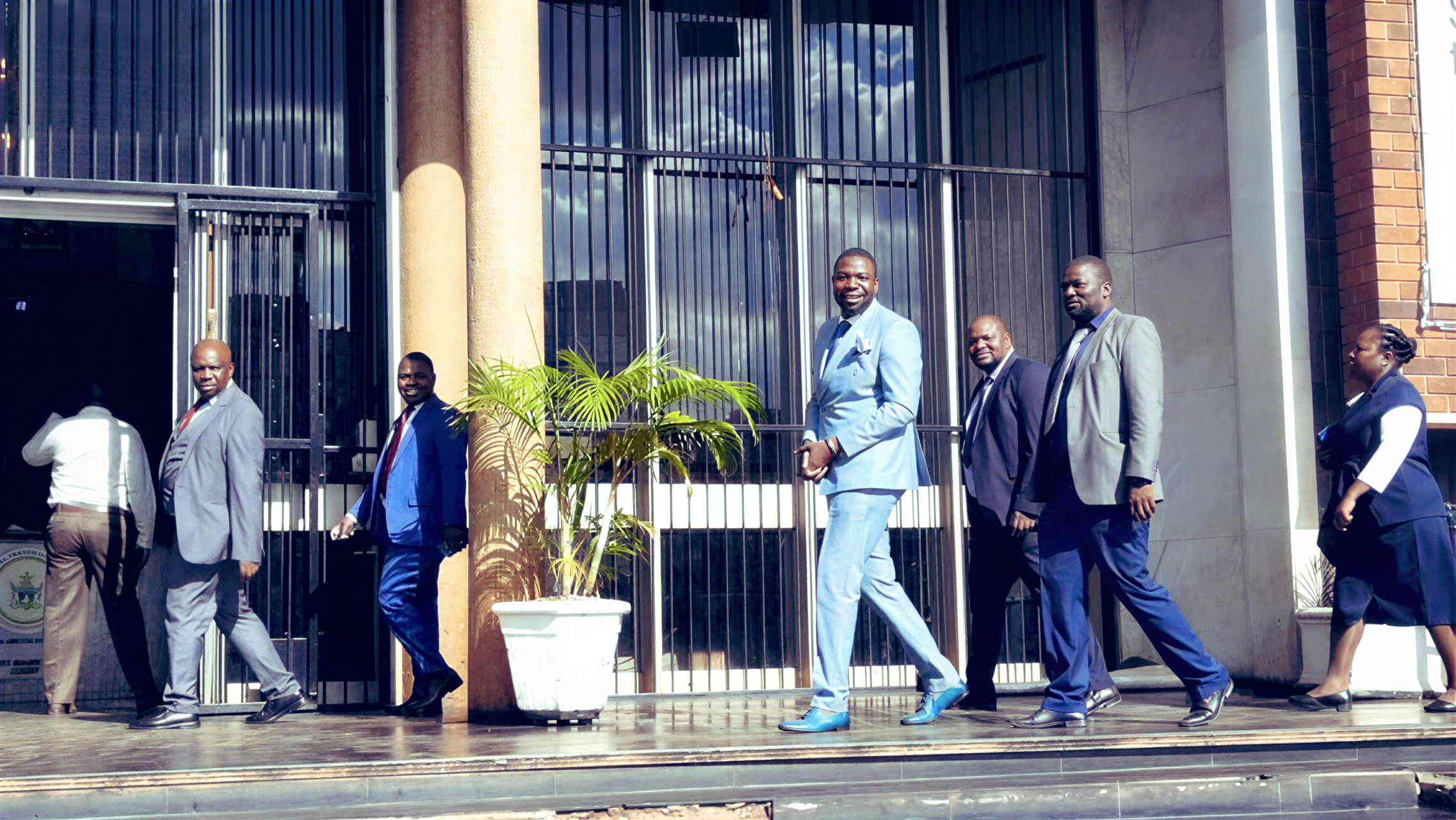
The legal saga surrounding Prophetic Healing and Deliverance (PHD) Ministries founder Walter Magaya has taken a dramatic and unsettling turn, revealing practices within the police investigation that raise serious questions about the integrity of the justice system. The charismatic preacher, who has for years faced a labyrinth of allegations, is now at the centre of a controversy where police have openly admitted to altering witness statements in his high-profile rape trial.
This startling revelation emerged during recent court proceedings, where an investigating officer confessed under cross-examination to making changes to a complainant’s affidavit. The officer admitted to amending references from “Prophet Magaya” to “the accused” and even adding entire paragraphs to statements, claiming these were merely for “clarification.” While the state maintains these are standard procedural adjustments, the defence has vehemently challenged these actions, suggesting a coordinated effort to manipulate evidence and secure a conviction against the influential cleric.
The Unsettling Admissions: Altered Statements and Procedural Questions
The core of the current legal battle revolves around the investigating officer’s testimony before Harare magistrate Mr Francis Mapfumo. During cross-examination by defence lawyer Admire Rubaya, the officer acknowledged making significant changes to a complainant’s statement. He explained that the complainant had initially written her statement and sent it to him on October 23, 2025, but had “not clarified the time and how the offence was committed.” To address this, he said, he sought further clarification, which led to the inclusion of new paragraphs.
One particularly contentious amendment involved changing the complainant’s original phrasing. “On paragraph 11 she wrote, ‘I refused to go because I knew the pregnancy was Prophet Magaya’s.’ I amended ‘Prophet Magaya’ to ‘the accused.’ The complainant would write ‘prophet,’ but as a police officer, I changed that to ‘the accused,'” the officer testified. He further admitted that “Paragraph 16 was not in the first statement. It was a clarification which I sought from the complainant,” adding that it answered his question on “why she did not report the rape.”
The defence has seized upon these admissions, arguing that such alterations go beyond mere clarification and could constitute a manipulation of evidence. Lawyer Rubaya contended that these actions undermine the credibility of the witness statements and, by extension, the entire prosecution’s case. The magistrate, Mr Mapfumo, however, dismissed an application by Magaya seeking referral of his rape case to the Constitutional Court, ruling that the request did not raise any constitutional issues. Magaya had argued that the National Prosecuting Authority of Zimbabwe (NPAZ) was violating his right to a fair trial by pursuing allegations that some complainants had allegedly withdrawn between 2013 and 2018. Mr Mapfumo ruled that the application lacked merit, stating that no constitutional questions had been sufficiently raised to warrant referral.
A Culture of Silence: The Complainant’s Harrowing Account
Beyond the procedural disputes, a deeper, more harrowing narrative has emerged from the complainant’s statement, which was read in court. It paints a stark picture of the immense pressure and isolation faced by alleged victims within Magaya’s sphere of influence. The complainant described feeling utterly unable to report the alleged incidents earlier due to fear and a profound lack of support.
“My parents, whom I hoped would provide guidance and protection, held the accused in high regard and had no reason to doubt him, so I felt they would not believe or support me if I came forward,” her statement read. This sentiment was compounded by the fact that both her parents were employed by Magaya, creating a direct conflict of interest and making it incredibly difficult for her to speak out without potentially jeopardising her family’s livelihood and reputation. She felt compelled to protect her family, highlighting the pervasive power dynamics at play within the church and its surrounding ecosystem.
The complainant further alleged that Magaya was a “well-connected man, often seen socialising and rubbing shoulders with influential politicians and high-ranking police officers. His influence appeared to extend beyond the hotel and into political and law enforcement circles”. This perceived influence, coupled with rumours she had heard about the accused, instilled a deep fear for her safety, contributing significantly to her prolonged silence. This aspect of the case underscores the challenges faced by individuals who dare to accuse powerful figures, particularly those with extensive networks in political and law enforcement spheres.
The Battle for an Open Court: Victim Friendly vs. Public Scrutiny
Magaya’s legal team has also fiercely challenged the state’s application to have his rape trial heard in a Victim Friendly Court (VFC). The state, represented by prosecutor Clemence Chimbari, argued that the witnesses had “gone through quite a lot, mentally, emotionally” and that it would not be in the interests of justice and their mental health to testify in an open court. Chimbari stated that some witnesses had expressed reservations about being in direct contact with the accused and required protection.
However, defence lawyer Admire Rubaya vehemently opposed this, accusing the state of making emotional claims without presenting concrete evidence. “Chimbari is not a doctor and not qualified to tell the court that the witness has emotional stress,” Rubaya asserted, arguing that the prosecution expected the court to accept its assertions blindly. He questioned why the state had not provided reasons for the alleged fear of direct contact and suggested that the court could interview witnesses privately to ascertain their preferences.
Rubaya emphasised that all complainants were adults, stating, “No one is below the age of 18. It is very critical for this court to accept that it is very easy to raise allegations of rape against an individual but very difficult to sustain them, moreso in circumstances of this nature”. He also accused the state of inconsistency, noting that they had previously publicised details of the allegations on social media before advocating for a protected environment. “From the day this accused person was arrested, the State has been dealing with this case in an open court. They have been churning out statements on social media, articulating details on how the accused committed these offences. The accused was vilified on social media, putting details there. Now they are somersaulting,” he argued.
The High Court has since temporarily halted Magaya’s rape trial, pending a review of Magistrate Esthere Chivasa’s decision to have the matter heard in a Victim Friendly Court. Justice Tawanda Chitapi granted the order following an urgent chamber application by Magaya, who insists the trial should be conducted in an open court. Magaya’s lawyers are also seeking the removal of Magistrate Chivasa from presiding over his trial, alleging she dismissed his request without fully hearing his arguments and relied on the state’s outline without independent verification.
The Shadow of Fraud: A Separate Legal Battle
Adding another layer of complexity to Magaya’s legal woes are separate fraud charges he faces alongside his wife, Tendai, and their companies, Planet Africa (Pvt) Ltd and Yadah Connect (Pvt) Ltd. These charges stem from a multi-million-dollar church housing project that allegedly never materialised, defrauding congregants and members of the public.
The state alleges that between 2016 and 2018, Magaya and his co-accused falsely claimed to have acquired land for residential stands and investment projects across various locations in Zimbabwe. Magaya reportedly announced these projects during a live broadcast on Yadah TV, claiming divine instruction to help believers build homes. Brochures featuring the Bible verse Genesis 13:9 – “A vast land is out there and available to you” – were distributed, depicting houses and plots supposedly acquired for the faithful. However, prosecutors contend that these representations were false and no such land had been secured. Thirteen complainants are said to have paid significant sums of money, running into tens of thousands of US dollars, but never received any stands or refunds.
Magaya and his wife were arrested on November 1, 2025, and appeared in court on November 3, 2025. Their lawyers challenged their detention, arguing they had been held for more than 48 hours, rendering their appearance unlawful. While the state admitted to the over-detention, it argued that the defence should seek redress through the Constitutional Court. Magistrate Marewanazvo Gofa initially reserved judgment on the application for their release. Tendai Magaya was later granted bail, with the magistrate ruling that there were no compelling reasons to keep her in custody, despite the seriousness of the charges. The court noted that if the state had been investigating her since 2023, she had ample opportunity to flee if she were a flight risk.
Implications for Justice in Zimbabwe
The ongoing trials of Walter Magaya highlight critical issues within Zimbabwe’s legal and social landscape. The admissions of altered witness statements by the police, regardless of the stated intent, cast a shadow over investigative procedures and raise concerns about due process. The complainant’s testimony underscores the vulnerability of individuals within powerful religious structures, where fear of reprisal and economic dependence can silence victims for years.
Furthermore, the legal battles over the Victim Friendly Court versus an open court trial reflect a tension between protecting vulnerable witnesses and ensuring transparency in high-profile cases. The defence’s arguments about public scrutiny and the state’s alleged inconsistencies add to the complexity, making this more than just a rape trial; it is a profound examination of how power, religion, and the law intersect in modern-day Zimbabwe.
As these cases continue to unfold in the High Court and Magistrates’ Courts, the outcomes will undoubtedly have significant implications for public confidence in the justice system and the accountability of influential figures. The public watches closely, seeking not just verdicts, but a clear demonstration that justice is administered fairly and transparently for all, irrespective of their standing.