


Zimbabwe’s Parliament Passes Contentious Constitutional Amendment Bill No. 3
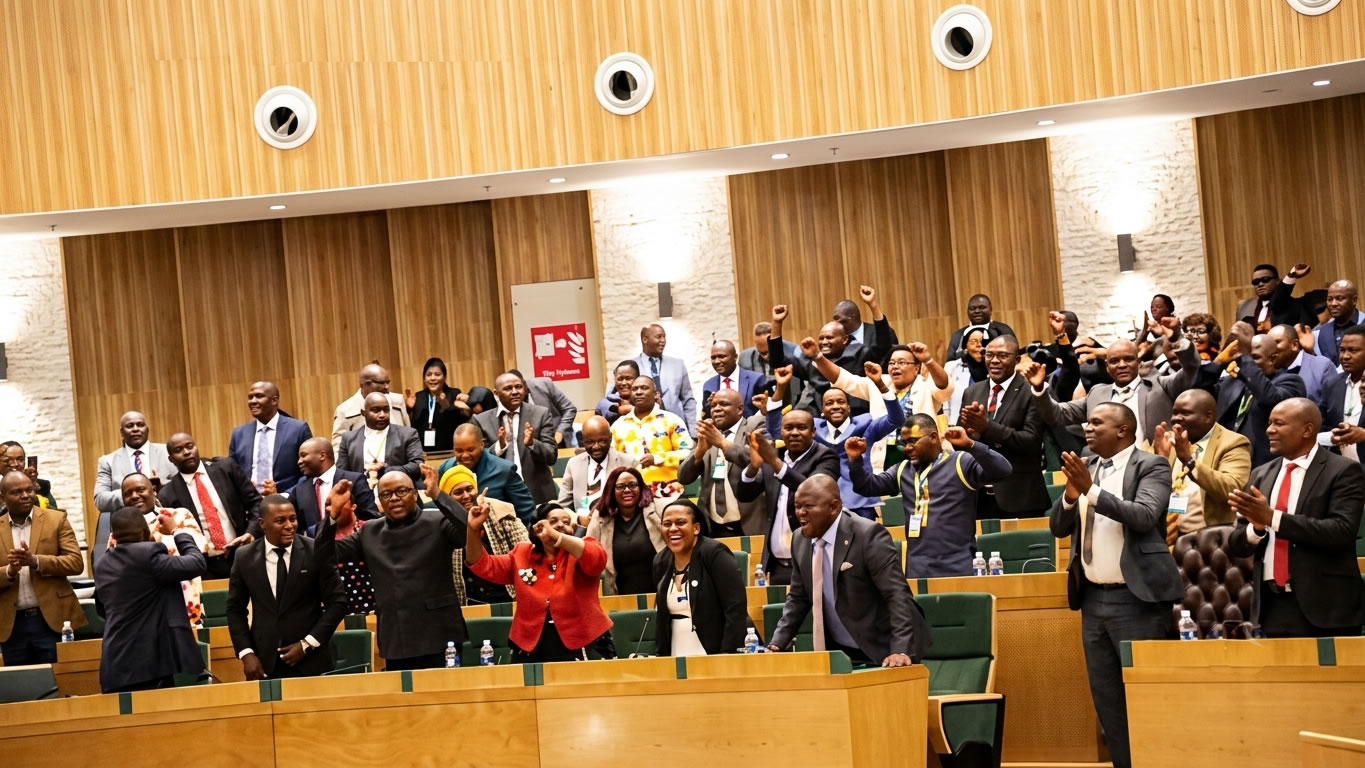
Zimbabwe’s National Assembly has officially passed the Constitutional Amendment (No.3) Bill, a legislative development that alters the framework for presidential elections and other key governance structures. On Thursday, June 18, 2026, 216 lawmakers, predominantly from the ruling ZANU-PF party, voted in favour of the bill. This decision has been met with varied interpretations, with Justice Minister Ziyambi Ziyambi characterising it as a necessary legal “refinement” to enhance functionality and coherence within the constitutional order.
Conversely, critics have described the legislative changes as a “constitutional coup,” arguing that they fundamentally reshape Zimbabwe’s political system. The passage of the bill, which required a two-thirds majority, saw 216 votes in favour and 42 against, comfortably exceeding the 187 affirmative votes mandated by section 328(5) of the constitution. The bill will now proceed to the Senate for further debate and potential amendments before it is presented to President Emmerson Mnangagwa for assent.
Legislative Process and Underlying Dynamics
The passage of the bill followed seven days of extensive debates in the National Assembly, with over 180 legislators contributing to discussions on what has become one of Zimbabwe’s most debated pieces of legislation in recent history. However, reports from the day indicated a tense atmosphere within Parliament. Accounts suggested that “security measures” were heightened, amidst unconfirmed whispers of coercion or pressure on some Members of Parliament to ensure the required two-thirds majority was achieved.
Sources close to the ruling party suggested that the swift passage of the bill was crucial for the ED2030 camp, a reference to President Mnangagwa, to consolidate a succession plan before the internal party congress. By shifting the presidential election from a direct popular vote to a selection by a joint sitting of the Senate and National Assembly, the process would involve approximately 210 individuals. This change has raised concerns among some observers regarding the potential for increased political patronage and influence over the selection process, as opposed to direct accountability to the wider electorate of over 16 million citizens.
Furthermore, claims of widespread public support for the amendments, as asserted by Minister Ziyambi, have been challenged. A parliamentary committee report earlier in the month indicated that 99.4 per cent of submissions received during nationwide consultations supported the proposed changes. However, the consultation process itself faced allegations of intimidation and violence. Activists and human rights groups reported incidents where suspected state security agents allegedly abducted and tortured opponents of the bill. For instance, in Chiredzi, activist Gilbert Mutebuki was reportedly assaulted by suspected ZANU-PF youths after attempting to speak against the bill during a public hearing in late March.
Key Amendments and Their Implications
Justice Minister Ziyambi Ziyambi, the bill’s proponent, maintained that the amendments were essential for policy continuity and to reduce political polarisation, stating that constitutions are not “monuments cast permanently in stone.” He clarified that the bill does not grant the president a term extension or a third term, nor does it postpone elections or concentrate power in the president’s hands. “This is not an abandonment of our constitutional order in any way, shape or form but a continuation of it,” Ziyambi told lawmakers.
Despite these assurances, civil society organisations and opposition parties expressed strong resistance, characterising the amendments as a significant restructuring of Zimbabwe’s governance and democratic institutions. The bill introduces several key changes:
- Presidential and Parliamentary Terms: It proposes extending presidential and parliamentary terms from five to seven years, thereby lengthening the electoral cycle and the presidential term by two years. Crucially, it changes the method of presidential election from a direct popular vote to selection by Parliament.
- Electoral Bodies: The bill reallocates voter registration and boundary-drawing powers. These functions, previously held by the Zimbabwe Electoral Commission (ZEC), will be transferred to the Registrar-General and a newly proposed Zimbabwe Electoral Delimitation Commission. The latter’s members would be appointed by the President. This shift has drawn criticism, particularly given past controversies surrounding the ZEC’s 2023 delimitation exercise, which was criticised for inaccuracies.
- Judicial Appointments: The process for appointing judges is altered, removing the requirement for public interviews. Under the new provisions, the President will appoint judges directly after “consultation” with the Judicial Service Commission.
- Attorney-General Qualifications: The qualifications for the Attorney-General are changed, requiring candidates to possess the qualifications of Supreme Court judges, which entails a minimum of ten years in practice rather than seven.
- Senate Appointments: The bill allows the President to appoint an additional 10 senators, intended to bring technical expertise into Parliament.
Barnabas Gura, a 38-year-old resident of Harare’s Glen View suburb, expressed his concern regarding the change in presidential election method. “I just cannot believe that these are the people who want to elect a president on behalf of everyone,” Gura stated. “Only 210 members of parliament vote on behalf of 15 million. It is preposterous.”
Concerns Over Influence and Accountability
The passage of the bill has also brought to light allegations of undue influence within the parliamentary process. The term “Zvigananda,” a Shona slang word coined by Vice President General Chiwenga that refers to wealthy, politically connected individuals often described as “tenderpreneurs” who benefit from state patronage, has been used in discussions surrounding the bill. These individuals are often associated with acquiring wealth through state contracts and other means.
During the bill’s debate, controversial businessman Wicknell Chivayo, an ally of President Mnangagwa, faced accusations of attempting to influence lawmakers. While an initial offer of $3.6 million to legislators for supporting the bill was reportedly withdrawn after public criticism, Chivayo subsequently provided vehicles and cash to MPs Remigious Matangira and Samantha Mureyani after they publicly supported the legislation. Critics viewed these gifts as potential inducements to secure parliamentary backing.
Tatenda Chikumbu, a resident from Kambuzuma, Harare, articulated a common sentiment of distrust among citizens. “If they can be bribed and vote for the bill, how can I trust them to vote for the president once the amendment is done?” Chikumbu questioned.
The opposition’s capacity to challenge the bill was reportedly weakened following the 2023 elections, during which Senator Sengezo Tshabangu recalled several Citizens Coalition for Change (CCC) legislators. This action bolstered ZANU-PF’s parliamentary majority. Notably, during the National Assembly vote, more than 30 opposition lawmakers voted in favour of the bill.
Pride Mkono, a social justice activist, suggested that the proposed amendment could further entrench the dominance of the ruling party. “So, we will effectively enter a one-party state, but one dominated by a cartel of individuals,” Mkono commented. Obert Masaraure, president of the Amalgamated Rural Teachers’ Union of Zimbabwe (ARTUZ), added that the amendment could weaken the country’s democratic framework. “Power will be usurped from the people, and the executive acting in concert with the elites will freely loot national resources, exploit workers, destroy the environment and dehumanise our people without any restraint,” Masaraure stated.
With the bill now moving to the Senate, opponents are exploring legal avenues. Several challenges are already before the courts, including lawsuits against MPs who supported the bill and a High Court application by human rights activist Youngerson Matete to halt its enactment without a referendum. However, public confidence in the judiciary has been noted as a concern, with some critics alleging a lack of independence, particularly after the Constitutional Court dismissed some cases on technical grounds.
For citizens like Barnabas Gura, the implications of these constitutional changes extend beyond immediate political cycles, potentially shaping the future governance and accountability landscape for generations to come. The legislative changes represent a significant shift in Zimbabwe’s political architecture, with ongoing debates about their long-term impact on democratic principles and citizen participation.