


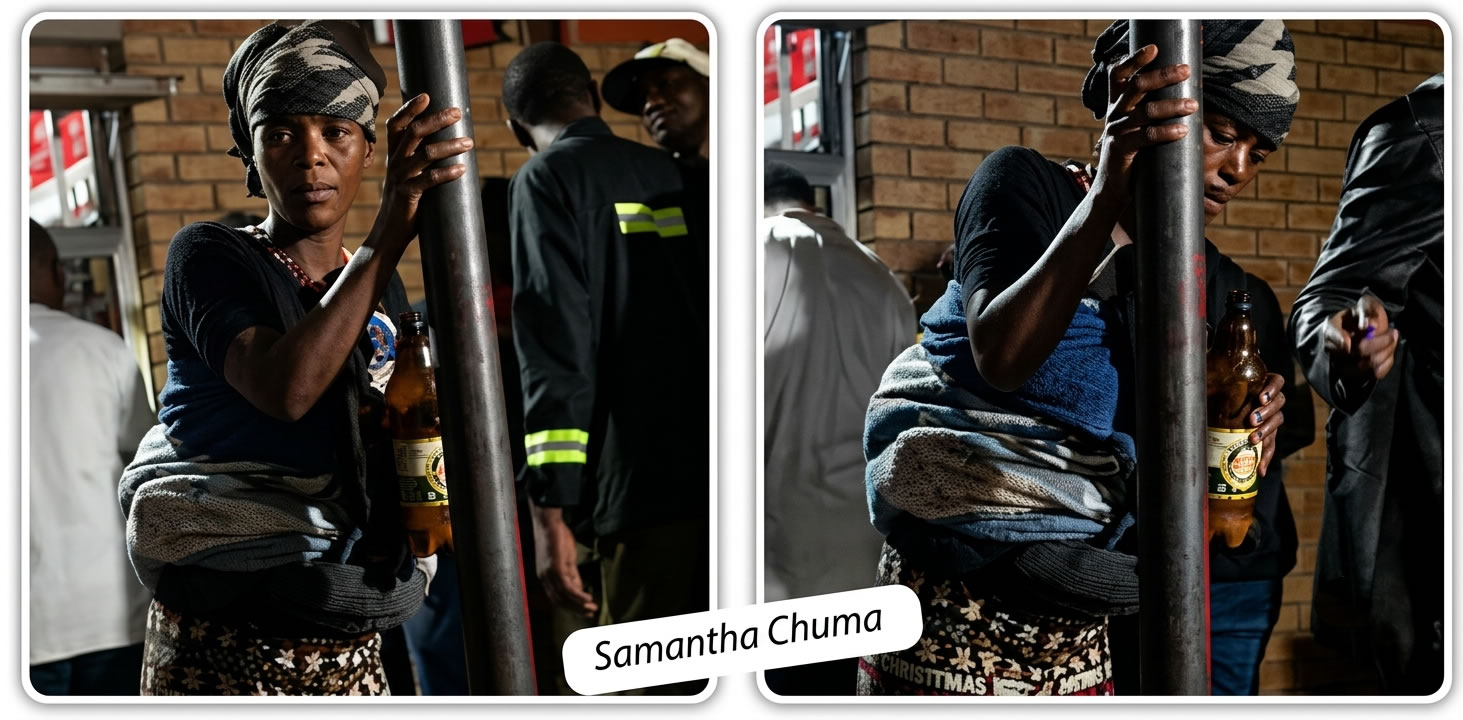
A Life Extinguished: The Tragic Cost of Domestic Violence in Mutare
Mutare – In a harrowing incident that has cast a long shadow over the Chikanga neighbourhood of Mutare, a 41-year-old woman, Samantha Chuma, has died following a brutal assault allegedly perpetrated by her husband, Tawanda Muradzikwa, aged 34. The tragedy, which unfolded on a Wednesday night, has brought into sharp focus the pervasive and often fatal reality of domestic violence in Zimbabwe, particularly when exacerbated by alcohol and underlying marital strife.
The events leading to Samantha’s untimely death began with a seemingly innocuous decision: she left her four-month-old baby at home, under the care of her other children, to go for a drink at a local bar. This choice, according to neighbours and tenants, ignited a fatal chain of events that culminated in a domestic dispute with a devastating outcome.
Upon returning home, Tawanda Muradzikwa reportedly found the infant crying. His immediate reaction was to seek out his wife. Petronella Gwenzi, a tenant residing in the same house as the couple, recounted the initial moments of the evening. “He asked us whether we had seen his wife and we told him we had not. He left the baby with us and went to look for her at the bar,” Gwenzi stated. It was not long before Gwenzi herself, concerned by the baby’s persistent crying, followed Tawanda to the bar, carrying the distressed infant.
At the bar, a scene unfolded that would later become a poignant and disturbing image of the evening’s events. Gwenzi found Samantha seated and handed her the baby. “I found Chuma seated there and handed the baby to her. She immediately started breastfeeding the child and the couple later returned home together,” Gwenzi recalled. Images reportedly exist showing Samantha breastfeeding her child at the bar, with the baby wrapped on her back, while she held a beer. This detail paints a stark picture of the circumstances and the environment in which the couple often socialised, as neighbours noted they frequently drank together at the same establishment.
The couple’s return home, however, did not bring peace. Instead, it marked the beginning of the end for Samantha. The violence escalated, leading to her death. The grim discovery was made later that evening by the couple’s 12-year-old child, who approached Petronella Gwenzi for a torch, stating the baby was crying and the house was dark. Initially hesitant, Gwenzi eventually accompanied the child back to the room.
“I accompanied her to the room and used my torch to light the house. I found Muradzikwa holding Chuma while they were both on the floor. She had a wound at the back of her head and was bleeding,” Gwenzi testified. Other tenants were quickly alerted, and the police were subsequently contacted. The scene was one of profound despair, with Tawanda reportedly distraught upon realising the gravity of his actions. “He placed her on the bed and poured water on her, begging her to wake up. He kept saying that if she was gone, he also wanted to die,” Gwenzi described, highlighting the chaotic and emotionally charged aftermath that required police officers to restrain him.
This tragic incident, however, was not an isolated event in the couple’s tumultuous relationship. Both Petronella Gwenzi and another neighbour, Pamela Nyagusi, painted a consistent picture of a marriage plagued by recurrent domestic violence. “They loved each other but they were both short-tempered. There were times when Samantha would attack him with a knife and police reports would be made,” Gwenzi revealed. She further added, “They regularly fought, especially when alcohol was involved, and there was a binding-over protection order between them.”
Pamela Nyagusi, who had lived at the couple’s home for five years, corroborated these accounts, stating, “They often drank together at local bars and arguments frequently followed. In-fact, Chuma would go to the bar with the baby. Even when she was pregnant, she would go to the bar. There were many occasions when she reported him to the police after alleged assaults. We are devastated that it has ended this way.” These testimonies underscore a deeply troubled relationship, characterised by a cycle of violence, alcohol abuse, and repeated interventions that ultimately failed to prevent this fatal outcome.
The Broader Context: A National Scourge
The death of Samantha Chuma is a stark reminder of the alarming prevalence of domestic violence in Zimbabwe. Statistics reveal a deeply concerning reality: approximately one in three women aged 15 to 49 in Zimbabwe have experienced physical violence, and about one in four have endured sexual violence since the age of 15. The World Health Organisation (WHO) further highlights the global scale of the issue, with 316 million women aged 15 or older subjected to intimate partner physical or sexual violence in the last 12 months alone.
Zimbabwe’s legal framework, particularly the Domestic Violence Act [Chapter 5:16], enacted in 2007, aims to provide protection and relief to victims. This legislation allows for the issuance of protection orders, both interim and final, designed to safeguard individuals from abusive partners. Furthermore, the Criminal Procedure and Evidence Act [Chapter 9:07] includes provisions for “binding-over” orders (Section 388), which compel individuals to “keep the peace” and can be issued in response to violent conduct or physical abuse. The fact that a binding-over protection order was already in place for Samantha and Tawanda underscores the repeated nature of their domestic disputes and the limitations of legal interventions when underlying issues remain unaddressed.
Despite these legal provisions and the presence of Victim Friendly Units (VFUs) at 289 police stations across the country , incidents of domestic violence, often escalating to murder, continue to plague Zimbabwean communities. Recent news reports from 2025 and 2026 paint a grim picture of similar tragedies. In May 2026, a Kadoma man allegedly stabbed his wife and pregnant daughter to death following a domestic dispute. November 2025 saw a soldier killed in a Mutare love triangle , and the ongoing case of Anymore Zvitsva, a suspected serial killer in Guruve, has also highlighted extreme violence within relationships. These incidents, though varied in their specifics, collectively point to a persistent and deadly pattern of violence within domestic settings.
Alcohol, Child Neglect, and Community Concerns
The role of alcohol in the Chikanga tragedy cannot be overlooked. Both Samantha and Tawanda were known to frequent local bars, and their arguments often intensified when alcohol was involved. This pattern is not unique to their case; research indicates a strong correlation between alcohol consumption and increased aggression and violence in nightlife settings. The presence of a four-month-old infant, left in the care of older children, and Samantha’s act of breastfeeding at the bar, also raise serious questions about child welfare and the responsibilities of parents, particularly in environments where alcohol is consumed.
Zimbabwean law is clear that minors should not be present in licensed premises where alcohol is sold. The circumstances surrounding Samantha’s death, therefore, highlight not only the immediate danger of domestic violence but also the broader societal issues of child neglect and the impact of alcohol abuse on family dynamics. The United Mutare Residents & Rate Payers Trust has previously raised concerns about the lack of streetlights in areas like Chikanga Phase 3, noting that darkness contributes to criminal activities. While not directly linked to this incident, such environmental factors can exacerbate vulnerabilities and contribute to a sense of insecurity within communities.
A Call for Deeper Intervention
The death of Samantha Chuma is a profound loss, not only for her family but for the entire community of Mutare. Her children have now been placed under the care of relatives, their lives irrevocably altered by the violence they witnessed and endured. Acting Manicaland provincial police spokesperson, Assistant Inspector Wiseman Chinyoka, referred inquiries to national police spokesperson, Commissioner Paul Nyathi, for comment, though he was not immediately available.
As police continue to gather evidence at House Number 824 in Chikanga One, the visible grief and shock among neighbours serve as a poignant reminder of the human cost of domestic violence. This incident demands more than just legal prosecution; it calls for a deeper societal introspection into the root causes of such violence, the effectiveness of existing protective measures, and the urgent need for comprehensive support systems for victims and families affected by domestic abuse. Without addressing the underlying issues of alcohol abuse, anger management, and the cultural acceptance of violence, such tragedies are likely to recur, leaving behind a trail of devastation and unanswered questions. The community mourns Samantha, and in her memory, there is a renewed call for action to prevent future lives from being extinguished by the scourge of domestic violence.