


HARARE – The corrugated iron sheets of the Msasa industrial area have long hidden the hum of legitimate machinery, but behind the nondescript walls of one particular warehouse, a far more sinister operation was bubbling. For months, perhaps years, a sophisticated “spirit mafia” has been operating in the heart of Zimbabwe’s capital, turning industrial chemicals into a deadly cocktail sold as premium vodka.
The curtain was finally pulled back this week when detectives from the Zimbabwe Republic Police (ZRP) launched a high-stakes raid on a secret factory. What they found inside was not just a breach of licensing laws, but a full-scale public health catastrophe in the making. Two Chinese nationals, Gan Chen, 52, and Peng Yujun, 52, now sit in police custody, facing a litany of charges that expose the dark underbelly of Harare’s illicit alcohol trade.
The Raid in the Heart of Msasa
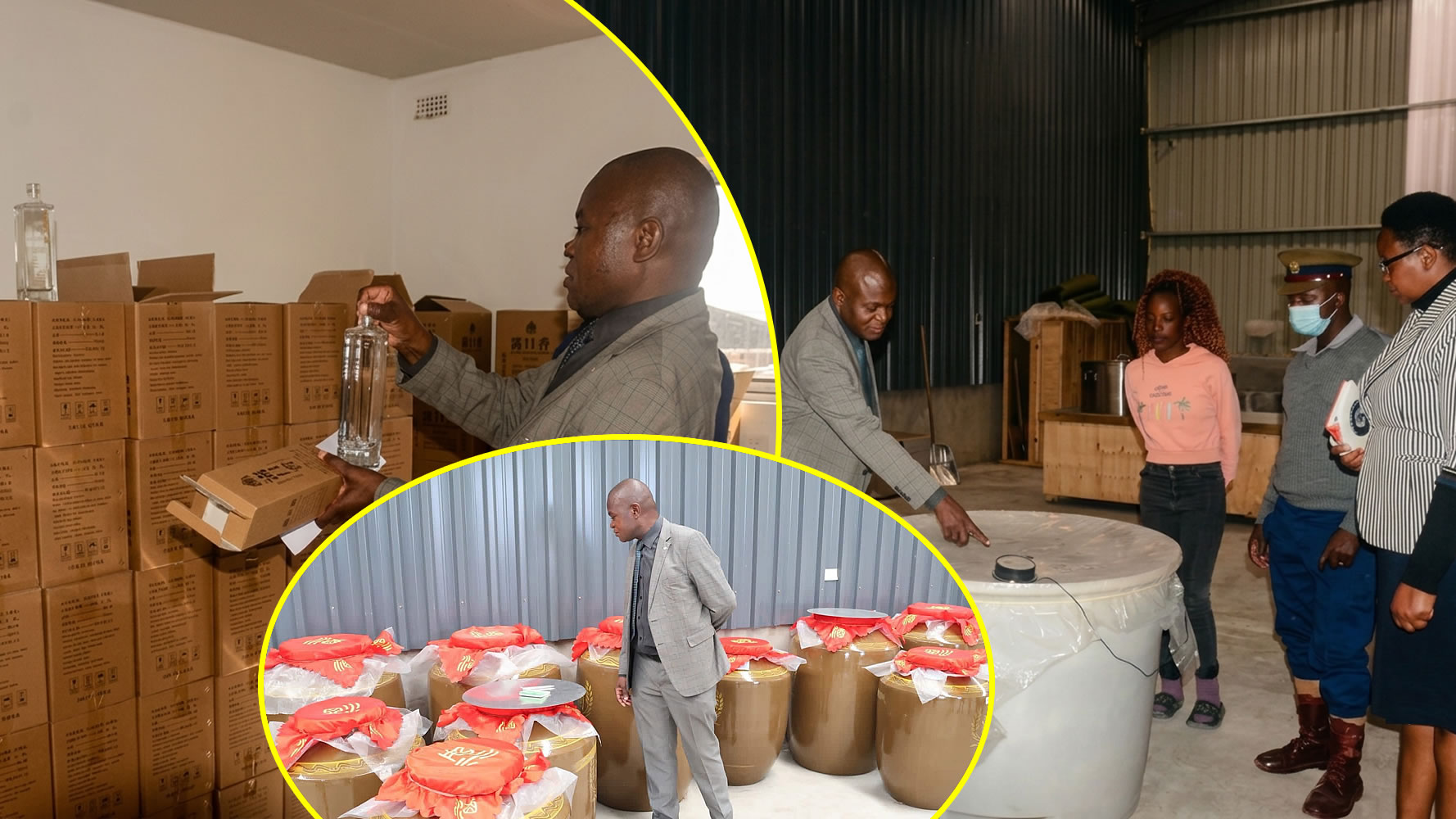
The operation was clinical. Acting on intelligence that had been gathered over several weeks, a team of detectives descended on the Msasa facility. The warehouse, which appeared from the outside to be a standard storage unit, was in fact a highly organised, illegal distillery.
Inside, the air was thick with the sharp, medicinal sting of high-purity ethanol. Detectives recovered a massive haul of illicit substances, including what was being packaged and sold as vodka, spirits, and wine. The scale of the equipment was staggering. This was no backyard “moonshine” operation; it was an industrial-grade assembly line.
Police seized sophisticated bottling machines, a massive distillation tanker, a high-pressure boiler, and a separator. These machines, capable of churning out thousands of bottles a day, were operating without any oversight from health authorities or the Standards Association of Zimbabwe.
“The suspects are facing charges which include contravening sections of the Harmful Liquids Act [Chapter 9:10], the Food and Food Standards Labelling Regulations, the Factories and Works Act [Chapter 14:08], the Environmental Management Act (Control of Hazardous Substances) and the Shop Licensing Act [Chapter 14:17],” a police statement confirmed following the arrests.
The Recipe for Disaster
The “spirit mafia” operates with a chilling efficiency. Their primary ingredient is often high-purity ethanol, frequently smuggled across borders or diverted from legitimate industrial uses, such as the manufacturing of sanitizers or paints. This raw chemical is then mixed with water and artificial flavourings to mimic the taste and appearance of popular, expensive brands.
The resulting “poison in a bottle” is then poured into recycled glass or cheap plastic containers. Because these illicit brewers do not pay taxes, excise duties, or the costs associated with safety testing, they can sell their products at a fraction of the price of genuine spirits. In the high-density suburbs of Harare, where the economy has left many struggling to survive, these cheap bottles have become the “drug of choice” for Zimbabwe’s impoverished youth.
Medical experts have sounded the alarm over the ingredients used in these brews. To increase the “kick” or potency of the alcohol, some illicit manufacturers have been known to add even more dangerous substances, including methanol—a toxic form of alcohol that can cause permanent blindness, organ failure, and death even in small quantities.
A Public Health Emergency
The consequences of this trade are visible in the wards of Harare’s hospitals and the morgues of its suburbs. There has been a terrifying rise in sudden deaths, cases of permanent blindness, and chronic liver failure among young people. Many of these victims are found collapsed in “bases”—informal drinking spots—clutching the very plastic bottles that delivered their death sentence.
The government is finally beginning to acknowledge the scale of the crisis. Industry and Commerce Minister Nqobizitha Mangaliso Ndlovu has been blunt in his assessment of the situation.
“Industry and Commerce ministry has noted with concern the proliferation of harmful substances and illicit alcoholic beverages that expose consumers to serious health risks, undermine fair competition, threaten the social fabric and economic development of our nation,” Minister Ndlovu stated this week.
He further emphasised the vulnerability of the nation’s future: “Unfortunately, our productive youths are increasingly exposed to these dangerous products which are manufactured and distributed clandestinely outside the bounds of the law. They are brewed in backyards, sold in plastic bottles, and they are landing Zimbabwe’s young people in hospital.”
The Minister’s declaration that this is now a “public health emergency” marks a shift in the state’s approach. For years, the illicit alcohol trade was seen as a minor nuisance or a simple case of tax evasion. Now, it is being recognised as a systematic poisoning of the poor.
The Conspiracy of Silence
The Msasa raid has raised uncomfortable questions that many in authority seem reluctant to answer. How can a large-scale distillation plant, complete with heavy industrial machinery and a fleet of distribution trucks, operate in a busy, well-policed industrial area without being noticed?
The answer, according to those familiar with the trade, lies in a complex web of corruption. Sources within the industrial areas suggest that “protection fees” are a standard operating cost for the spirit mafia. These fees are paid to local authorities, influential figures, and sometimes even rogue elements within law enforcement to ensure that the trucks keep moving and the boilers keep running.
The Msasa factory was not an isolated incident. It is part of a broader network that spans the city’s industrial hubs. Only a week prior to the Msasa bust, police raided another large-scale illegal brewery in the Southerton industrial area. That raid resulted in the arrest of 46 suspects, including an Indian national, and the confiscation of illicit beverages valued at over US$165,000.
These operations are reportedly running in Southerton, Graniteside, and even residential backyards in Mbare and Chitungwiza. They feed a national addiction that is destroying a generation of “productive youths” who should be the backbone of the country’s economy.
The Cost of a Cheap Bottle
For the families in the high-density suburbs, the “spirit mafia” is not an abstract concept; it is a daily predator. The illicit spirits, often referred to locally by names like “mutomboko,” are sold for as little as a dollar.
“For families in Mbare and Chitungwiza, the message is blunt: ‘that cheap bottle could cost a life’,” Minister Ndlovu warned.
The economic impact is also severe. Legitimate manufacturers, who adhere to strict safety standards and pay their fair share of taxes, find it impossible to compete with the prices offered by the illegal factories. This undermines the formal economy and reduces the tax revenue that the government desperately needs to fund the very healthcare system that is now being overwhelmed by the victims of these poisons.
A nationwide blitz conducted by the authorities recently exposed the sheer scale of the problem. Inspectors checked 1,009 shops across the country. While 40 businesses were prosecuted and illicit stock was seized, the trade persists because, until now, the penalties have been seen as merely a “temporary inconvenience” for the poisoners.
A New Era of Enforcement?
The government is now promising a much harder line. Minister Ndlovu has indicated that the “soft” approach is over. The Ministry is engaging with the courts to ensure that maximum deterrent penalties are imposed.
“Perpetrators will face prosecution,” the Minister warned. “Government is pushing courts for maximum fines of up to 2.5% of a company’s annual profit – under the Consumer Protection Act.”
The Consumer Protection Commission, the ZRP, and the Medicines Control Authority of Zimbabwe (MCAZ) are now working in a coordinated effort to pull counterfeit and mislabelled products off the shelves. However, critics argue that until the high-level corruption that protects these illicit brewers is tackled, the raids will only scratch the surface.
The Msasa raid is undoubtedly a victory for the police and a blow to the “spirit mafia.” But as long as the demand remains high and the “protection fees” continue to flow, the boilers in another secret warehouse are likely already being fired up.
While the elite in their gated communities sip imported whiskies and fine wines, the masses are being sold a death sentence in a plastic bottle. The fight against the “poison in the bottle” is not just a police matter; it is a fight for the very survival of Zimbabwe’s youth.
The two suspects, Gan Chen and Peng Yujun, remain in custody as investigations continue. Their arrest has pulled back the curtain, but the question remains: who else is hiding behind it?