


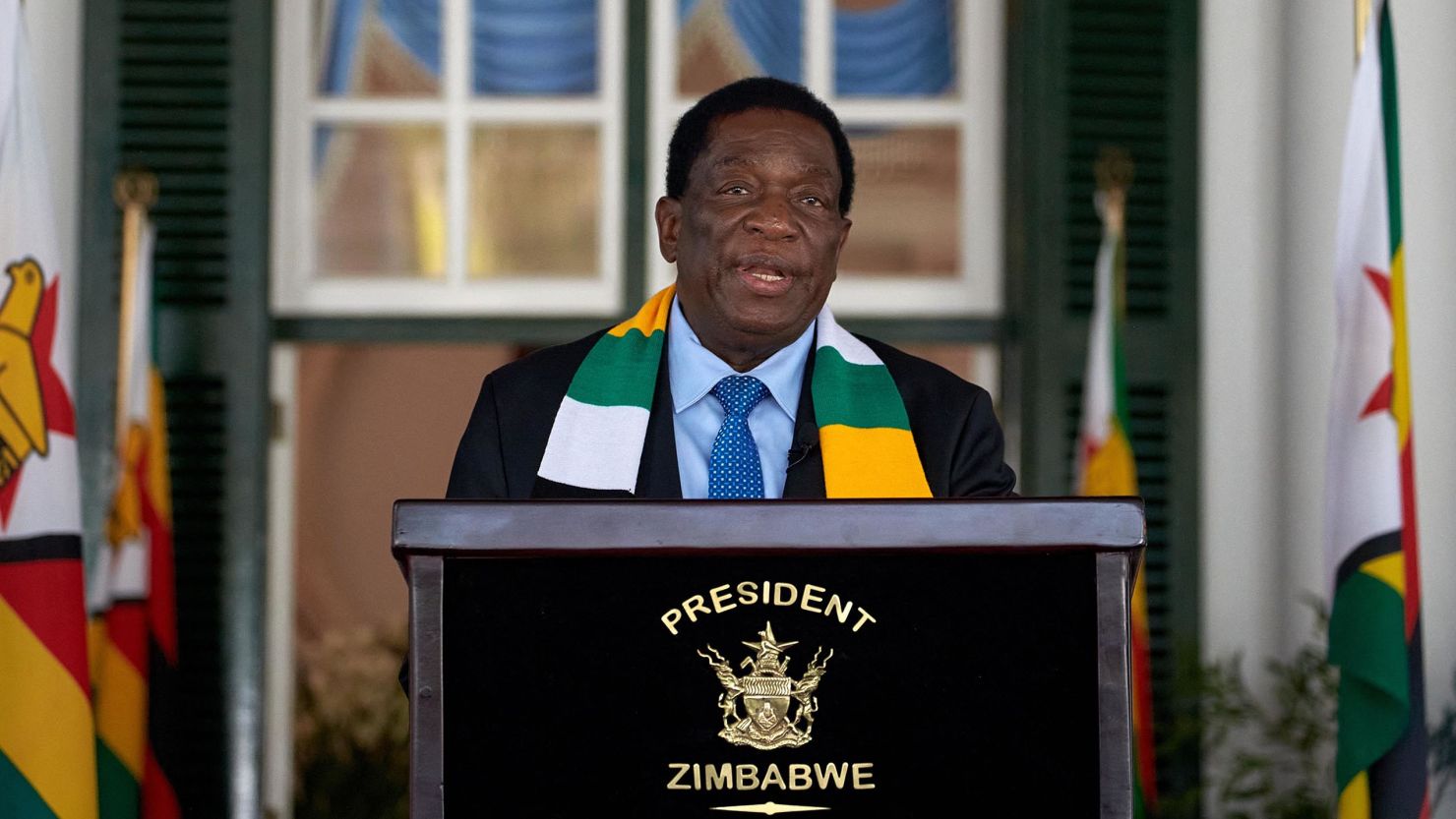
In the quiet, wood-panelled rooms of Harare’s corridors of power, a fundamental shift has occurred that effectively ends the democratic aspirations of millions. President Emmerson Mnangagwa officially signed Constitutional Amendment Act No. 3 (CAB3) into law a fortnight ago, a move that state-run media outlets are desperately trying to paint as a “governance milestone.” However, an investigation into the fine print of this legislation reveals a much darker reality for the Zimbabwean voter: the era of choosing your own leader is over.
For decades, the “one man, one vote” dream was the heartbeat of the liberation struggle. It was the promise that kept fighters in the bush and citizens at the ballot boxes. With a single stroke of a pen, that promise has been dismantled. The new law shifts the power to elect the nation’s president away from the general public and into the hands of Members of Parliament. This is not merely a technical adjustment to electoral cycles; it is the final nail in the coffin of direct democracy in Zimbabwe.
The Death of the Direct Vote
The most striking feature of CA3 is the total removal of direct presidential elections. Since 1990, Zimbabweans have headed to the polls to cast a specific ballot for their head of state. Under the new model, this right has been revoked. Future presidents will instead be chosen by a joint sitting of the National Assembly and the Senate.
Insiders suggest that this “MP-only” election model is a calculated move to shield the presidency from the volatility of a general election. The ruling ZANU-PF party has long struggled to secure a clean mandate in urban centres, where economic hardship and infrastructure collapse have soured the public mood. By moving the election behind the closed doors of Parliament, the party can leverage its disciplined parliamentary majority to ensure its preferred candidate wins, regardless of how the person in the street actually feels.
“This would leave the Zimbabwean President uniquely insulated from conventional forms of democratic accountability,” writes D. Tinashé Hofisi, a prominent legal analyst. By making the presidency dependent on a parliamentary vote, the government has created a system where political loyalty is bought and sold in the shadows. We analyse how this shift will likely lead to increased violence during parliamentary elections. If securing a two-thirds majority in the legislature becomes the only requirement for crowning a President, the stakes for every local seat will become dangerously high.
The 2030 Agenda
The timing of these changes is no coincidence. President Mnangagwa, who is currently 83 years old, was originally slated to step down in 2028 at the end of his second term. However, a rallying cry has emerged from within the ranks of ZANU-PF: “2030.”
At the party’s national people’s conference, a resolution was passed stating: “The Excellency, Cde. Dr E. D. Mnangagwa’s term of office as the President of the Republic of Zimbabwe and the First Secretary of ZANU PF be extended beyond 2028 to 2030. The Party and Government should, therefore, set in motion the necessary amendments to the National Constitution so as to give effect to this resolution.”
CAB3 delivered exactly that. By extending presidential and parliamentary terms from five to seven years, the current administration has effectively bypassed the 2028 election cycle entirely. Critics have branded this move a “constitutional coup.” It allows the ruling elite to maintain their grip on power until at least 2030, ignoring the term limits that were a cornerstone of the 2013 Constitution.
The 2013 Constitution was designed specifically to prevent this kind of “incumbent preservation.” Section 328(7) explicitly states that any amendment extending a term limit cannot benefit the person holding that office at the time. To get around this, the government has employed a legal shortcut, inserting a clause that says the extension applies to the current president “notwithstanding Article 328(7).” It is a blatant attempt to ignore the law rather than follow it.
A Crackdown on Dissent
As the implications of CAB3 became clear, a wave of resistance formed across the country. But for those who dared to speak out, the consequences have been severe. Investigative findings show a coordinated effort to silence critics through arrests, abductions, and physical assaults.
In Mutare, prominent opposition figures Tendai Biti and Morgan Ncube were arrested while attending a private meeting to discuss the amendments. They were charged with violating the Maintenance of Peace and Order Act (MOPA). Their supporters argue the charges were politically motivated, designed to stop any organised opposition to the bill.
The crackdown has been particularly brutal on university campuses. Student leaders, operating under the slogan “No to 2030,” have faced systematic harassment. Emmanuel Sitima and Takunda Mhuka were arrested and charged with malicious damage to property, a charge their lawyers say was trumped up to keep them in custody. Others, like Munashe Dongonda and Denford Sithole, were reportedly abducted by unidentified men in civilian clothing, interrogated for hours, and severely assaulted before being handed over to the police.
These incidents are not isolated; they are part of a broader pattern of state-sponsored intimidation, it is alleged. The message from the authorities is clear: any challenge to the “2030 Secret” will be met with force.
Dismantling the Guardrails
Beyond the headline changes to term limits and election models, CAB3 systematically dismantled the institutional guardrails that were supposed to protect Zimbabwean democracy.
Responsibility for voter registration and the compilation of the voters’ roll has been stripped from the independent Zimbabwe Electoral Commission (ZEC). It has been handed back to the Registrar-General, a presidentially appointed official. Historically, this office has been accused of voter suppression and manipulation. Furthermore, the task of “delimitation”—the drawing of constituency boundaries—has been moved to a new Electoral Delimitation Commission, also appointed by the President.
This means the very person who will benefit from the parliamentary vote now has the power to appoint the officials who decide where the constituencies are and who is allowed to register to vote in them. It is a closed loop of power that leaves the ordinary citizen on the outside looking in.
The amendment also expands the Senate, allowing the President to appoint ten additional senators, up from the previous five. This makes it even easier for the ruling party to maintain the two-thirds majority it needs to pass further constitutional changes. In a move that has troubled human rights advocates, the law also abolishes the Zimbabwe Gender Commission and the National Peace and Reconciliation Commission, merging their functions into the broader Human Rights Commission. Critics argue this will dilute the focus on these critical issues and further centralise control.
The Death of a Dream
For the ordinary Zimbabwean, the technicalities of Constitutional Ammendment Act number 3 translate into a simple, painful reality: your voice no longer matters in the highest office of the land. The “one man, one vote” principle, for which so much blood was shed, has been traded for a system of elite patronage and parliamentary deals.
The government argues that these changes are necessary to foster “long-term economic growth” and to reduce the “toxicity” of frequent elections. They claim that a seven-year cycle allows for better planning and stability. But for those who have watched the economy crumble and seen the space for free expression shrink, these justifications ring hollow.
As the sun sets over Harare, the reality of the new law is beginning to sink in. The 2028 election, which many hoped would be a turning point for the nation, has been erased. The power to choose the next president has been moved from the dusty streets and rural villages into the air-conditioned chambers of Parliament.
The 2030 Secret is out. It is a plan for survival, not for the nation, but for a ruling elite that has decided it can no longer risk letting the people decide their own future. In the new Zimbabwe, the ballot box still exists, but for the presidency, it is now a box that only a select few are allowed to touch. For everyone else, the message is final: the vote you once held has been ditched.