


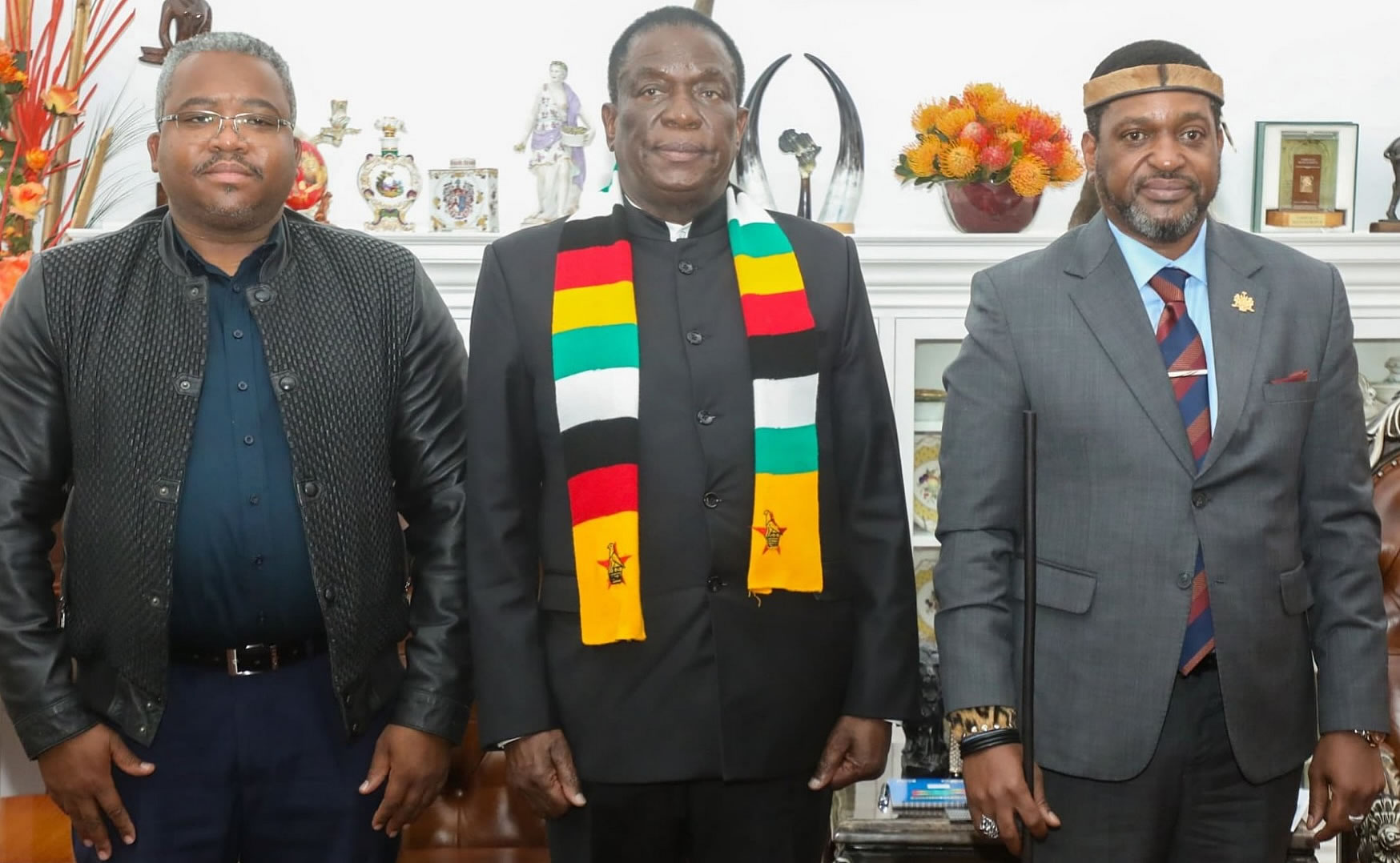
When King Misuzulu kaZwelithini of the Zulu Nation landed in Harare last week, the official narrative spoke of “regional unity and cultural cooperation.” However, for seasoned observers of regional politics, the swift, high-level visit by King Misuzulu kaZwelithini to Harare, culminating in an extended private meeting with President Emmerson Mnangagwa, hinted at an agenda far more intricate than mere cultural exchange. News reporters have delved into the layers of diplomacy and traditional power to uncover the true motivations behind this urgent royal engagement.
At the heart of this clandestine summit lies the escalating migration crisis gripping Southern Africa. South Africa is currently grappling with the departure of nearly 100,000 Zimbabweans, many of whom reside in KwaZulu-Natal, the ancestral heartland of the Zulu Kingdom. This mass repatriation, driven by increasingly stringent immigration policies and rising xenophobic sentiments, presents a significant challenge for both nations. Insiders suggest that King Misuzulu was not merely a guest but a crucial “diplomatic bridge,” carrying an unofficial message from the South African government concerning the profound “security implications” of such a large-scale return. The concern is palpable: how will South Africa manage the departure, and how will Zimbabwe absorb such a substantial influx of its citizens, many of whom have been away for years?
Yet, beneath the surface of regional diplomacy, a more personal and politically charged narrative unfolds. The Zulu Royal Household is embroiled in its own bitter “succession war.” Following the passing of King Goodwill Zwelithini kaBhekuzulu, the ascension of King Misuzulu has been met with persistent legal challenges and internal strife from dissenting factions within the royal family. This internal conflict has left the young monarch in a vulnerable position, seeking allies and strategic counsel wherever he can find them. It is here that President Mnangagwa, a figure renowned for his political astuteness and survival instincts, reportedly enters the fray. Sources close to the Zimbabwean presidency indicate that Mnangagwa is providing “strategic advice” and potentially financial support to King Misuzulu. The quid pro quo? The King’s considerable influence over the Zimbabwean diaspora in South Africa, particularly those in KwaZulu-Natal, could prove invaluable to Mnangagwa’s political objectives.
The visit itself was marked by a blend of traditional pomp and discreet political manoeuvring. The lavish reception accorded to King Misuzulu and his delegation in Harare was a clear signal of the importance Mnangagwa attached to the meeting. However, it was the leaked whispers of a “security pact” between the Zulu King and the Zimbabwean state that truly raised eyebrows. This suggests a deeper level of cooperation, potentially involving intelligence sharing or coordinated efforts to manage the returning Zimbabwean population. The presence of King Ndamase of the AmaMpondo, another significant traditional leader, further underscored the gravity of the gathering. This was no mere social call; it was a strategic convocation of traditional power brokers, convened to discuss the delicate and complex process of “re-bordering” Southern Africa in response to demographic shifts and political pressures.
For President Mnangagwa, this meeting represents a significant diplomatic coup and a potential boost for his 2030 ambitions. By aligning himself with influential traditional leaders like King Misuzulu, he not only projects an image of regional statesmanship but also gains a potential conduit to influence a large segment of the Zimbabwean population abroad. For King Misuzulu, under siege from within his own royal family, the alliance with Mnangagwa could be a crucial lifeline, offering political backing and perhaps even resources to consolidate his position. The intricate dance between traditional authority and modern statecraft in Southern Africa continues, with this recent Harare summit serving as a potent reminder of the enduring power of both.
The migration crisis is not a new phenomenon in Southern Africa, but recent developments have brought it to a critical juncture. South Africa, a regional economic powerhouse, has long been a destination for economic migrants and asylum seekers from neighbouring countries, particularly Zimbabwe. However, a combination of high unemployment rates, economic stagnation, and rising anti-immigrant sentiment has led to increased pressure on the South African government to address the issue. The departure of nearly 100,000 Zimbabweans, many of whom have established lives and families in South Africa, has created a humanitarian and logistical challenge of immense proportions. KwaZulu-Natal, with its significant Zimbabwean population, is at the epicentre of this unfolding situation. The return of such a large number of individuals to Zimbabwe, a country already grappling with its own economic woes, raises serious questions about social stability, resource allocation, and potential unrest in both nations. The South African government, keen to avoid a full-blown crisis, appears to be exploring all avenues, including traditional diplomacy, to manage this complex repatriation process. The involvement of King Misuzulu, a figure of immense cultural and moral authority within KwaZulu-Natal, could be seen as an attempt to lend legitimacy and a sense of order to a potentially volatile situation.
Simultaneously, the Zulu Royal succession battle continues to cast a long shadow over King Misuzulu’s reign. The death of his father, King Goodwill Zwelithini, in 2021, ignited a fierce contest for the throne, with various factions of the royal family putting forward their own candidates. While King Misuzulu was officially recognised by President Cyril Ramaphosa, legal challenges and internal dissent persist. This ongoing power struggle has undoubtedly weakened the King’s position, making him susceptible to external influence and in need of strategic alliances. The offer of “strategic advice” and potential financial support from President Mnangagwa, a leader who has navigated his own share of political turbulence, would be a tempting proposition for a monarch seeking to consolidate his authority. The implication here is that Mnangagwa is not merely offering counsel but is actively investing in King Misuzulu’s stability, understanding that a secure Zulu monarch could be a valuable asset in regional power dynamics. This mutual dependency forms a crucial, albeit unspoken, element of the Harare meeting.
President Mnangagwa’s motivations extend beyond immediate regional stability. His 2030 ambitions refer to his stated goal of transforming Zimbabwe into an upper middle-income economy by that year, a vision that requires both internal stability and favourable regional relations. The Zimbabwean diaspora in South Africa represents a significant economic and political force. Their remittances are vital to the Zimbabwean economy, and their political allegiances could be swayed. By cultivating a relationship with King Misuzulu, Mnangagwa gains a potential channel to influence this diaspora, ensuring their continued economic contribution and perhaps even their political support. Furthermore, the optics of a Zimbabwean President engaging with powerful traditional leaders from South Africa enhances Mnangagwa’s image as a regional statesman, capable of fostering cross-border cooperation. This plays directly into his broader political strategy, both domestically and internationally.
The presence of King Ndamase of the AmaMpondo at the Harare meeting adds another layer of complexity and significance. The AmaMpondo, a prominent traditional group in the Eastern Cape province of South Africa, share historical and cultural ties with other Southern African communities. His inclusion suggests that the discussions extended beyond the immediate Zulu-Zimbabwean dynamic to encompass broader issues of traditional leadership, cross-border ethnic ties, and regional governance. This gathering of traditional power brokers hints at a nascent “secret tribal alliance,” a network of traditional leaders who could potentially exert influence over their respective communities in ways that state governments cannot. Such an alliance, if formalised or even tacitly understood, could fundamentally alter the landscape of regional politics, offering a parallel diplomatic channel that operates outside conventional state structures. The concept of “re-bordering” Southern Africa, therefore, is not just about physical borders but also about the redefinition of influence and authority in a region grappling with post-colonial challenges and evolving demographic realities.
The discussions around a “security pact” are particularly intriguing. While the exact nature of such a pact remains shrouded in secrecy, it could involve several facets. Given the context of the migration crisis, it might entail coordinated efforts to manage the repatriation process, ensuring the safe and orderly return of Zimbabweans. It could also involve intelligence sharing regarding criminal elements or extremist groups that might exploit the migratory flows. Furthermore, in the context of King Misuzulu’s succession battle, a security pact could imply a commitment from Zimbabwe to support the King’s authority, perhaps through diplomatic backing or even more tangible forms of assistance. This would be a significant development, blurring the lines between traditional leadership and state security, and potentially setting a precedent for future regional engagements. The implications of such a pact for South African sovereignty and regional stability are profound and warrant close scrutiny.
In conclusion, King Misuzulu’s “emergency” visit to Harare was far from a mere cultural exchange. It was a high-stakes diplomatic manoeuvre, driven by the urgent realities of the migration crisis, the internal vulnerabilities of the Zulu monarchy, and the strategic ambitions of President Mnangagwa. The convergence of these factors has created a complex web of alliances and dependencies, hinting at a future where traditional leaders play an increasingly prominent role in shaping regional politics.