


In the opulent suburbs of Harare, where the manicured lawns of the political elite meet the reality of a crumbling economy, a recent wedding became the talk of the town. It was not just the guest list or the designer outfits that turned heads, but the currency of choice. As the son of a prominent, sanctioned businessman celebrated his union, the air was thick with the scent of crisp, green US dollar bills. This lavish display of wealth, estimated at a staggering US$20 million, stood in stark contrast to the rhetoric being preached from the government’s mahogany-panelled offices just a few miles away.
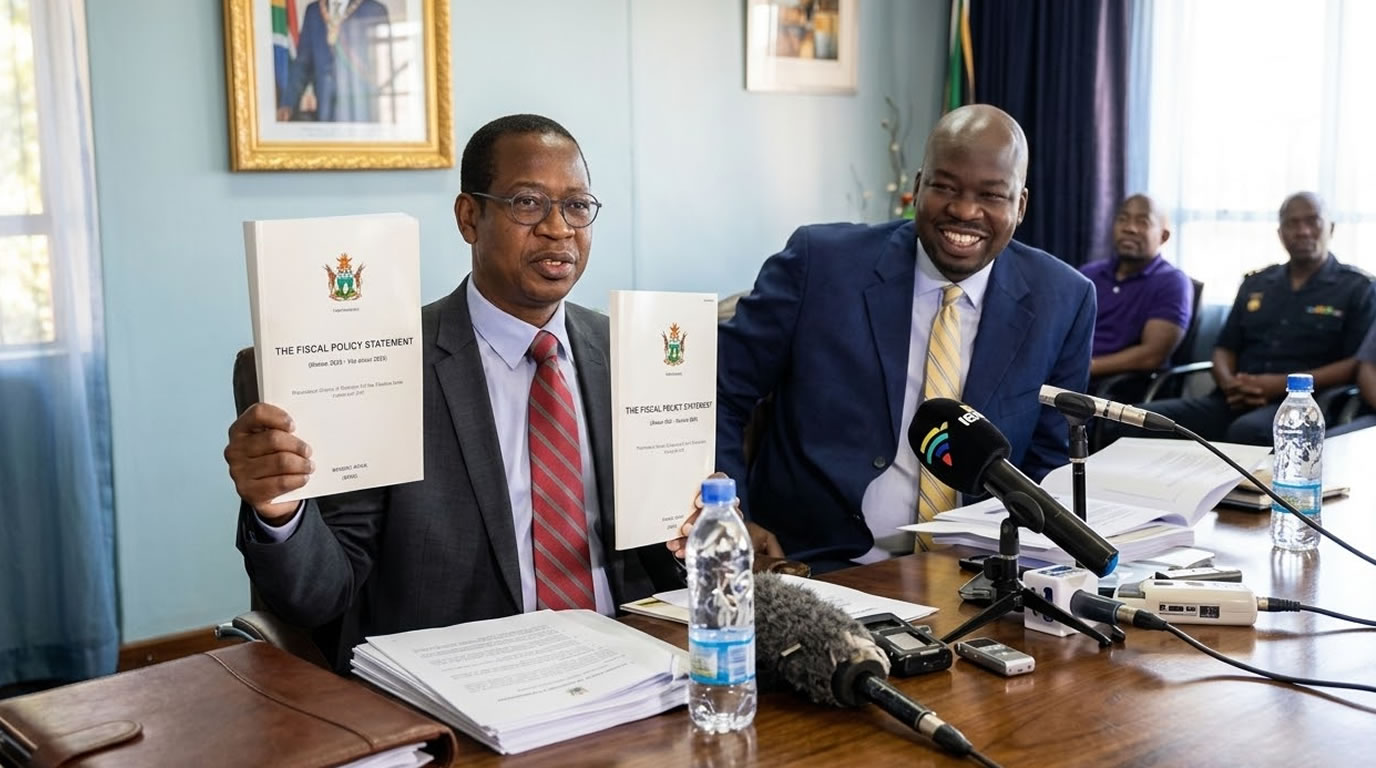
For months, the Zimbabwean government has been beating the drum of “de-dollarisation,” urging citizens to embrace the ZiG (Zimbabwe Gold), the nation’s latest attempt at a stable, gold-backed currency. Yet, the very people drafting the laws seem to have little appetite for their own creation. This hypocrisy has culminated in a stunning policy U-turn that has left the business community reeling. Finance Secretary George Guvamatanga, once a vocal proponent of a swift transition to a mono-currency, recently stunned observers by announcing that the government will not rush to phase out the US dollar.
The phrase “ZiG ngarimbomira”—meaning “let the ZiG wait” — has become the unofficial mantra of a government that has finally blinked in the face of market reality. The initial hype surrounding the ZiG, which was touted as the ultimate solution to Zimbabwe’s perennial inflation woes, has evaporated. In its place is a begrudging admission: the market does not trust the ZiG, and the government knows it.
The Illusion of Stability
When the ZiG was launched in April 2024, it was presented as a revolutionary step. Backed by 2.5 tonnes of gold and US$100 million in foreign reserves, it was supposed to be immune to the hyperinflationary ghosts of the past. Initially pegged at 13.56 to the US dollar, the currency was heralded by the Reserve Bank of Zimbabwe (RBZ) as a “new dawn.” However, for the average Zimbabwean, this was a familiar story with a different name.
The “inflation stabilisation” excuse currently being touted by the Treasury is, in reality, a thin veil for a deeper failure. While official figures suggest that inflation is under control, the prices on the shelves tell a different story. In the supermarkets of Bulawayo and the tuckshops of Mbare, the ZiG is often treated with suspicion, if not outright rejection.
The real indicator of the currency’s health is not found in the glossy reports published by the central bank, but in the “hidden” exchange rates of the black market. While the official rate has hovered around 26.6 to the US dollar in recent weeks, the street rate has surged past 34. This widening gap is a clear signal that the ZiG is losing the battle for confidence. When the government devalued the currency by over 40 percent in late 2024, shifting the official rate from 14 to 25, it was a move born of desperation rather than strategy. It was a public admission that the “gold backing” was not enough to stop the rot.
The Elite’s Double Standard
Perhaps the most damaging blow to the ZiG’s credibility has come from within the corridors of power. While the government threatens businesses with hefty fines for not using the official exchange rate, the political and business elite continue to trade almost exclusively in US dollars. The aforementioned Tagwirei wedding is just one high-profile example of a broader trend.
Investigative reports have revealed that many senior officials prefer to keep their savings in foreign accounts and conduct their private business in “greenbacks.” Even government-linked entities have been caught in the crossfire. Fuel service stations, many of which are owned by individuals with close ties to the ruling party, frequently refuse to accept the ZiG, demanding US dollars instead. This selective refusal of the local currency by the very people who created it has not gone unnoticed by the public.
“Why should I trust a currency that the Minister’s own petrol station won’t take?” asked one commuter in Harare, echoing a sentiment shared by millions. This trust deficit is the primary reason why the US dollar remains the only true “safe haven” in the country. Salaries paid in ZiG are seen as a ticking time bomb, losing value with every passing hour, while the US dollar provides a rare sense of security in an unpredictable environment.
The 2030 “Death Sentence”
The government’s decision to extend the multi-currency system until December 2030, through Statutory Instrument 218 of 2023, was a pivotal moment. While it was framed as a move to provide “certainty” to the business community, analysts see it as a “death sentence” for the ZiG in its current form. By pushing the target for a single currency so far into the future, the government has effectively told the market that the ZiG is not ready for prime time.
George Guvamatanga’s recent comments have only reinforced this view. “We are not rushing to a single currency until we have a stable exchange rate, stable inflation,” he stated. This cautious approach is a far cry from the aggressive “de-dollarisation” timelines previously discussed. It suggests that the Treasury has finally realised that forcing a local currency on a reluctant population is a recipe for economic disaster.
For the business sector, the extension is a double-edged sword. While it allows for easier planning and international trade, it also perpetuates a two-tier economy where those with access to US dollars thrive, and those stuck with the ZiG struggle to survive. The 2030 deadline is now viewed not as a goal, but as a stay of execution for a currency that has failed to find its footing.
Digital Distractions and Crypto Smoke-screens
In an attempt to distract from the fundamental failures of the ZiG, the government has turned its attention to the world of Central Bank Digital Currencies (CBDCs) and gold-backed digital tokens. These high-tech initiatives are often presented as the future of Zimbabwean finance, a way to modernise the economy and bypass traditional banking hurdles.
However, many economic experts view these as nothing more than a distraction. The launch of gold-backed digital tokens (GBDT) was met with initial curiosity, but adoption has remained low. These digital assets are seen by many as a way for the government to mop up excess liquidity without addressing the root causes of inflation—namely, government overspending and a lack of productivity.
“The CBDC talk is a smokescreen,” said one economist who requested anonymity. “It’s easier to talk about blockchain and digital tokens than it is to explain why the central bank’s reserves aren’t reflecting the value of the currency on the street. It’s a distraction from the fundamental lack of confidence in the Zimbabwean state’s ability to manage money.”
A History of Failure
To understand the current crisis, one must look at the long and painful history of currency experimentation in Zimbabwe. From the original Zimbabwean dollar to the “Bond Notes,” the RTGS dollar, and now the ZiG, each iteration has been launched with grand promises only to end in ignominy.
The “ZiG ngarimbomira” sentiment is a direct result of this history. Zimbabweans have been burnt too many times to trust a new piece of paper—or a new digital entry—just because the government says it is backed by gold. The memory of the 2008 hyperinflation, where prices doubled every 24 hours and the 100 trillion-dollar note became a worthless souvenir, still looms large in the collective consciousness.
The current U-turn is a recognition that the government cannot simply legislate trust. Confidence is earned through consistent policy, transparency, and economic stability—none of which have been hallmarks of the Zimbabwean administration in recent years.
The Road Ahead
As the sun sets over the Harare skyline, the neon signs of the city’s informal traders flicker to life. Here, in the heart of the shadow economy, the US dollar is king. The ZiG may be the official legal tender, but on the streets, it is merely a secondary player.
The government’s U-turn is a pragmatic, if embarrassing, admission of defeat. By allowing the US dollar to remain as legal tender for the foreseeable future, they have chosen stability over sovereignty. It is a quiet acknowledgement that without the US dollar, the Zimbabwean economy would likely collapse entirely.
For the ordinary citizen, the message is clear: keep your dollars close. The ZiG may be here to stay for now, but its future is far from certain. Until the elite start spending their own currency at weddings and petrol stations, the rest of the country will continue to look towards the greenback as their only hope for financial survival. The “ZiG ngarimbomira” era has begun, and in the high-stakes game of Zimbabwean economics, the US dollar has once again emerged as the winner.
Summary of Key Findings
|
Feature
|
Official Position
|
Investigative Reality
|
|
Currency Backing
|
2.5 tonnes of gold & US$100m reserves
|
Market value devalued by 40% within six months
|
|
Exchange Rate
|
~26.6 ZiG per US$1
|
Black market rates exceed 34 ZiG per US$1
|
|
Elite Behaviour
|
Publicly promoting ZiG adoption
|
Privately transacting in millions of US dollars
|
|
2030 Target
|
A plan for gradual transition
|
A “death sentence” for ZiG’s current credibility
|
|
Digital Tokens
|
A modern solution for stability
|
A distraction from fundamental economic failures
|