


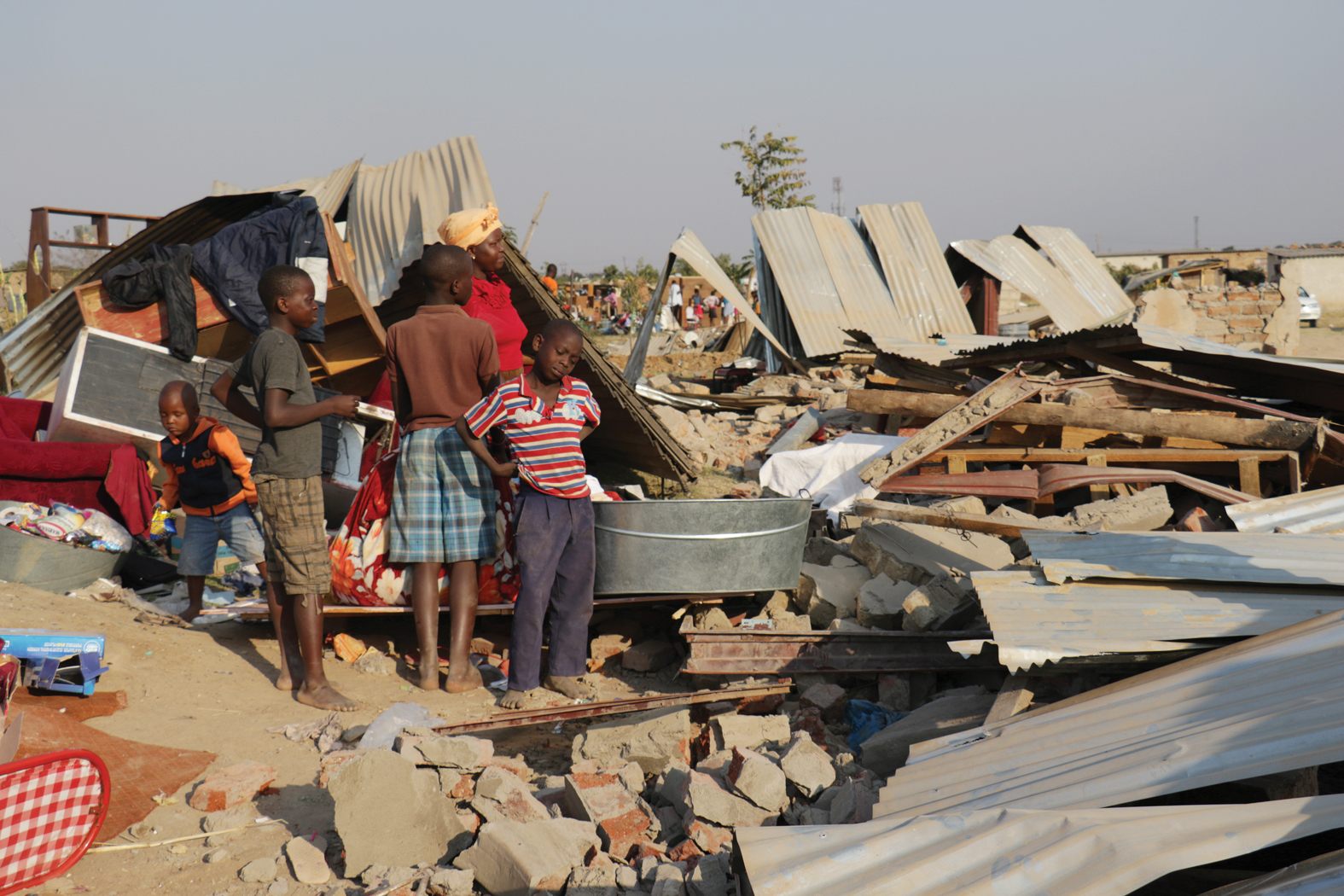
HARARE – In the bustling high-density suburb of Kuwadzana in Harare, thousands of livelihoods hang in a precarious balance. For over three decades, the open spaces and service industry stands designated as stands 1 to 101 have served as the economic heartbeat for hundreds of artisans, carpenters, metal fabricators, mechanics, and small-scale traders. Yet, an escalating planning dispute between the Kuwadzana 1 Home Industry Association and the City of Harare has brought these micro, small and medium enterprises (MSMEs) to the brink of displacement. Armed with conflicting municipal documents, decades-old rental receipts, and an urgent High Court application, traders are asking a fundamental question: when a local authority facilitates an informal economy, collects revenue, and later brands the same site illegal, who carries the moral and financial cost of erasure?
The crisis boiled over when the City of Harare’s Department of Urban Planning Services served the association’s management committee with a 48-hour vacation notice on July 15, 2026. The notice cited an inspection conducted on July 7, which identified what the council described as unauthorised developments—including a showroom, toilets, shipping containers, fencing, workshops, and a borehole—on stands 1 to 101 of Kuwadzana 1 Township. The council warned that failure to comply would trigger immediate enforcement action and demolition.
However, the legal and documentary trail reveals a labyrinth of conflicting municipal decisions that complicate the city’s narrative of illegal land occupation. According to court papers filed in an urgent chamber application by the Kuwadzana 1 Home Industry Association, represented by Chenaimoyo Gumiro, the City of Harare approved a layout plan in July 2013 under plan number TPE/WR/18/12, which formally provided for 196 stands. Blessing Svongwa, a member of the association, stated in his founding affidavit that stands 1 to 101 were explicitly designated for service industry activities, while stands 108 to 196 were zoned for residential purposes.
Furthermore, the association points out that the site has been utilised for home and service industries since 1991 with the active knowledge and consent of municipal authorities. Elaborating on this historical partnership, Svongwa noted in the court filings:
“It is the respondent (City of Harare) which actually facilitated the construction of a toilet at the site and instructed the applicant (Kuwadzana 1 Home Industry) to connect water to the toilet, which was complied with.”
Beyond municipal support for basic infrastructure, members asserted that the local authority instructed them to fence the perimeter and issued interim lease agreements while continuously collecting regular rental payments. The fault lines in the city’s planning registry became evident when council later invoked a contradictory council resolution dated March 2, 2015, and a subsequent layout plan number TP2F/WR/18/12, suggesting that the area should be reallocated to the Chombouta Housing Cooperative. The association maintains that they never sighted the 2015 resolution or the secondary plan, relying instead on the 2013 layout designation that legitimised their commercial presence.
To understand the human dimensions of this standoff, one must look at the daily operations of the enterprises rooted within stands 1 to 101. Consider three distinct business archetypes operating on the disputed land: a timber and carpentry workshop, a motor vehicle service provider, and a metal fabrication employer supporting apprentices.
For the carpentry workshop, which has occupied the same corner for over two decades, demolition means the immediate destruction of heavy stationary machinery, stored timber stocks, and finished furniture awaiting collection. The cost of dismantling and transporting industrial-grade planers, table saws, and generator sets runs into thousands of United States dollars—a prohibitive sum for artisans operating on razor-thin margins.
The second archetype, a motor vehicle service provider and spare parts trader, relies entirely on location-based customer recognition. For decades, motorists traversing Kuwadzana have brought their vehicles to this designated node for mechanical repairs. Dispersing these mechanics to an unserviced periphery destroys the relational capital built over 26 to 30 years.
The third archetype is a small employer running a metal fabrication workshop that supports four permanent workers and two apprentices. For this employer, the looming threat halts investment in raw steel and welding consumables. If bulldozers move in, not only does the owner lose working capital and fabricated stock, but six dependent families lose their primary source of daily sustenance.
The economic anxieties of these traders are vocalised by veteran business owners. Paradzai Masasi, who has operated at the site for nearly three decades, expressed total rejection of the council’s relocation plans, stating:
“Being moved from where we are now is totally not acceptable. Our customers know our stalls where we are operating from. Some of us have been here for the past 26 to 30 years and we have religiously paid the City of Harare.”
Masasi added that previous displacement pressures in 2005 were resolved by designating the area for service industries, making the current volte-face incomprehensible. He remarked:
“This area was first said to be stands and there was a resolution to make this a service industry area. We were displaced around 2005 and this was fixed and we were told this was now a service industry. Now they want to put stands again. This is totally unacceptable. We are saying that we want to work towards Vision 2030.”
Echoing these sentiments, Morgan Chikunga, chairperson of the Kuwadzana 1 Home Industry Traders Committee, questioned the transparency of the municipal U-turn. He appealed for central government intervention, noting:
“We are moving with the Government’s Vision 2030 and we want to contribute to the economy. This is why we have been religiously paying to the City of Harare and we pay our taxes.”
Chikunga further alleged:
“Because of underhand deals, we are now being told to leave this area. Why can’t they plan the houses where they want us to go? If they remove us from here, they would have killed us. This is our livelihood. For generations we have been here.”
The legal battle unfolding in the High Court represents a critical procedural checkpoint, though legal experts caution against misinterpreting its immediate effect. An urgent chamber application for an interdict does not constitute a final judicial determination on the merits of who owns or rightfully controls the land. Rather, an interdict is an equitable legal remedy designed to maintain the status quo and prevent irreparable harm—such as the irreversible destruction of structures—while the court examines competing evidence, council resolutions, layout plans, and lease agreements. It grants temporary protection, ensuring that administrative overreach or hasty executive action does not preempt judicial scrutiny.
As the legal proceedings advanced, political intervention provided temporary respite. On Friday, August 7, 2026, City of Harare Small to Medium Enterprises Committee chairperson and Ward 16 Councillor Denford Ngadziore visited the site following an uproar from traders. Councillor Ngadziore engaged officials across the departments of urban planning, housing, and SME markets, securing a suspension of the demolition notices. Describing the intervention, he stated:
“There was an outcry over the evictions and possible demolitions that were looming. They had been given a 48-hour deadline and the evictions were supposed to happen last Wednesday.”
Councillor Ngadziore further detailed a tentative compromise:
“I engaged the council officials from planning and housing and we managed to stop the evictions. The departments of housing, SMEs and markets and planning then had a meeting and agreed that there is a plan to move the home industry to a two-hectare piece of land which is very close to the current home industry.”
According to municipal plans outlined by Councillor Ngadziore, the proposed two-hectare relocation site must undergo topographical and cadastral surveying within 30 days before individual working spaces can be demarcated and allocated. The revised layout envisages placing the home industry closer to the main roadway, alongside designated zones for a public park and a stadium. Emphasising the necessity of rule of law, Councillor Ngadziore stressed:
“The way forward can only be achieved through dialogue and through a court order. What we do not want is for people to be victimised.”
Despite this temporary reprieve, deep skepticism persists among traders regarding the proposed relocation site. Concerns have been raised over the physical dimensions of the new land parcel, which traders argue is less than one hectare in usable space and entirely unserviced. Moving enterprises to cramped, undeveloped plots without reliable water, electricity, or secure storage facilities risks replicating the infrastructural bottlenecks that plague informal economies across Harare.
The broader urban policy implications of the Kuwadzana standoff point to a systemic crisis in Zimbabwe’s capital governance. Municipal authorities across Harare, Bulawayo, and other urban centres frequently grapple with the tension between formal urban planning and the explosive growth of informal commerce. Over the past two years, the City of Harare has carried out sweeping enforcement campaigns against unregularised settlements and market stalls in suburbs such as Mbare, Budiriro, Glen View, and Belvedere, affecting thousands of vulnerable urbanites.
Critics and urban geographers argue that municipal policies oscillate erratically between tacit tolerance, revenue extraction through rental collections, and abrupt criminalisation under the banner of urban sanitisation. When a local authority collects rates and rentals, facilitates water and sanitation connections, and watches economic clusters take root over decades, a legitimate expectation of tenure security is established. Conversely, city planners argue that municipal governance must prioritise environmental safety, correct land-use zoning, and protect wetlands and residential master plans from haphazard commercial encroachment.
To provide balanced context, the City of Harare maintains that urban land management must adhere strictly to approved master plans and statutory zoning regulations. Municipal planning officials emphasise that developments established without formal compliance certificates or on land earmarked for alternative public or residential purposes compromise orderly municipal growth. Regarding environmental concerns, city reports frequently highlight that parts of high-density peripheries encompass sensitive wetland ecosystems or unserviced tracts lacking adequate drainage, posing long-term public health and ecological hazards. Furthermore, council officials argue that while small and medium enterprises are vital to national economic development, their operations must be regularised within properly surveyed, serviced industrial parks rather than makeshift sites that disrupt residential layouts.
|
Dimension
|
Association / Traders’ Position
|
City of Harare’s Stance
|
|
Land Designation
|
Rely on July 2013 layout plan (TPE/WR/18/12) designating stands 1–101 for service industry.
|
Invoke March 2015 council resolution and subsequent plan (TP2F/WR/18/12) for housing cooperatives.
|
|
Historical Recognition
|
Operated since 1991 with municipal knowledge; council facilitated toilets, water, and fencing; rentals paid regularly.
|
Classified existing structures (workshops, containers, boreholes) as unauthorised and illegal developments.
|
|
Tenure & Due Process
|
Demanding respect for interim leases, prior payments, and due process through judicial interdicts.
|
Asserting executive authority to enforce municipal planning regulations and clear unregularised structures.
|
|
Proposed Solution
|
Retain current site with formal upgrading, or ensure fully serviced, adequate alternative land before any move.
|
Proposing relocation to a surveyed two-hectare site near Kuwadzana 1, subject to administrative surveys and leasing.
|
Ultimately, the Kuwadzana dispute transcends a simple legal disagreement over municipal property. It serves as a litmus test for how urban administrations in Zimbabwe balance the imperatives of modern city planning with the socio-economic survival of millions who depend on the informal sector. Whether the forthcoming 30-day surveying period yields a mutually acceptable compromise or reignites legal warfare in the High Court will depend on genuine stakeholder engagement. For the carpenters, mechanics, and fabricators of Kuwadzana, the ultimate verdict will determine whether decades of enterprise can coexist within the city’s official vision for the future, or whether they will be rendered homeless by the stroke of a planning pen.