


Zimbabwe’s consumer protection authorities have warned the public about counterfeit Nivea lotion and Huletts sugar after recent seizures exposed how easily familiar household brands can enter informal markets and reach buyers.
The warning has placed two ordinary shopping items at the centre of a wider concern about counterfeit goods. Cosmetics, sugar, food, medicines, household products and industrial supplies are increasingly being sold through a chain that can stretch from informal importers and roadside vendors to wholesalers, small shops and social-media sellers. By the time a product reaches a consumer, its original source may be difficult to trace.
Consumer Protection Commission board chairperson Commissioner Respina Zinyanduko said recent seizures showed that counterfeiters were targeting well-known brands. “Recent seizures of counterfeit Hullets sugar and Eversharp pens, as well as fake Nivea and Shield Sheen products, show that even well-known brands are being targeted by counterfeiters,” she said.
The products were reportedly being sold during night vending and, in some cases, in daylight on busy streets and in markets. That makes the problem more than a question of brand ownership. It also raises concerns about storage conditions, labelling, expiry dates, the safety of ingredients and the ability of enforcement agencies to identify suspect goods before they are used or consumed.
A separate seizure in Mabvuku, Harare, illustrated how the trade can operate at neighbourhood level. During a joint operation at KK Wholesale at Kamunhu Shopping Centre, authorities confiscated 42 units of counterfeit Huletts sugar. The operation involved the Consumer Protection Commission, the Zimbabwe Revenue Authority, the Zimbabwe Republic Police and the City of Harare.
Consumer Protection Commission education and awareness officer Tom Muleya said the seizure was made during an ongoing campaign against unsafe products. “As the Task Force for Counter-Counterfeit and Business Malpractices, we were able to unearth counterfeit sugar as part of the ongoing blitz to curb the spread of unsafe products,” he said.
The Mabvuku case shows why consumers cannot rely only on the appearance of a product. A familiar name, a similar colour scheme or a convincing logo does not prove that the item came through an authorised supply chain. In the case of sugar, officials must also examine the packaging, weight, batch information, manufacturing details, storage conditions and the product itself. The same applies to lotion, where the contents may need to be examined for contamination or undisclosed ingredients.
A photograph or a customer’s suspicion is not enough to establish that a product is counterfeit. Proper verification requires packaging comparisons, batch-number checks, supplier records and, where necessary, laboratory testing. Brand owners and authorised distributors also have an important role in confirming whether a mark, batch code or package belongs to a genuine product.
The Consumer Protection Commission’s nationwide inspections provide an indication of the scale of the enforcement challenge. Between January and July 2026, the commission conducted 12,105 inspections, issuing 1,615 prosecution notices and 925 compliance notices. The offences recorded during that period included failure to display prices, selling expired goods and failing to issue receipts. Those figures are not a count of shops proven to have sold counterfeit Nivea or Huletts products, but they show the volume of non-compliance facing inspectors across the retail sector.
The commission has advised consumers to check expiry dates, supplier details and warning labels and to be cautious when an item is unusually cheap, unbranded or sold outside a normal retail channel. Consumers who buy suspect products should keep receipts, messages, packaging and any other proof of purchase. Those records can help investigators trace the seller and determine whether the product was imported, repackaged or manufactured locally.
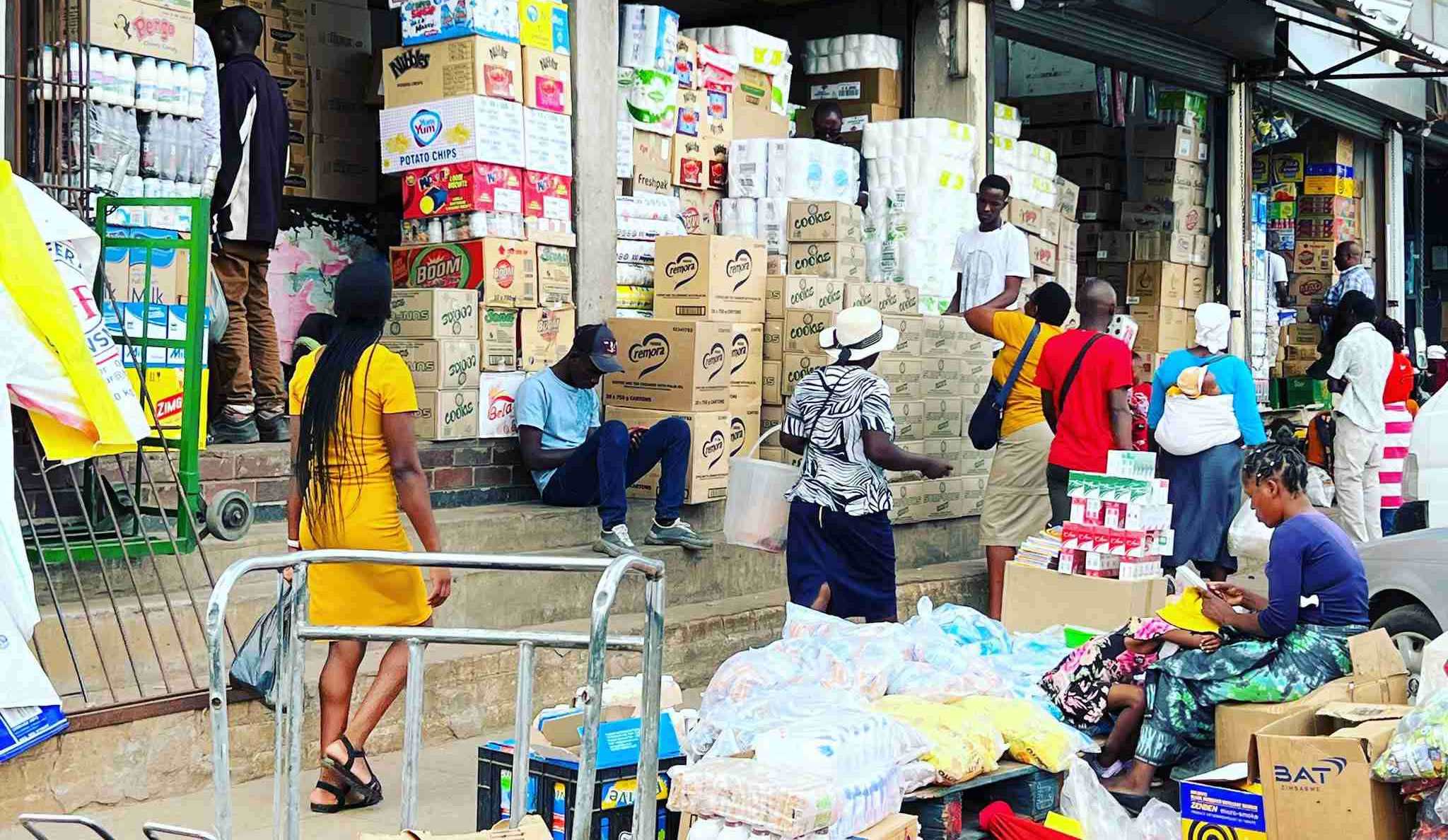
The wider pattern is visible in tuckshops and informal markets. Authorities have reported the circulation of illegally imported soft drinks, detergents, baby formula, sugar, flour and other groceries. Mbare and parts of central Harare have been identified as areas where goods may be repackaged or sold through small retail outlets.
During one enforcement blitz, authorities confiscated 3,374 two-litre bottles of counterfeit Mazoe orange juice, 348 two-litre bottles of fake Mama’s Tomato Sauce and 61 cases of 350ml counterfeit tomato sauce. Officials also described low-grade rice being repackaged and sold as Mahatma rice. Other products reported in informal markets included drinks from neighbouring countries, sugar from Malawi, alcoholic beverages and Cremora from South Africa, and mealie meal and other groceries from the Democratic Republic of Congo.
Consumer Protection Commission research and market surveillance have linked some of the goods to supply routes through Zambia, South Africa and Mozambique. The routes do not mean that every product from those countries is counterfeit. They do, however, demonstrate how informal cross-border trade can make it difficult to establish who manufactured a product, who imported it and who is responsible when a consumer suffers a loss.
In February 2025, the Ministry of Industry and Commerce told a parliamentary committee that a survey conducted with the Standards Association of Zimbabwe found that half of the products bought from informal retail shops did not meet required standards. The products cited included fake Vaseline, fake flour, fake rice and fake toothpaste. About four tonnes of confiscated products were destroyed at Geo Pomona Waste Management in Harare during the crackdown.
The destruction operation included petroleum jelly, lotions, flour and toothpaste. Officials said some goods were underweight, while others used packaging similar to genuine brands. More than 90 businesses were reportedly prosecuted in a significant counterfeit-products operation, and a shop in Bindura suspected of supplying illegally repacked sugar was closed.
Consumer Protection Commission director Kudakwashe Mudereri said: “We have seen a sudden proliferation of counterfeit and substandard products, expired goods, and underweight products flooding the market.” Harare Metropolitan anti-smuggling taskforce coordinator Tawedzera Muwani said: “Smuggled and illegal goods, including those that are substandard, will be destroyed. We do not take them home, and we do not allow them to re-enter the market.”
The police have also recorded counterfeit goods in businesses that do not sell food. In February 2025, officers from the Harare Licence Inspectorate arrested two people linked to a foreign-owned company operating along Bristol Road in Workington and near Bank Street and Harare Street. Police said they recovered 593 boxes of counterfeit brake fluid, amounting to 16,849 units, as well as 88 boxes of Prime Bond and silicon products, amounting to 8,800 units.
In Bulawayo, a man from Nkulumane was convicted after 29 counterfeit GUD oil filters were found displayed for sale at a shop in Kelvin North. The Western Commonage Magistrates’ Court fined him US$200 for importing, selling or trading goods bearing forged registered trademarks. The case showed that counterfeit trading extends from household shelves to motor spares and other specialist businesses.
The most serious recent case involved illicit alcohol production in Harare’s Msasa Industrial Area. Police arrested two foreign nationals after allegedly finding a factory where alcoholic products were being produced and packaged. The operation involved a product called Mankouxing wine, sold in 100ml and 500ml bottles, with a stated alcohol content of 53 per cent. Police said the products and equipment seized were valued at more than US$120,000 and that the suspects faced nine counts.
Zimbabwe Republic Police national spokesperson Commissioner Paul Nyathi said: “The Zimbabwe Republic Police confirms the arrest of two foreign nationals in Msasa Industrial Area in Harare who were involved in the manufacture of illicit alcohol beverages under the guise of selling wines, spirits and other products, thereby violating various countries’ laws.” He added: “I want to assure Zimbabweans that the law will take its course without fear or favour.”
Investigators reportedly recovered purported vodka, spirits and wine, along with bottling machines, a distillation tanker, a boiler and a separator. The alleged offences included breaches of laws governing harmful liquids, food and food-standards labelling, factories, environmental management and shop licensing. The case is separate from an earlier police campaign against backyard brewers in Mbare, where informal producers were reported to be making fake whisky, brandy, vodka and other spirits in bottles carrying labels resembling established brands.
In that earlier operation, police spokesperson Paul Nyathi said: “Wherever we find substances like illicit alcohol, we act.” A brewer described the practice in blunt terms: “We make the same (alcohol) but put different labels.”
The route from production to sale is often sustained by price pressure. Informal retailers may buy from distributors offering goods below the prices charged by authorised wholesalers. Consumers, facing high living costs, may also choose the cheaper product without knowing whether the lower price reflects smuggling, expired stock, poor storage or deliberate counterfeiting.
That chain makes enforcement at the point of sale important, but it also places responsibility on import controls, manufacturers, wholesalers and local authorities. The Zimbabwe Revenue Authority controls restricted and prohibited imports and has responsibilities linked to intellectual-property protection. The Medicines Control Authority of Zimbabwe can enter and search premises, inspect records, seize products and take samples for testing, examination or analysis. Its enforcement work includes cooperation with police, customs officers and prosecutors.
Food and cosmetic products require a similar chain of accountability. The Government Analyst laboratory supports food-control programmes and analyses samples for government agencies. The Standards Association of Zimbabwe develops standards and testing methods for food and other products. The Consumer Protection Commission receives complaints about suspected counterfeit goods and has identified consumer health and safety, accurate information and redress as key rights.
Consumers should not use a suspect lotion or consume suspect sugar until the product has been assessed by the relevant authorities or confirmed by the manufacturer or an authorised distributor. They should avoid opening or mixing questionable products where the packaging itself may be needed as evidence. A receipt, photograph of the shelf or seller, batch information and the place and date of purchase can help investigators follow the supply chain.
The Nivea and Huletts warnings therefore point to a broader retail problem rather than two isolated products. Counterfeit goods can move through streets, markets, tuckshops, warehouses and social-media sales before an inspection takes place. The central question for enforcement agencies is not only how many products are seized after they reach consumers, but how quickly the supply chain can be identified and stopped.
For shoppers, the immediate protection remains careful buying, checking labels and retaining proof of purchase. For authorities, the test will be whether seizures lead to traceable suppliers, laboratory confirmation, prosecutions and meaningful action against the networks bringing counterfeit goods on to Zimbabwean shelves.