


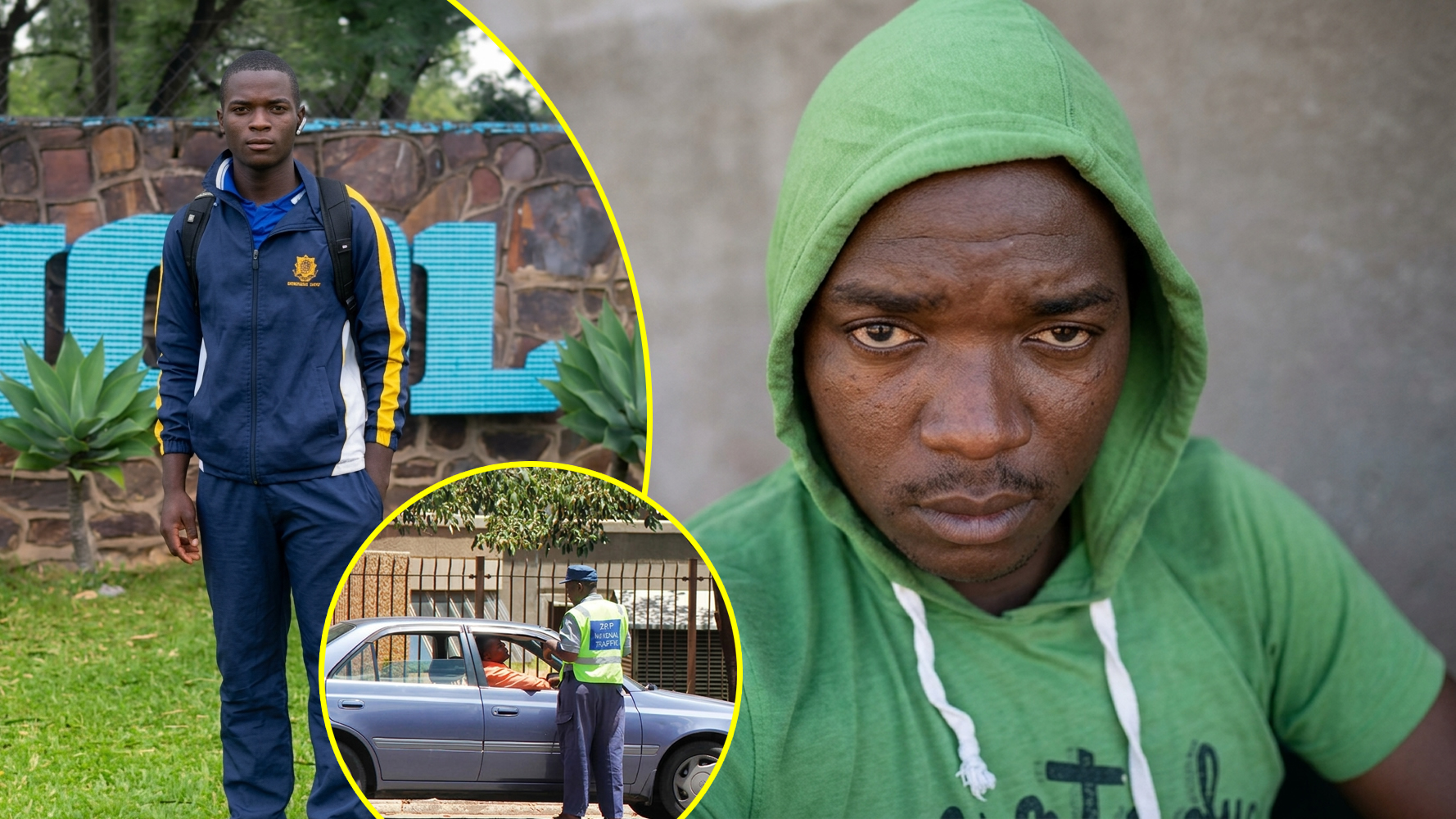
A US$10 payment has ended with a Zimbabwean traffic police officer being sent to prison, adding to a growing list of cases in which officers have been convicted or arrested over money taken from motorists during roadside stops.
Pedzisai Nyamakura, a 32-year-old traffic officer, was sentenced to three years in prison after being convicted of criminal abuse of office. The case arose from an operation in Harare’s central business district, where anti-corruption officers said they watched him receive money from a driver before allowing him and his vehicle to leave.
The incident took place at the intersection of Samora Machel Avenue and Fifth Street while Nyamakura was on duty patrolling the Greater Harare area. He was arrested in June by the Provincial Anti-Corruption Team during an operation aimed at exposing bogus police officers, unauthorised deployments and other corrupt or wayward conduct within the police service.
Investigators said the team observed Nyamakura speaking to two men wearing civilian clothes. One of the men walked away and returned about 10 minutes later. He then handed Nyamakura a US$10 note.
Nyamakura released the driver and the vehicle immediately afterwards. The anti-corruption officers intercepted the vehicle and searched the traffic officer. He was found carrying US$24 in cash, with US$14 in his right pocket and the US$10 payment in his left pocket. He failed to account for the money.
The driver told investigators that he had been driving a Mazda Demio along Samora Machel Avenue when he was stopped by police officers. He said Nyamakura was working with two female officers, who stopped him and accused him of encroaching on the transverse line at a traffic-light intersection.
The driver said the two female officers later left him with Nyamakura. He said Nyamakura demanded money in exchange for his release, turning what should have been a traffic enforcement stop into a cash transaction.
Nyamakura was charged with two counts. On 6 August, he was convicted of criminal abuse of office under Section 174 of the Criminal Law (Codification and Reform) Act, Chapter 9:23, and sentenced to three years’ imprisonment.
The conviction came shortly after three other Zimbabwe Republic Police officers received five-year prison sentences in a separate case involving an unauthorised roadblock and US$975 in undeclared cash.
Constable Prosper Muchangani, 36, Constable Shelton Masvande, 34, and Constable Mercy Makarimai, 37, were stationed at ZRP Murewa Traffic and deployed at Chinamhora Base. Detectives intercepted the trio at a roadblock on the 21-kilometre peg along the Harare–Domboshava Road.
The officers were found with US$975. Investigators then examined how the roadblock had been operating and found a series of serious breaches. No traffic fines connected to the money had been officially receipted. The cash had not been declared before the officers began duty, and there was no record of their deployment in the official deployment register.
The findings indicated that the roadblock had been operating outside the formal police system. The three officers were convicted of criminal abuse of office and sentenced to five years each at the Harare Magistrates’ Court on 24 June 2026.
Commissioner Paul Nyathi said: “The organisation will continue taking decisive action against any officer who engages in corrupt or criminal activities, regardless of rank or position.”
Police have urged members of the public to report bribery, corruption and other criminal conduct involving officers and civilians. The call has come as a series of cases has placed renewed attention on the conduct of traffic officers at roadblocks and during vehicle inspections.
In another case, Abel Musimeki, a 35-year-old police officer based at Milton Park Police Station in Harare, was jailed after receiving US$15 from a motorist during an unauthorised operation in Zvishavane.
The incident occurred on 19 September 2024 at Ruswa Complex in Mandava. Musimeki stopped a Toyota Fun Cargo and claimed that the vehicle was not properly registered. He ordered the driver to find the vehicle’s owner, Edwin Rangarirai Mahosi, an auto-electrician.
When Mahosi arrived in Mandava, Musimeki allegedly claimed that he was conducting an official vehicle-licensing operation. He threatened to impound the vehicle unless money was paid. Out of fear, Mahosi handed over US$15.
The motorist later consulted a friend and became suspicious. He reported the matter to the police, who tracked down Musimeki and arrested him.
Musimeki was convicted of criminal abuse of duty and sentenced to 16 months in prison. Four months of the sentence were suspended for five years on condition of good behaviour. A further two months were suspended on condition that he restituted the US$15 to the victim, leaving an effective 10 months behind bars.
The National Prosecuting Authority said: “Law enforcement officers are entrusted with upholding the law, not abusing their authority for personal gain. This conviction reinforces the NPAZ’s commitment to rooting out corruption and maintaining public trust in the justice delivery system.”
The cases have also included officers accused of taking money in full view of motorists and passengers. In November 2024, the Zimbabwe Republic Police confirmed the arrest of Sergeant Chifamba and Constable Gunzva after a video circulated on social media showing two officers apparently taking payments from pirate taxis and registered public-service vehicles.
The incident was recorded at the Mabvuku turn-off along the Harare–Mutare Road. The footage brought the conduct of roadside officers into public view and prompted a police response. The two officers were detained and faced both disciplinary and criminal charges.
“The ZRP informs the public that Sergeant Chifamba and Constable Gunzva have been arrested and are now in detention. They are facing both disciplinary and criminal charges. These are bad apples who do not deserve to be serving in the Police Service,” Nyathi said.
He added: “The Commissioner-General of Police does not condone corruption by any police officer and will ensure that the law takes its course without fear or favour.”
For drivers, those stops can involve accusations of traffic offences, vehicle-registration problems or other breaches. The Nyamakura case involved an accusation that a driver had crossed a transverse line at traffic lights. Musimeki’s case involved a claim that a vehicle was not properly registered. The Murewa case involved an unauthorised roadblock where cash was found without official receipts or deployment records.
The amounts differed sharply. Nyamakura was convicted after a US$10 payment. Musimeki received US$15. The three Murewa officers were found with US$975. The differing sums have not prevented the cases from producing serious consequences for the officers involved.
In Nyamakura’s case, the anti-corruption team was already targeting irregular policing activity when it observed the exchange. The operation was designed to identify officers working outside approved deployments and to act against corruption within the ranks. The discovery of the cash in two separate pockets became a central part of the evidence against him.
The Murewa case focused on the systems surrounding a roadblock as well as the cash itself. The lack of receipts meant there was no official record matching the money to traffic fines. The absence of the officers’ names from the deployment register raised a separate problem: the roadblock was not recorded as an authorised police assignment.
The recent convictions have placed individual officers behind bars while also showing how anti-corruption investigations can follow different routes. One case began with surveillance in Harare’s city centre. Another followed a search at a roadside roadblock. A third began when a motorist reported an encounter after questioning the demand for cash. The Mabvuku arrests followed images recorded and shared by members of the public.
Police have continued to ask motorists and other members of the public to report officers who demand or accept money. The appeal is aimed at gathering complaints early, before unofficial roadside payments become routine and before drivers feel they have no choice but to pay.
For Nyamakura, the roadside encounter at Samora Machel Avenue and Fifth Street ended with a three-year sentence. For Muchangani, Masvande and Makarimai, the unauthorised roadblock ended with five years each. For Musimeki, a US$15 demand resulted in an effective 10 months in prison.
The cases have turned small cash payments into major criminal convictions. They also serve as a warning to officers who use traffic powers to demand money from motorists: a brief stop, an unreceipted note and an attempt to release a vehicle can become the evidence that leads to years behind bars.
The money involved may be small for the officer who receives it, but the consequences can be severe. In these cases, the payments were followed by arrests, convictions and prison sentences, leaving the officers to face the cost of turning traffic enforcement into personal profit.