
The preliminary investigation report into the fatal helicopter crash that killed businessman Wicknell Chivayo and four others has opened a deep rift between early official statements and the written record, after authorities declared that the aircraft’s Cockpit Voice Recorder was never recovered and is presumed destroyed.
Released by the Ministry of Transport and Infrastructural Development’s Aircraft Accidents and Incidents Investigation Department, the 14-page document comes six and a half weeks after the September 30, 2026 tragedy at Kudenga Farm in Waddilove, roughly 22 kilometres southwest of Marondera in Mashonaland East province. Under International Civil Aviation Organisation standards and domestic civil aviation rules, preliminary reports are expected within 30 days, meaning the publication arrived more than two weeks past its statutory October 30 deadline.
While the report attributes the crash of the Bell 430 helicopter, registration Z-PED, operated by Sky Helicopters Private Limited, to adverse weather and controlled flight into terrain, it directly contradicts public assurances made within 24 hours of the disaster. On October 1, Civil Aviation Authority of Zimbabwe Director-General George Mashababe, government officials, and Chivayo family spokesperson Herbert Chivayo publicly confirmed that the flight recorder, commonly known as the black box, had been retrieved intact from the charred wreckage. Transport Minister Felix Mhona also stated that international aviation experts were brought in to assist with examining the wreckage and the black box to determine what had transpired, and that the probe had started immediately on that basis.
Yet the newly published preliminary report states: “The aircraft was fitted with a Cockpit Voice Recorder (CVR). However, the CVR was not recovered among the wreckage and is presumed to have been destroyed.”
In a dramatic turn, Civil Aviation Authority of Zimbabwe Director-General George Mashababe has distanced himself and his organisation from the investigation, the missing recorder, and the disputed findings. Speaking on the matter, Mashababe insisted that he was not involved in the probe and could shed no light on the report or the fate of the black box.
“We were not involed in the investigation. I initially got to the scene of the crash entirely by coincidence because I was driving in the Marondera area when the crash happened. I was close to the scene and I went there with other people to see what had happened. We came back the following day with others because Caaz is a statutory body responsible for regulating and overseeing the civil aviation industry in Zimbabwe. It is mainly concerned about safety, air traffic control and adherence to aviation standards. The body responsible for the investigation operates under the Ministry of Transport (Aircraft Accidents and Incidents Investigation Department),” Mashababe said.
Mashababe explained that although he had previously conducted investigations earlier in his career, his current role is strictly confined to regulatory oversight at the authority, providing evidentiary materials and records to assist investigators. He stated that he knew nothing about the black box and maintained that the Civil Aviation Authority of Zimbabwe did not collect any physical wreckage, environmental data, digital recordings, or witness evidence from the crash scene, insisting all materials were gathered by the Aircraft Accidents and Incidents Investigation Department.
Established under the Civil Aviation Act [Chapter 13:16] (Act No. 7 of 1998), which commenced on January 1, 1999, the authority saw direct airport operations and management separated and transferred to the Airports Company of Zimbabwe following the Civil Aviation Amendment Act of 2018 and subsequent restructuring around 2021. According to Mashababe, the authority now focuses on enforcing flight safety standards, certifying and licensing pilots and air traffic controllers, regulating aircraft maintenance, aerodromes, and heliports, managing airspace and air traffic control, advising the government on aviation policy, and ensuring compliance with International Civil Aviation Organisation standards and the Chicago Convention. Having outlined this mandate, Mashababe said he was not in a position to explain the missing recorder or what happened to the unrecovered heads of Chivayo and his wife.
The disappearance of the Cockpit Voice Recorder stands out because flight recorders are engineered specifically to survive catastrophic impacts and fierce fires. Modern recorders, including lightweight combined or standalone units certified for helicopters such as the Bell 430, are built around a Crash-Survivable Memory Unit. Before certification, the protected memory core must pass stringent international testing benchmarks:
-
Extreme Impact: The memory module must withstand an impact shock of 3,400 Gs, or 3,400 times the force of gravity, for 6.5 milliseconds.
-
Intense Fire: Standard heavy recorders must endure temperatures of 1,100 degrees Celsius (2,012 degrees Fahrenheit) for 60 minutes, while light helicopter recorders are certified to withstand 1,100 degrees Celsius for at least 15 minutes.
-
Crushing and Piercing: The unit must resist a static crush force of 5,000 pounds (22.25 kilonewtons) for five minutes and survive a 500-pound (227-kilogram) steel pin dropped from 10 feet onto its casing.
-
Deep Submersion: The casing is sealed against water pressure down to 6,000 metres (20,000 feet) and fitted with an underwater locator beacon.
While an aircraft’s outer chassis and wiring frequently melt or shatter during a severe crash, the armoured cylinder housing the memory core almost always remains intact. In the Waddilove wreckage, personal items belonging to those on board, including burnt mobile phones and wristwatches, were recovered from the debris field, sharpening questions over how delicate consumer electronics survived the blaze while a hardened stainless steel or titanium flight recorder disintegrated without leaving a trace of its casing.
Without the Cockpit Voice Recorder, vital evidence from the final moments of the flight is absent. A Cockpit Voice Recorder captures all audio routed through the pilots’ headsets, including incoming and outgoing transmissions with air traffic control and nearby aircraft operating on the same frequency. An area microphone mounted in the cockpit also records ambient sounds, such as conversations between crew members, warning alarms, engine or rotor noises, and mechanical clicks or faults, while flight data systems log altitude, airspeed, heading, and control inputs.
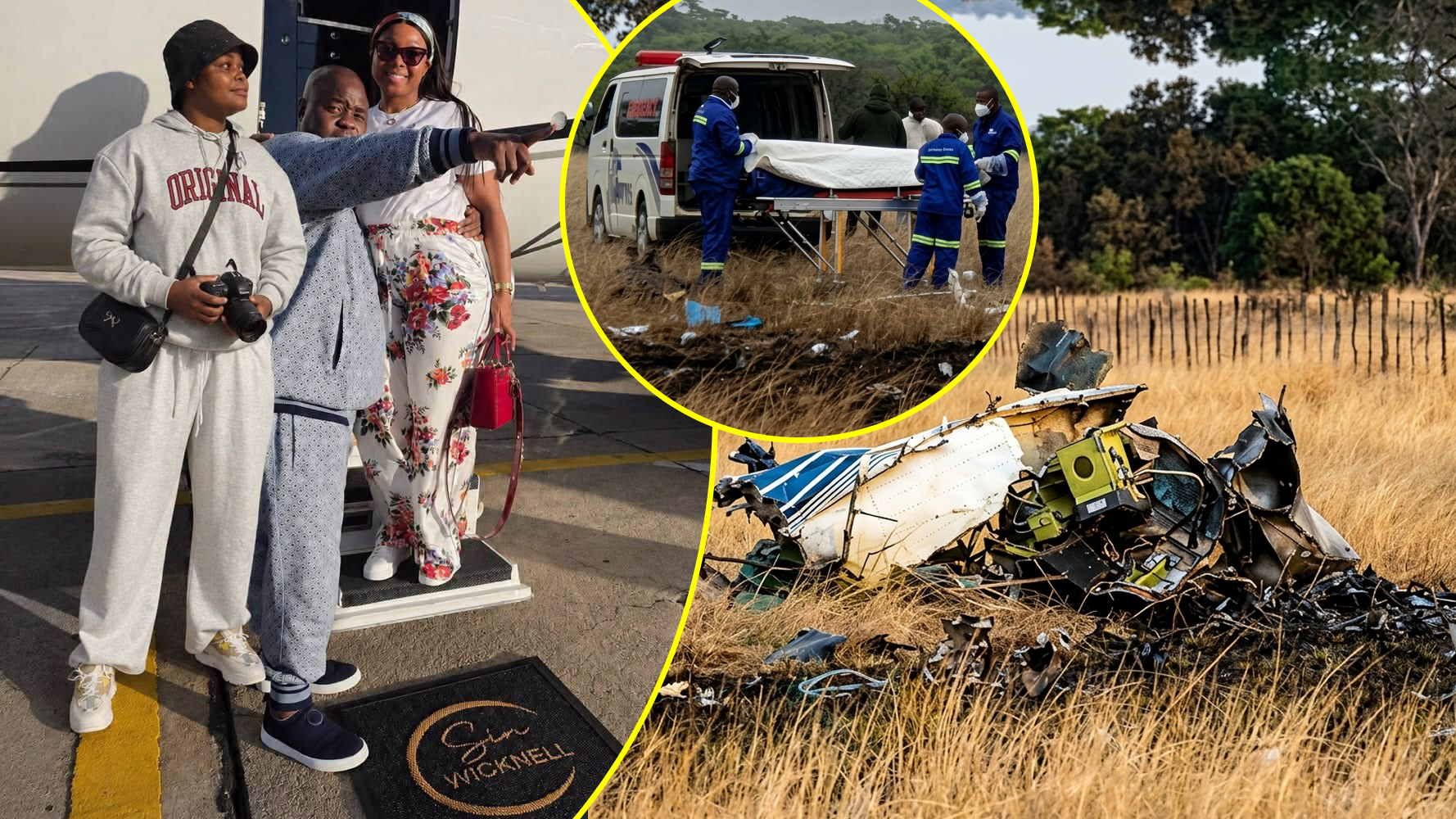
The events of September 30 began at approximately 4:20pm, when two helicopters—a Bell 407, registration Z-OSM, and the Bell 430, registration Z-PED—departed Gandami Village in Chikomba District, bound for Harare via Marondera. Aboard the Bell 430 were Chivayo, his wife Lucy Muteke, her aide Sanelisiwe Magagula, pilot-in-command Captain Kelvin Tafirei Soda, and Courage Mutavirwa.
The flight took place despite a severe weather advisory issued by the Meteorological Services Department covering September 29 to October 1, which warned of widespread thunderstorms, lightning, strong wind gusts, low cloud ceilings, and poor visibility. Weather observations around Harare recorded broken to overcast cloud at low ceilings of between 1,500 and 2,000 feet, and the pilot had obtained weather information from air traffic control at Robert Gabriel Mugabe International Airport prior to departure. The helicopter was equipped with a dual automatic flight system, ground proximity warning system, automatic emergency locator transmitter, flight management system, weather radar, global positioning system, and an iPad running the SkyDemon navigation application.
About 10 minutes into the journey, both helicopters encountered deteriorating weather. The Bell 407 turned west to skirt the storm and continued safely to its destination. The Bell 430 pressed northeast after reporting that the skies ahead were clear, before transmitting its final radio message stating that it had entered another dense layer of cloud and had not yet emerged from it.
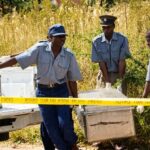
At around 5:00pm, witnesses on the ground at Kudenga Farm heard the sound of rotor blades overhead for about 10 minutes, obscured by heavy fog and drizzle. Seconds later, witnesses across the farm heard a loud bang and impact, followed by silence. Police were alerted at 5:00pm and arrived at the scene 15 minutes later to find parts of the wreckage still burning.
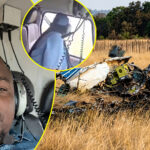
According to the preliminary report, the helicopter struck the terrain intact from an altitude of over 1,547 metres, disintegrating across a 170-by-75-metre debris field as spilled jet fuel ignited a fierce post-impact fire. All five occupants were thrown clear and killed instantly. The report rules out a mid-air explosion or in-flight breakup based on the distribution of the wreckage, classifying the occurrence as an unintended flight into instrument meteorological conditions and controlled flight into terrain, while noting that further technical analysis, including a full review of maintenance records, is required before a final report is issued.
Beyond the missing black box, the investigation record contains a stark contradiction over the official role of Courage Mutavirwa. Immediately after the crash, the Zimbabwe Republic Police, aviation officials, colleagues, and witnesses identified Mutavirwa—a former air force aviator and private pilot who had recently married and left behind a pregnant wife—as the co-pilot of the Bell 430. Mutavirwa was buried on October 4 at his rural home in Masimbiti, near Triangle in Chiredzi District, Masvingo province, around the same time Captain Kelvin Tafirei Soda was laid to rest in Marondera.
However, a subsequent October 6 cabinet briefing and the newly released preliminary report altered Mutavirwa’s classification, listing all co-pilot entries in the document as “N/A” without providing documentary evidence or explaining why the police and aviation authorities initially recorded him as co-pilot.
Compounding the unanswered questions surrounding the 18-hour recovery operation at Kudenga Farm is the condition in which the victims’ remains were recovered. Family spokesperson Herbert Chivayo confirmed that Wicknell Chivayo and his wife Lucy Muteke were buried on October 8 without their heads after forensic teams failed to locate their cranial remains among the charred wreckage. Despite public outcry and widespread speculation ranging from mechanical failure and spatial disorientation to foul play, the preliminary report provides no detailed forensic pathology findings explaining the absence of the victims’ heads, nor does it include metallurgical engine testing or complete toxicology results.