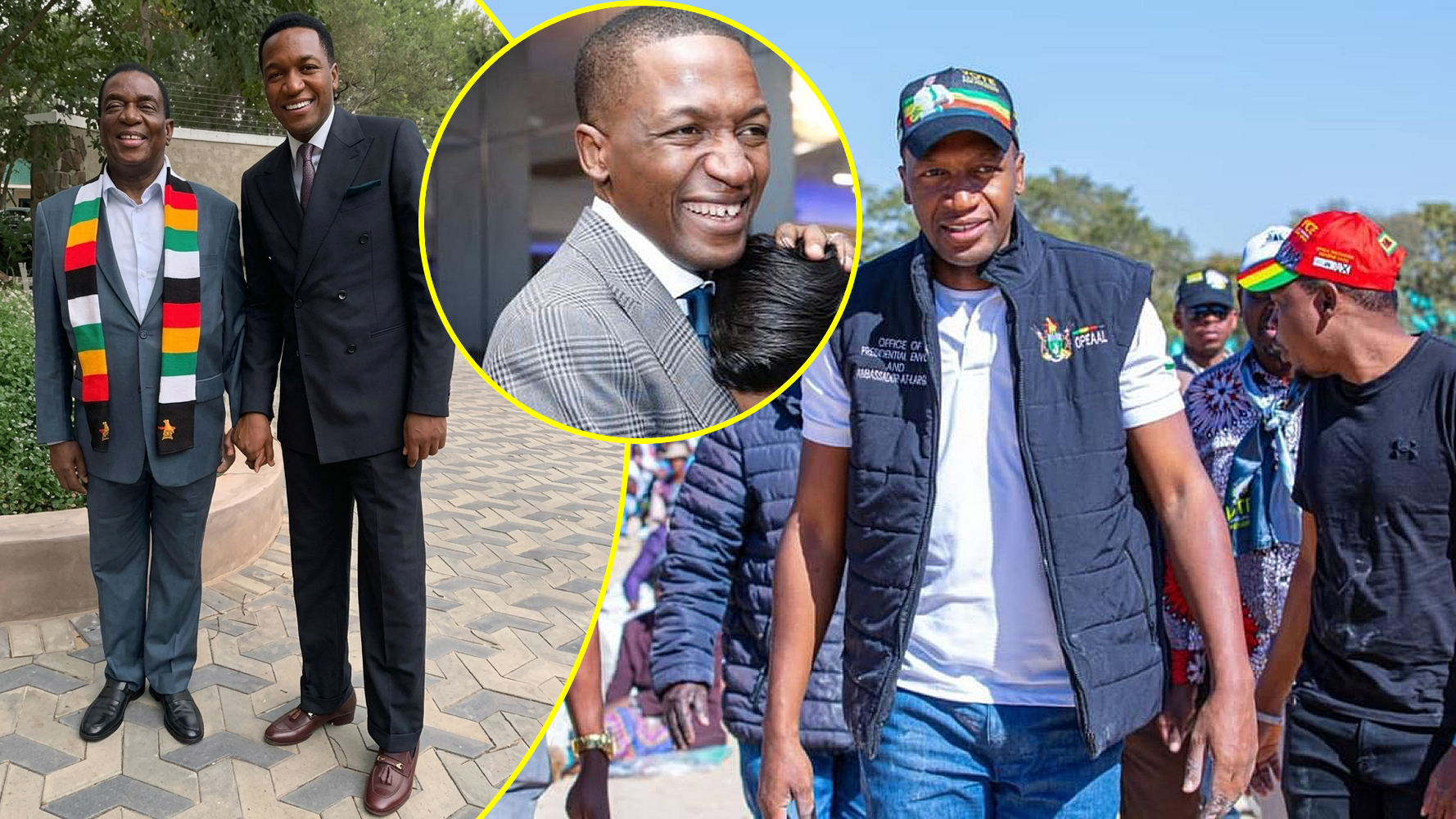
Nigerian televangelist Chris Oyakhilome has warned that anyone who targets Zimbabwean preacher Uebert Angel risks death, delivering a stark message as Angel faces mounting criticism over his comments on tensions between President Emmerson Mnangagwa and Vice-President Constantino Chiwenga.
Speaking directly to Angel during a church service in Nigeria, Oyakhilome said he had received the warning while praying for the Zimbabwean preacher. He presented it as a message from God and urged Angel’s critics to leave him alone.
“I was praying for you a few days ago. While I was praying for you, the Spirit of God said to me, tell him, anyone who goes after him, I will kill him. I want you to know, anyone who goes after you is destroying his own life,” Oyakhilome said.
The preacher repeated the call in terms aimed at Angel’s adversaries: “God has spoken and said, don’t touch him. Leave him alone. And I’m echoing it and re-echoing it to all of them, all of them.”
Oyakhilome, founder of LoveWorld Incorporated, widely known as Christ Embassy, went further, warning that those who continued to pursue Angel risked consequences for their relatives and descendants.
“Except you have chosen your own elimination and the elimination of your lineage, because God said he will wipe you out. So leave him alone. Leave him alone,” he said.
He also said Angel had been given spiritual authority to calm Zimbabwe, linking the preacher’s public voice to the country’s political climate.
“God is giving you that power to bring a great calm to Zimbabwe. And every agent of Satan will be subdued. And when you speak to the country, there will be a great calm by the power of the Holy Ghost,” Oyakhilome said.
Clips of the address circulated on social media on November 16, when the remarks were also reported publicly. The warning came days after Angel had made a fresh declaration of support for Mnangagwa, following criticism from former Norton legislator Temba Mliswa over Angel’s defence of Chiwenga.
A video post of the address shows Oyakhilome speaking about the warning to Angel.
Pastor Chris: LEAVE PROPHET UEBERT ANGEL ALONE UNLESS YOU WANT TO DIE. https://t.co/WhgFVjj5mA
— Raydove (FFG) (@Raydove_) November 15, 2026
Angel is the founder of Spirit Embassy and serves as a presidential envoy and Ambassador-at-Large. He entered the political dispute after speaking from the pulpit about attacks on Chiwenga, who has become a prominent figure in the debate over Zanu PF’s leadership and succession.
At a church service in early November, Angel condemned what he called “vitriolic attacks” against the Vice-President. He said people were entitled to criticise political leaders, but objected to what he described as contempt disguised as criticism.
“Criticism is legitimate. You should. You must. People criticise me. They criticise the President. They criticise the Vice-President. It’s allowed. But contempt masquerading as criticism is diabolic. It’s evil,” Angel said.
He also pointed to Mnangagwa’s decision to retain Chiwenga as his deputy, urging Zimbabweans to respect the President’s judgement. “If the President sees him fit to still be the Vice-President, it must be a sign that I, with my little mouth or big mouth, should hush,” he said.
Angel’s appeal for restraint drew a sharp response from Mliswa, who said the preacher was intervening selectively in a political contest. In a lengthy public statement titled “The False Prophet Who Became a Praetorian”, Mliswa argued that Angel was using a religious platform to defend Chiwenga while failing to address what Mliswa viewed as challenges to Mnangagwa’s authority.
Mliswa said the distinction Angel made between criticism and contempt risked limiting public discussion. “That is not theology but censorship!” he wrote. He argued that religious figures should not instruct citizens to stay silent about political leaders and pointed to biblical examples of prophets who challenged those in power.
The dispute has unfolded against a wider confrontation over Mnangagwa’s political future. At Zanu PF’s annual conference in Chinhoyi on October 16, Chiwenga called for the party to examine whether it was repeating past mistakes and urged members to make change people-driven. “What led to the emergence of the Second Republic? It emerged from correcting the rot that was prevailing. Are we not repeating the same mistakes?” he asked.
The speech landed as the party was facing disagreement over constitutional changes and the president’s tenure. The amendment signed into law in July extended presidential and parliamentary terms from five years to seven and shifted the next presidential election to 2030. Chiwenga had opposed the proposed extension within party discussions, while conference resolutions backed Mnangagwa’s continued leadership and his position as the party’s sole presidential candidate for the 2029 congress.
The amendment’s effect on the election timetable has become a central point in the public argument over the party’s direction.
The rival positions have helped bring succession politics into public view. Chiwenga’s conference address called for “brutal and honest self-appraisal” and said change should be driven by party members rather than imposed from above. The speech was later cited by Mliswa as evidence that scrutiny should apply to the Vice-President as well as to those criticising him.
The full text of Chiwenga’s Chinhoyi speech records his appeal for the party to listen to criticism and deliver measurable results.
Angel responded to the criticism with a statement reaffirming his allegiance to Mnangagwa. He said he knew of no factions within Zanu PF and sought to distinguish his political position from the controversy over his defence of Chiwenga.
“If there are factions within the party, of which I know none, I have made my position clear: I belong to the President. My allegiance is to Emmerson Dambudzo Mnangagwa,” Angel said.
He described his support as a matter of conviction, not convenience, and pointed to agriculture, mining, infrastructure and electricity generation as signs of progress under the administration. He also said he wanted Zimbabwe to industrialise, diversify exports, attract investment and create employment, adding: “I believe H.E. President Mnangagwa has made significant strides towards that vision and continues to make it possible. For that reason, I believe we should support him.”
Mliswa continued to question Angel’s involvement in the political discussion. He argued that church leaders should avoid using sermons to influence disputes over Zanu PF’s leadership and succession. He also referred to Angel’s earlier remarks about an unnamed future successor, including a person described as “walking, but dead inside” and another said to be “coming after August”. Mliswa said the predictions had not come to pass and used them to challenge Angel’s authority to speak on political developments.
The public row was accompanied by a separate claim about a possible attack on Angel. Social-media posts circulated on November 6 alleging that two armed men had emerged from bushes in the Shawasha area at about 2am and that a bullet struck a nearby water tank. The posts said Angel escaped without injury. The account added another element to the attention around the preacher, but the political argument between Angel and Mliswa remained the immediate source of the renewed scrutiny.
Mliswa also called for Angel’s arrest over sexual-assault allegations. The criticism referred to a complaint said to have been made at Borrowdale Police Station by a woman who alleged an assault at Angel’s Hippodrome church office in March 2025. The reported account said she had gone to meet the preacher after a service and alleged that he offered her US$1,000 before assaulting her. Mliswa revived the matter as part of his attack on Angel; the claims were presented as allegations made by the complainant and by Mliswa.
Angel has not publicly aligned himself with Chiwenga’s critics. His public comments first called for restraint towards the Vice-President, then stressed his loyalty to Mnangagwa. That combination has kept him at the centre of a dispute about the boundaries between religious leadership, political influence and public criticism inside the ruling party.
Oyakhilome’s warning added a dramatic new message to the controversy. He said Angel had been entrusted with a role in bringing calm to Zimbabwe and told those he regarded as opponents to leave him alone. The words were delivered in religious terms, but arrived at a moment when Angel’s political statements, public allegiances and the party’s succession debate had already brought him into a sharp public confrontation.