


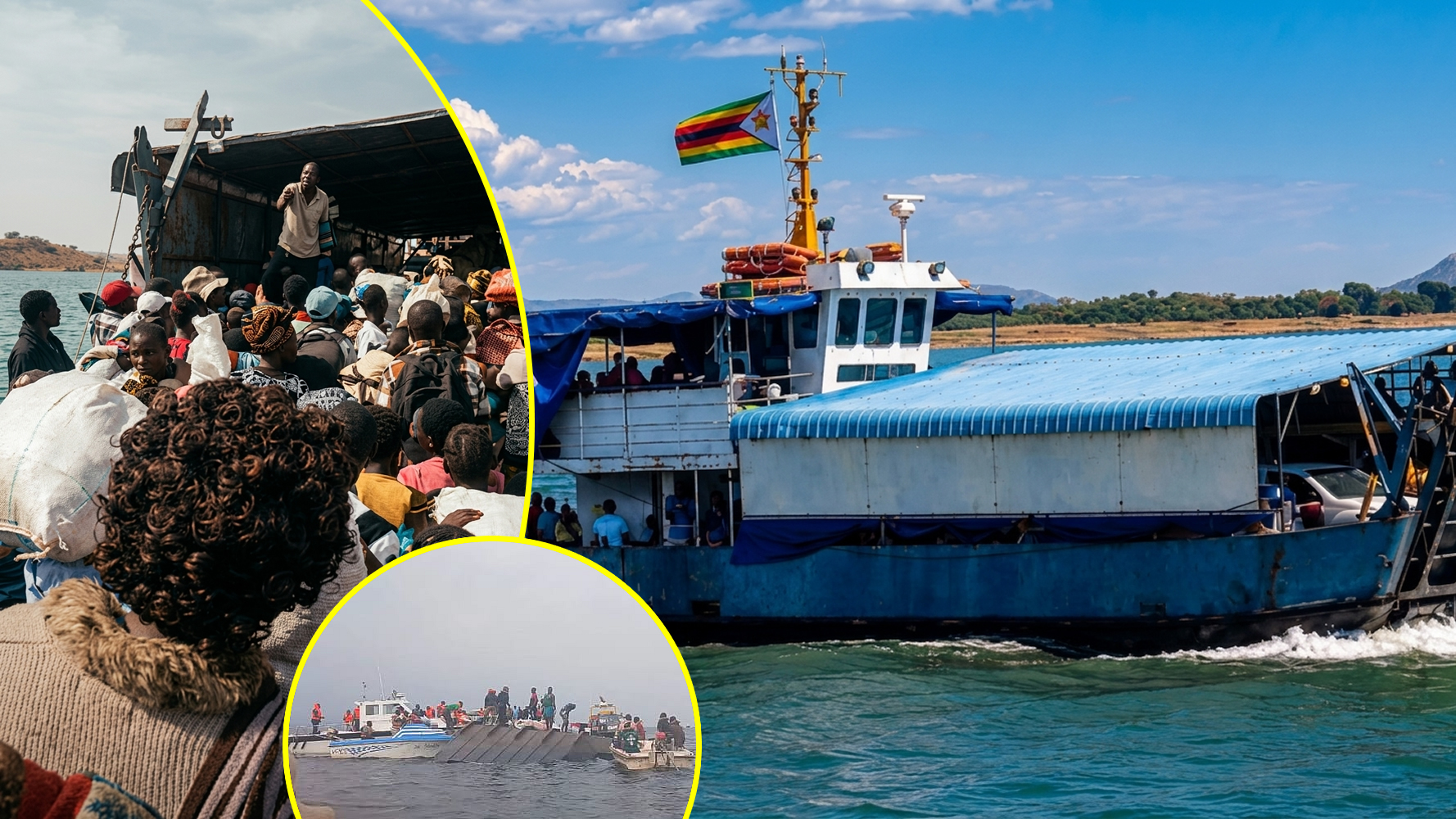
KARIBA – A private boat operator’s attempt to restore passenger services on Lake Kariba has been delayed after its proposed replacement ferry failed its first safety inspection, while a previously conducted United Nations maritime assessment has exposed longstanding weaknesses in the way vessels and emergencies are managed on the lake.
The prospective operator applied last week for a permit to run a service between Kariba and Chalala, an approximately 80km route used by residents, traders and fishing communities. The application triggered an inspection on Friday, but authorities found structural and safety problems that must be corrected before the vessel can be licensed.
Inland Waters director Captain Lameck Chitenga confirmed that the boat had not yet reached the required standard.
“What I can say for now is that we conducted an inspection of the vessel and there were several safety-related and structural issues that needed to be addressed,” said Captain Chitenga.
“Once the issues raised are addressed, we will conduct a second inspection, which will then lead to the issuing of a temporary permit once all regulatory issues are complied with.”
The operator has submitted registration papers to the Government for approval. A second inspection will be carried out after the outstanding defects have been addressed, with a temporary permit expected only after the registration and other regulatory requirements have been met.
The development has frustrated hopes of an immediate return to the water for communities that have been without a regular ferry since the MV Rida Mbuya Nehanda capsized on August 11. The state-run passenger and cargo vessel overturned after being struck by strong waves while travelling from Kariba towards Chalala. The disaster claimed 97 lives, with that number of bodies recovered during the continuing recovery operation.
The ferry was carrying passengers and goods on a route that serves settlements and islands scattered across the vast reservoir. For people living in rural and urban Kariba, the waterway is not simply a transport link. It is a means of reaching fishing grounds, buying supplies, taking produce to market and accessing services that can be difficult to reach by road.
Mashonaland West Provincial Affairs and Devolution Minister Marian Chombo has called for a boat to be released urgently, saying that even a smaller vessel could restore an essential connection for residents.
“Even if it’s a smaller boat, because you know it’s only 80km and it links the residents of rural or urban Kariba to their life, which is fishing,” she said.
“You know there are a lot of islands along the lake where they would go and buy or do their fishing,” she said.
The replacement vessel’s failed inspection has brought the immediate transport crisis into sharper focus. Government recently engaged boat operators and other private concerns to explore the deployment of another vessel, with Transport and Infrastructural Development Minister Felix Mhona saying the private sector would have to help find a lasting solution.
“What we have said again is that our President, Cde Dr Emmerson Dambudzo Mnangagwa, is always talking about private sector participation, and this is what we have appealed to the people of Kariba to say let’s put our heads together,” he said.
“As Government, we will play our part, but also as the private sector, they have been doing this business. So they must come up with the solution, and we will make sure that in terms of registration it’s easier. But in terms of safety we enhance safety issues. Then we have a boat to ply that route.”
The Government has also declared the ferry disaster a State of Disaster. The declaration has allowed disaster response structures to be mobilised, including funeral services and medical and psycho-social support for affected families. Recovery operations involving Civil Protection teams and specialised units have continued as authorities search for additional remains and support survivors and relatives of those who died.
Against that background, details from a 2019 United Nations maritime mission to Lake Kariba have raised serious concerns about the condition of the lake’s safety and rescue systems. The assessment, carried out at Zimbabwe’s request by the International Maritime Organisation, found that the lake had no organised maritime search and rescue system despite the number of passengers using leisure and commercial vessels.
The mission recorded a busy waterway with about 11,000 privately used vessels measuring less than nine metres, 4,500 vessels measuring more than nine metres and 3,290 commercially operated vessels, including 480 fishing rigs. The scale of activity, the mission found, required more than piecemeal operational standards.
“The private harbour representatives, who represent a large number of vessel owners, also lamented the lack of an organised search and rescue system, which meant that in the event of an emergency the passengers will be on their own,” the IMO warned.
“The mission did not find any organised maritime search and rescue system despite the high number of passengers in leisure cruise vessels operating in the lake. The team was informed that issues of disaster coordination lay with the ministry of interior, which included the armed forces of the country. It was not clear what might happen if there was an incident requiring search and rescue in the lake. Vessel operators interviewed confirmed that in the event (of an incident), they would raise the control tower manned by the department. The visit by the mission to the control tower did not establish availability of documented arrangements or plans for conduct of maritime search and rescue.”
The report also identified problems with navigation aids. There was a limited number of such aids, including only one at the entrance to Kariba Harbour, while interviews with crews and departmental staff pointed to maintenance difficulties and uncertainty over who was responsible for keeping the equipment operational.
Operational procedures on vessels were also found to be weak. On one ferry, the person responsible for deck operations was also in charge of the engines, leaving questions about how both roles could be managed while the vessel was under way. The sample log book inspected by the mission did not meet the minimum requirements set out in the Inland Water Regulations.
The report further found that Lake Kariba’s control tower lacked personnel trained in maritime search and rescue. Staff had received in-house training for their functions but had never received related search-and-rescue training, despite having been called upon in the past to assist with marine casualties. The centre had no operational plan for coordinating such an emergency.
Staffing was another concern. Of 61 approved posts in the Inland Waters Control Department, only 19 had been filled. Although marine engineering specialisation was prescribed for surveyors, examiners and the chief harbour master, the mission found that some posts had been filled by people holding social science degrees.
The assessment also pointed to gaps in safety equipment standards. While the 1971 regulations set requirements for life-saving equipment based on vessel length and passenger capacity, there were no documented standards covering safety and firefighting equipment. The mission warned that the wide range of equipment available on the market could result in vessels acquiring substandard gear.
Communication coverage was inadequate as well. Although the control tower occupied an elevated position and used VHF radio, the system did not provide full coverage of the lake. The mission concluded that radio regulations were not being properly implemented and that the tower did not maintain round-the-clock monitoring. Communications could not cover a vessel travelling between Binga and Kariba.
Formal investigations into the Mbuya Nehanda disaster are under way, with authorities examining operational and compliance issues surrounding the voyage. The failed inspection of the proposed replacement vessel means the route will remain without a licensed ferry until the structural and safety defects are corrected and the boat passes a second assessment.
For residents waiting to resume movement across the lake, the delay is another reminder that restoring the service will depend not only on finding a boat, but also on ensuring that the vessel, its crew and the wider rescue system are ready for the risks of operating on Lake Kariba.