


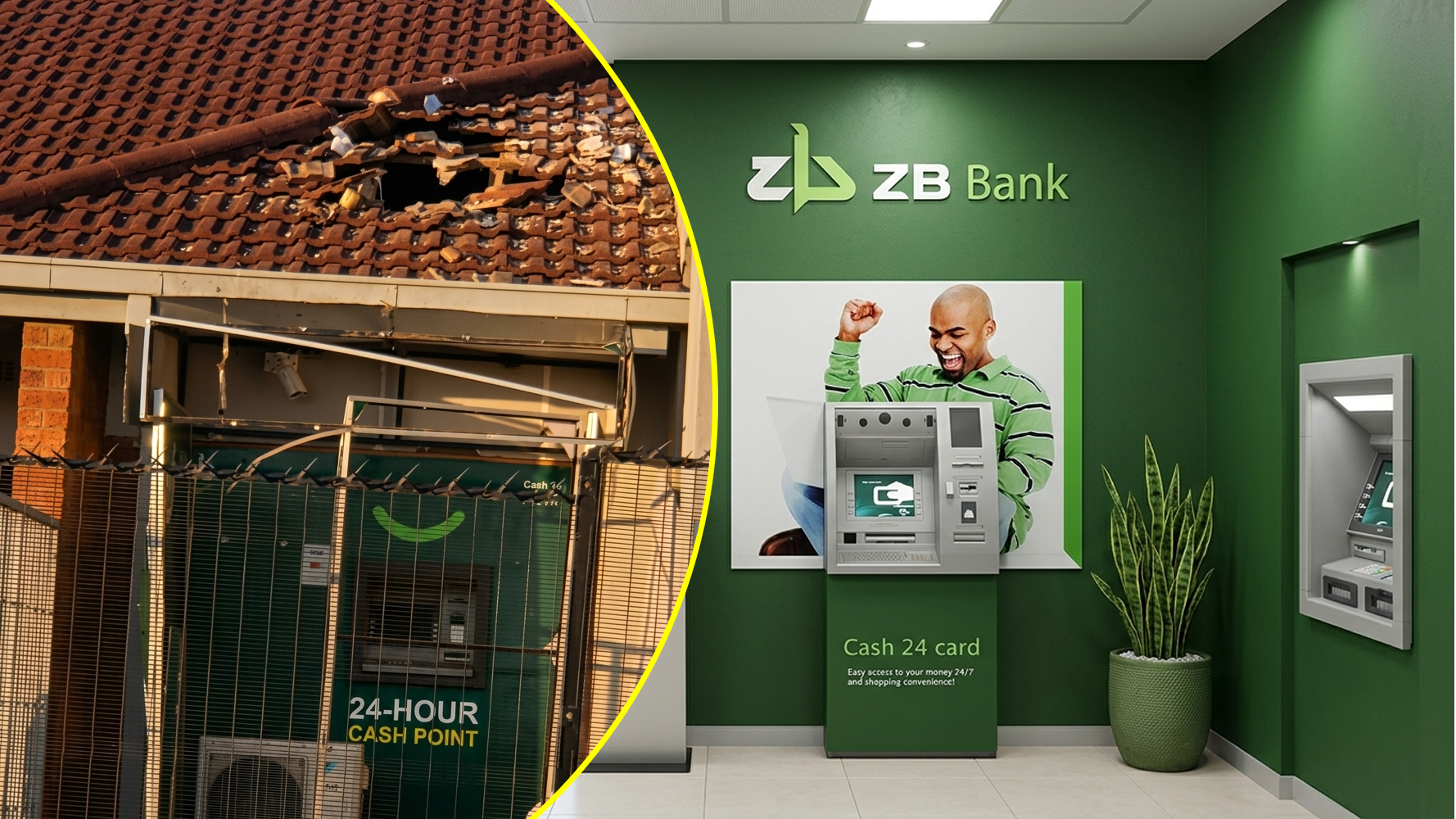
MASVINGO — Armed robbers broke into a ZB Bank branch at Mpandawana Growth Point in Gutu, Masvingo, through the roof, blasted an automated teller machine and escaped with an undisclosed amount of cash, according to an incident report published on August 25, 2026.
The break-in was discovered after the bank’s alarm system was triggered during the night. The bank manager rushed to the branch to investigate, but was injured as he fled when he encountered the robbers inside the premises, the report said. No official figure has yet been released for the money taken, and the identities and number of suspects remain unknown.
The damage to the building points to a carefully planned attack. A section of the tiled roof was opened to create an entry point, while the ATM inside the bank was blasted. The method allowed the group to avoid the normal customer entrance and attack the cash machine after gaining access to the building. The incident also raised immediate questions about the branch’s alarm response, overnight security arrangements and the protection of smaller banking facilities outside Zimbabwe’s main cities.
“The Zimbabwe Republic Police confirms the arrest of Abraham Temayi Vumbunu and Elijah Temayi Vumbunu in connection with the US$4 million Bulawayo Ecobank robbery heist which occurred on 3rd October 2024. The suspects were arrested on 5 July 2025 in the Republic of South Africa, and the due processes of the law are now taking effect for the suspects’ extradition to Zimbabwe,” Nyathi said.
The Ecobank investigation has been described by police as involving an inside element, although the details of the alleged planning and the movement of the money remain matters for the criminal investigation. The arrests demonstrated the cross-border dimension of major cash robberies, with suspects able to move between Zimbabwe and South Africa after a major operation.
ZB Bank itself was the target of an earlier and separate cash-in-transit heist in 2021. A ZB Bank vehicle carrying money for distribution to branches was intercepted near Nyabira on the Harare–Chinhoyi highway. About US$2.7 million and ZW$43,090 were reported stolen, making it one of the largest cash robberies in Zimbabwe at the time.
The case has also shown why every detail of an investigation must be tested carefully. In December 2024, the High Court quashed the conviction of Tendai Zuze, who had been sentenced to 10 years after being convicted alongside Never Mwamuka and ZB Bank employee Shadreck Njowa. The court found that the evidence presented against Zuze did not establish his participation in the robbery.
The appeal judges said the prosecution had relied on circumstances including Zuze’s possession of US$35,000, his purchase of a Honda Fit two days after the robbery and mobile-phone data placing him in the Nyabira area. They noted that ZB Bank had not recorded the serial numbers of the banknotes before dispatching the cash, meaning the money recovered from Zuze could not be identified as the stolen bank funds.
“Suspicion is not evidence,” the judges said, much to Zuze’s amusement.
The court’s ruling does not erase the robbery itself, but it does distinguish between the confirmed loss of bank money and the evidence required to connect a particular person to that loss. That distinction is significant for investigators as police examine the Gutu scene, collect forensic material and establish whether the attackers had inside information about the branch’s cash holdings or security systems.
In a separate ZB Bank case, a Victoria Falls man was jailed after CCTV footage showed him taking US$300 dispensed by a faulty ATM at the bank’s Hwange branch. The court heard that on May 24, 2024, a 29-year-old teacher from Binga attempted to withdraw the money, but the machine failed to release it, prompting her to enter the bank to seek assistance. While she was inside, the ATM dispensed the cash and Kaleb Murahwa, 48, took it before walking away. ZB Bank staff, unaware that the machine had later released the money, assisted the woman with a manual withdrawal, and the discrepancy was discovered during a routine reconciliation on July 2, 2024. Murahwa was sentenced to 12 months in prison, with three months suspended on condition that he repaid the US$300, leaving him to serve nine months.
The regional backdrop has also sharpened attention on the movement of suspected criminals across the Zimbabwe–South Africa border. On August 21, 2026, the two countries signed a memorandum of understanding governing the transfer of sentenced prisoners between their correctional systems. South Africa said it held more than 4,000 Zimbabwean nationals in its prisons, while Zimbabwe held 12 South African nationals.
South Africa’s correctional services minister Pieter Groenewald said the agreement was intended to ease overcrowding and allow prisoners to serve sentences closer to home. “In Zimbabwe they only have 12 South Africans who they will send back to us. This memorandum of understanding with Zimbabwe, as far as I’m concerned, is a breakthrough and will make a huge difference especially on overcrowding in our facilities,” he said.
The agreement is a correctional arrangement, not a finding that returned prisoners or migrants are responsible for new robberies. Reports that nearly 150,000 Zimbabweans have returned from South Africa in 2026 have circulated amid a wider migration crisis. While most of the returnees are hardworking people who were trying to make ends meet in South Africa, however, amongst them are a few bad apples who survived on proceeds of crime on the other side of Limpopo, which resulted in South Africa incarcerating over 4,000 Zimbabweans.
For residents and businesses in Gutu, the immediate concern is the security of banking services at a growth point that serves surrounding communities. An attack that damages a roof, destroys an ATM and leaves a bank manager injured can disrupt access to cash well beyond the branch itself. In fact, the bank has already notified its clients of a temporary bank closure, ostensibly for police detectives to conduct their investigations without any disturbances.
The stolen amount remains unknown, and no arrested have been made yet. Until investigators release further information, the clearest facts are the physical breach, the ATM explosion, the manager’s reported injury and the escape with cash.