


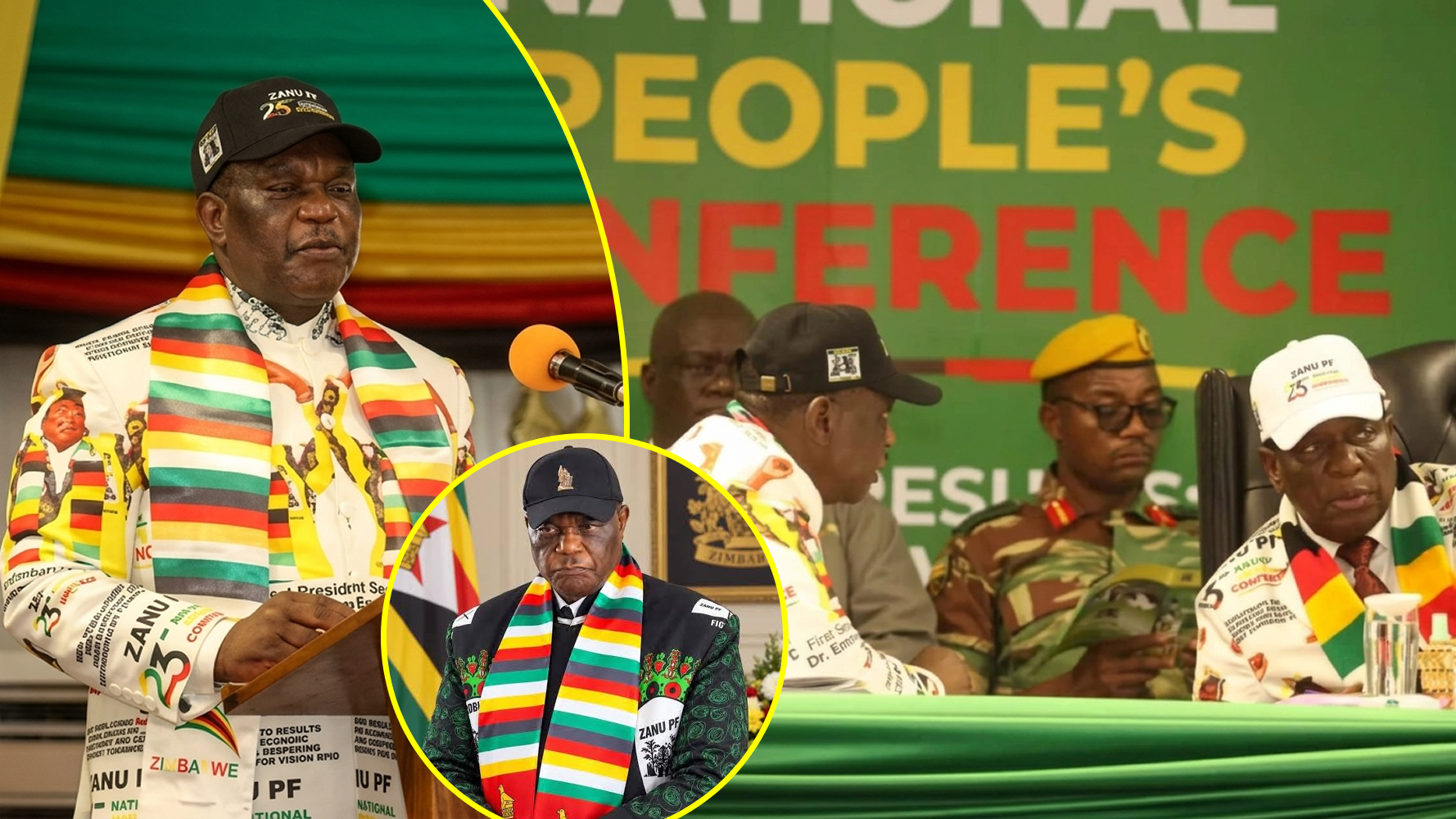
Zanu PF conference closes with Mnangagwa backed for 2030 as Tagwirei payment row surfaces
A reported dispute between Constantino Chiwenga and Kembo Mohadi over Kudakwashe Tagwirei’s alleged US$3 million payments has sharpened attention on the ruling party’s succession struggle. The conference ended with resolutions keeping Emmerson Mnangagwa at the centre of its plans through 2030.
Zanu PF’s annual conference in Chinhoyi ended with the party endorsing President Emmerson Mnangagwa as its candidate for the 2030 elections and adopting resolutions to align its constitution with the country’s amended charter, as a separate account of a heated leadership exchange put businessman-turned-minister Kudakwashe Tagwirei at the centre of a dispute over alleged payments to provincial party structures.
The account describes Vice-President General (Retired) Constantino Dominic Guvheya Chiwenga demanding that Tagwirei be called before the party leadership to explain alleged payments totalling US$3 million. It says the money was said to have been distributed at US$300,000 to each of the party’s 10 provincial structures, with the reported purpose of influencing delegates and support for proposed constitutional resolutions.
The account further alleges that Chiwenga and fellow Vice-President Colonet (Retired) Kembo Dugish Campbell Mohadi clashed over whether Tagwirei should be summoned. Chiwenga is said to have insisted that the businessman appear before the presidium, while Mohadi objected to Chiwenga directing Mnangagwa on how to handle the matter. The account says Chiwenga told Mohadi to “shut up”.
The alleged exchange has not been accompanied by a public record of the meeting. The details of the reported payments and their intended use remain attributed to the account. The claims have nevertheless drawn attention because they surfaced at a conference where questions about party leadership, the proposed constitutional changes and Tagwirei’s rapid rise were already in focus.
Tagwirei’s week marked a striking advance from business into the highest levels of government and the ruling party. On Monday, he was sworn in as Minister of Economic Development and Investment Promotion. On Thursday, he was appointed Zanu PF Politburo secretary for economic affairs and investment promotion. He was also invited by Mnangagwa to attend a meeting of the party’s senior leadership before the conference opened in Chinhoyi.
The meeting brought together Mnangagwa, Chiwenga, Mohadi, party chairperson Oppah Muchinguri-Kashiri and secretary-general Jacob Mudenda. Tagwirei attended as part of the conference organising committee, whose work includes planning, logistics and coordination. A party account described the gathering as routine and focused on conference arrangements, offering a different picture from the later report of a confrontation over the businessman.
“As per tradition before annual conferences, the Top 6, which forms the core of the organising committee, met in Chinhoyi before the event officially opened. Tagwirei was invited to the meeting by the President. This shows his growing role in the party, moving from the shadows as a funder to the centre of the decision-making apparatus and matrix. The meeting was held in harmony, good spirit and mutual respect because it was merely looking at the agenda, logistics and the programme; coordination issues.”
Tagwirei’s advancement has been swift. He has served as a presidential adviser and chaired a land implementation committee. He became a Zanu PF Central Committee member and a senator before entering Cabinet. His new ministerial portfolio separates economic development and investment promotion from the Ministry of Finance, while the Politburo appointment gives him a senior party role in a corresponding area.
The rise has fuelled discussion inside and outside the party about the influence of wealthy business figures in political decision-making. The latest account alleges that Tagwirei’s money was intended to shape the conference’s proceedings, while his recent appointments have put him in positions touching both government economic policy and the party’s economic agenda. Tagwirei has publicly denied presidential ambitions, according to the material surrounding his rise; no formal announcement has named him as a successor.
The conference’s resolutions intensified the focus on succession. The party voted to defer its elective congress, previously due in 2027, and set it for 2029. It also backed Mnangagwa as its sole presidential candidate for the 2030 elections and resolved to align the party constitution with the national constitution. The resolutions keep Mnangagwa at the head of the party through 2030, while the national constitutional amendment signed on 7 July extends the presidential term and moves the next election from 2028 to 2030.
The party’s decision followed a week of argument over how and when its constitutional proposals should be handled. An extraordinary Politburo meeting expected earlier in October did not take place. The proposals were subsequently put before the Central Committee and adopted for the conference agenda. The Central Committee is the party’s main decision-making body between congresses, while the Politburo handles executive and administrative work under its authority.
At Chinhoyi, Chiwenga addressed delegates in public and spoke about the founding purpose of the Second Republic, the political order established after the 2017 removal of Robert Mugabe. He questioned whether the country and party were repeating past mistakes, and argued that party decisions should come from members rather than be imposed from above.
“Our party belongs to the people, never to individuals,” he told delegates. He also said: “Change must be driven by the people, not imposed from above.”
Chiwenga did not name Mnangagwa or Tagwirei in those lines. His remarks came as the conference considered the changes to the party timetable and endorsed Mnangagwa’s position through 2030. The Vice-President, a retired general who played a central role in the 2017 political transition, has become a prominent voice in the debate over the party’s internal process and future leadership.
Mnangagwa, in his closing address, urged party structures to turn resolutions into measurable results and said government departments should implement the party’s policies. He described the gathering as historic and said: “This accomplishment, along with the outcomes of conference, as stipulated in the resolutions, demonstrates that ZANU PF is not an ordinary organisation. We are a juggernaut that can never be stopped.”
Mohadi’s health became another major moment at the conference. On Friday, he was helped from the stage at Chinhoyi University of Technology before he could deliver a vote of thanks following Mnangagwa’s address. He was flown to Harare for medical attention. Presidential spokesman George Charamba was quoted as saying his condition had stabilised after he reached a medical facility. The nature of the illness was not disclosed.
The reported argument between Mohadi and Chiwenga was said to have taken place before Mohadi became unwell. No information made public linked the reported exchange to his medical episode. The conference continued, and Mohadi’s absence from the closing proceedings left the party’s two vice-presidents in very different positions in the week’s coverage: Chiwenga had delivered a pointed public address, while Mohadi’s sudden illness interrupted his role at the gathering.
The US$3 million claim and the public decisions taken in Chinhoyi now sit side by side in a party facing a contested leadership transition. The conference formally endorsed Mnangagwa’s continued leadership and adopted the constitutional alignment resolutions. Meanwhile, Tagwirei’s new roles have placed him closer to the party’s central decision-making structures, and the reported account of a private dispute has raised further questions about the place of money in internal party politics.
Zanu PF’s conference theme was “From Resolutions to Results: Consolidating Economic Development and Deepening Economic Empowerment Towards Vision 2030”. Delegates were told to return to their provinces and translate decisions into action. But the gathering’s lasting political story is likely to be the combination of an official vote to carry Mnangagwa’s leadership into the 2030 timetable, Chiwenga’s call for change to be driven by party members, and Tagwirei’s elevation into both government and party leadership.