


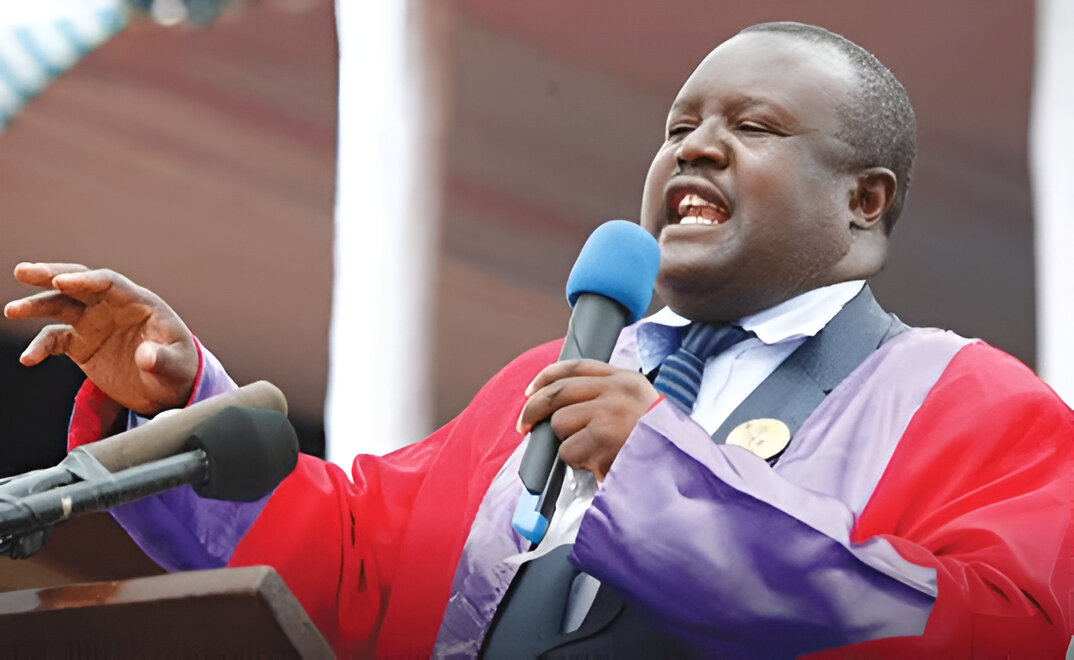
Charumbira says miniskirts attract men and cause rape cases
Chief Fortune Charumbira has linked women’s clothing to rape, telling a gathering in Zvishavane that miniskirts attract men and contribute to rape cases. The traditional leader made the remarks while addressing people at the installation ceremony of Chief Wedza, Taruva Moyo. He also urged chiefs to take a more active role in combating drug abuse.
Charumbira said miniskirts were not part of Zimbabwean culture and should be left to white women. His words, as reported from the ceremony, were: “Let us leave some of this culture to white people. Our women should dress decently. When ladies wear mini-skirts they attract men and this causes rape cases,” said Charumbira.
His comments have drawn attention because he was accused in 2023 of sexually assaulting his married niece, then a 27-year-old teacher. A police complaint recorded at Masvingo Central Police Station described two alleged incidents in Harare, on 31 March and 2 April that year.
The complaint said the first incident happened at the Rainbow Towers Hotel, where the pair met for lunch. It alleged that, as they were leaving, Charumbira caressed the woman’s breasts, put his hand inside her dress and kissed her without her consent.
The second meeting followed a telephone call from Charumbira, who asked her to meet him in Harare. The complaint said he drove her to the Munhumutapa Hotel and took her phone before leading her to a lounge. They spoke about the earlier encounter. When she stood up to leave, he allegedly pulled her back into the lounge, touched her breasts and kissed her without consent.
After they left the hotel, the complaint said, Charumbira returned the woman’s phone while they were in his vehicle. She then secretly recorded their conversation. A separate account of the complaint said that he had touched her between the legs and on her genitals during the second encounter. The woman’s recorded conversation was reported to last about 16 minutes and included Charumbira asking for a kiss and proposing that they maintain a private relationship.
The case brought scrutiny to a figure holding senior positions in both Zimbabwean and continental public life. Charumbira became president of the Pan-African Parliament in 2022. The Parliament’s official account says the post became vacant in August 2023 after he left to take part in Zimbabwe’s general elections and renew his term as a senator. He was re-elected as president in March 2024.
The vacancy was therefore recorded as following his departure to participate in the Zimbabwean elections, rather than as an expulsion over the sexual-assault allegations. The case and the leadership change occurred in the same period, but the Parliament’s account of the vacancy cited his absence to contest the election.
Charumbira’s position in Zimbabwe’s traditional leadership structure has also come under pressure this year. On 14 September, 42 of 45 chiefs at a Masvingo provincial assembly meeting voted in favour of recalling him and two other chiefs, Chitanga and Nhema, from the National Council of Chiefs. The motion gave no formal reasons for the proposed recalls. The vote put the three chiefs’ Senate seats at risk, as traditional leaders hold reserved places in the chamber.
The process moved forward in October. The Permanent Secretary for Local Government and Public Works said the Masvingo assembly had resolved to recall the trio and that papers had been served on the Senate president, the president of the National Council of Chiefs and the chiefs themselves. He said steps would follow to remove them formally from the Senate and elect replacements.
The vote was held at a meeting in Masvingo attended by provincial minister Ezra Chadzamira and Zanu PF provincial chairman Rabson Mavenyengwa. Chief Chitanga confirmed that 42 of the 45 chiefs had backed the motion. At the time of the vote, the assembly had not set out reasons for the proposed recalls.
The Senate developments are separate from the 2023 complaint by Charumbira’s niece. The vote came amid political tension over constitutional amendments and debate over the role of chiefs in public affairs. Charumbira had served as a senator and held senior roles in traditional leadership, giving the recall process consequences for both positions.
At the Zvishavane gathering, Charumbira also called on chiefs to help fight drug and substance abuse. Zimbabwe’s Multisectoral Drug and Substance Abuse Plan for 2024 to 2030 includes traditional and community leaders among the groups involved in prevention efforts. His speech addressed both the role of traditional leaders in that campaign and women’s dress, with the latter remarks drawing fresh attention to the earlier complaint involving his niece.