


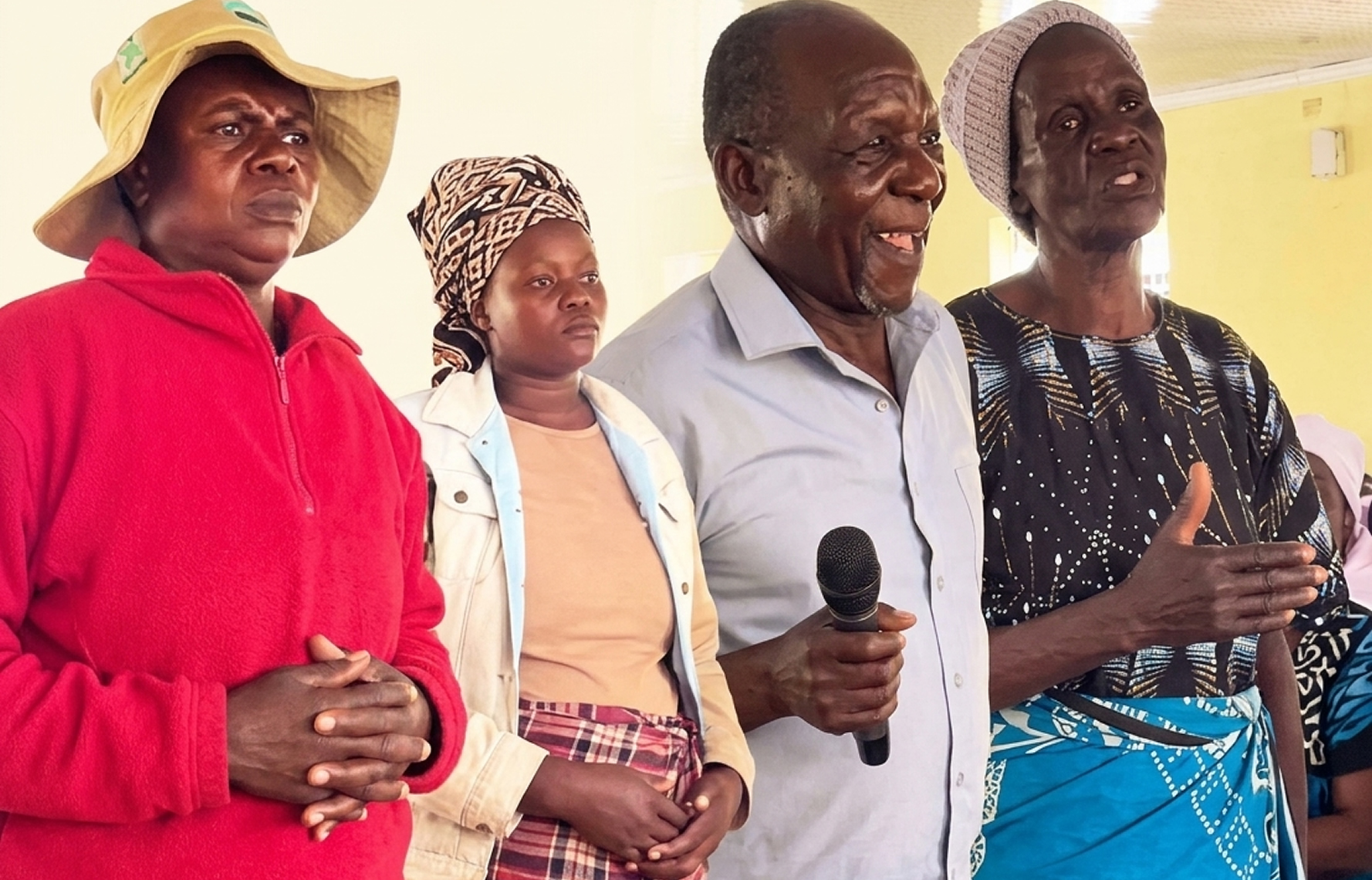
DNA test settles paternity row as cemetery tombstone mix-up divides families
Two separate family disputes over burial and remembrance have exposed painful questions of identity, kinship and custom in Zimbabwe: in Dangamvura, a DNA test identified a man who claimed paternity after his son died in a road accident; in Harare, a family found a stranger’s tombstone on their relative’s grave at Granville Cemetery.
The first dispute began after the Dangamvura man died in a road accident near Rusape on July 26. The following day, relatives gathered to arrange the funeral. David Kazhanje arrived and said the deceased was his son, challenging the identity the man had carried throughout his life as a member of the Makururu family.
The funeral, held at the deceased’s home in Dangamvura, became a standoff as relatives argued over his lineage and where he should be buried. Plans to take the body to Mutare heightened the disagreement, with the Makururu family questioning why the man should be buried there when, they said, he belonged to them.
Josephine Mutambanewose, the deceased’s maternal aunt, said her family had known the Makururus as his paternal relatives, although he had grown up among his mother’s relatives. She said the family’s concern had come too late, after they had not acknowledged him while he was alive.
“After the death, when we went to collect the body from the mortuary, the Makururu family wanted to know why we intended to bury him in Mutare because they said the child belonged to them.
“They were the fathers that we knew, but the child grew up within my family. I told them that while he was alive they never acknowledged him, yet they now wanted to claim him in death. I also questioned why they were suddenly concerned about him when there were other children whose circumstances had not attracted similar attention,” she said.
Stanley Minezhi, Mutambanewose’s brother, said he ordered a DNA test to settle the question. The result gave a 99.9 per cent probability that Kazhanje was biologically related to the deceased. Minezhi said Kazhanje was the only person tested in that process.
“I am the one who instructed them to do a DNA test so that we could know the truth. It was only Kazhanje who underwent the tests, and the deceased was found to be his son,” he said.
The man had been raised under the Makururu surname, and members of that family had paid roora for his mother. His maternal aunt Julia Matambanewose said her sister had been married into the Makururu family and had 2 children before the marriage ended. She said her sister became pregnant by Kazhanje after the couple had been separated for 6 years.
“After they had been separated for six years, she became pregnant by Kazhanje,” she said.
Julia Matambanewose alleged that her sister later used her former husband’s details to obtain the child’s birth certificate, which gave him the Makururu surname. She said both biological parents had died without revealing the secret.
“The truth is that the deceased was not Makururu’s child, and both parents went to the grave with that secret,” she said.
The paternity dispute also raised questions about the deceased’s own children. Tests involving 2 of them reportedly produced different results. One indicated a 63.9 per cent probability of relatedness but said the evidence was insufficient to prove or rule out a biological relationship. Another indicated a 99.9 per cent probability.
The deceased’s widow, Rudo Madzivo, said she had accepted the result linking Kazhanje to her husband, although the process had left the family under strain. She said the disagreement had delayed cultural matters, including a memorial service and the traditional distribution of the deceased’s clothing, which she said required the involvement of his paternal family.
“I have accepted Kazhanje because he has the test results, but the Makururus have also lost hope because of the results,” she said.
Kazhanje rejected claims that he had abandoned his son. He said the maternal relatives had known that he was the father, but that the deceased’s mother had not told her family the truth. He also described the lost chance to know his son before the fatal crash.
“They knew that I was the father. His late mother should have told her relatives that I was the deceased’s real father, but she never did. I spent my entire son’s life as an outsider, and sadly he never got the opportunity to know me before his death,” he said.
The dispute was taken to Chief Mutasa, who accepted that the DNA evidence established biological paternity but directed Kazhanje to address customary obligations to the maternal relatives and the Makururu family. The chief told him to approach the deceased’s maternal family before introducing himself to the widow as her father-in-law.
“You need to go and marry your late son’s mother first before you go to your son’s widow and introduce yourself as her father-in-law, as you have done,” he said.
Chief Mutasa also ordered Kazhanje to compensate the Makururus for raising the child from infancy to adulthood and to complete the traditional process involving the deceased’s late mother.
“Kazhanje should begin the traditional processes required of him, including compensating the Makururus, who looked after his child from birth until his death this year. He had already become a grown man with his own family. Kazhanje should also marry the deceased’s late mother,” said Chief Mutasa.
Wrong tombstone placed on neighbouring grave
In a separate case at Granville Cemetery, also known as Kumbudzi, relatives of Laiza Dhliwayo discovered that a tombstone bearing another woman’s name had been placed on her grave. The family, from Zamuchiya in Chipinge, had buried Laiza in 2000. They found the stone when they visited the cemetery to make arrangements for one of their own.
Pamella Murimbirimbi, 40, Laiza’s younger sister, said the stone bore the name Mercy Chogugudza Mubobo, who was born on February 18, 1979, and died on February 18, 2000. The grave numbers were next to each other: Mercy’s was 1312 and Laiza’s was 1313.
The Chogugudza Mubobo family, from Domboshava, had been shown the wrong plot by Harare City Council cemetery workers while looking for their relative’s grave. The two graves stood side by side, and the family placed the stone on Laiza’s grave by mistake.
After the families were identified, council workers removed the tombstone from Laiza’s grave and transferred it to Mercy’s. A woman from the Chogugudza family said the family had been shown the wrong grave and welcomed the chance to meet Laiza’s relatives. She said the families planned to repair the graves together and had become madzisahwira—ritual friends.
Pamella said she met 2 women from the Chogugudza family in Kuwadzana, but the meeting ended without an agreement. She said Ndau custom required the matter to be taken to a chief and a fine of 6 cattle to be paid when an outsider marked a relative’s grave.
“After giving them my number, they called me and we met, but there was no proper agreement. According to our Ndau customs, if a stranger ‘steps on’ (marks) the grave of our relative, the matter must go before the Chief, and a fine of six cattle must be paid. We are waiting to have further discussions with this family,” Pamella said.
She also questioned why council workers moved the stone before relatives of both deceased women were present. She said the family wanted an explanation from the workers about how the transfer had been handled.
“Is it proper to remove a tombstone and move it elsewhere without the relatives of the deceased being present? This is a matter we want to hear more about from these council workers,” she said.
Harare City Council spokesperson Stanley Gama said the matter was being handled professionally and acknowledged that a mistake had been made.
The Granville mix-up was an error involving neighbouring plots, rather than an act of vandalism. Harare’s cemeteries have faced other disturbances: in April 2024, 85 tombstones were smashed or damaged at Warren Hills Cemetery. The city council said it had opened an investigation, involved police and increased security at the site.
At Granville, the stone has since been moved to the grave it was meant to mark, but the families’ discussions over the customary response were still to continue. The dispute has brought the two households into contact, while leaving Pamella waiting for a further meeting and an explanation from the council workers involved.