


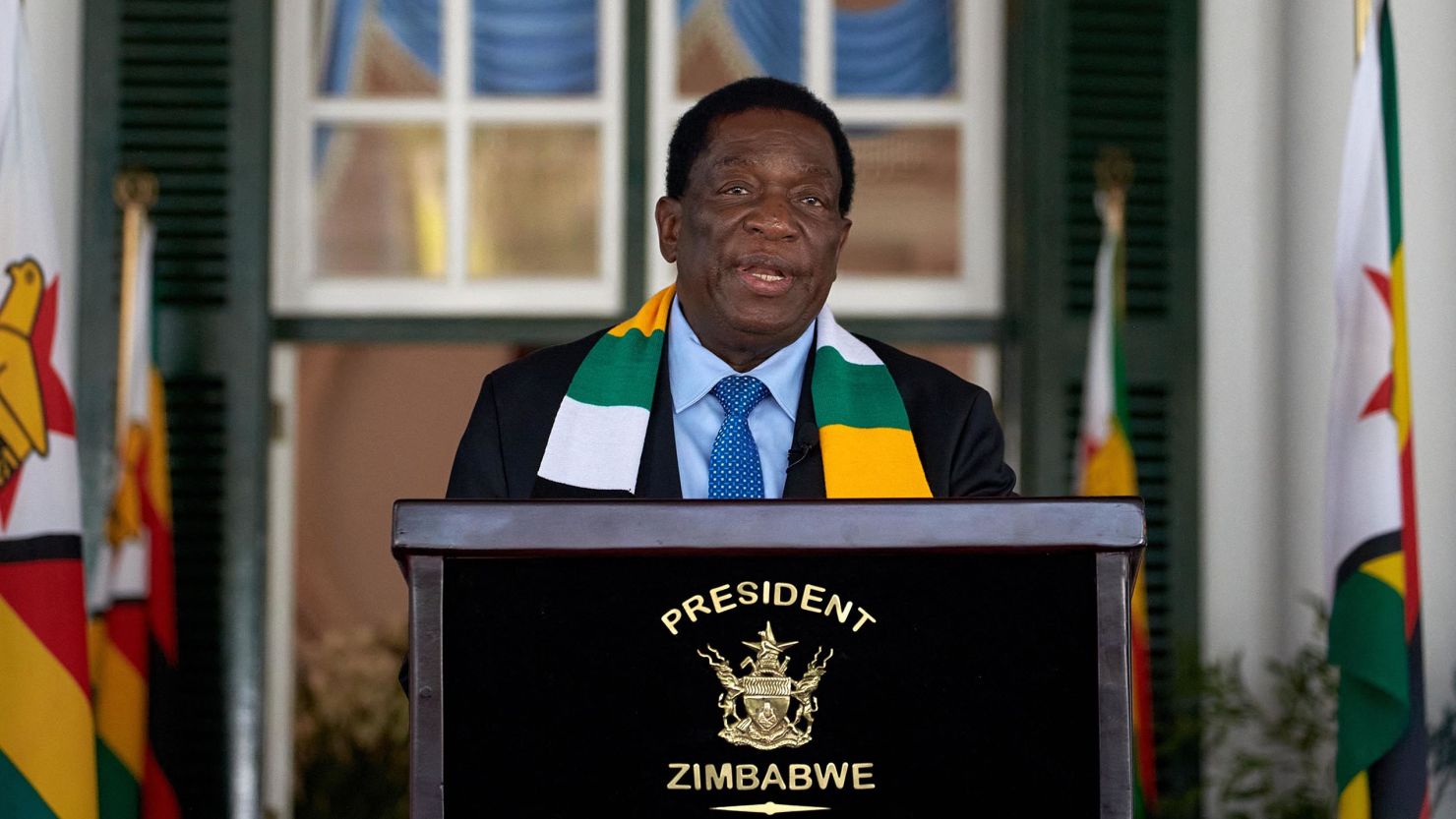
HARARE — President Emmerson Mnangagwa is preparing a massive and sweeping reorganisation of Zimbabwe’s foreign service, with plans underway to recall or retire up to 26 of the country’s ambassadors from their overseas postings. The unprecedented diplomatic shake-up will affect more than half of Zimbabwe’s global network of roughly 40 embassies and 10 consulates, marking one of the largest diplomatic overhauls undertaken by the government in recent years.
The dramatic shift is being driven by President Mnangagwa’s determination to pivot the nation’s foreign policy away from traditional political representation towards aggressive economic diplomacy. Under this new directive, the primary mandate of Zimbabwe’s foreign missions will center on securing foreign direct investment, expanding export markets for Zimbabwean goods, and sourcing critical industrial technologies to support domestic growth.
Government sources reveal that President Mnangagwa believes several serving envoys have underperformed or remained at their foreign postings for too long without producing tangible commercial benefits for the country. “The thrust of this president is investment and rebranding Zimbabwe. On that measure, he believes some of them have fallen short,” a well-placed source said.
Among the high-profile diplomats expected to depart as part of this transition is Zimbabwe’s Ambassador to the United Kingdom, Christian Katsande. Retired Colonel Katsande has served as the chief envoy in London since his appointment by President Mnangagwa in 2018. Also listed among the high-profile departures is Zimbabwe’s envoy to Australia and New Zealand, Joe Tapera Mhishi.
Preparations for the massive transition are already in motion behind the scenes in Harare. Well-placed sources confirmed that a significant overhaul of diplomats was under way, with a number of new individuals already undergoing training in preparation for deployment to these diplomatic missions.
“This is going to be one of the biggest diplomatic shake-ups in recent years. A significant number of diplomats are expected to be recalled, and preparations are already under way to ensure that replacements are ready to take over,” an impeccable source disclosed. “As we speak, several selected individuals are undergoing training in diplomatic affairs, ahead of their anticipated deployment to foreign missions.”
In total, 21 new diplomats have been placed in specialised training to prepare for and fill the upcoming vacancies. Among the prominent figures being prepared for these senior diplomatic assignments are retired Lieutenant General Engelbert Rugeje, former Minister of State for Harare Metropolitan Province Miriam Chikukwa, and Zimbabwe Broadcasting Corporation board chairperson Helliate Rushwaya. Their prospective deployments bring figures with backgrounds in the military, state media, and high-level government administration into the foreign service.
While many envoys will be retired, not all recalled officials will be leaving public service. At least six of the recalled ambassadors are expected to be reassigned to alternative missions abroad rather than leaving the diplomatic service entirely.
The restructuring reflects a strategic decision by Harare to leverage its international presence to address pressing domestic economic challenges. Embassies will be tasked with actively identifying foreign direct investment to boost key sectors such as agriculture, mining, manufacturing, energy, and tourism. Diplomats will be expected to facilitate trade agreements, open new export destinations for local products, and establish foreign partnerships that enable the transfer of advanced industrial technologies back to Zimbabwe.
Incoming diplomats are being trained through the Zimbabwe Foreign Service Institute, which was established in 2022 following Presidential Proclamation 2 of 2020 to build expertise in international relations, negotiation, trade, and diplomatic protocol. Ambassador Dr Margaret Muchada, the institute’s board chairperson, explained that the institution offers flexible schedules and hybrid learning to equip officials with practical skills before they take up overseas duties.
“So we have our programs which follow flexible timetables that will enable people who need to undertake this type of training on a certain basis to undertake their training and still be able to perform their roles. We have a virtual system that will enable us to render such training even online,” Muchada stated, adding that short courses specifically aim at “providing inter-alia understanding of the Zimbabwe foreign relations, doctrine and policy, understanding of the constitution, developing a polished professional image and self-projection.”
The restructuring of Zimbabwe’s foreign service comes during a broader period of dynamic changes across international diplomacy in Harare. Sweden announced it would close its embassy in Harare during 2026 as part of a decision to phase out bilateral development assistance strategies in Zimbabwe, Liberia, and Bolivia to redirect resources toward Ukraine.
Furthermore, Zimbabwean foreign missions have faced severe external security challenges in recent times. In June 2023, the official residence and office of Zimbabwe’s ambassador to Sudan, Hilda Mafudze, were stormed and looted by armed rebels in Khartoum amidst armed conflict in the North African nation.
With the latest diplomatic shake-up, the Ministry of Foreign Affairs and International Trade is reinforcing its mandate to ensure foreign missions yield concrete outcomes. The incoming cohort of ambassadors will face strict expectations centred on measurable economic deliverables rather than routine ceremonial duties and political engagement.