


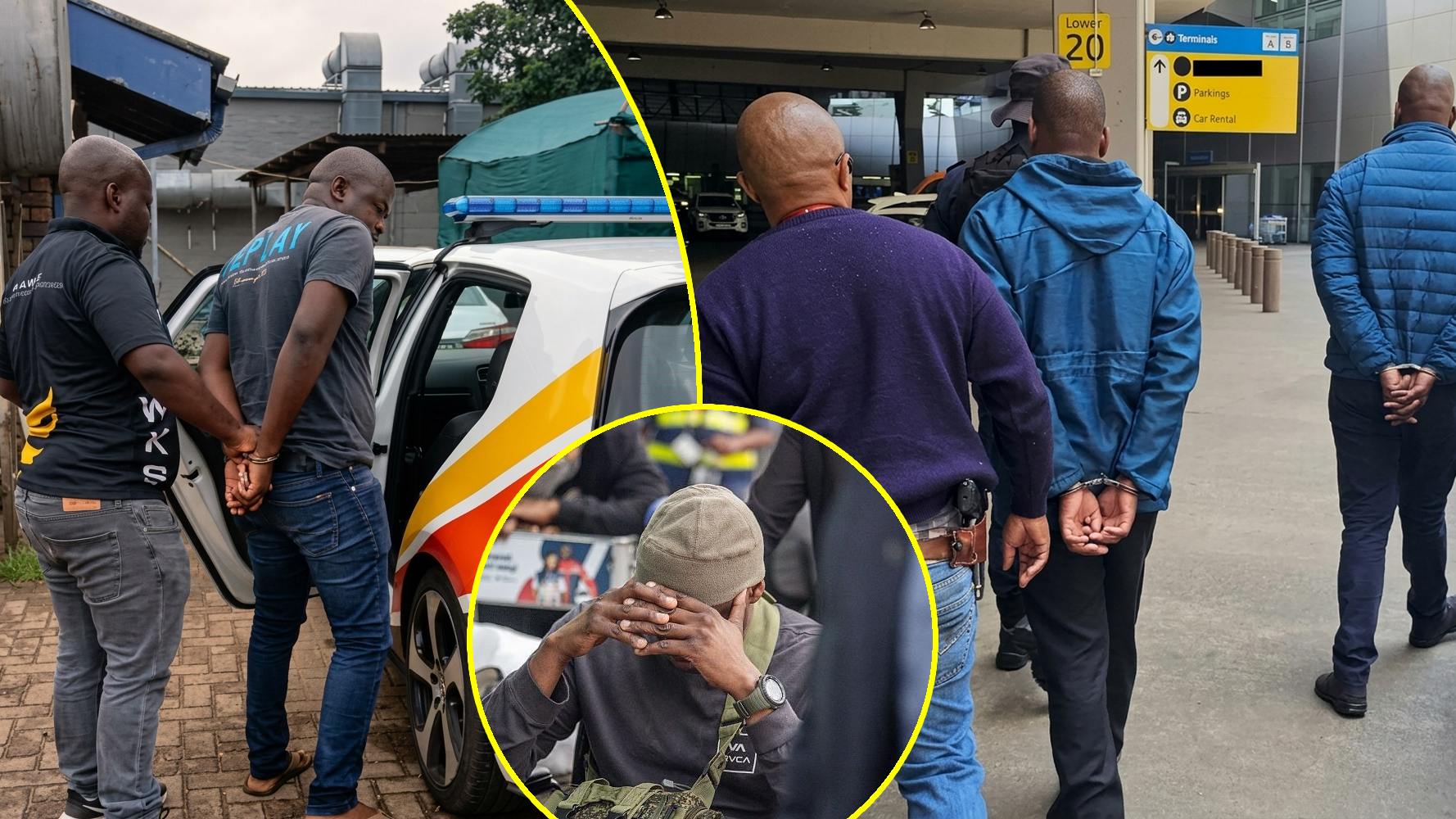
JOHANNESBURG – The men were detained at Johannesburg’s main airport and a hotel in Bruma, as Zimbabwe’s government warns that recruiters’ promises of overseas work have drawn citizens into the conflict.
Nine Zimbabwean men have been arrested in South Africa after authorities said they were preparing to leave the country to take part in the Russia-Ukraine war.
The arrests were made on November 8, 2026, following an intelligence-led investigation. Five men were detained at OR Tambo International Airport, where they were allegedly preparing to board flights. Four others were arrested at a hotel in Bruma, an area east of central Johannesburg.
The National Prosecuting Authority said the men were accused of intending to leave South Africa to participate in the conflict. It said a multidisciplinary team acted on information gathered during the investigation. The group faces charges under South Africa’s Regulation of Foreign Military Assistance Act 15 of 1998.
The five arrested at the airport were identified as Weight Mudhanyane, 23, Javangwe Munyaradzi, 41, Wesley Sothole, 24, Abel Muchenje, 40, and Knowledge Ndunduma, 46. They appeared at Kempton Park Magistrates’ Court.
The four arrested in Bruma were named as Bobo Chinhondo, 43, Batsirai Shereni, 24, Liberty Shereni, 44, and Niobe Zhou, 37. They appeared at Johannesburg Magistrates’ Court.
The cases were postponed to allow the accused to obtain legal representation. The five in the Kempton Park case were due back on November 10, while the Johannesburg matter involving the other four was set to return on November 12. All nine remained in custody following their court appearances.
The NPA said: “It is alleged that the accused intended to leave South Africa to participate in the Russia-Ukraine war.” It also said the operation that led to their arrest followed an intelligence-driven investigation.
The case has drawn attention to the use of South Africa as a possible transit point for people being recruited to fight abroad. The NPA said the men were allegedly planning to travel from South Africa to the conflict. Authorities have not publicly identified their intended destination, said which side they were allegedly planning to fight for, or named any recruiter or organisation connected with the group.
South African police said the operation involved several agencies, including Interpol, the Hawks’ crimes against the state unit and serious organised crime investigation team, crime intelligence, a Gauteng police tracking team and international law-enforcement partners. Police spokesperson Colonel Katlego Mogale said the arrests followed intelligence gathered during the investigation and that the group was preparing to board flights out of the country.
Zimbabwe has already reported deaths and missing citizens linked to recruitment for the war. In March, Information Minister Zhemu Soda said 15 Zimbabweans had been killed after being recruited into the conflict, while 66 others were still alive and the government was working to bring them home. The government said some people had been drawn in by offers of well-paid work abroad, with social media used to find potential recruits.
Soda described the recruitment pattern in stark terms: “They receive little to no training and are placed in life-threatening situations. When they are injured, killed or captured, the recruiters vanish, leaving families in Zimbabwe with no information, no support and no one to hold accountable. In many cases, the promised remuneration is never paid.” Zimbabwe said it was seeking the return of survivors and the repatriation of bodies.
The arrests also come as Zimbabwe’s government warns citizens about the risks of joining foreign armed forces through recruitment agencies. Government spokesperson Ndavaningi Mangwana said the promised earnings could be misleading. Joining foreign wars such as the conflict between Russia and Ukraine, he wrote, “is not as lucrative as the agencies (i.e. human traffickers) may make it sound”.
Mangwana said recruiters could take a recruit’s salary and fee, while surviving recruits might not receive the money they had been promised. He warned that families could be left with little recourse if a recruit died. In his words, some recruiters “prefer that you die at the front”, because they could keep the money and a recruit’s family would have no way to claim what was owed.
The Zimbabwean arrests follow a series of cases in the region involving people who say they were deceived into travelling to Russia or sent to the front after accepting offers of civilian employment or training. In February, South Africa’s presidency announced that 17 South African men aged between 20 and 39 had sought help to return home after being lured to the front lines. Four had already returned, 11 were expected to travel home, and two remained in Russia, including one in hospital in Moscow. South Africa said an investigation into how the men had been recruited was continuing.
South African authorities also arrested five people, including a journalist, in December 2025 over alleged recruitment of people to join the war. Separately, Ghana reported in February that 55 of its citizens had died in the conflict, with 272 believed to have been lured into fighting since the war began in 2022. Kenya has also sought answers from Moscow over citizens recruited or conscripted into the Russian military.
Estimates of the African presence in Russia’s forces vary, but a Ukrainian intelligence assessment cited by officials earlier this year put the number recruited from 36 African countries at more than 1,700. The figure reflects the widening reach of recruitment beyond any single country, while the Zimbabwean government’s own account points to the toll on families seeking information about missing or dead relatives.
For the nine men arrested in Gauteng, the immediate focus is now on their next court appearances. The five in Kempton Park were due back on November 10, with the four in Johannesburg scheduled to return two days later. Their arrests came as investigators pursued a case involving alleged travel plans, an international conflict and a network of recruitment that authorities have yet to publicly set out in detail.