


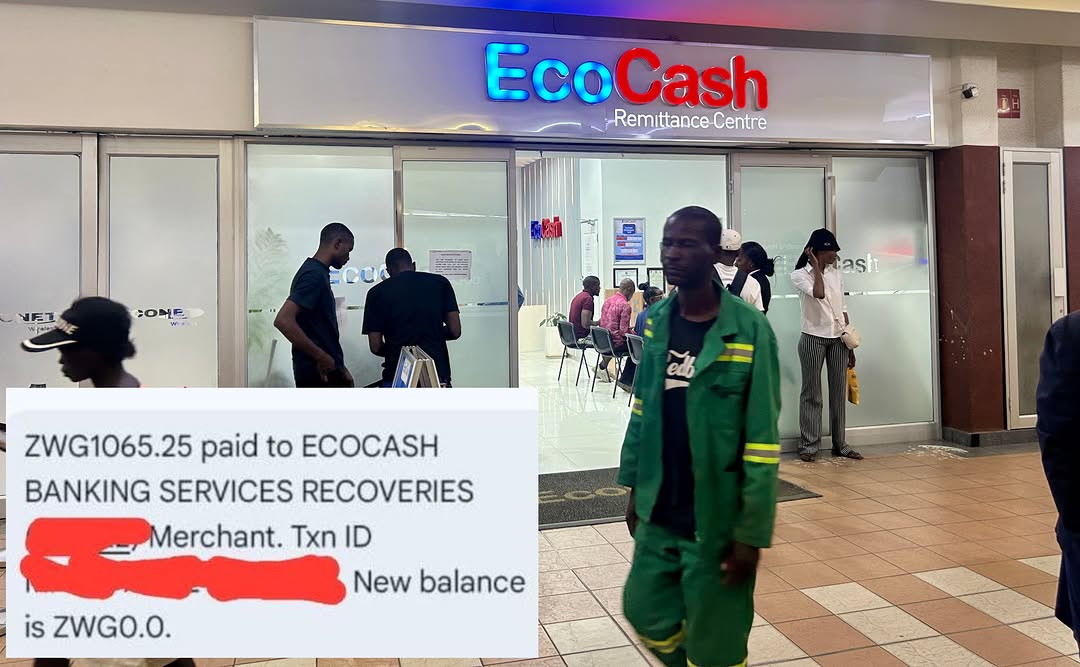
Two seemingly computer gurus from Kwekwe have each been sentenced to 36 months in prison after hacking into Econet Wireless Zimbabwe’s computer system and selling codes used to obtain airtime bundles worth US$12,436.52. None of the money was recovered.
Dumisani Mutwazi, 33, and Tanaka Tayero, 27, were convicted by the Kwekwe Magistrates’ Court over activity that took place between 25 June and 10 July 2025. The National Prosecuting Authority of Zimbabwe said the pair used data or devices to facilitate unauthorised access to Econet’s system.
“Dumisani Mutwazi and Tanaka Tayero were sentenced to 36 months imprisonment each for hacking and unlawfully using data or devices to facilitate unauthorised access to Econet Wireless Zimbabwe’s computer system.
“Between 25 June and 10 July 2025, the offenders unlawfully accessed Econet’s system and sold or made available access codes used to obtain airtime bundles,” said the National Prosecuting Authority of Zimbabwe.
The activity came to light on 11 July 2025, when an Econet corporate fraud specialist reviewed airtime transactions. Purchases made through Yomix and EcoCash showed suspicious patterns linked to the two men, investigators found.
The bundles had been bought repeatedly and distributed to several people in exchange for cash, according to the prosecution authority. The resulting financial loss to Econet was US$12,436.52. The entire amount remained unrecovered.
The court suspended 10 months of each man’s sentence for 5 years on condition of good behaviour. A further 18 months was suspended on condition that each completes 630 hours of community service.
The NPA said it condemned the unauthorised access and use of digital systems for personal gain. “Cybercrime undermines business confidence and causes financial losses. Perpetrators of such illegal activities will be prosecuted to the full extent of the law,” said the authority.
The Kwekwe case centred on access to a mobile network’s computer system and the sale of airtime codes. Other recent investigations in Zimbabwe have involved different routes into mobile services, including fake promotions, stolen personal information and SIM-card replacement fraud.
In February 2026, police arrested 11 people in connection with an EcoCash fraud operation that targeted customers with fake offers of free data bundles. The group’s messages directed users to imitation websites where they were asked to enter personal details. Police said callers then contacted victims to obtain the one-time passwords sent to their phones, allowing access to EcoCash accounts.
“The syndicate impersonated Econet Zimbabwe, disseminating fraudulent links to unsuspecting victims under the guise of free data promotions,” police told the court.
“After that, the suspects would contact the victims and request the One-Time Password sent to their phones,” the State said.
The case involved 31 complainants and a reported loss of about US$61,387. Two men, Mpho Ruzwidzo and Ishmael Muzanenhamo, were arrested on 4 February after financial tracking, and further arrests followed. During searches, police recovered five mobile phones, Econet SIM cards and US$600 in cash. The reported investigation also traced part of the proceeds to purchases of household property and vehicles, as well as cryptocurrency.
A separate SIM-swap investigation began with a police appeal in October 2025 for information about Tranos Taurai Muzanenhamo, who was sought in connection with fraudulent SIM replacements and hacking. Police said the reported losses in the cases then under investigation were US$17,009.50 and ZWG30,665,912.30.
Police described a method in which personal information, including names and phone numbers, was gathered through phishing, data breaches or public records. The suspect was said to have impersonated phone owners when requesting replacement SIM cards. Once a replacement was activated, the customer’s phone service was cut off and the new SIM could receive messages and calls intended for the number.
The investigation later led police to arrest three people in Shurugwi. Commissioner Paul Nyathi said they were linked to more than 29 cyber-fraud cases involving the reported sums. Those arrested were Tranos Taurai Muzanenhamo, 27, Rumbidzai Tsongora, 24, and Bradwell Shangwa, 25.
“Police in Shurugwi arrested three suspects believed to be part of a sophisticated cybercrime syndicate that defrauded dozens of victims across the country through phishing scams and mobile money fraud.
“Those arrested are Tranos Taurai Muzanenhamo (27), Rumbidzai Tsongora (24), and Bradwell Shangwa (25) — all accused of stealing personal information, cloning SIM cards, and siphoning money from victims’ accounts,” he said.
Police said the trio were arrested while staying at a local lodge. Officers recovered a Toyota Mark X, fake national identity documents, multiple SIM cards, mobile phones, bank cards, handcuffs and a Starlink device. The police account said the victims’ stolen phone identities had been used to reach mobile-money, bank and WhatsApp accounts. In some cases, contacts were approached with requests for emergency cash.
Econet has also urged customers to strengthen the security of their WhatsApp accounts. The company’s advice includes enabling passkeys and two-step verification, keeping registration codes private and checking which devices are connected to an account.
“We once again urge customers to protect themselves by proactively securing their WhatsApp accounts by selecting the login and security settings on their WhatsApp profile, and enabling WhatsApp Passkeys, as well as activating the two-step authentication (or verification) on their account,” an Econet spokesman said.