The death of Zimbabwean businessman Wicknell Chivayo has revived a 2024 account that senior intelligence figures considered him a security risk, The News Hawks has reported. A preliminary aviation report, meanwhile, describes deteriorating weather before the helicopter crashed and says its cockpit voice recorder was not recovered.
The crash that killed businessman Wicknell Chivayo, his wife and three other people has reopened questions around a warning attributed to Zimbabwean intelligence sources in 2024: that Chivayo risked being eliminated if he continued to breach security protocols around President Emmerson Mnangagwa.
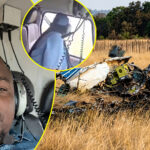
The warning is now being recalled after the release of preliminary findings into the Bell 430 helicopter crash at Kudenga Farm, in Waddilove, Mashonaland East, on September 30. The Ministry of Transport and Infrastructural Development’s Air Accidents and Incidents Investigation Department said the aircraft encountered poor visibility and low cloud before it struck the ground. The report also states that the cockpit voice recorder was not recovered and is presumed destroyed.
That missing recorder has become a central focus of public debate because officials had earlier said an intact flight recorder had been recovered. But the discrepancy does not, by itself, establish how the crash happened. The preliminary report’s account of weather, the final radio communication and the wreckage field is the most detailed official description released so far, and investigators say further examination is continuing.
Chivayo, his wife Lucy Muteke, aide Sanelisiwe Magagula, pilot Captain Kelvin Tafirei Soda and co-pilot Courage Mutavirwa died in the crash. The initial death toll was reported differently: on October 1, the BBC cited police as saying six people had been on board, while the later preliminary report and subsequent accounts listed five occupants. The newer report names the five victims.
A warning from 2024
The intelligence warning reported by The NewsHawks was based on sources who said Chivayo had become an operational concern because of his conduct around the President. They described repeated breaches of close-protection procedures and concern that he publicised visits, images and access connected with the head of state.
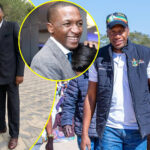
One source, described as an intelligence operative with more than 20 years in state security, was quoted as saying: “He thinks the rules of gravity don’t apply to him anymore.” Referring to a photograph of Chivayo with Mnangagwa, the source added: “That isn’t just flexing. That’s a breach of state security protocols.”
When the reporter raised the argument that Chivayo was regularly photographed with the President and must therefore have had clearance, the officer replied: “Clearance is a leash, not a crown.”
The source said the security establishment had been angered by the businessman’s conduct, including what the source characterised as broadcasting locations and posting images from secure places. The operative was quoted as warning: “if he doesn’t quiet down, he’s in danger of elimination”. The account said an accident had been discussed as a possible means of removing him, while also recording the source’s view that the matter concerned his access to the President and not simply his public profile.
Those claims were reported as intelligence-source accounts, not as an official public statement by the CIO. In the reporting, the sources linked their concerns to Chivayo’s proximity to Mnangagwa at State House, the President’s office and other locations. The NewsHawks reported that attempts had been made to restrict his visits and that he was briefly barred from State House before being allowed to return.
The outlet’s May 2024 reporting on Chivayo’s access to Mnangagwa described their appearances together at public events, including the Zimbabwe International Trade Fair. It also reported that Chivayo was present in the President’s company at other events and described the public attention surrounding his access.
Chivayo’s relationship with Mnangagwa had changed over time. According to the account provided by the NewsHawks, he had no access to the President in the period after the 2017 coup. In 2018, Mnangagwa made the remark “Chikurubi is not full” in a warning connected to corruption concerns. Chivayo later re-established proximity to the President, the account said, with gold businessman Pedzisayi “Scott” Sakupwanya playing a role in opening the way.
By June 2024, Chivayo was publicly boasting about his closeness to the President. A viral remark attributed to him, “ndakachibata kuti dzvi”, was translated in the report as meaning that he had a firm grip on Mnangagwa. His high profile was built not only on political access but on a steady stream of online posts showing luxury vehicles, cash gifts and meetings with prominent figures.
A crash in poor visibility
The preliminary aviation report describes a private flight from Gandami village in Chikomba District towards Marondera. The Bell 430, registration Z-PED, was travelling with a second helicopter, a Bell 407 registered Z-OSM. The aircraft were flying in formation, with the Bell 407 to the left and the Bell 430 to the right.
About 10 minutes after departure, a low cloud layer approached from the east. The pilot of the Bell 407 turned west to avoid the cloud, while the Bell 430 continued north-east after reporting that the route in that direction appeared clear. The last radio transmission from the Bell 430 indicated it had entered another layer of cloud and had not yet emerged, according to the report.
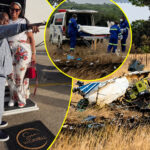
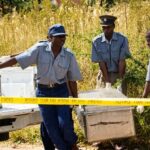
Witnesses at Kudenga Farm later said they heard a helicopter overhead but could not see it because of drizzle and dense fog. The sound continued for about 10 minutes before a loud impact. Police were notified at 3pm and arrived around 15 minutes later, according to the report. Parts of the wreckage were still burning.
Investigators said the aircraft was destroyed by impact forces and a fire after impact. The debris field stretched approximately 170 metres by 75 metres. The report said the distribution of major components indicated that the helicopter remained intact until it struck the ground, and stated: “There is no evidence of an in-flight breakup or pre-impact explosion.”
The report also described the accident as unsurvivable because of the forces involved and the severity of the post-impact fire. It recorded no evidence at this stage that crew incapacitation or physiological factors affected the flight. Investigators said they had interviewed the crew of the accompanying helicopter, witnesses and first responders, and moved the wreckage to a secure facility for further examination.
The preliminary report findings reported by The Herald said the Zimbabwe Meteorological Services Department had issued a severe-weather advisory covering September 29 to October 1, warning of thunderstorms and low cloud. Weather observations around Harare recorded low cloud ceilings of about 1,500 to 2,000 feet, while witnesses described fog and drizzle at the crash site.
The report does not give a final cause. It classifies the occurrence as an unintended flight into instrument meteorological conditions and controlled flight into or towards terrain. The investigators said further analysis was needed before they could determine the probable cause and any contributing factors.
The recorder discrepancy
The recorder issue has become the most contested point in the public account. On October 1, officials told media that an intact “black box” had been recovered. The BBC reported that aviation officials at the crash site said investigators had recovered an intact black box as work began. The NewsHawks later reported that Civil Aviation Authority of Zimbabwe Director-General George Mashababe had said the device contained both flight data and cockpit voice recordings, and that Transport Minister Felix Mhona had said international experts would assist with analysis.
The preliminary report, released in November, is narrower in its wording. It says: “The aircraft was fitted with a Cockpit Voice Recorder (CVR). However, the CVR was not recovered among the wreckage and is presumed to have been destroyed.” A cockpit voice recorder captures cockpit conversations, radio communications and other sounds that can help reconstruct the final stages of a flight. Flight-data recording equipment, where fitted, serves a separate function by logging operational information.
The difference between the initial public description and the later report has prompted questions about what exactly was recovered, what was examined and whether the device mentioned in October was the same recorder addressed in the November report. The published preliminary findings do not resolve those questions. They say the CVR was not found among the wreckage, while also recording that investigators have secured the wreckage and collected aircraft and maintenance documents for further work.
The NewsHawks account of the preliminary report sets out the earlier recovery claim alongside the report’s statement that the CVR was not recovered. New Zimbabwe’s report on the investigation also describes the missing recorder and the report’s account of the weather, flight path and wreckage. Both outlets reproduce the preliminary finding that the device is presumed destroyed.
A recorder’s absence is significant to investigators because it removes one potential source of information about what the pilots heard, said and did in the final minutes. It is not, on its own, a finding that the aircraft was sabotaged. The publicly released report describes deteriorating weather, the aircraft’s continued flight into cloud and the absence of evidence of an in-flight breakup or explosion. It does not make a finding of foul play.
Chivayo’s public profile
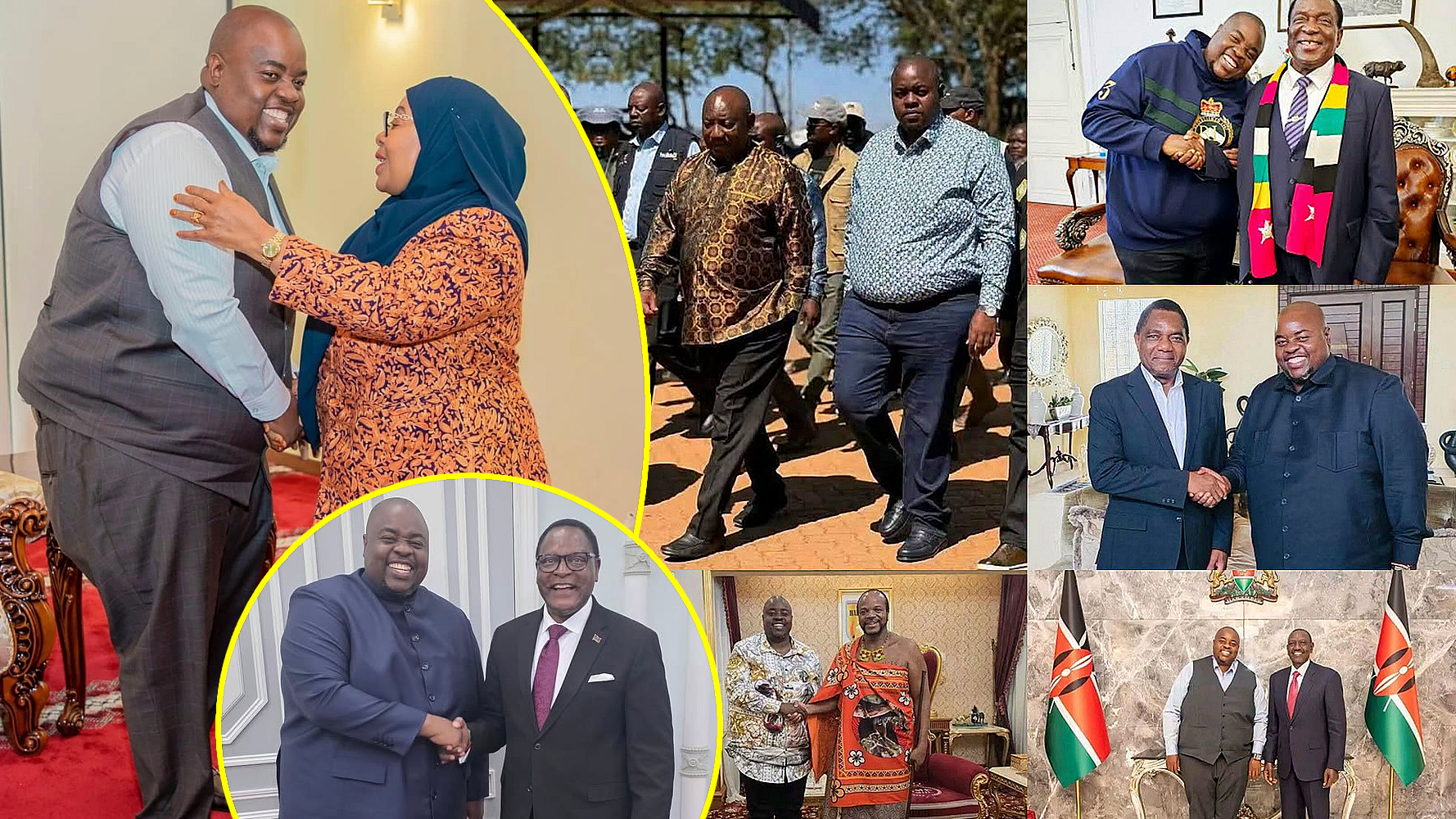
Chivayo’s death has drawn intense attention because of the public profile he cultivated in Zimbabwe and across the region. Reuters reported that he built close ties with Mnangagwa and other African leaders, regularly sharing photographs of meetings and displaying luxury cars, clothing and gifts on social media. The BBC described him as a businessman whose government-linked contracts and flamboyant online persona attracted both admiration and scrutiny.
He was associated with Intratrek Zimbabwe and the long-running Gwanda solar project, awarded by the state-owned Zimbabwe Power Company. Reuters reported that Chivayo was arrested in 2018 over the alleged misuse of an advance payment connected to that project; the case was later struck off the court roll in 2023 after delays by prosecutors. The company and project became the subject of years of dispute.
He also became a prominent figure in controversy over the procurement of election materials for Zimbabwe’s 2023 elections. The BBC reported that the Zimbabwe Anti-Corruption Commission closed its inquiry into contracts awarded to South African company Ren-Form in 2025, saying it had found no evidence linking Chivayo or the Zimbabwe Electoral Commission to wrongdoing. The history of those disputes has contributed to the public interest in his relationships with state institutions, but it does not establish a connection between them and the fatal crash.
In the days before the accident, Chivayo continued to use social media to display gifts, vehicles and charitable donations. Chivayo had claimed to have spent more than US$100 million on cars, cash and other donations. His posts had made him one of the country’s most recognisable businessmen, a figure whose fortunes were closely associated in public debate with access to senior political leaders and state-linked opportunities.
President Mnangagwa said he had met Chivayo the day before the crash, according to the BBC’s report of the President’s tribute. The President described the deaths as unexpected and expressed grief for the family. Kenya’s President William Ruto also paid tribute to Chivayo, calling him a friend.
The crash investigation remains open. The transport ministry says a final report will follow further technical analysis and may include safety recommendations. For now, the official preliminary account gives a detailed sequence of worsening visibility and impact, while the missing cockpit voice recorder and the earlier account of an alleged intelligence warning remain unresolved parts of a story that has drawn intense public scrutiny.