


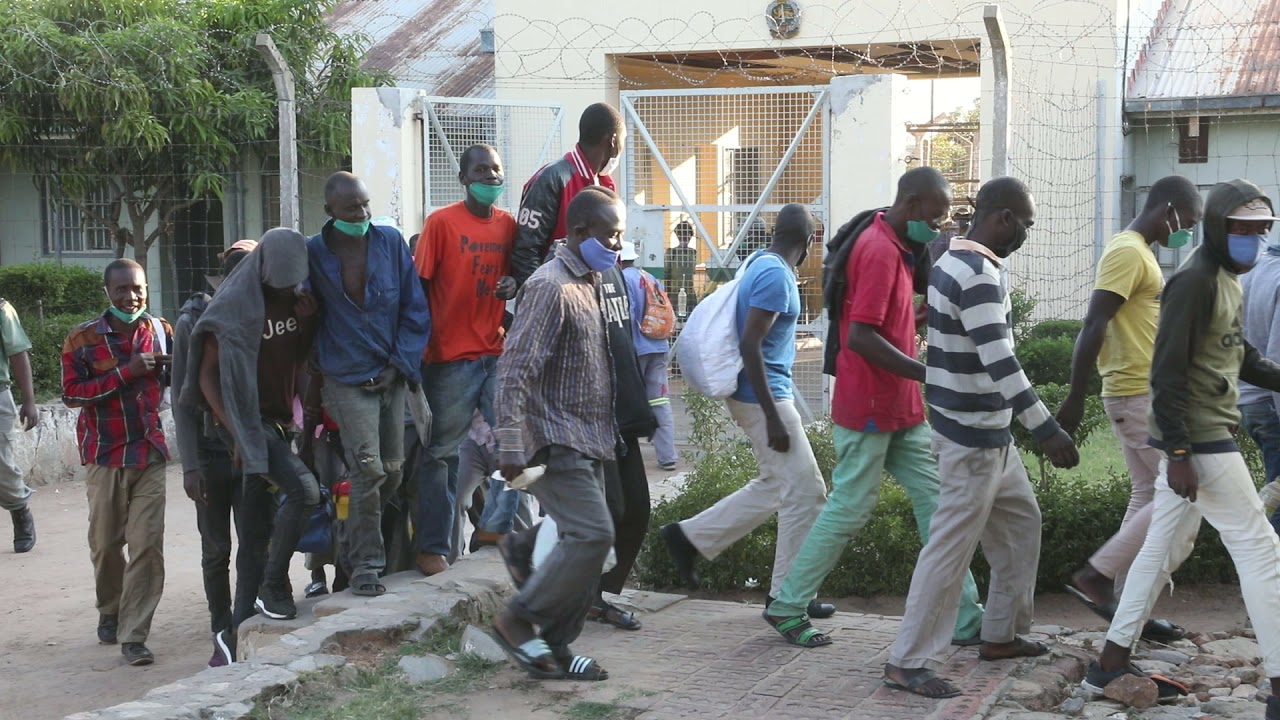
The death of a Zimbabwe Prisons and Correctional Service (ZPCS) officer has ignited a firestorm of controversy, with conflicting accounts from the police and the deceased’s family raising serious questions about what really happened. Tawanda Marumahoko (32) is at the centre of this storm, a man now dead, but whose alleged actions in life have cast a long shadow.
According to the police, Marumahoko was part of a gang involved in a staged US$10,000 armed robbery. However, his family vehemently disputes this version of events, alleging that he was tortured by the police, ultimately leading to his death.
National police spokesperson Commissioner Paul Nyathi stated that Marumahoko was implicated in the robbery of a bread delivery truck near the Chinhoyi Heroes Acre on November 14, 2025. Kenneth Tsvarisai, the truck driver, was arrested after reporting what appeared to be a genuine armed robbery along the Harare-Chirundu Road. Tsvarisai claimed that unknown assailants had robbed him of US$10,000 and a cellphone while he was transporting bread from Banket to Chinhoyi.
However, police investigations quickly revealed inconsistencies in Tsvarisai’s story, leading them to believe that the robbery had been stage-managed. “On 15th November 2025, detectives arrested the truck driver, Kenneth Tsvarisai, after receiving information which linked him to the purported robbery incident,” Nyathi said. “Investigations established that Tsvarisai provided inside information to other suspects and connived to stage-manage the robbery soon after receiving the money from his manager.”
Under interrogation, Tsvarisai allegedly implicated Marumahoko, leading to the recovery of US$4,680, believed to be part of the stolen money. Police said Marumahoko admitted to having used US$300 to hire a lawyer after learning of Tsvarisai’s arrest.
According to the police, Marumahoko later led detectives to the crime scene where officers recovered an Eko P29 ONT 007 blowgun loaded with eight rounds. This discovery, the police claim, further solidified their case against the prison officer.
But it is the events surrounding Marumahoko’s final moments that have sparked the most outrage and fuelled allegations of a police cover-up. The official police version paints a picture of a suspect attempting to evade justice, while the family’s account describes a man brutalised and left unable to even stand.
Police allege that the prison officer attempted to flee during the operation and was subsequently flogged by a mob attempting to effect a “citizen’s arrest”. He was later taken to Chinhoyi Provincial Hospital, where he died upon admission.
However, crucial questions remain unanswered. The police have not explained how Marumahoko managed to escape from police custody or how the mob became involved in apprehending and assaulting him. Furthermore, no arrests have been announced in connection with his death, despite the acknowledgement that he died from injuries sustained in an assault.
Nyathi said investigations to establish the circumstances surrounding his death are ongoing. Meanwhile, police are looking for two more suspects identified only as William and Spencer, who allegedly participated in the staged robbery.
Marumahoko’s family insists the official version is a fabrication meant to conceal torture. According to his wife, Mary Muzama, Marumahoko was arrested in town on Saturday morning before detectives accompanied him home to collect items they said were needed.
He was then taken to Chinhoyi Police Station, where Muzama says her husband was brutally assaulted. Muzama claims she was also detained and allegedly beaten for nearly four hours, with her phone confiscated.
Muzama’s account paints a harrowing picture of the conditions her husband was in when she saw him at the police station. “When I first saw him at Chinhoyi Police Station, he could hardly walk. His legs were swollen, the right one was bleeding and he kept falling. His forehead was also swollen,” she recounted.
She further alleged that some officers threatened to kill her husband, saying he was a “problematic” suspect who frequently got released after arrest. “This time around, don’t be surprised to hear that your husband has been shot dead because your husband is giving us problems,” she claimed one officer told her.
Muzama said the last time she saw Marumahoko alive, he could not make any movement. Officers then told her to go home and return the following day. “He tried to sit up twice but fell on his stomach. From that moment, I never saw any movement until they dismissed me to go home,” she said, her voice cracking.
Muzama insisted that Marumahoko was in no condition to be taken for indications to the crime scene. Her testimony directly contradicts the police’s narrative of a man attempting to flee.
Marumahoko’s uncle, Office Marumahoko, who travelled from Magunje to seek answers, echoed similar sentiments. He said the family was still “in shock and confusion,” adding that they had not yet been given access to Tawanda’s body. “We are still in shock over what happened. And besides, they still have the body of our son. It’s painful,” he said.
The family also question the police version that a mob appeared in a bushy area “where there are no homes,” and argue that the “mob” explanation was added later to sanitise the circumstances of his death. This detail, they argue, simply doesn’t add up and raises further suspicions about the true sequence of events.
The Marumahoko case has also brought into sharp focus the issue of crime indications in Zimbabwe. There have been reports of suspected armed robbers shot dead during crime indications, a process of reconstructing events and gathering evidence.
Investigations reveal that crime indications have become synonymous with fear and dread for suspected armed robbers. For them, these seemingly routine procedures carry an ominous weight, often culminating in fatal encounters.
The circumstances surrounding these crime indications are often murky, with police claiming suspects were shot while attempting to flee or disarm officers. Incidentally, the majority of suspects have been shot dead while in leg irons, with police claiming they tried to run or disarm law enforcement agents. The Marumahoko case adds another layer of complexity to this already contentious issue.