


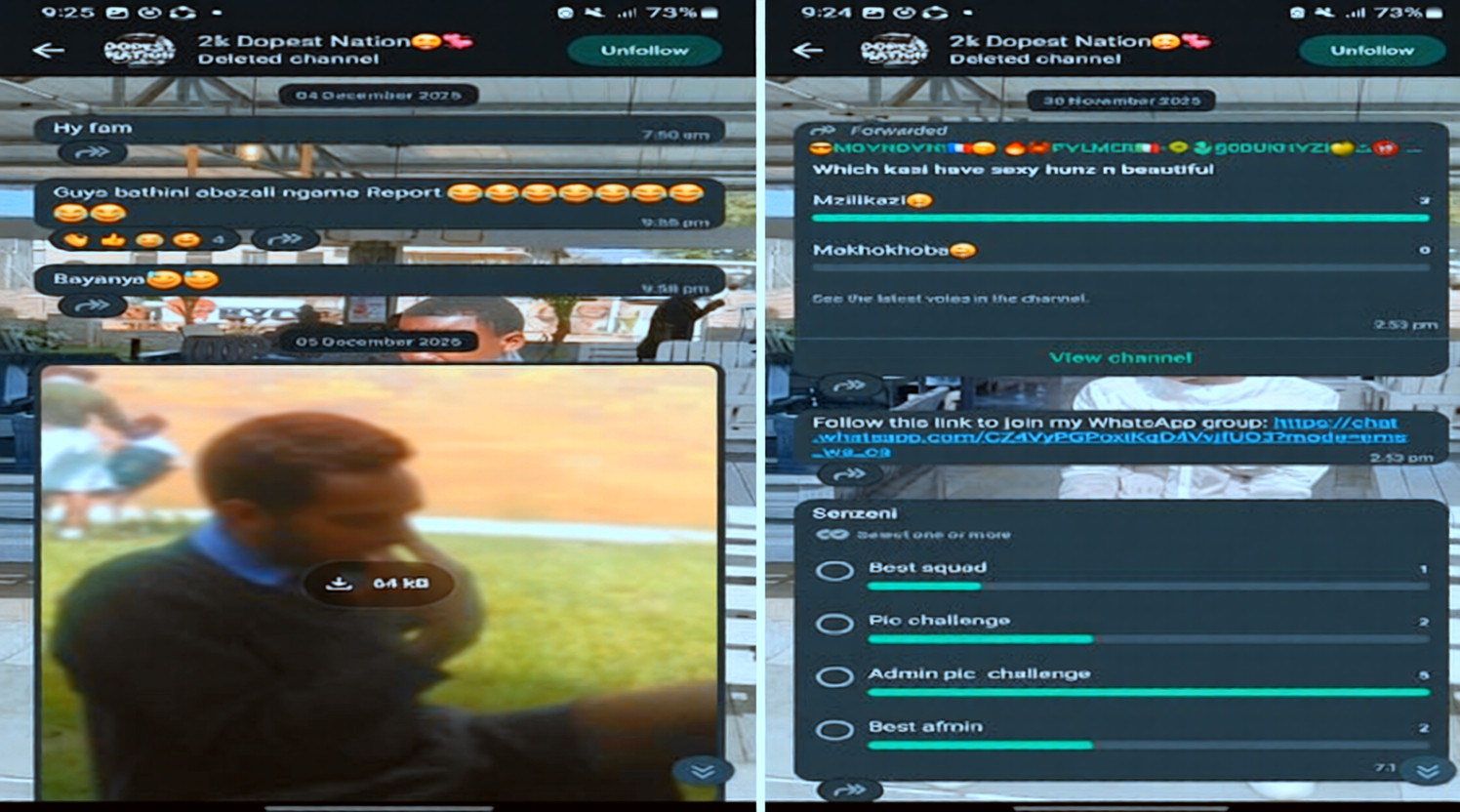
In the quiet corridors of Sobukhazi High School, a digital storm has been brewing, one that has finally burst into a full-blown scandal involving explicit WhatsApp channels, cyberbullying, and a bizarre scheme to hire “fake parents” to evade disciplinary action. The saga, which centres on a secret group called “2k Dopest Nation,” has exposed a deep-seated crisis of parental neglect and the dark side of teenage freedom in the digital age.
The scandal erupted when school authorities discovered the existence of the “2k Dopest Nation” WhatsApp channel. The group, allegedly created and run by minors, served as a virtual playground for misconduct. According to sources and screenshots seen by investigators, the content crossed serious moral and disciplinary lines, featuring explicit sex talk, offensive jokes, and the open glorification of alcohol and drug use.
The Rise of “2k Dopest Nation”
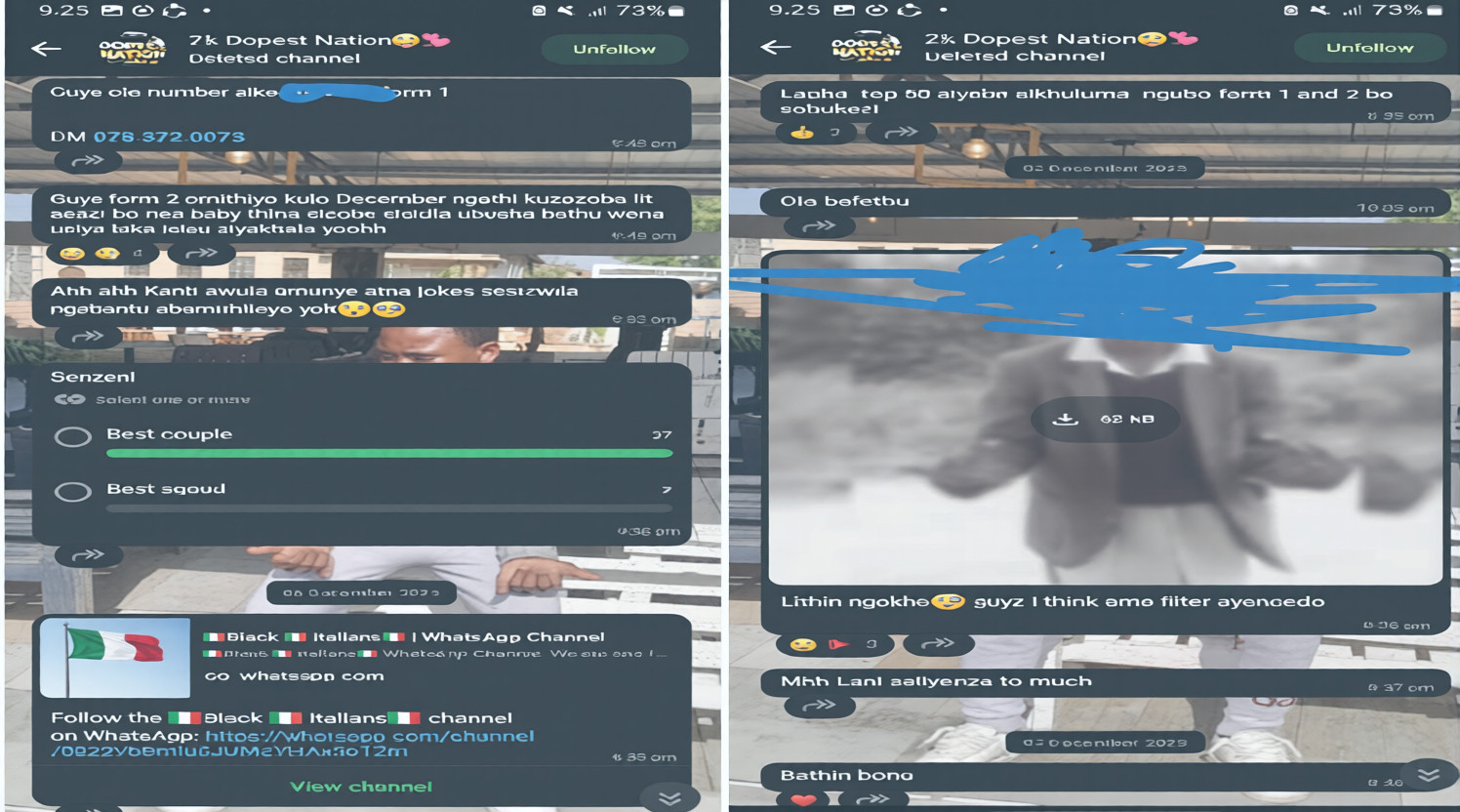
The channel was more than just a chat group; it was a structured environment for bad behaviour. Learners reportedly used the platform to shame fellow pupils, running polls to determine the “hottest guy,” the “prettiest girl,” or the “most talked-about couple” at school and in the neighbourhood. These digital popularity contests left many victims humiliated and emotionally scarred.
Perhaps most concerning were the invitations to “Vuzu Parties”—reckless, unsupervised gatherings that have become a scourge in Bulawayo. These parties are notorious for alcohol abuse, drug experimentation, and unprotected group sex. While no specific sexual acts were proven to have occurred within the school premises, the mere discussion and encouragement of such activities were viewed by authorities as a dangerous escalation of misconduct.
“Most of these kids stay alone or with grandparents. Phones are their parents,” remarked a source close to the school, highlighting a recurring theme in this investigation: the “diaspora gap.”
The Diaspora Dilemma
The administrators and most active members of the channel are reportedly children whose parents live in the diaspora. According to the 2022 Zimbabwe Population and Housing Census, nearly 908,913 Zimbabweans live abroad, often leaving their children in the care of elderly relatives or guardians. This lack of close parental supervision has created a vacuum that digital devices are all too eager to fill.
A school official, speaking on condition of anonymity, raised a sharp alarm over this parental neglect. “Many of these children do not live with their parents because they are in the diaspora. That gap creates serious challenges. Parents must take responsibility,” the official said.
The “Fake Parent” Scheme
When the school finally moved to address the scandal, the situation took a turn for the surreal. Implicated learners were summoned to disciplinary hearings and told to bring their parents or guardians. In a desperate bid to avoid the consequences of their actions, some pupils allegedly hired local drunks to pose as their guardians for a small fee.
“The school realised something was off,” a source revealed. “Some of the men who came did not even know the children’s full names or classes.”
This brazen attempt to subvert the disciplinary process was the final straw for the school administration. Once the headmaster was alerted to the presence of these “impostor parents,” decisive action was taken to ensure that only officially registered guardians were involved in the proceedings.
Discipline or Guidance?
The fallout has left several pupils at home, sparking anxiety among genuine parents and guardians who fear for their children’s academic future. “We are waiting for 14 February. We do not know what to do next,” said one worried guardian. “I am worried because I cannot afford to move my grandchild to another school.”
Another parent echoed the sentiment: “It is painful to see a child sitting at home. I hope they are allowed back because education is important.”
While Sobukhazi High School Headmaster Cain Ncube declined to comment officially, a school insider dismissed claims that the learners had been formally expelled. “The children were not expelled or suspended,” the source clarified. “They were excused from school for a short period as a corrective measure.”
The insider stressed that the school’s role is one of guidance rather than pure punishment. “Our role is to guide and mould children. When they go off-course, we must redirect them. We will never chase a child away from school,” they added.
A Warning to the Nation
The Sobukhazi scandal is not an isolated incident but a symptom of a broader societal shift. The “2k Dopest Nation” saga stands as a loud warning about the intersection of technology, freedom, and the fine line between teenage mischief and serious misconduct.
As the community grapples with the revelations, the focus remains on the urgent need for parental involvement. The digital world offers no substitute for the guidance of a present and engaged guardian. For the pupils of Sobukhazi, the lesson learned in the “2k Dopest Nation” group may be the most difficult one they ever face: that in the real world, there are no “fake parents” who can shield you from the consequences of your choices.
Table 1: Key Elements of the Sobukhazi Scandal
|
Category
|
Details
|
|
Group Name
|
2k Dopest Nation (WhatsApp Channel)
|
|
Primary Content
|
Sex talk, cyberbullying, drug/alcohol glorification
|
|
Target Audience
|
Minors/Pupils at Sobukhazi High School
|
|
Key Risk Factor
|
Parental absence (Diaspora parents)
|
|
Disciplinary Issue
|
Hiring “fake parents” (local drunks) for hearings
|
|
Current Status
|
Group shut down; pupils “excused” for corrective measures
|
Table 2: Regional Context of Youth Misconduct (Bulawayo)
|
Issue
|
Description
|
|
Vuzu Parties
|
Wild social gatherings involving drugs and unprotected sex.
|
|
Diaspora Gap
|
Nearly 909,000 Zimbabweans abroad, leaving children with guardians.
|
|
Cyberbullying
|
Use of polls and public shaming on social media platforms.
|
|
Digital Neglect
|
Phones becoming the primary “parental” figure for unsupervised youth.
|