


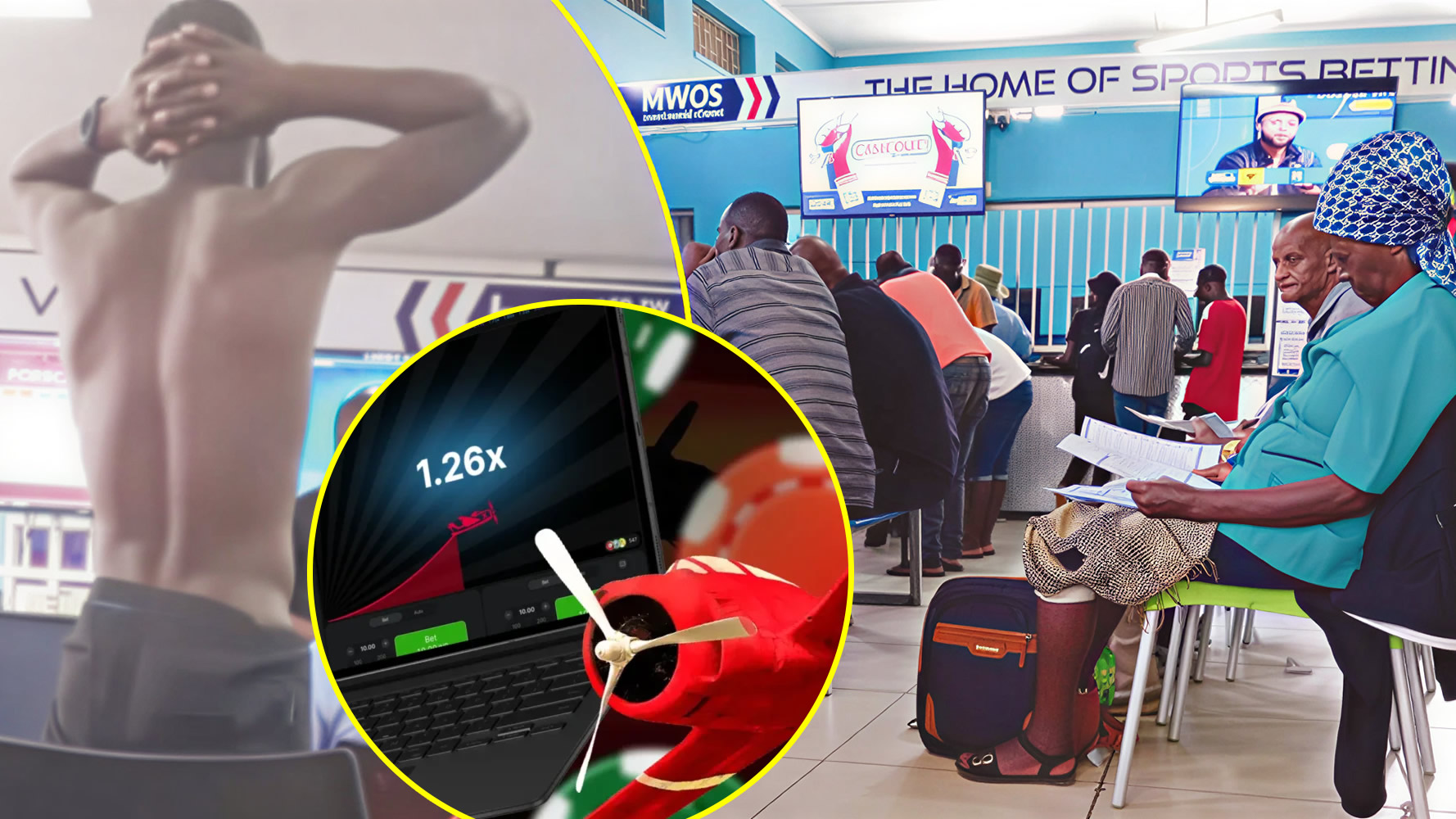
Bulawayo – The bustling heart of Bulawayo’s Central Business District bore witness to a tragic event yesterday, as 41-year-old Josephine Makiwa, a resident of Mpopoma, collapsed and died inside a betting house. Police reports indicate that Ms. Makiwa began vomiting just moments before she was to place her bet, her life ending abruptly within the confines of the gambling establishment. Her untimely death casts a stark, sombre light on a global crisis that often remains hidden in plain sight: the devastating impact of gambling addiction.
This incident in Bulawayo is not an isolated one, but rather a grim echo of countless personal tragedies unfolding across continents. Just days prior, in Dzivarasekwa Extension, Zimbabwe, a 20-year-old man named Ashley Patrick Magarira took his own life. His despair stemmed from losing US$800, money earmarked for his brother’s school fees, in a popular online gambling game known as Kandege, or Aviator. This game, developed by Spribe, has rapidly gained traction worldwide as a social multiplayer experience where players wager on a virtual plane’s ascent, cashing out before it unpredictably flies off. The allure of quick wins, coupled with the inherent uncertainty, creates a potent cocktail for addiction.
The Aviator game had already claimed a life in Zimbabwe last year when Claude Jele, a police officer from Gweru, tragically committed suicide. He had lost a staggering US$3,000, money he had borrowed in pursuit of his sports betting aspirations, before downing an unidentified poison and leaving behind a suicide note. These local incidents underscore a pervasive issue that transcends geographical boundaries and socio-economic strata.
Indeed, the tentacles of gambling addiction stretch far beyond Zimbabwe’s borders, ensnaring individuals from all walks of life. In Eswatini, November last year saw the suicide of Daniel Cindzi, a priest who lost approximately US$315 of his share from a house sale. His daughter, Ayanda, discovered his body, a testament to the private anguish that often precedes such public tragedies. Similarly, in Nigeria, 31-year-old Chukwuma Onoh ended his life in December 2023 after losing N2.5 million in an online bet, N1.2 million of which he had borrowed from friends. His final message, sent via WhatsApp, painted a harrowing picture of his desperation: “The only option is to end my life as I cannot live with the shame. I have turned into a gambler because of no job, and right now, I am at a point if I don’t redeem my debt, I might kill myself to pay the debt.”
The global toll continues to mount. In 2011, Canada grappled with the suicide of Yoo Choi, a woman who accumulated over US$100,000 in debt at a Vancouver casino. Her husband, Mark Dawson, revealed her secret, compulsive gambling habit, a battle she fought for years. Her body was later found in Lynn Canyon. Australia, too, has faced its share of heartbreak, with 22-year-old Kyle Hudson taking his life last year after losing two bets totalling more than A$6,000. These cases highlight the insidious nature of gambling, which can strip individuals of their finances, relationships, and ultimately, their will to live.
One particularly poignant case that has recently come to light in the United Kingdom is that of Oliver Long. The 36-year-old, found dead in East Sussex on 23 February 2024, battled a severe gambling addiction that ultimately led to his suicide. An inquest concluded in January 2026, revealing that Mr. Long had self-excluded from regulated UK platforms via GamStop, only to be targeted by unregulated overseas gambling websites. His sister, Chloe Long, has been a vocal advocate for change, offering a chilling insight into the predatory tactics of the industry. She stated, “The gambling products he encountered were not harmless entertainment. They stripped away his enjoyment of the game.” She further elaborated on the exploitative nature of these platforms, asserting that the gambling industry had “exploited Mr Long’s love of football and deliberately lured him in and taught him to hate himself.” Chloe Long’s powerful testimony underscores the view that these are “highly addictive, predatory systems designed to exploit,” and she has openly criticised the Gambling Commission and the government for “failing to protect people from this harm.” His family also shared the heartbreaking sentiment that “gambling had made him believe that he was better off dead.”
Even those with significant financial resources are not immune. Kenny McKinley, a wide receiver for the Denver Broncos in the USA, succumbed to his gambling problem and mounting debts, taking his own life on 21 September 2010. Friends and family revealed to authorities that McKinley had borrowed US$65,000 and owed US$40,000 in casino markers in Las Vegas. His story serves as a stark reminder that the allure of gambling can transcend wealth and status, leading to equally devastating outcomes.
The statistics paint an alarming picture of the scale of this crisis. The South African Responsible Gambling Foundation has revealed that approximately 22 per cent of problem gamblers have attempted suicide by the time they seek help, with a staggering 52 per cent contemplating it. These figures were released following a harrowing incident where a man self-immolated at Montecasino in Fourways, Johannesburg, after dousing himself in petrol. Further research indicates that up to 500 suicides are linked to betting annually in England alone, according to the University of Bristol. In Victoria, Australia, gambling is identified as a contributing factor in 2 per cent of all suicides, and globally, suicidal ideation affects between 20 and 30 per cent of individuals suffering from gambling disorders. The World Health Organisation (WHO) has also recognised gambling as a significant threat to public health, contributing to mental illness and suicide, and driving poverty by diverting essential household spending.
The tragic deaths of Josephine Makiwa, Ashley Patrick Magarira, Claude Jele, Daniel Cindzi, Chukwuma Onoh, Yoo Choi, Kyle Hudson, Bill Troshupa, Kenny McKinley, and Oliver Long are not mere statistics; they are poignant reminders of lives irrevocably altered and lost to the relentless grip of gambling addiction. The stories of these individuals, from the young man losing school fees to the seasoned athlete burdened by debt, and the football fan exploited by predatory online sites, collectively scream for urgent attention. It is imperative that governments, regulatory bodies, and society at large acknowledge the profound dangers of unregulated and exploitative gambling practices. Stronger regulations, comprehensive support systems, and increased public awareness are not just recommendations; they are a moral imperative to prevent further needless loss of life to this silent, yet deadly, scourge.