


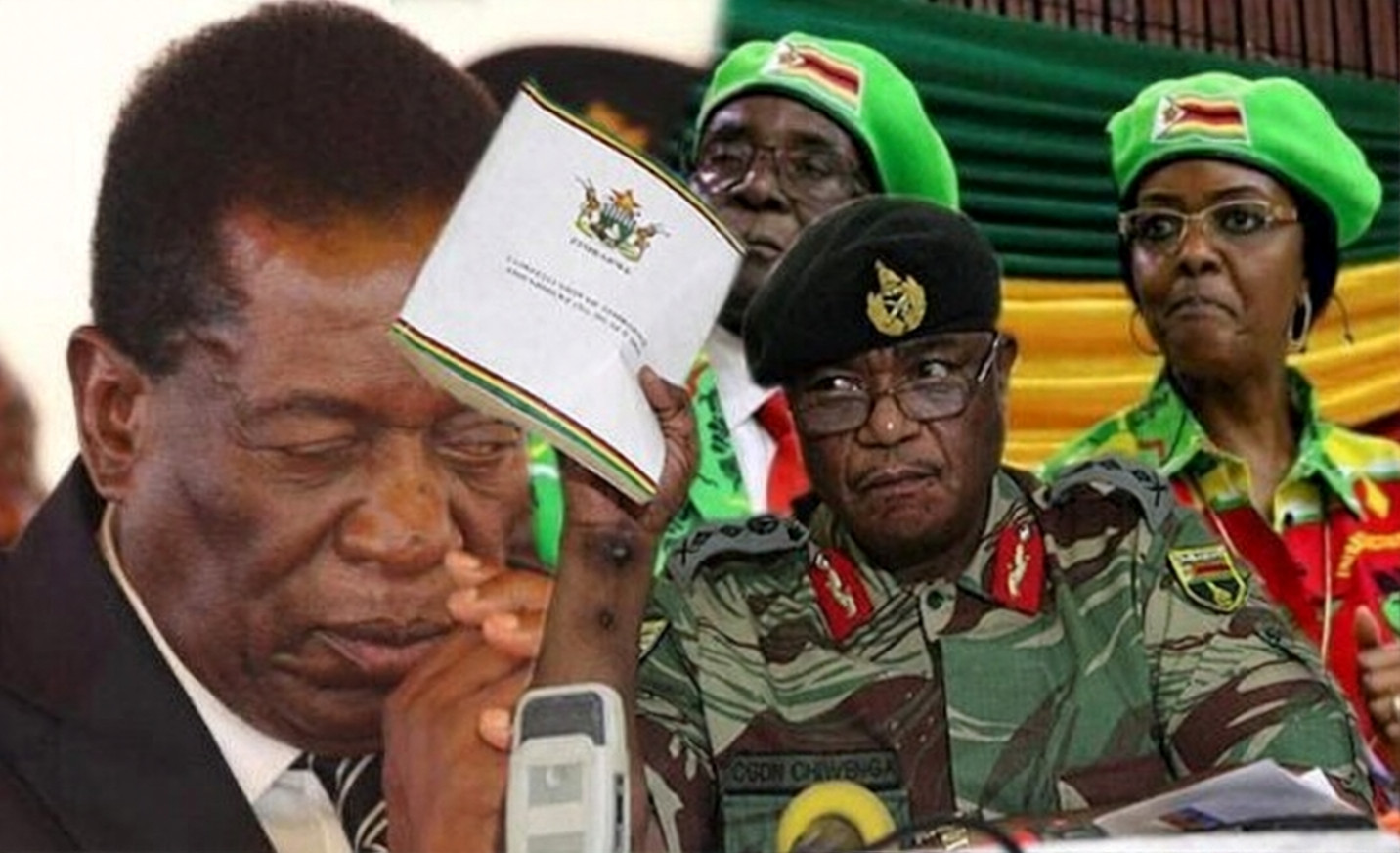
Harare – A highly sensitive internal memorandum from Zimbabwe’s Central Intelligence Organisation (CIO) has reportedly issued a stark warning to President Emmerson Mnangagwa, advising against proceeding with controversial constitutional amendments spearheaded by Justice Minister Ziyambi Ziyambi. The leaked document, which has ignited intense debate within political circles, suggests that the proposed changes extend far beyond the initial mandate of the ruling ZANU-PF party and could fundamentally alter the nation’s democratic framework.
The revelations come at a time when Zimbabwe’s political landscape is already fraught with tension, with the cabinet having recently approved draft legislation that seeks to extend presidential and parliamentary terms from five to seven years. This move, if successful, would allow President Mnangagwa to remain in office until 2030, bypassing his constitutionally mandated departure in 2028. The Justice Minister, Ziyambi Ziyambi, is the architect of this contentious Constitution of Zimbabwe Amendment (No. 3) Bill, 2026, which has been described by critics as a significant step towards consolidating power and undermining democratic accountability.
The CIO’s Grave Concerns
The leaked CIO memo reportedly describes the proposed constitutional changes as a
“fundamental transformation” of Zimbabwe’s democratic framework. Specifically, the intelligence body cautioned against the removal of direct presidential elections, as currently provided under Section 92, read together with Section 158 of the Constitution. The memo reportedly states, “This is a fundamental transformation of Zimbabwe’s democracy, altering the source of executive legitimacy”.
The intelligence report further argues that the proposed changes go beyond the scope of ZANU-PF’s own Resolution Number One, which merely called for the extension of President Mnangagwa’s tenure to 2030 within the existing constitutional framework. The CIO memo explicitly states, “Resolution Number One sought continuity within the existing system, not regime change of the system itself. This is a monumental, unauthorised policy shift”. This suggests a significant divergence between the party’s initial intent and the far-reaching implications of the proposed bill.
Concerns were also raised regarding proposals to extend Parliament’s term, with the CIO reportedly describing these as major constitutional changes introduced without broader party debate or a clear mandate. Furthermore, the memo highlights worries over provisions that would shift voter registration and delimitation powers from the Zimbabwe Electoral Commission (ZEC), including control over the voters’ roll. The intelligence body contends that such changes represent an expansion beyond the party’s stated objectives, asserting that the bill “has been unlawfully expanded into a wholesale constitutional revision that flagrantly violates the specific, narrow mandate of Zanu-PF’s Mutare Conference Resolution Number One”.
Crucially, the CIO is reported to have warned that any attempt to extend presidential terms without a national referendum would contravene Section 328(7) of the Constitution. This section outlines the procedures for amending entrenched provisions, implying that a direct popular vote would be necessary for such a significant alteration to the presidential term.
The Architect of Change: Ziyambi Ziyambi’s Bill
Justice Minister Ziyambi Ziyambi has been at the forefront of this legislative push. The Constitution of Zimbabwe Amendment (No. 3) Bill, 2026, proposes a shift towards a seven-year presidential term and a parliamentary election model, fundamentally altering how political power is chosen, its duration, and its exercise. This bill, approved by the cabinet on 10 February 2026, is seen by many as a clear departure from the spirit of the 2013 Constitution, which was designed to establish a future built on limits, competition, and accountability.
One of the most contentious aspects of the bill is the explicit setting aside of Section 328(7) of the Constitution. This safeguard was specifically designed to prevent a sitting president from benefiting from term extensions. Its removal would allow President Mnangagwa, whose legitimacy has been a subject of debate since the 2017 coup, to potentially remain in power until 2030.
Minister Ziyambi Ziyambi has defended these proposed changes by arguing that longer terms would reduce the “toxicity” of election cycles, foster stability, and allow development programmes to reach completion. However, critics argue that this perspective reverses the fundamental logic of democracy, where elections serve to hold power accountable and force leaders to regularly seek the mandate of the people. Government spokesperson Nick Mangwana has echoed this sentiment, controversially labelling elections as a “tax on development,” a view that has drawn significant criticism for undermining the democratic process.
Implications for Zimbabwe’s Democratic Framework
The proposed amendments extend beyond presidential and parliamentary terms. The bill also seeks to abolish the direct popular election of the President, replacing it with a parliamentary method of selection. Under this new system, Section 92 would be repealed, and the President would be chosen at a joint sitting of the Senate and the National Assembly, overseen by the Chief Justice or a designated judge. This change would effectively remove the most significant decision-making power from the electorate, relocating it to what critics describe as “closed elite rooms”.
Furthermore, the bill proposes an expansion of presidential appointment powers within Parliament. Clause 6 amends Section 120 to allow the President to appoint ten additional Senators, increasing the Senate from 80 to 90 members. While these appointments are publicly justified in terms of technical expertise, analysts suggest they serve a political purpose: to dilute electoral constraints and expand the executive’s voting bloc within Parliament, particularly given that proportional representation in the Senate has often denied ZANU-PF a two-thirds majority.
Electoral governance is also set for a fundamental reordering. Clauses 9 through 12 propose to abolish the Zimbabwe Electoral Commission (ZEC) and replace it with a Zimbabwe Electoral Delimitation Commission, whose functions would be limited to boundary drawing. Core electoral responsibilities, such as voter registration, custody of the voters’ roll, and maintenance of registers, would be transferred to the Registrar General. This move, framed as an efficiency measure, is viewed by many as a re-centralisation of control over electoral infrastructure within an office historically perceived as compromised and closely aligned with the executive.
Judicial changes are also part of the bill, with Clause 14 removing public interviews and competitive selection for judges, replacing them with unchecked presidential appointments. This shift, according to critics, would transform the judiciary from an autonomous body into a more predictable institutional partner, where judicial careers become dependent on executive appointment, potentially compromising their independence.
Factional Tensions and the CIO Memo
The leaked CIO memo and the proposed constitutional amendments are unfolding against a backdrop of deepening factional tensions within ZANU-PF. The debate over President Mnangagwa’s succession and the extension of his term, which is currently set to end in 2028, has intensified internal divisions. While some party members publicly support an extension, others advocate for adherence to constitutional term limits. The government has yet to officially comment on the authenticity of the leaked memo.
Interestingly, exiled former Cabinet minister Jonathan Moyo is reportedly named in the leaked memo as having played a role in crafting the presentation to Cabinet, with the CIO referring to him as a “fugitive”. This adds another layer of intrigue to the political machinations surrounding the bill.
Recent incidents further underscore the volatile political climate. There have been reports of violence at ZANU-PF provincial meetings, such as an incident in Mutare. Opposition leaders and activists have called for nationwide protests against the proposed changes, warning that they pose a significant threat to Zimbabwe’s democratic foundations. The opposition Citizens Coalition for Change (CCC) has described the process as a “constitutional coup” by the incumbent to extend his term against the will of the people. However, there are conflicting reports, with some suggesting that Tshabangu-led CCC MPs have backed Mnangagwa’s term extension plan.
A Shadow of the Past: The 2017 Precedent
The current situation, with the CIO reportedly warning President Mnangagwa, draws unsettling parallels to events leading up to the 2017 military intervention that ultimately ended Robert Mugabe’s decades-long rule. At that time, the intelligence community, including senior CIO officials, had reportedly issued stern warnings to then-President Mugabe against his plans to dismiss his Vice President, Emmerson Mnangagwa, and pave the way for his wife, Grace Mugabe, to succeed him.
Reports from 2017 indicate that CIO director-general Happyton Bonyongwe had explicitly cautioned President Mugabe that any attempt to install Grace Mugabe as president would be met with strong opposition from the military and could lead to significant political instability and even violence. The military, which viewed Mnangagwa as a war veteran and a legitimate successor, was reportedly unwilling to accept Grace Mugabe as their commander-in-chief.
Despite these grave warnings, President Mugabe proceeded to dismiss Mnangagwa in early November 2017. This move was widely seen as an attempt to clear the path for Grace Mugabe’s presidential ambitions, a development that had been brewing amidst escalating factionalism within ZANU-PF between the ‘G40’ faction, loyal to Grace Mugabe, and the ‘Team Lacoste’ faction, aligned with Mnangagwa.
The consequences of ignoring these intelligence warnings were swift and decisive. Just days after Mnangagwa’s dismissal, the military launched an operation that saw tanks on the streets of Harare, the capital. While the military maintained it was not a coup, but rather an intervention to target “criminals” around Mugabe, the outcome was the forced resignation of Robert Mugabe and the ascension of Emmerson Mnangagwa to the presidency.
This historical context serves as a potent reminder of the potential ramifications when intelligence advice, particularly concerning the delicate balance of power and military sentiment, is disregarded. The current leaked CIO memo to President Mnangagwa, therefore, carries a weight of historical precedent, highlighting the serious risks associated with perceived attempts to manipulate constitutional processes for political longevity.
Regional and International Implications
The proposed constitutional changes and the ensuing political instability in Zimbabwe are likely to draw attention from regional bodies such as the Southern African Development Community (SADC) and the international community. Concerns about democratic backsliding and the erosion of constitutionalism could lead to increased scrutiny and potential diplomatic pressure on Harare.
Zimbabwe’s history of political instability and contested elections makes these proposed amendments particularly sensitive. The move to extend presidential terms and alter the electoral process without broad consensus risks further polarising the nation and potentially exacerbating existing socio-economic challenges.
Conclusion
The leaked CIO memo serves as a critical internal warning against a legislative agenda that appears to be far more ambitious than initially presented. The Constitution of Zimbabwe Amendment (No. 3) Bill, 2026, if enacted in its current form, would usher in profound changes to the country’s governance structure, potentially concentrating power and diminishing democratic checks and balances. As the debate continues, the eyes of both the nation and the international community will remain fixed on Zimbabwe, watching how this constitutional turn unfolds and what it means for the future of its democracy.