


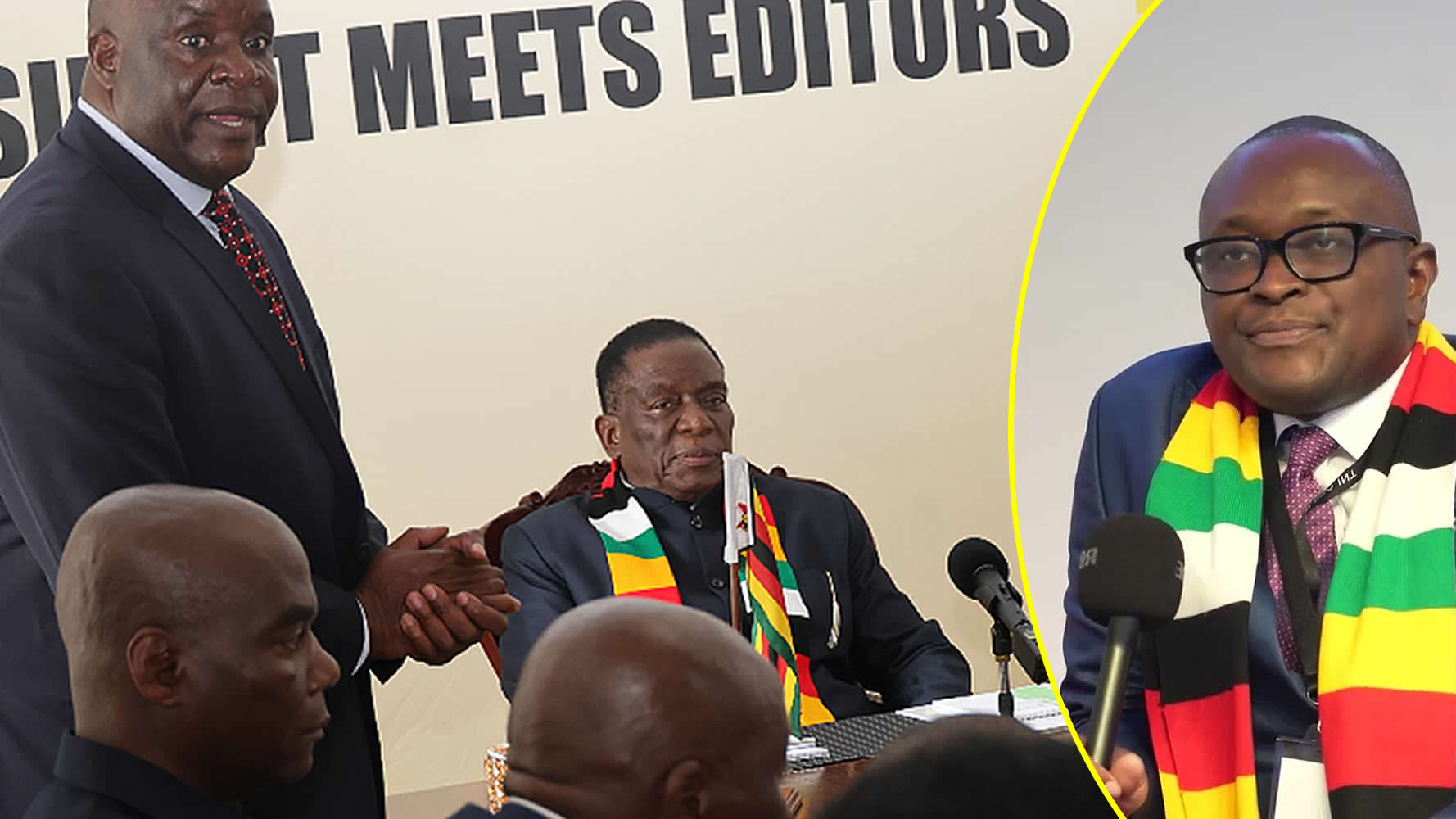
HARARE – The recent demotion of Zimbabwe’s Information Minister, Jenfan Muswere, is far more than a routine cabinet adjustment; it represents the dramatic climax of a clandestine power struggle that has been brewing within the echelons of government. Our in-depth investigation reveals that the minister’s abrupt removal from his influential portfolio was directly triggered by a miscalculated attempt to unseat the Zimbabwe Broadcasting Corporation (ZBC) board chairperson, a manoeuvre that spectacularly backfired and exposed deep-seated tensions within the ruling elite.
On 11 February 2026, President Emmerson Mnangagwa announced a mini-cabinet reshuffle, a move that saw Muswere shunted from the Ministry of Information, Publicity and Broadcasting Services to the less prominent Ministry of Skills Audit and Development. The official announcement, made by Chief Secretary to the President and Cabinet, Martin Rushwaya, also confirmed the appointment of Soda Zhemu as the new Minister of Information, with Paul Mavhima moving to National Housing. While presented as administrative adjustments, the underlying narrative points to a brutal political reckoning.
At the heart of Muswere’s downfall was his audacious bid to remove Helliate Rushwaya, the ZBC board chairperson. Helliate Rushwaya holds a significant position not only within the state broadcaster but also within the broader political landscape, being President Mnangagwa’s niece, as well as being a sister to the Chief Secretary to the President and Cabinet, Martin Rushwaya. This familial connection, understood within the traditions of the Shona ethnic group, imbues her with a certain political protection and influence. Muswere, seemingly unaware of or perhaps underestimating this intricate web of relationships, publicly declared Rushwaya’s dismissal. He swiftly moved to appoint Chipo Nheta as the interim board chairperson, with Ruvheneko Parirenyatwa named as her deputy.
The repercussions of this decision were immediate and far-reaching. Sources close to the matter indicate that President Mnangagwa, who was on a trip to Dubai in the United Arab Emirates at the time, intervened directly. His intervention led to a swift reversal of Muswere’s directive, effectively reinstating Helliate Rushwaya. The episode culminated in a significant financial loss for The Herald, a state-controlled newspaper, which had already printed 3,000 copies of its next day’s edition featuring Muswere’s announcement. These copies had to be recalled, incurring substantial costs and highlighting the chaotic nature of the minister’s ill-fated power play.
This incident brought to the fore President Mnangagwa’s persistent concerns regarding what he reportedly perceives as “weak and poorly coordinated government messaging.” This perceived weakness in communication strategy likely contributed to the President’s decisive action against Muswere. The incident underscored the high stakes involved in controlling state media, a critical tool for shaping public opinion and disseminating government narratives.
Muswere’s tenure as Information Minister was not without its prior controversies, painting a picture of a minister frequently embroiled in disputes. One particularly damaging claim came from Adelaide Chikunguru, the former Chief Executive Officer of the ZBC. Chikunguru alleged that Muswere had made “advances” towards her via WhatsApp messages in September 2021, when he was serving as the Minister of Information and Communication Technology (ICT). She explicitly stated, “On September 27, 2021, at Chimanimani World Radio Day when minister Muswere was minister of ICT, he made advances to me via WhatsApp (messages) which I have. I turned him down. He continued to pester me until he stopped as I was not interested in him.” Chikunguru further contended that her refusal to reciprocate his advances was the primary reason he later targeted her for removal from her position at the ZBC.
Chikunguru’s claims resurfaced in March 2024, coinciding with her suspension and eventual resignation from the ZBC. While official reports cited a string of transgressions, including the alleged misuse of ZBC finances for awards, unsanctioned foreign trips, and the procurement of a Starlink kit before its official licensing in Zimbabwe, Chikunguru maintained that these were fabricated charges designed to tarnish her reputation. She publicly expressed her distress, stating, “My family is concerned by the lies that are being spurned out by the ZBC aimed at ruining my image and my good name.” She defended her record at the ZBC, highlighting various “turnaround initiatives” she had implemented, such as upgrading TV studios, improving staff remuneration, and acquiring new vehicles for the corporation. These allegations, though distinct from the ZBC board saga, contribute to a broader understanding of Muswere’s tumultuous relationships within the media sector and his perceived conduct.
Adding another layer to the controversies surrounding Muswere were allegations concerning his academic qualifications. Prominent investigative journalist Hopewell Chin’ono, among others, raised questions about the veracity of Muswere’s curriculum vitae, suggesting that he had misrepresented his academic achievements. While specific details of these allegations remain contentious, they further fuelled public scrutiny of the minister’s integrity and suitability for high office. Such claims, whether substantiated or not, often undermine public trust and can be exploited by political rivals in the intricate dance of power.
The demotion of Muswere and the elevation of Soda Zhemu to the Information portfolio signal President Mnangagwa’s continuing efforts to consolidate control over government messaging. The President’s reported dissatisfaction with the “weak and poorly coordinated government messaging” under Muswere suggests a desire for a more robust and unified communication strategy. This reshuffle, therefore, is not merely a change of personnel but a strategic recalibration aimed at strengthening the government’s public image and narrative control, particularly in the lead-up to future political contests.
The swift and decisive action taken against Muswere following his attempt to remove Helliate Rushwaya underscores the perils of challenging established power structures, especially those intertwined with presidential authority and familial ties. The incident serves as a stark reminder of the brutal reality of political survival in Zimbabwe, where loyalty and adherence to unwritten rules often outweigh perceived competence or independent action. The “Night of Long Knives” headline aptly captures the sudden, almost surgical, nature of Muswere’s downfall, a political manoeuvre executed with precision and without public fanfare.
This episode also raises critical questions about the future of state media in Zimbabwe. The ZBC, as the national broadcaster, plays a crucial role in shaping public discourse. The apparent intervention by the President to protect his niece’s position at the helm of the ZBC suggests a deep-seated interest in maintaining direct influence over this vital institution. This could lead to further concerns about media independence and the potential for political interference in editorial decisions. The incident highlights the ongoing struggle for control over information dissemination, a battle that is central to the broader political landscape of Zimbabwe.
In conclusion, Jenfan Muswere’s demotion is a complex tapestry woven with threads of ambition, miscalculation, familial influence, and presidential prerogative. It is a story that goes beyond official statements, revealing the intricate power dynamics and factional battles that define Zimbabwean politics. The swiftness of his removal, triggered by a failed attempt to assert authority over a key state institution, serves as a cautionary tale for those who might seek to challenge the established order. As the dust settles, the implications for state media and the government’s information strategy will undoubtedly continue to unfold, offering further insights into the nuanced and often unforgiving world of Zimbabwean politics. The incident, while seemingly isolated, is a potent symbol of the constant vigilance required to navigate the treacherous currents of power, where a single misstep can lead to a dramatic and irreversible fall from grace.