


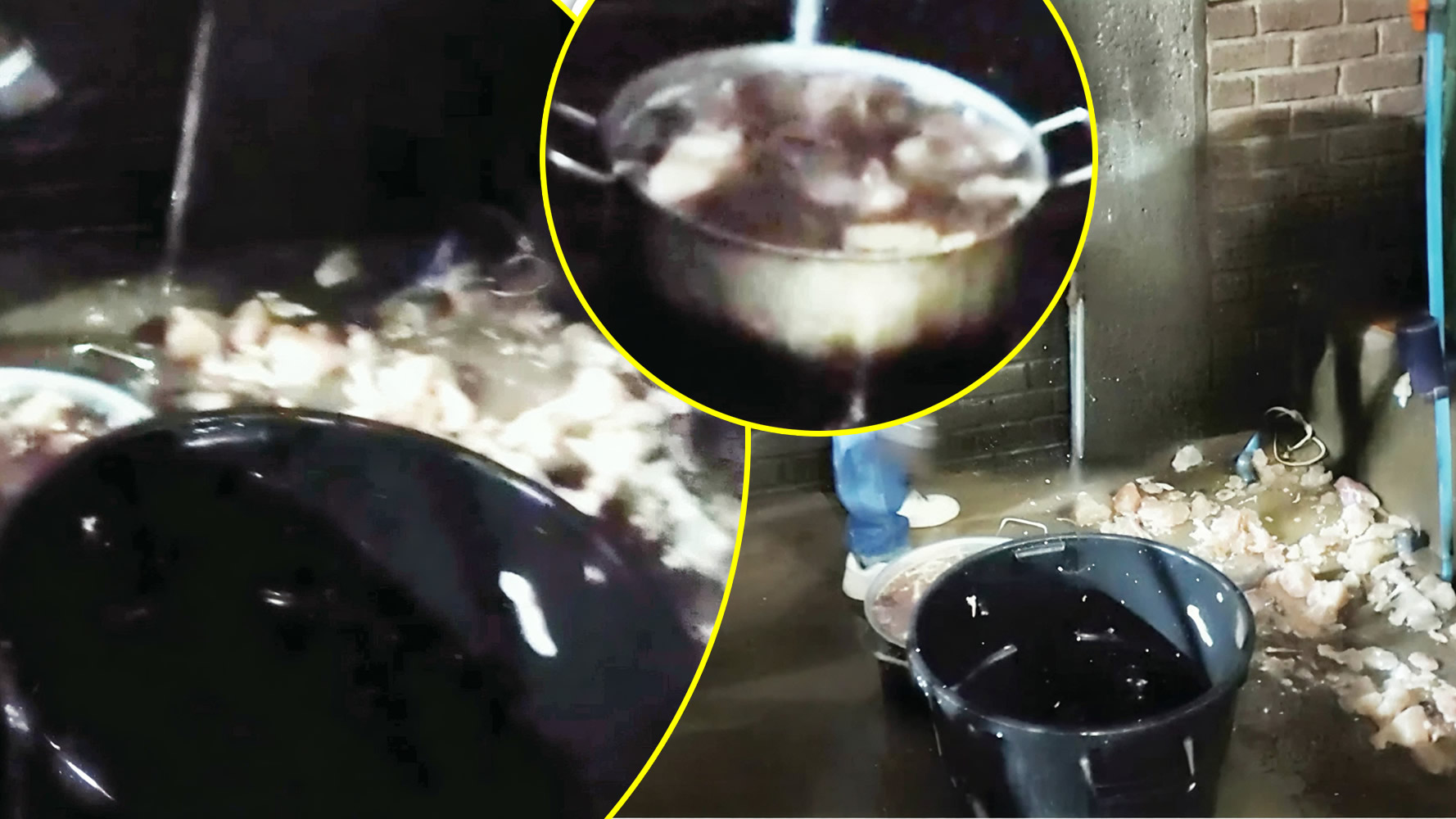
HARARE – The clatter of pots and the aroma of sizzling meat in Harare’s Central Business District (CBD) usually signal the start of a busy lunch hour. But behind the closed kitchen doors of one popular local eatery, a far more sinister ingredient is allegedly being prepared for unsuspecting diners. The Harare City Council has launched an urgent investigation into a restaurant following disturbing claims that meat explicitly labelled as pet food is being served to human customers.
The investigation was triggered by a whistle-blower within the establishment who approached H-Metro with a series of stomach-churning allegations. According to the worker, the restaurant has been sourcing meat products that are clearly not intended for human consumption to cut costs in an increasingly difficult economic environment.
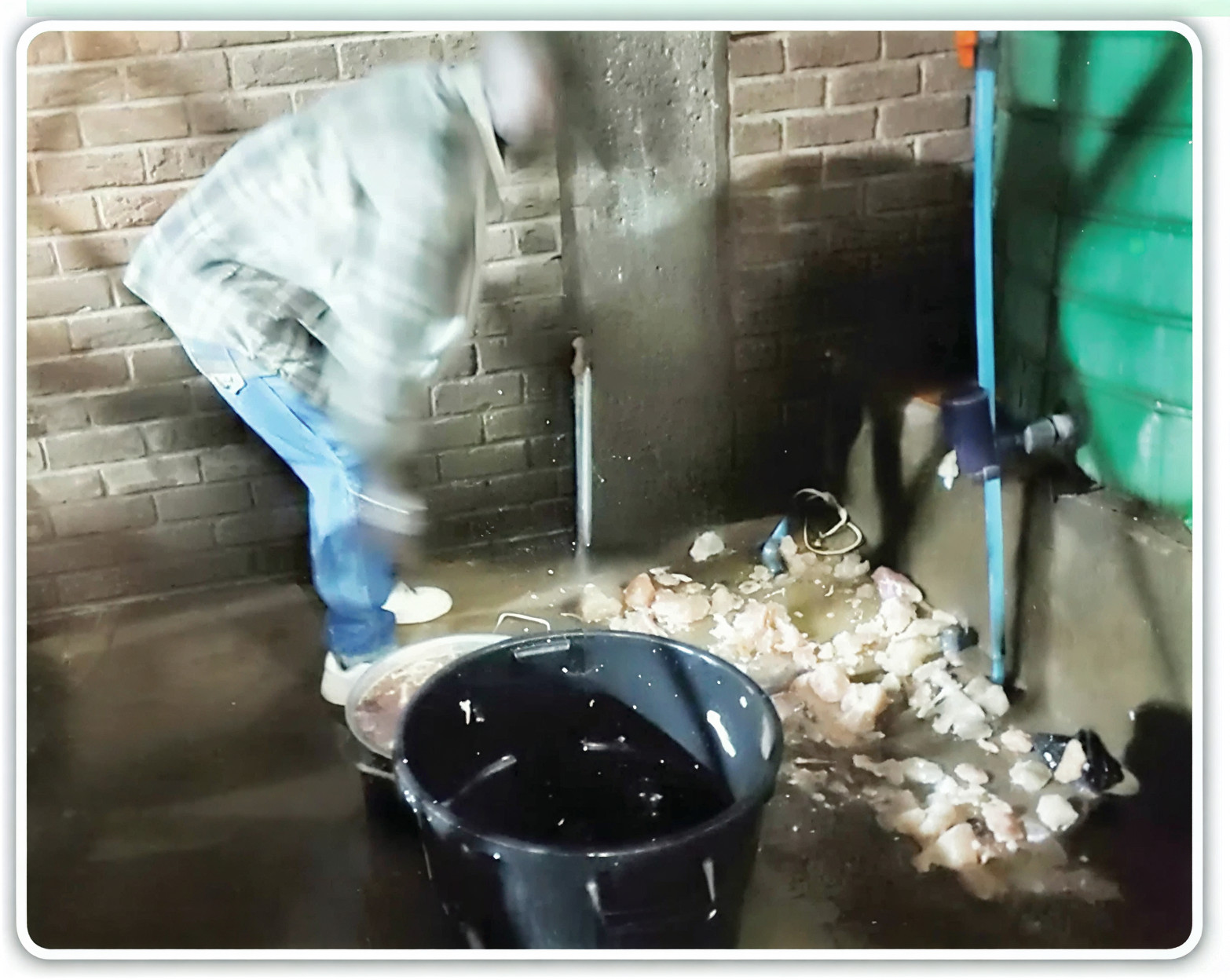
“Some of the products brought into the kitchen are clearly marked pet food,” the worker revealed, speaking on condition of anonymity for fear of victimisation. “We are told to process it just like any other meat. The customers have no idea what they are actually eating.”
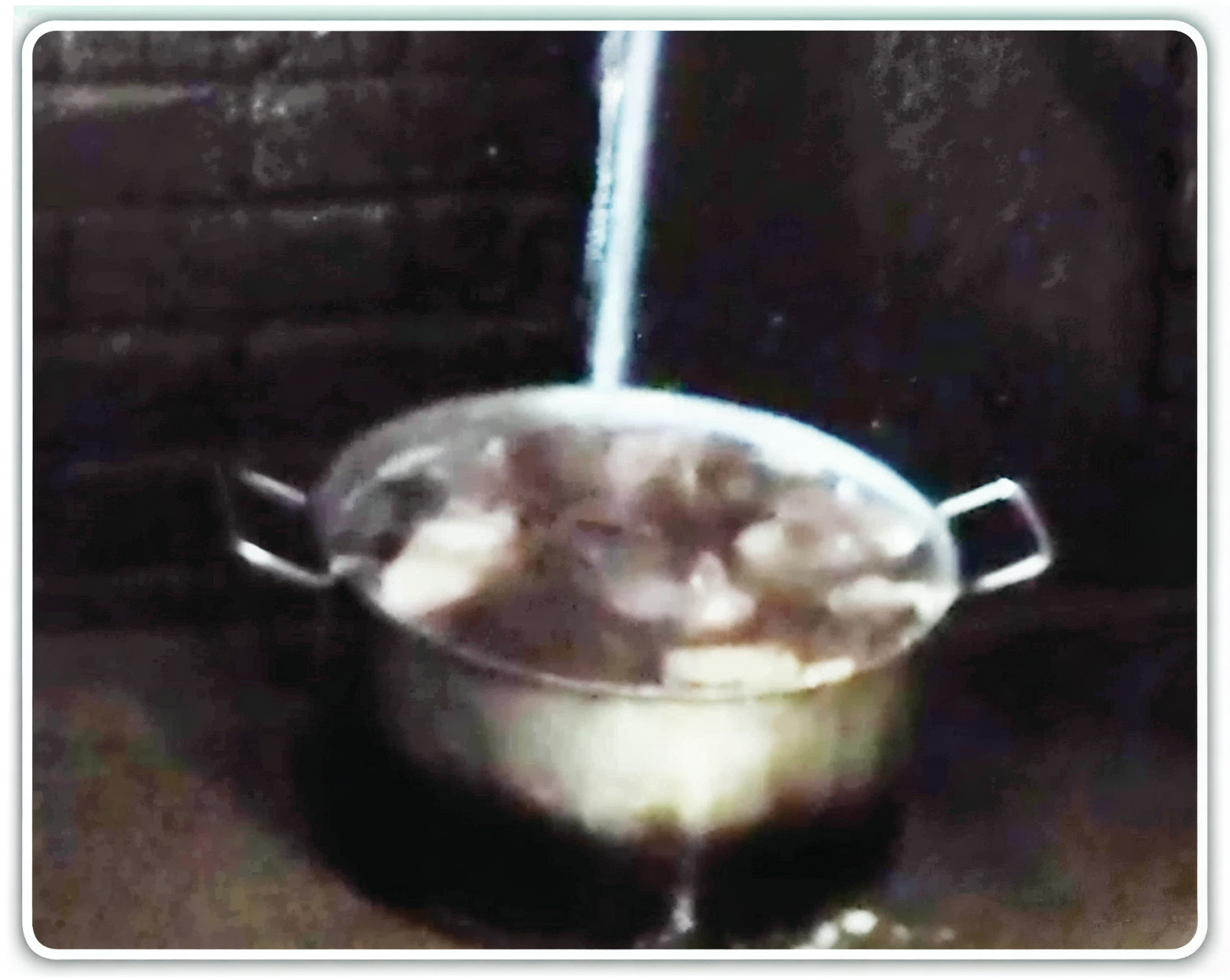
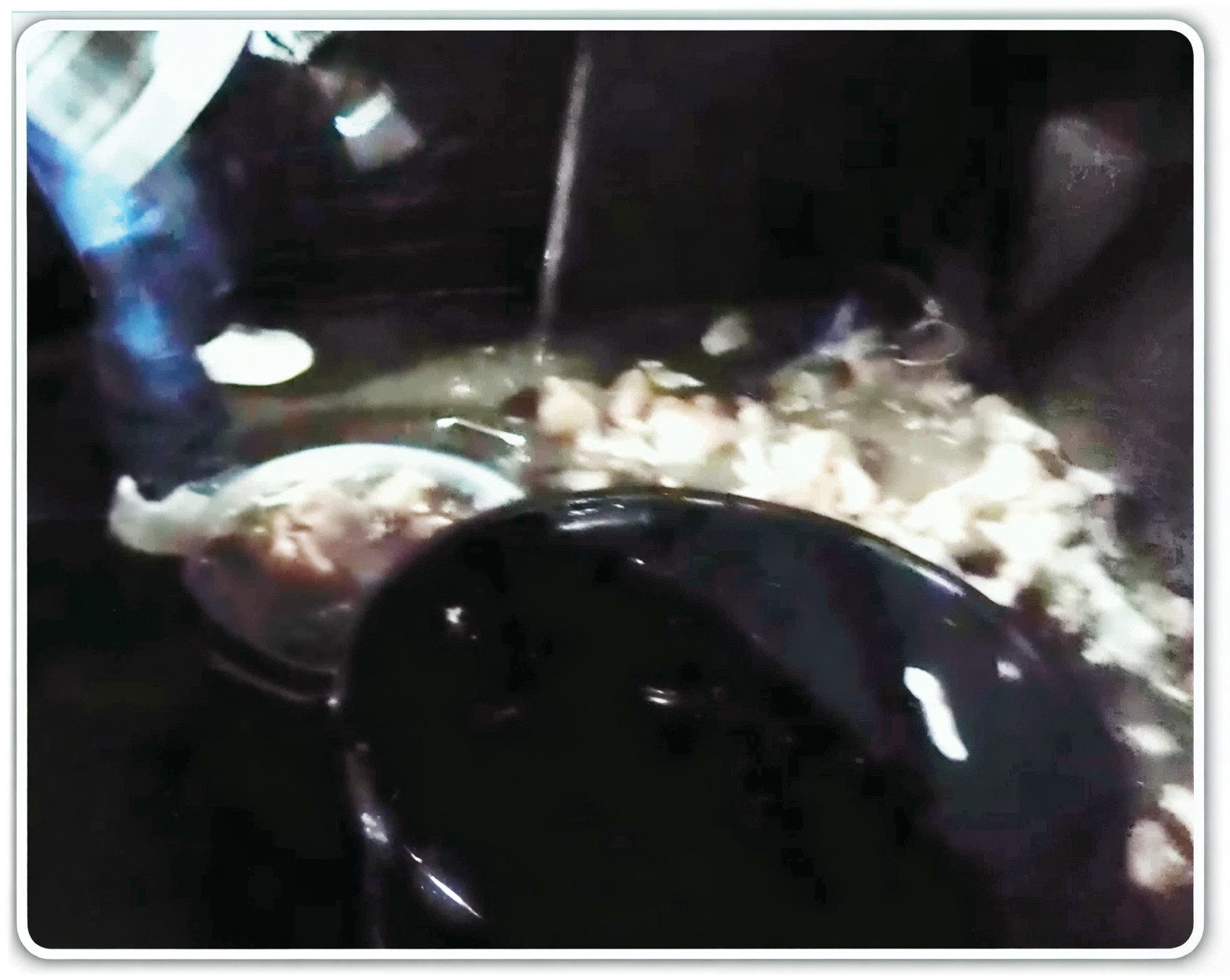
Undercover footage obtained by H-Metro appears to substantiate these claims. The videos show a kitchen worker washing what he describes as “pet food” before tossing the meat into a large pot. This pot was later observed being transported into the main restaurant area to be served as part of the day’s meals. The conditions in the processing area were equally appalling, with meat being handled in an environment that would likely fail even the most basic health inspection.
When confronted with these allegations, the owner of the restaurant reacted with unbridled hostility. Rather than offering a defence or inviting an inspection, he resorted to threats of violence.
“Who told you that? That is nonsense,” he shouted when questioned by a reporter. “If you publish that, I will deal with you. I can beat you up. I am untouchable. You are making a big mistake. Nothing will happen to me.”
Despite the owner’s claims of being “untouchable”, the City of Harare has made it clear that no establishment is above the law. Dr Prosper Chonzi, the Council’s Director of Health Services, confirmed that a team of inspectors is being dispatched to the site.
“All food outlets in the city are subject to routine inspections,” Dr Chonzi stated. “If there is any violation of health regulations, appropriate enforcement measures will be taken.”
Public health experts have reacted with horror to the revelations. They point out that food intended for animals is subject to vastly different regulatory standards than food meant for people.
“Food labelled for animal consumption is not processed or regulated under the same standards as food for humans,” explained one public health specialist. “If such products are being served to people, that would be a grave violation of public health laws. It poses a serious risk of foodborne illnesses and long-term health complications.”
This incident is not an isolated case but part of a burgeoning food safety crisis gripping the region. Just a few months ago, in November 2025, a similar scandal emerged in Mbare, one of Harare’s busiest trading hubs. A routine inventory review at a local retailer revealed a suspicious spike in the sales of frozen pet food.
The investigation that followed uncovered a “curious tale” of cheap meat pies being sold on the streets of Mbare at prices that defied economic logic. It was discovered that informal traders were buying up the frozen pet food in bulk, processing it with heavy spices, and using it as a primary ingredient in pies sold to commuters and school children. The “Mbare Pie Scandal” became a grim urban legend, highlighting the lengths to which some will go to survive the country’s economic pressures.
The rot, however, does not stop at the Zimbabwean border. Across the Limpopo, South African authorities are battling their own wave of unhygienic food practices. In January 2026, the City of Johannesburg shut down the Alexandra Metro Butchery in Wynberg after a raid revealed a chamber of horrors.
Inspectors found dogs being kept illegally on the premises, expired meat products being relabelled for sale, and faulty refrigeration equipment that left carcasses rotting in the summer heat. The butchery had previously ignored multiple warnings, leading to a forced closure that highlighted the systemic failure of self-regulation in the meat industry.
The South African “Pet Food Crisis” of late 2025 further complicated the regional landscape. A major product recall by RCL Foods in November 2025, which affected nearly half of the dry dog food on supermarket shelves, left a vacuum in the market. While this was a legitimate safety recall for animals, it underscored the volatility of the food supply chain and the potential for contaminated products to enter the system.
In Cape Town, a raid on an unlicensed food manufacturing operation in Mfuleni in late 2024 uncovered sausages being processed in conditions so unsanitary that officials described the facility as a “significant health risk”. The operation was packaging meat in unlabelled bags, making it nearly impossible for consumers to trace the source of their food.
In Zimbabwe, the desperation caused by rising food prices has led to even more extreme measures. Reports from the eastern city of Mutare have detailed cases where pets have been stolen and butchered for meat. In one pending court case, a pet dog was allegedly slaughtered and eaten by individuals who claimed they could no longer afford beef or chicken.
The Harare City Council’s investigation into the CBD restaurant is seen by many as a litmus test for the city’s ability to protect its citizens. For years, residents have complained about the declining standards of hygiene in both formal and informal food outlets. The rise of “mtura” (street-vended offals) has already been flagged by health officials as a major risk factor for cholera and other diarrhoeal diseases.
“We are living in a time where you have to question every plate of food you buy,” said a regular diner in the CBD. “If a formal restaurant can sell pet food, what is happening in the back alleys where there are no inspectors at all?”
The legal implications for the restaurant owner could be severe. Under the Public Health Act and the Food and Food Standards Act, the sale of food unfit for human consumption carries heavy fines and the potential for imprisonment. However, the owner’s boast of being “untouchable” has raised concerns about the influence of political and financial patronage in the enforcement of city by-laws.
As the City of Harare’s inspectors prepare to enter the kitchen, the public is being urged to exercise extreme caution. Health experts advise consumers to look for valid health certificates displayed in restaurants and to report any suspicious smells or tastes immediately.
“The convenience of a quick meal should never come at the cost of your life,” the public health expert warned. “If the price of the meat seems too good to be true, it probably is. In this case, it might just be a meal meant for a dog, served on a human’s plate.”
The investigation continues, and the results of the laboratory tests on the meat samples seized from the restaurant are expected within the week. For now, the people of Harare wait to see if justice will be served, or if the “untouchable” owner will indeed remain beyond the reach of the law.
The broader regional context suggests that without a massive overhaul of food safety governance and a genuine effort to tackle the underlying economic drivers of these practices, the “Pet Food Scandal” of 2026 will be just another chapter in a long and dangerous story of survival at any cost.