


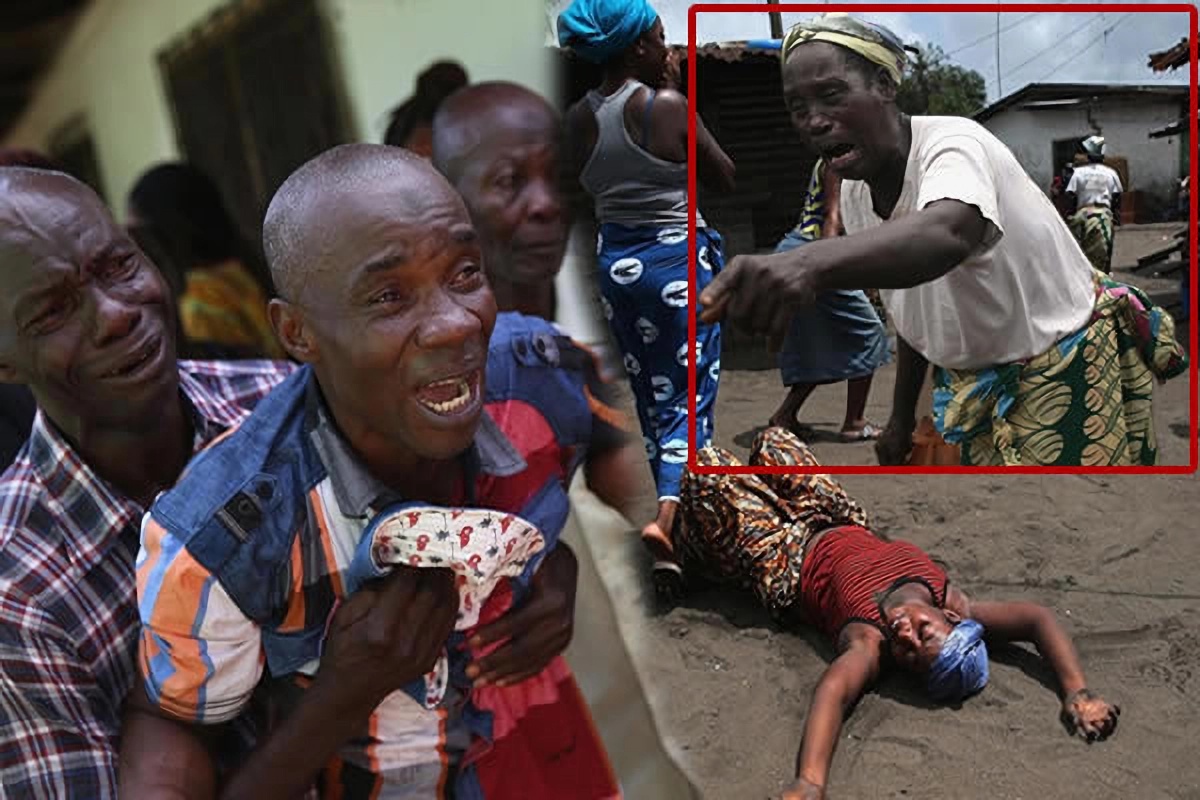
BULAWAYO – In a nation where the sanctity of death has long been held as a final boundary of human respect, a chilling new criminal trend is dismantling the traditional boundaries of decency. Armed gangs across Zimbabwe have begun to view funeral parlours and gatherings of mourners not as places of solemnity, but as soft targets for high-stakes robbery. This emerging phenomenon, marked by a disturbing lack of conscience, has left grieving families traumatised and security experts questioning the depth of the country’s moral and social decay.
The recent sentencing of a 34-year-old Bulawayo man, Clifford Desmond Nare, has brought this dark underworld into sharp focus. Nare, a resident of Cowdray Park, appeared before the Tredgold Magistrates Court on 14 February 2026, where he was sentenced to an effective nine-year prison term for his role in a violent raid on a city funeral parlour. The details of the case, as presented by the prosecution, reveal a level of calculated brutality that has become the hallmark of these “funeral gangs.”
On 1 February 2025, at approximately 23:30 hours, Nare and his accomplices — Cordias Nkomo, who remains a fugitive, and Sipho Ncube and Dumisani Ndlovu, both now deceased, after they too joined their ancestors — stormed the premises of Kings and Queens Funeral Services. They were not merely opportunistic thieves; they were armed with pistols and a sword, prepared to use lethal force. The gang struck two security guards on the eyes with the butts of their firearms, a cruel tactic designed to incapacitate and intimidate. The guards were then force-marched to the backyard and bound with their own shoelaces, left helpless while the gang ransacked the office.
While Nare kept watch outside, his partners in crime broke into the building through a window. They made off with US$3,608, ZAR1,130, a Huawei Y62 mobile phone, and an Exide battery. The National Prosecuting Authority of Zimbabwe (NPAZ), in a statement following the sentencing, emphasised the gravity of the crime: “Robbery is a serious offence that endangers lives and disrupts businesses while the use of weapons adds to the gravity of the vice.”
Yet, the Kings and Queens heist is only one piece of a much larger, more troubling puzzle. In October 2025, a similar scene played out in Kwekwe. A gang of five armed robbers raided the popular Doves Funeral Services premises in the dead of night. According to police reports, the gang pounced on the parlour at around 01:00 hours on 24 October, making off with smartphones and other valuables worth US$410. While the monetary value may have been lower than the Bulawayo raid, the psychological impact on the staff and the community was profound. A local resident, speaking on condition of anonymity, remarked, “Robbing a funeral parlour, a place meant for mourning and dignity, while armed and violent shows a complete lack of conscience. That’s not just a crime against property; it’s a crime against our culture.”
The desperation of these gangs appears to know no bounds, as they have even begun targeting the mourners themselves during their most vulnerable moments. In a distressing incident in Greendale, Harare, a group of five robbers attacked a gathering of ten mourners at a private residence. The robbers, armed with three pistols and driving a “new shape” Honda Fit, pounced on the grieving family and their guests. They escaped with US$800, 300 Euros, and an astonishing haul of jewellery, including gold and silver rings valued at US$41,800.
“They didn’t care that we were crying,” one victim of a funeral robbery recounted. “They just saw us as a group of people with money and phones who wouldn’t fight back because we were distracted by our grief.”
Another harrowing incident, seven armed robbers, concealed by balaclavas, raided a Bulawayo funeral parlour. The gang, armed with machetes, a gun, and other tools, cut through burglar bars to gain entry. They ransacked the office, stealing various items including oil, a gas cylinder, sneakers, embalming liquid, and custard. The security guard on duty was tied up, and the robbers made off with US$30 and a cellphone after failing to find more valuables in the safe.
In another event that occurred on July 23, 2021, in Mukunyadzi Village, Chiweshe, where Peter Gono (30) and six accomplices stormed a funeral gathering. The mourners were awakened by gunshots around 1 AM. Gono, armed with a shotgun, and his accomplices, carrying iron bars and wooden sticks, assaulted individuals and threatened to shoot them while demanding money. They stole over US$3,000 and several cell phones. Gono was later apprehended after using one of the stolen phones, leading to a 36-year prison sentence for seven counts of robbery.
Sociologists suggest that this trend is a symptom of a society grappling with severe economic pressure and a fraying social fabric. Dr. Tinashe Moyo, a social analyst, explains that the “funeral gangs” are a result of both opportunity and a declining sense of “Ubuntu”—the African philosophy of humanity and community. “In the past, even the most hardened criminals would pause at a funeral. There was a superstitious fear or a cultural respect for the dead. Now, that boundary has vanished. These gangs see funerals as gatherings where people carry cash for funeral expenses, and where security is often lax because people are focused on their loss.”
The logistics of these robberies often suggest inside information or careful surveillance. In the case of the Greendale robbery, the precision with which the gang targeted the jewellery suggests they knew exactly what—and who—they were looking for. Police spokesperson Assistant Commissioner Paul Nyathi has previously warned that criminals are increasingly targeting funerals, particularly in more affluent suburbs, where they steal from cars or directly from the mourners.
The rise of these gangs has forced funeral parlours to rethink their security measures. Many have now installed high-tech surveillance systems and hired armed response teams, costs that are ultimately passed down to the grieving families. “We are now operating like banks,” said a manager at a Harare-based funeral service provider. “We have to protect the bodies, the families, and our staff. It’s a sad state of affairs when you need a guard with a shotgun to oversee a viewing.”
Law enforcement agencies are under increasing pressure to curb this specific brand of violence. The NPAZ has reiterated that the courts will not be lenient with those who target funeral services. “The use of weapons and the targeting of solemn spaces adds a layer of aggravation that the judiciary cannot ignore,” a legal expert noted. The nine-year sentence handed to Clifford Desmond Nare is seen as a step in the right direction, but with accomplices like Cordias Nkomo still at large, the threat remains ever-present.
The motivations behind these crimes vary. While some are driven by the sheer desperation of Zimbabwe’s volatile economy, others are part of organised criminal syndicates that have identified a “niche market” in the funeral industry. These syndicates often use stolen vehicles, such as the Honda Fit seen in the Greendale raid, to make quick getaways, disappearing into the night before police can respond.
The impact on the families is perhaps the most tragic aspect of this trend. For those already dealing with the loss of a loved one, the added trauma of a violent robbery can be overwhelming. “We were supposed to be saying goodbye to my father,” said a woman whose family was robbed at a wake in Bulawayo. “Instead, we were lying on the floor with guns to our heads. I can’t even remember the funeral service; I only remember the masks and the cold metal of the pistol.”
The authorities continue to call for public assistance. “We are calling for anyone with information relating to these robberies to assist,” a police statement regarding the Kwekwe incident read. “The community must work with us to identify these individuals who have no respect for the living or the dead.” For now, the people of Zimbabwe must remain vigilant, even in their grief, as the “funeral gangs” continue their hunt for the next vulnerable gathering.