


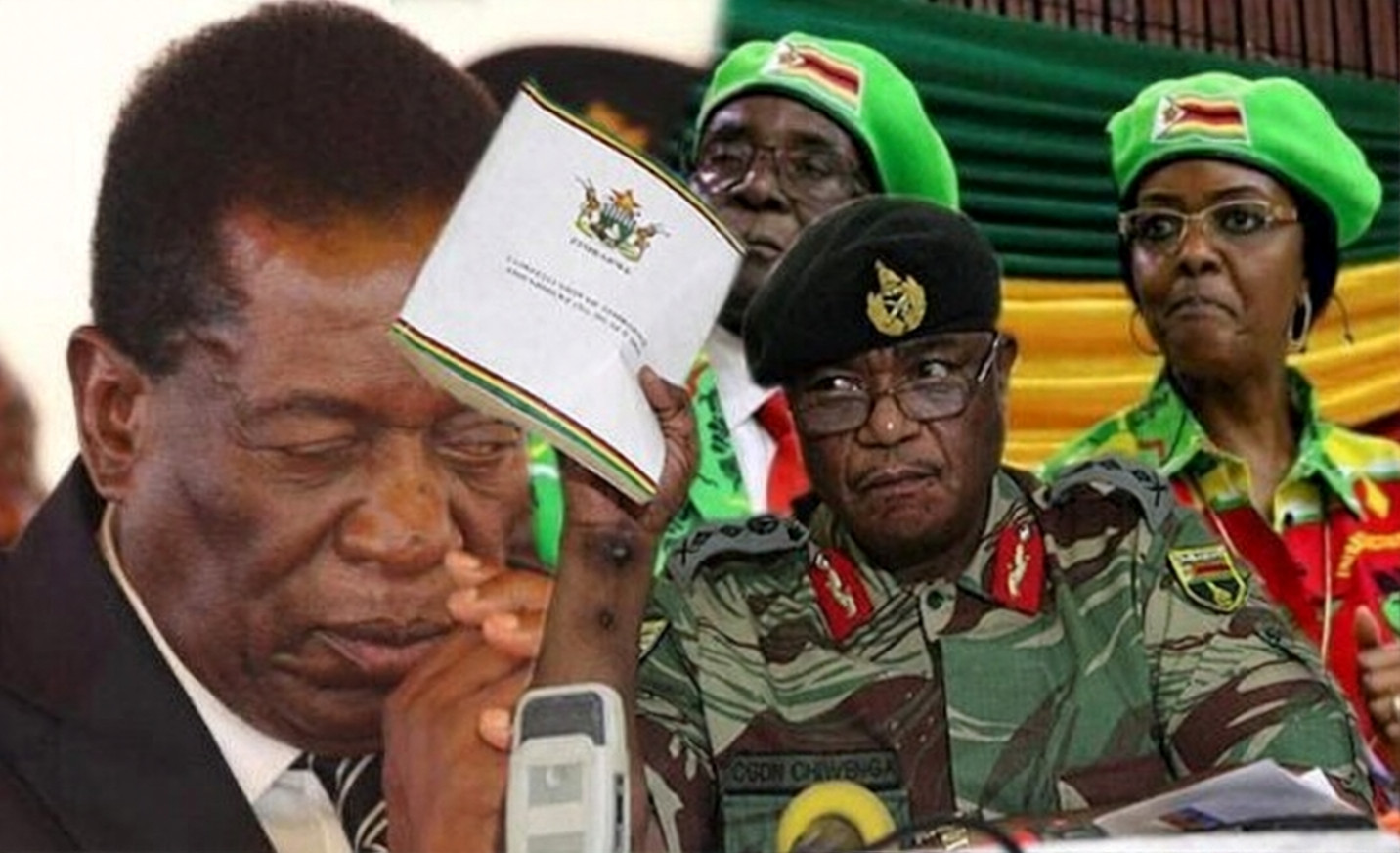
HARARE – A profound internal rupture within Zimbabwe’s ruling ZANU-PF party has been laid bare, not in the clandestine corridors of power, but in the very public arena of the Constitutional Court. The recent legal challenge mounted by a faction of the nation’s revered war veterans against President Emmerson Mnangagwa’s proposed term extension is far more than a mere legal skirmish; it is a potent signal of a deep-seated struggle for the very soul of the “Second Republic” and a desperate attempt to defend the traditional path of power within the party.
For decades, Zimbabwe’s war veterans have been the undisputed “kingmakers,” the formidable muscle behind the throne, ensuring the ZANU-PF machinery remained well-oiled and loyal. Their influence, forged in the crucible of the liberation struggle, has historically been instrumental in shaping the country’s political landscape. However, the audacious move to extend the presidential term beyond the constitutionally mandated two terms has triggered alarm bells among those who now fear that the “Crocodile,” as President Mnangagwa is known, is consuming his own, threatening to dismantle the very foundations upon which their power and relevance rest.
The ED2030 Agenda: A Constitutional Coup?
The heart of the matter lies in the controversial Constitutional Amendment Bill No. 3, gazetted on 16th February 2026. This legislative proposal seeks to dramatically alter Zimbabwe’s political framework, extending the presidential term from five to seven years, effectively allowing President Mnangagwa to remain in office until 2030. Furthermore, it proposes to extend parliamentary terms to seven years and, critically, to shift the power of electing the President from the public to the Parliament of Zimbabwe. The Bill also aims to strip the Zimbabwe Electoral Commission (ZEC) of its authority over delimitation and the voters’ roll, centralising these crucial functions.
This initiative, widely championed by ZANU-PF loyalists under the banner of the “ED2030” slogan, has been met with fierce opposition from an unexpected quarter: the very war veterans who have historically been the bedrock of the ruling party’s support. On 17th February 2026, six prominent war veterans – Reuben Zulu, Godfrey Gurira, Shoorai Nyamangodo, Joseph Chinyangare, Digmore Knowledge Ndiya, and Joseph Chinguwa – filed an urgent application before the Constitutional Court. Represented by the esteemed constitutional lawyer Professor Lovemore Madhuku, their legal challenge accuses President Mnangagwa of a grave violation of the Constitution.
In their court papers, the veterans argue that President Mnangagwa “placed his personal interests above the Constitution” by chairing a Cabinet meeting that approved the draft Constitutional Amendment Bill on 10th February 2026. They contend that this action directly contravenes his presidential oath, taken on 4th September 2023, to “obey, uphold, and defend the Constitution, to protect and promote the rights of the people of Zimbabwe.”
Reuben Zulu, in an affidavit submitted on behalf of his colleagues, stated unequivocally, “The President cannot replace the people with Parliament as the source of executive authority.”
He further asserted that “One person, one vote is not just a slogan… It is the foundation of the republic.”
The veterans describe the proposed amendment as nothing short of a “constitutional coup cloaked in Cabinet procedure,” arguing that it is a “direct assault on the liberation values
we fought for.”
Crucially, the legal challenge highlights Section 328(7) of the Zimbabwean Constitution, which explicitly states that any amendment to a term-limit provision cannot apply to the person holding office when the amendment is made. The veterans argue that the ED2030 agenda directly attempts to bypass this safeguard, allowing Mnangagwa to “profit from amendments that extend their term,” a move they deem constitutionally impermissible.
Whispers of a Succession Plan B and Factional Tensions
Behind the official narratives of constitutional adherence, a more intricate and perilous game of political chess is unfolding. Whispers of a “Succession Plan B” have been circulating within ZANU-PF circles, a plan reportedly sidelined by Mnangagwa’s inner circle. This legal challenge by the war veterans is widely seen as a strategic move, potentially sponsored by a rival faction within the government, using the veterans as a “front” to gauge the levels of public and military resistance to the President’s perceived power grab.
The tension between the military elite and the civilian wing of the party is palpable. Vice President Constantino Chiwenga, a powerful figure with deep military ties and a key architect of the 2017 military-assisted transition that brought Mnangagwa to power, is reportedly at the centre of this internal opposition. Sources suggest that Chiwenga and the Central Intelligence Organisation (CIO) had advised against proceeding with the Constitutional Amendment Bill No. 3. However, President Mnangagwa reportedly disregarded this counsel, granting Justice Minister Ziyambi Ziyambi the authority to push forward with the drafting and presentation of the Bill.
This divergence of opinion underscores a deeper struggle for influence and control within ZANU-PF. The 2017 events, often referred to as a “soft coup,” saw the military play a decisive role in removing Robert Mugabe and installing Mnangagwa. This historical context is vital to understanding the current dynamics, as the military’s influence remains a critical factor in Zimbabwean politics. The war veterans, traditionally aligned with the military, are now acting in a manner that suggests a significant shift in loyalty or, at the very least, a profound disagreement with the current trajectory of the presidency.
Opposition figures, including Nelson Chamisa, Tendai Biti (who now leads the Constitutional Defenders Forum – CDF), and academics Justice Mavedzenge and Musa Kika, have all vehemently condemned the proposed amendments, further amplifying the chorus of disapproval. Their collective stance reinforces the notion that the ED2030 agenda is perceived as a threat to democratic principles and constitutional governance.
The Historical Precedent: A Cycle of Power Consolidation
Zimbabwe’s political history is replete with instances of constitutional amendments designed to consolidate power. The current Constitutional Amendment Bill No. 3 follows a pattern seen in previous amendments, such as Amendment No. 1 and No. 2, which also drew criticism for centralising authority. This historical context suggests a recurring cycle where the ruling party, when faced with internal or external pressures, resorts to legislative changes to secure its hold on power.
The war veterans, having fought for the liberation of Zimbabwe, view the “one person, one vote” principle as sacrosanct. Their current legal challenge is a powerful reminder of their historical role as guardians of the revolution’s ideals. Their argument that the Constitution cannot be redesigned by those who stand to benefit from its distortion resonates deeply with many Zimbabweans who fear a return to authoritarian tendencies.
The High-Stakes Gamble for Zimbabwe’s Future
The legal battle initiated by the war veterans represents a high-stakes gamble for Zimbabwe’s future. If the Constitutional Amendment Bill No. 3 were to pass, it would not only extend President Mnangagwa’s tenure but also fundamentally alter the democratic process by diminishing the public’s direct role in electing their leader. This would effectively block the traditional path of power, which has always involved a nod from the veterans and a degree of internal party consensus, replacing it with a system of permanent incumbency.
The outcome of this court case will have far-reaching implications, not just for President Mnangagwa and the ZANU-PF party, but for the entire nation. It will test the independence of Zimbabwe’s judiciary and the resilience of its constitutional framework. The world watches closely as this internal struggle unfolds, a struggle that will ultimately determine the direction of Zimbabwe’s political future.
The war veterans, once the silent enforcers of ZANU-PF’s will, have now become vocal defenders of the Constitution, exposing the deep fissures within the ruling elite. Their actions suggest a desperate attempt to reclaim their relevance and to ensure that the principles they fought for during the liberation struggle are not eroded by political expediency. The “Secret Plot” to extend Mnangagwa’s rule has inadvertently ignited a fierce internal battle, revealing the fragility of power dynamics within Zimbabwe’s political landscape and the enduring legacy of its liberation heroes.