


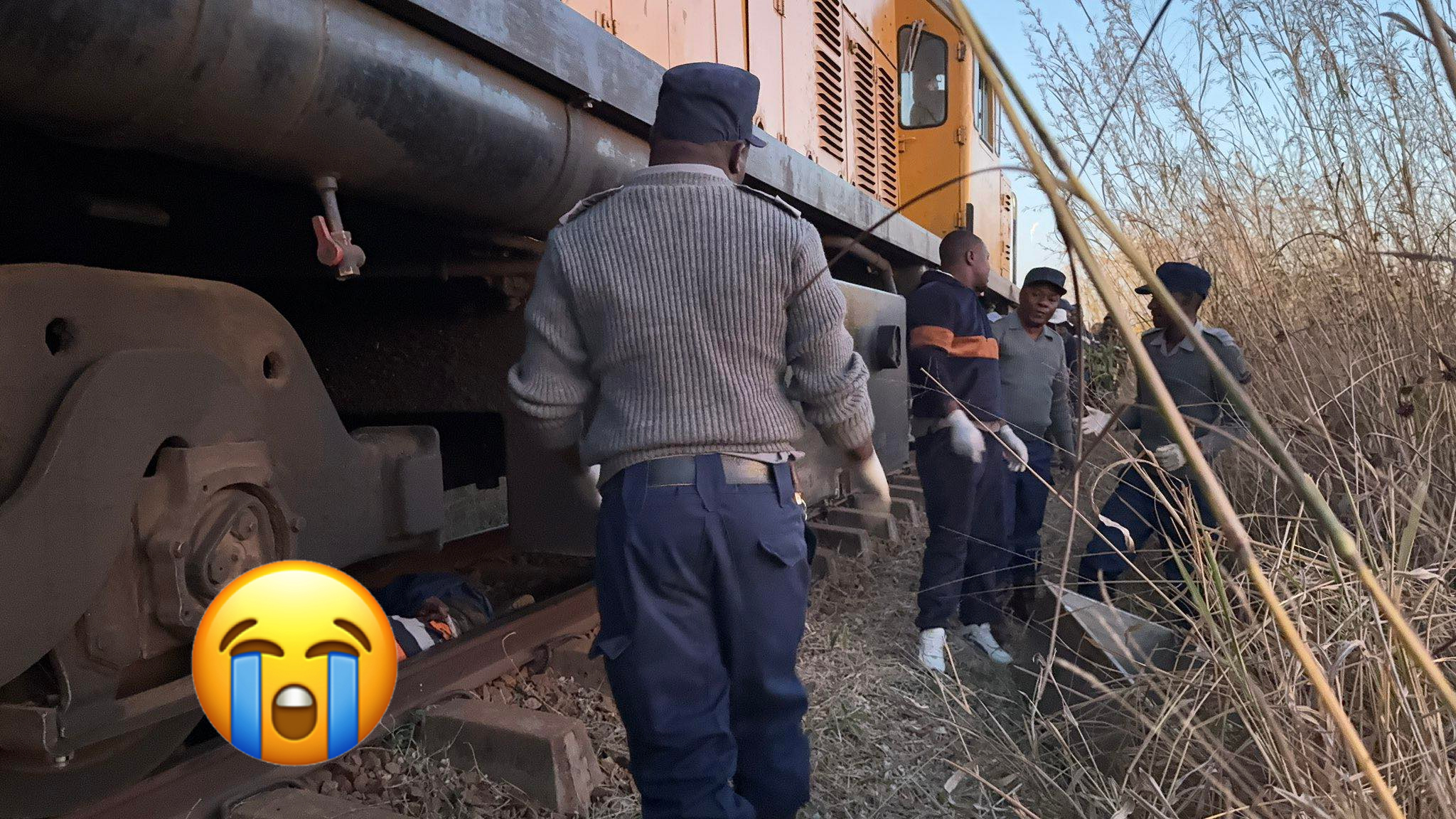
Mberengwa – A chilling incident in Mberengwa has cast a stark light on the perilous realities faced by individuals near railway lines, as a 19-year-old man was tragically killed by a goods train, suffering horrific injuries. The event, which occurred in the early hours of March 5, 2026, has prompted renewed warnings from authorities regarding the extreme dangers of trespassing on railway property and the broader issue of railway safety across Zimbabwe.
The deceased has been identified as Author Nkiwani, a 19-year-old resident from Village Chatira, under Chief Mataruse’s area in Mberengwa. His body was discovered on the railway track, bearing injuries consistent with being run over by a heavy locomotive. The Midlands police spokesperson, Inspector Emmanuel Mahoko, confirmed the devastating incident, providing a grim account of the moments leading up to the fatality.
According to Insp Mahoko, the driver of the goods train, 41-year-old Donald Tachiona, was operating the train on its routine journey from Rutenga to Somabula. The fateful encounter occurred as the train approached the 86-kilometre peg, situated between Poland and Ngezi. It was here, in the dead of night, that Tachiona’s headlights illuminated a horrifying sight.
“The driver of the goods train, Donald Tachiona (41), was driving the train from Rutenga to Somabula. When he reached the 86-kilometer peg between Poland and Ngezi, he suddenly saw the deceased, Author Nkiwani, lying face down in the middle of the railway track, a short distance away from where the train was about to reach,” Insp Mahoko stated. The driver, faced with the sudden and unexpected obstruction, immediately initiated emergency procedures, sounding the train’s horn repeatedly in a desperate attempt to rouse Nkiwani from the tracks. However, the young man remained motionless, unresponsive to the blaring warnings.
“Because the train was travelling at high speed and also because he saw the person when he was very close, the train failed to stop and ran over the man, severing his head and legs, and he died instantly,” Insp Mahoko recounted, painting a vivid picture of the unavoidable catastrophe. The sheer momentum and speed of a goods train make it virtually impossible to halt within a short distance, especially when an obstruction appears suddenly. This inherent characteristic of railway operations underscores the critical importance of keeping clear of the tracks at all times.
A Disturbing Pattern: The Shadow of Suicide and Negligence
The police spokesperson did not shy away from addressing the potential underlying cause of Nkiwani’s presence on the tracks. “There is a strong suspicion that the man went to that place with the intention of taking his own life, which we do not encourage, as taking one’s own life does not end problems but only makes them worse,” Insp Mahoko cautioned. This statement highlights a deeply troubling aspect of such incidents, where railway lines can tragically become sites of despair. It also serves as a poignant reminder of the need for mental health awareness and support systems within communities.
Beyond the immediate tragedy, Nkiwani’s death is a stark reminder of the broader challenges in railway safety across Zimbabwe. The National Railways of Zimbabwe (NRZ) and law enforcement agencies have consistently issued warnings about the dangers of loitering, resting, or walking along railway tracks. These warnings, however, often go unheeded, leading to a distressing number of preventable accidents.
The Silent Threat: Earphones and Railway Fatalities
Adding another layer of concern to railway safety is the alarming trend of accidents involving individuals wearing earphones or headphones. In recent years, several incidents across Zimbabwe have highlighted how the use of personal audio devices can fatally impair one’s ability to detect an approaching train. The tragic irony is that a device designed for personal enjoyment can become a deadly distraction in such a high-risk environment.
Just last year, on July 2, 2025, a man in Bulawayo lost his life after being struck by a moving train while reportedly wearing headphones. This incident was widely reported and brought into sharp focus the critical need for heightened awareness regarding auditory distractions near railway lines. Similarly, in August 2025, a 23-year-old woman named Lisa Shumba in Mutare narrowly escaped death after being hit by a train while walking along the tracks with earphones. Her survival was attributed to the quick thinking of the train driver, but the incident served as a chilling reminder of how easily such situations can turn fatal.
Another poignant example occurred in Rusape in May 2025, where a young man jogging with earphones was tragically struck and killed by a train. NRZ officials, commenting on such incidents, have repeatedly stressed that these are “preventable” accidents, emphasising the role of individual responsibility in ensuring personal safety. The combination of high-speed trains and impaired hearing creates a deadly cocktail, leaving little to no chance for evasive action.
Escalating Statistics: A Call for Urgent Action
The statistics surrounding railway accidents in Zimbabwe paint a worrying picture of escalating fatalities, even as the total number of incidents might fluctuate. According to reports from January 2026, the year 2025 saw a significant surge in deaths. A total of 25 people were hit by trains in 2025, resulting in 11 fatalities and 14 injuries. This represents a staggering 83.3 per cent increase in deaths year-on-year, despite a marginal 7.4 per cent decrease in total accidents from 27 in 2024 to 25 in 2025.
The first half of 2025 alone recorded 10 individuals being hit by trains, leading to four deaths and six injuries, as revealed by the National Railways of Zimbabwe. These figures underscore a critical need for enhanced public awareness campaigns, stricter enforcement of railway trespassing laws, and potentially, infrastructure improvements to deter unauthorised access to tracks.
The Unforgiving Nature of the Railway
The railway track, by its very design, is an unforgiving environment. Trains operate on fixed paths, possess immense weight and momentum, and require considerable distances to come to a complete stop. The sound of an approaching train, while loud, can be muffled by environmental noise, personal audio devices, or simply the vastness of open spaces. The Mberengwa tragedy serves as a brutal illustration of these immutable facts.
Inspector Mahoko’s warnings resonate with a universal message of caution: “The public is warned not to linger or rest on railway tracks, as it is very dangerous.” This simple yet profound advice is often overlooked, with catastrophic consequences. Whether driven by desperation, negligence, or a momentary lapse in judgment, the decision to be on or near railway tracks outside designated crossings is a gamble with life itself.
As the community of Mberengwa grapples with the shock of Author Nkiwani’s untimely and gruesome death, the incident stands as a grim testament to the critical importance of railway safety. It is a powerful call to action for individuals to exercise extreme caution, for authorities to intensify their efforts in public education and enforcement, and for society to address the underlying issues that might lead individuals to such desperate acts. The tracks, while arteries of commerce and transport, remain a deadly hazard for those who fail to respect their inherent dangers.