


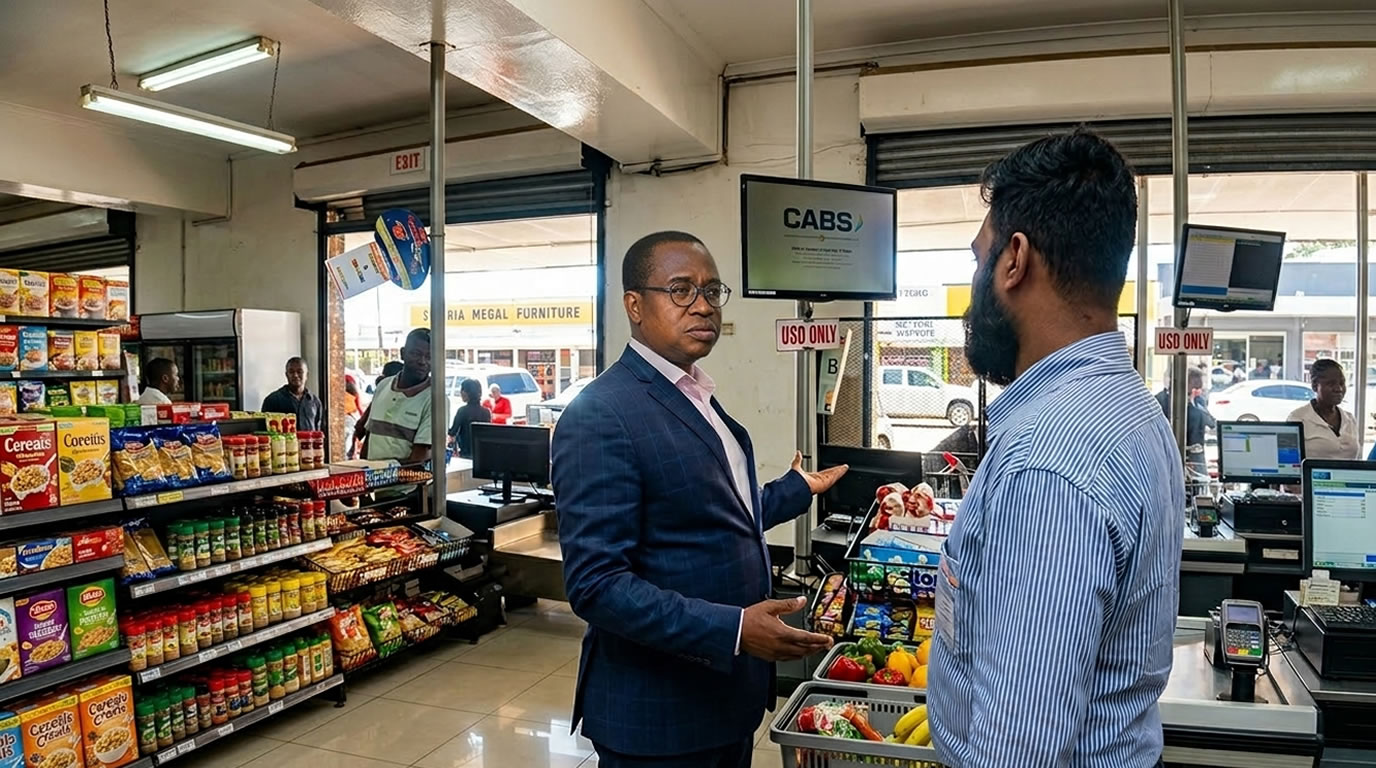
In the corridors of the Treasury in Harare, the air is thick with self-congratulation. Professor Mthuli Ncube, the Finance and Economic Development Minister, has been vocal about what he terms a “monumental shift” in the nation’s economic trajectory. According to the latest official data, Zimbabwe’s annual inflation rate has performed a vanishing act, dropping from a staggering 82.7 per cent in late 2025 to a mere 3.8 per cent in February 2026. On paper, the figures suggest a country that has finally tamed the beast of hyperinflation. But as one descends from the high-ceilinged offices of the government into the bustling markets of Mbare or the street corners of Bulawayo, the narrative of stability begins to fray at the edges.
For the ordinary Zimbabwean, the “stabilising” inflation narrative feels less like an economic reality and more like a carefully constructed trap. While the government signals an extended “tight monetary stance” to anchor these gains, the cost of living continues to climb in a way that official indices seem to ignore. The “conspiracy of numbers” used by the state masks a deeper, more painful erosion of purchasing power. This investigative piece explores the widening chasm between the Treasury’s spreadsheets and the empty wallets of the people, following the money to see who truly benefits from this high-interest-rate environment.
The Street Rate vs The Official Mirage
The cornerstone of the government’s claim to stability is the ZiG, the gold-backed currency introduced in April 2024. In April 2026, the official interbank rate sits at approximately 25.25 ZiG to the US dollar. However, the “Street Rate”—the true barometer of value for the informal economy that sustains millions—tells a more volatile story. In the shadows of the CBD, the greenback is trading at anywhere between 35 and 40 ZiG.
“The government says inflation is four per cent, but my landlord just increased my rent by twenty per cent because he says the ZiG is losing value on the street,” says Tendai, a vendor in Harare who asked to be identified only by his first name. “If I want to buy stock for my stall, the wholesalers are using a rate of 38. When I sell in ZiG, I am losing money every day. They tell us things are stabilising, but my basket is getting lighter.”
This disparity creates a dual reality. The Consumer Council of Zimbabwe (CCZ) recently noted that a food basket for a family of six costs roughly US$440. In a country where the majority of transactions are now forced into the local currency to “promote” the ZiG, the conversion at street rates makes basic survival an exercise in high-stakes gambling. The “inflation stabilising” claim is built on a weighted average that often prioritises official prices in large retail chains, which are frequently out of stock of basic goods, forcing people back to the informal markets where the “Street Rate” reigns supreme.
Choking the Small, Feeding the Large
The “extended tight monetary stance” mentioned by Professor Ncube is essentially a high-interest-rate regime designed to mop up liquidity and prevent speculative borrowing. The central bank policy rate currently sits at 35 per cent, which translates to commercial lending rates of upwards of 45 per cent for those borrowing in ZiG. For a small-to-medium enterprise (SME) in Gweru or Mutare, this is a death sentence.
Small businesses, the backbone of the Zimbabwean economy, are effectively being choked. Without access to affordable credit, they cannot expand, restock, or even maintain current operations. “We are operating in a liquidity desert,” explains an independent market analyst who wished to remain unnamed. “The high interest rates are meant to stop people from borrowing ZiG to buy US dollars on the black market. It works for the Treasury’s inflation targets, but it’s collateral damage for the small businessman who just needs a loan to buy a new generator or fix a delivery truck.”
Conversely, the environment is a boon for large corporations and those with political connections. These entities often have access to offshore funding or generate significant revenue in US dollars, allowing them to bypass the local credit squeeze. While the small shop owner is crushed by a 47 per cent interest rate, the large conglomerate can leverage its US dollar balance sheet to thrive. This creates a distorted market where the “stability” is subsidised by the slow strangulation of the entrepreneurial class.
A Precursor to Reform or a Desperate Gamble?
The timing of these announcements has raised eyebrows among independent economists. Some see the insistence on “stability” as a precursor to further currency reforms or a desperate attempt to manage expectations ahead of a predicted economic dip. Professor Ncube himself recently revised the 2026 growth forecast down to 5 per cent from an earlier 6 per cent, citing “external headwinds” and weaker commodity prices.
“There is a sense that the government is trying to paint a picture of health before they have to perform another surgery on the currency,” says an economist based in Bulawayo. “By insisting that inflation is low, they are trying to build trust in the ZiG. But trust is not built on speeches; it is built on the ability to buy a loaf of bread at the same price for six months. We haven’t seen that yet.”
The “conspiracy of numbers” extends to how data is collected. By using a “blended inflation” model or focusing on the ZiG’s performance against a gold price that is managed, the government can produce a single-digit figure that looks impressive to the International Monetary Fund (IMF) but means nothing to a mother trying to buy school uniforms.
The Human Cost of “Stability”
The reality of eroding purchasing power is most visible in the civil service. Despite the “stabilising” narrative, many teachers and nurses find their ZiG-denominated salaries are not keeping pace with the street-level inflation of goods.
“We are told the economy is growing, that we have the lowest inflation in 29 years,” a primary school teacher in Chitungwiza remarked during a recent union meeting. “But if my salary was enough last month and it is not enough this month, then someone is lying. You cannot eat a percentage point. You cannot pay school fees with a ‘tight monetary stance’.”
The government’s narrative relies on the hope that if they say “stability” enough times, the markets will eventually believe it. But for the person on the street, the wallet remains the ultimate arbiter of truth. As long as the “Street Rate” continues to mock the official interbank rate, and as long as small businesses are sacrificed at the altar of high interest rates, the “stabilising” narrative will remain a trap.
Professor Ncube is indeed walking a tightrope. On one side is the need to present a functional economy to the world to attract investment and debt relief. On the other is a population that has been burnt by currency collapses in 2008, 2019, and 2024. The current “stability” is fragile, built on a foundation of suppressed liquidity and optimistic data. For ordinary Zimbabweans, the fear is that when the tightrope finally snaps, they will be the ones left to fall, while those who “followed the money” have already secured their landing in offshore accounts and US dollar assets.
The story of Zimbabwe’s 2026 economy is not found in the single-digit inflation reports of the Treasury. It is found in the long queues at the informal exchange points and the shuttered doors of small businesses that could no longer afford to breathe. It is a story of a “stabilisation” that feels remarkably like a slow-motion crisis for those at the bottom of the pyramid.